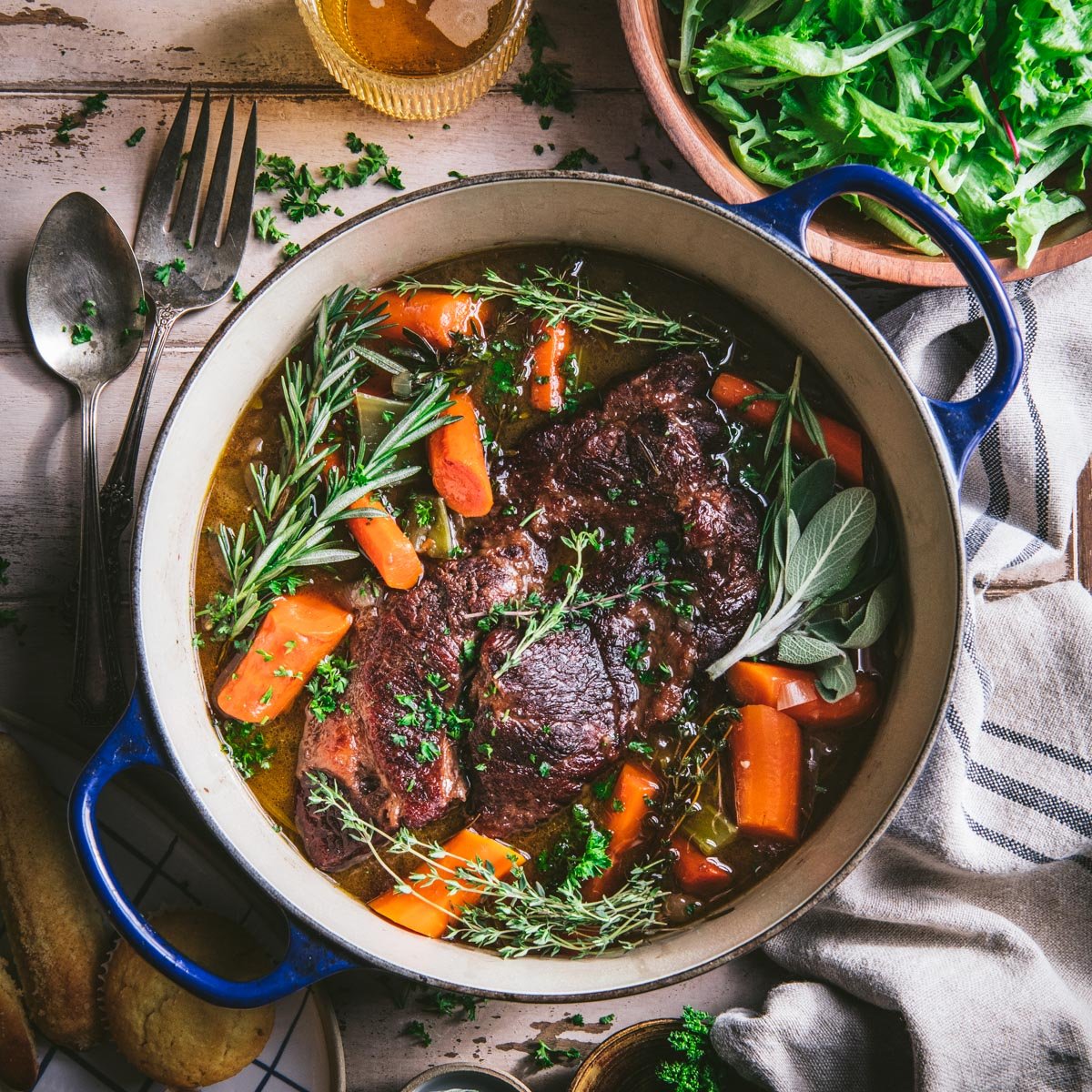
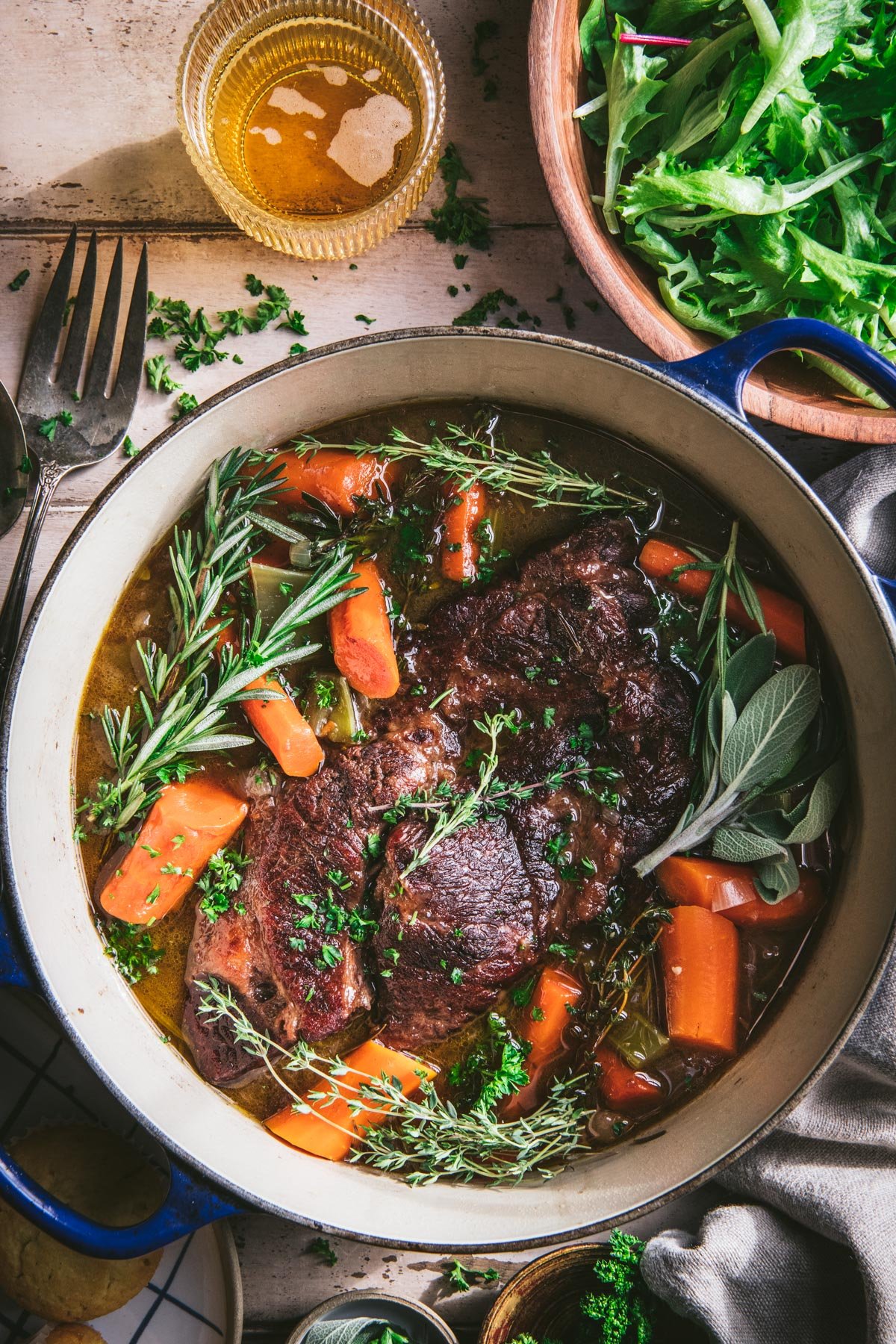
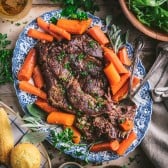
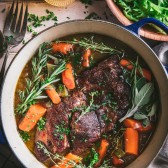
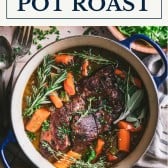
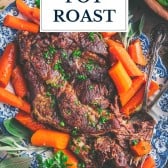
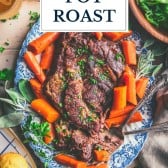
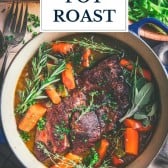
Tender and juicy, this stovetop pot roast and gravy transforms an affordable cut of meat into a delicious comfort food dinner. The beef slowly simmers in a Dutch oven with vegetables, herbs, and red wine for an easy, flavorful, and cozy meal!
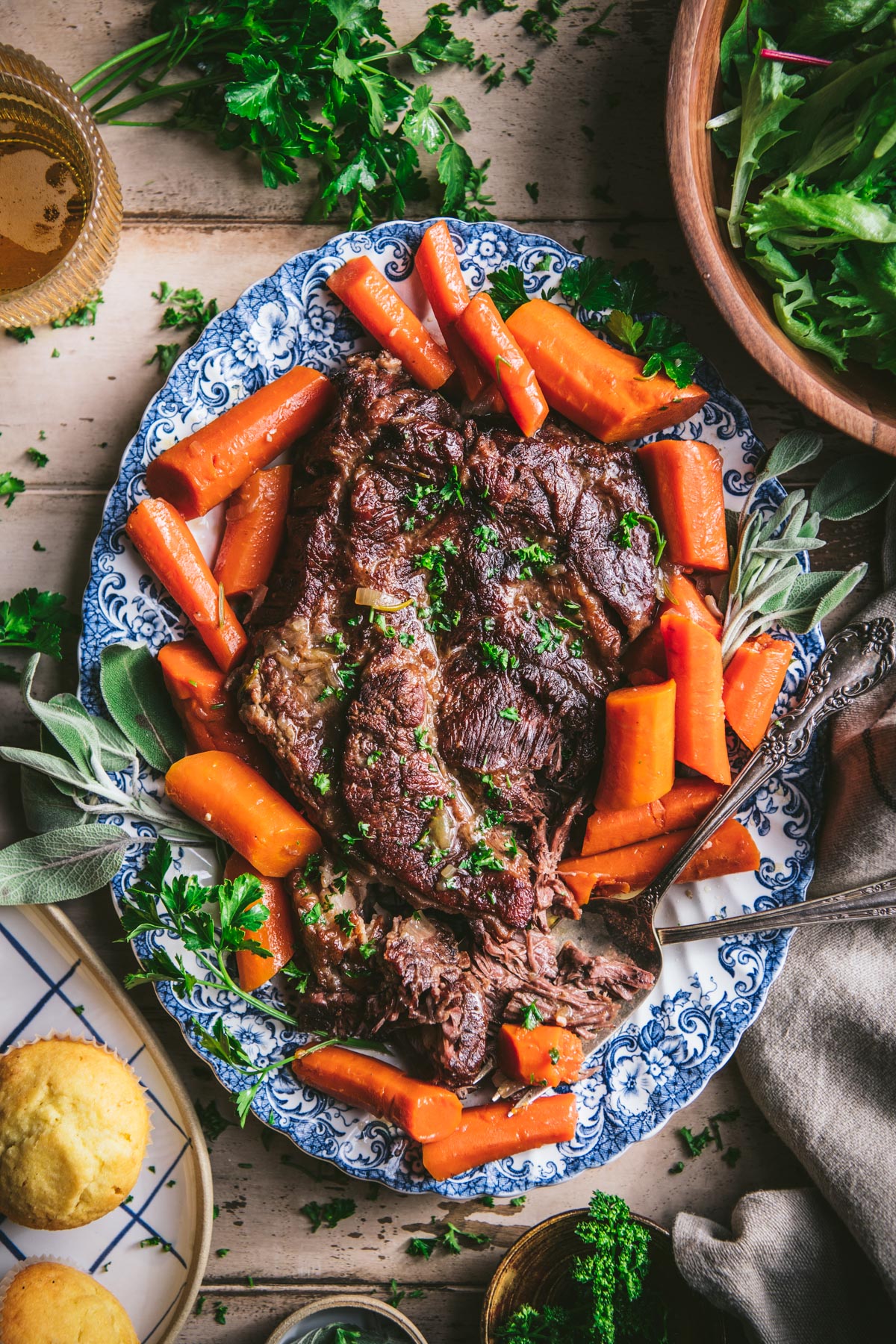
Table of Contents
If you love pot roast recipes, be sure to try this Crock Pot pot roast with cream of mushroom soup, this popular Dutch oven pot roast, a classic Crock Pot pot roast, and this Mississippi pot roast recipe, too!
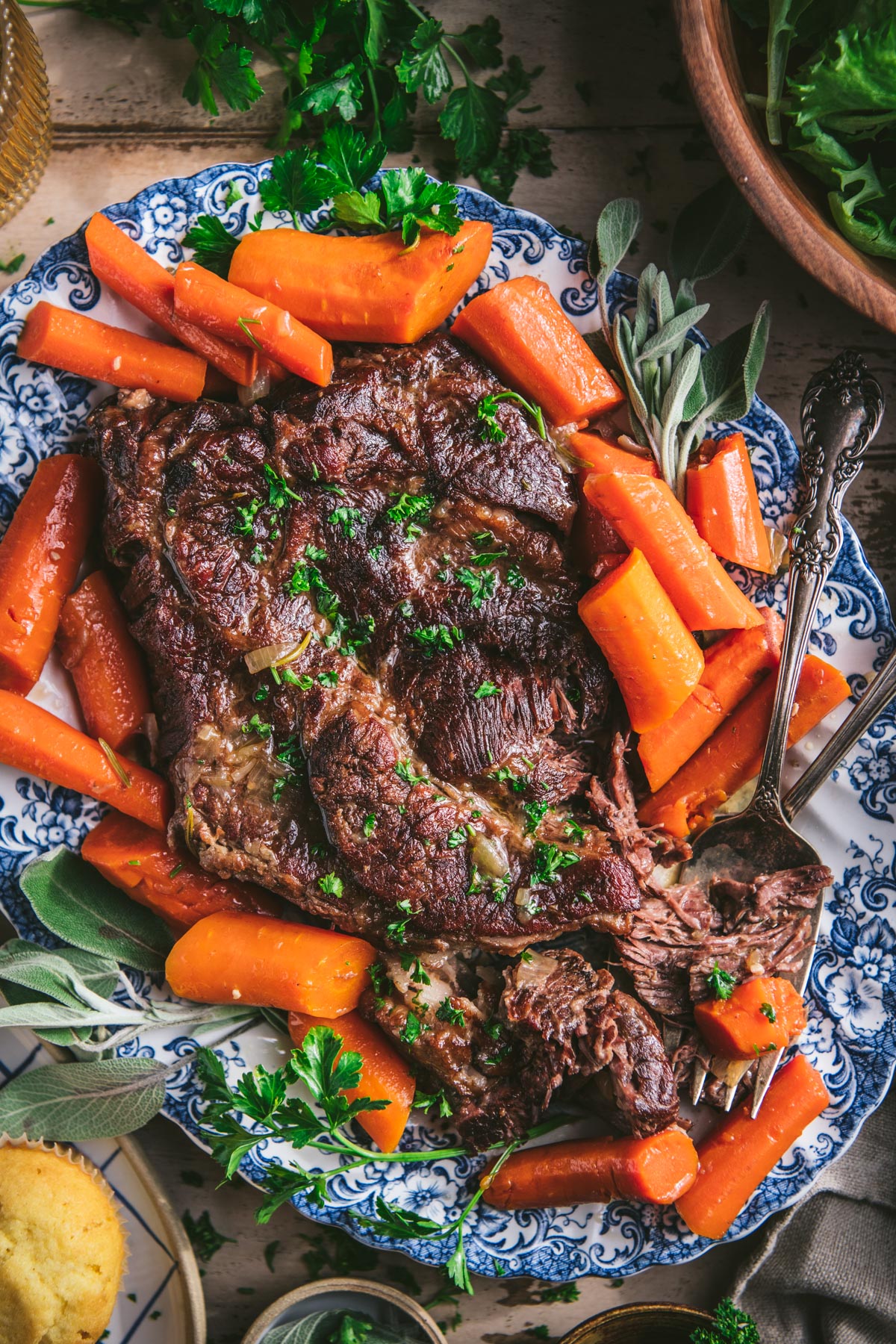
Nothing beats the cozy comfort of a fall-apart tender stovetop pot roast and gravy. The aroma that wafts through your home as it cooks all afternoon is like a warm hug from your grandmother! This melt-in-your-mouth easy dinner recipe gives you succulent beef, as well as plenty of drippings for an optional gravy. Pair it with cornbread, biscuits, a loaf of crusty bread, and a side salad, for a perfect supper on a quiet Sunday evening.
What is a stove top pot roast?
A “pot roast” is a braised beef dish that’s made by searing a big, tough cut of beef (usually an inexpensive roast) and then slowly cooking the beef in a covered dish called a Dutch oven. In America, this dish is often called a “Yankee Pot Roast,” and is served with carrots and potatoes or other vegetables. Slowly roasting a tough cut tenderizes the meat, resulting in succulent beef and rich liquid that’s perfect for gravy.
Some recipes call for roasting the meat in the oven, others use a slow cooker, and this version simmers over low heat on top of the stove. The end result is the same — slowly braised beef that’s fall-apart tender!
This particular stove top pot roast recipe works well because the vegetables, beef, and herbs flavor the rich juices that are further enhanced by a touch of red wine. Use these same flavorful drippings to make the gravy, and you’ve got a restaurant-quality meal with minimal effort!
The Best Meat for Pot Roast
Chuck roast is a very common cut for a pot roast recipe, but you can also use a brisket or a round roast. A boneless beef chuck roast is my first choice for a pot roast because it has great marbling, making the roast tender and juicy when braised. Chuck roast is cut from the shoulder just above the short rib, so it’s tougher (and therefore more affordable) than those cut from the front part of the animal, like the sirloin or short loin.
Ingredients for Stove Top Pot Roast with Red Wine
This is just a quick overview of the ingredients that you need for a southern pot roast on the stove top. As always, specific measurements and step-by-step cooking instructions are included in the printable recipe box at the bottom of the post.
- Chuck roast: a 3-lb. boneless beef chuck roast is the perfect piece of meat here, but you can use a different beef roast instead, such as a brisket or a round roast.
- All-purpose flour: to dredge the meat, which helps it brown and develop a nice crust when seared. The flour also adds body to the finished sauce.
- Butter and olive oil: for searing the meat.
- Onions, carrots, celery, and garlic: fresh veggies that add a lot of savory flavor to the pot.
- Beef broth: the liquid that braises the meat and veggies and keeps everything really moist.
- Red wine: adds more depth of flavor to the pot roast. For an alcohol-free meal, substitute additional beef broth for the red wine. You might also like to add a splash of Worcestershire sauce or balsamic vinegar.
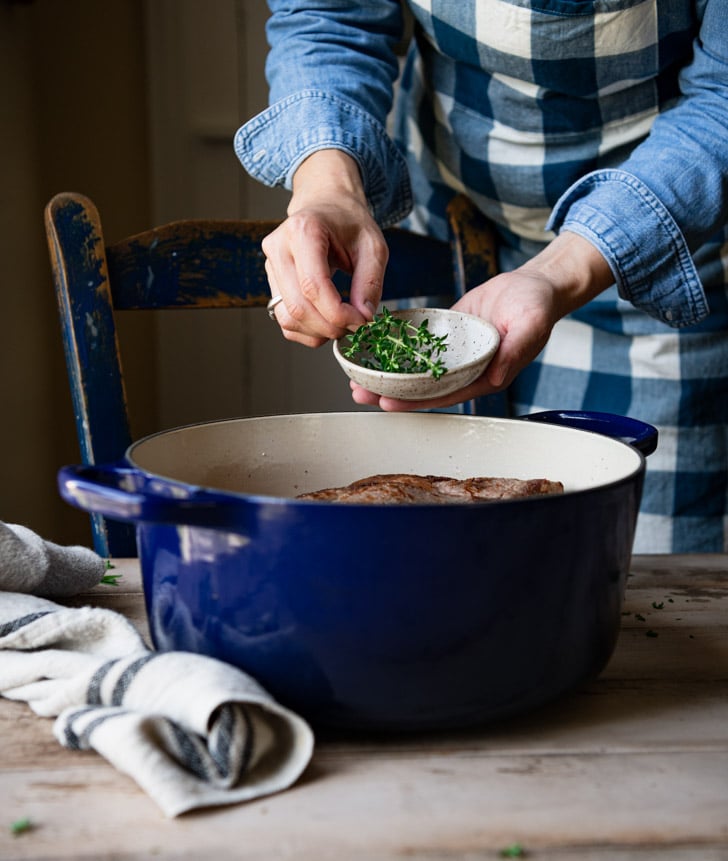
- Thyme, rosemary, and bay leaves: for even more flavor! Fresh herbs are always my preference, but you can use dried herbs in a pinch.
- Kosher salt and ground black pepper: to enhance the other flavors in the dish.
How to Cook Pot Roast on Stovetop
While you need to allow plenty of time for the braising process, this easy one-pot meal is almost entirely hands-off. Get it going on the stovetop, and then put your feet up and enjoy the afternoon. Your delicious pot roast will be ready and waiting for you by dinnertime! As always, the specific step-by-step directions are included in the printable recipe box at the bottom of the post.
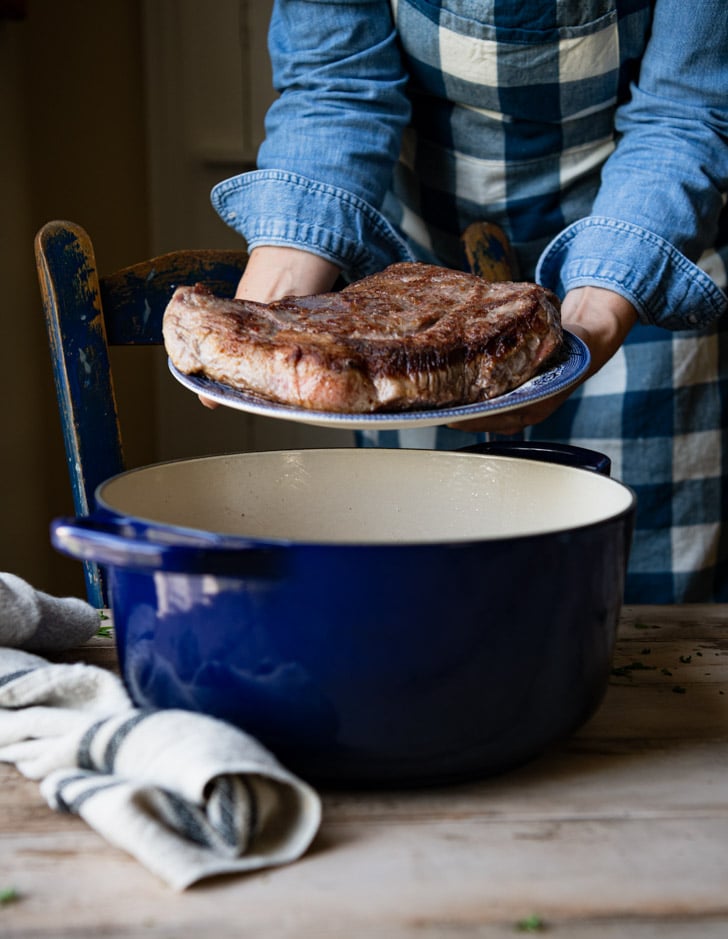
- Dredge the roast in flour, and then sear it butter and oil.
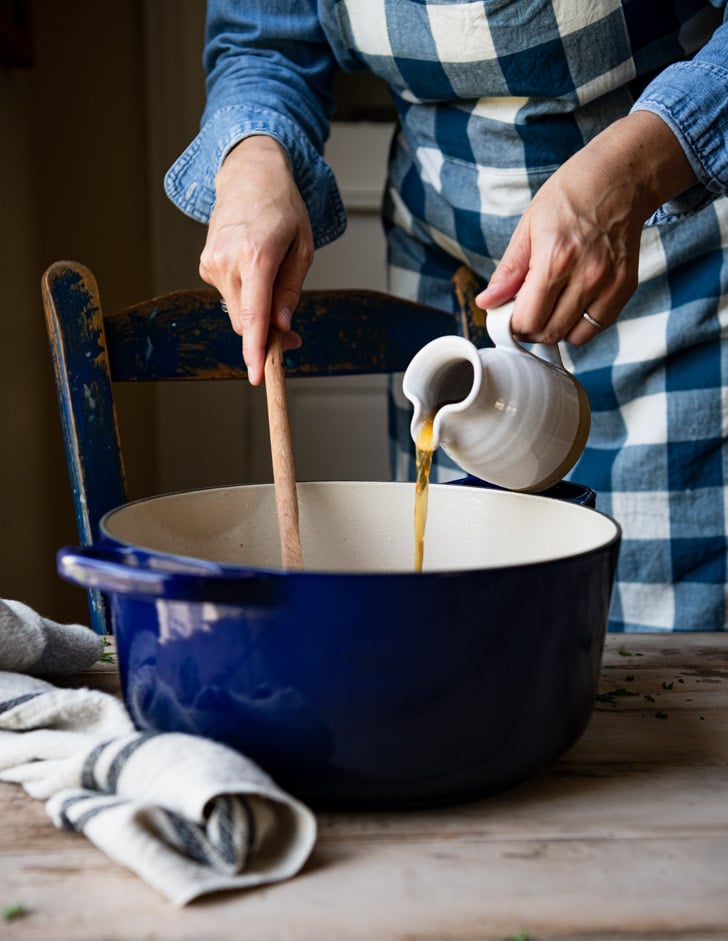
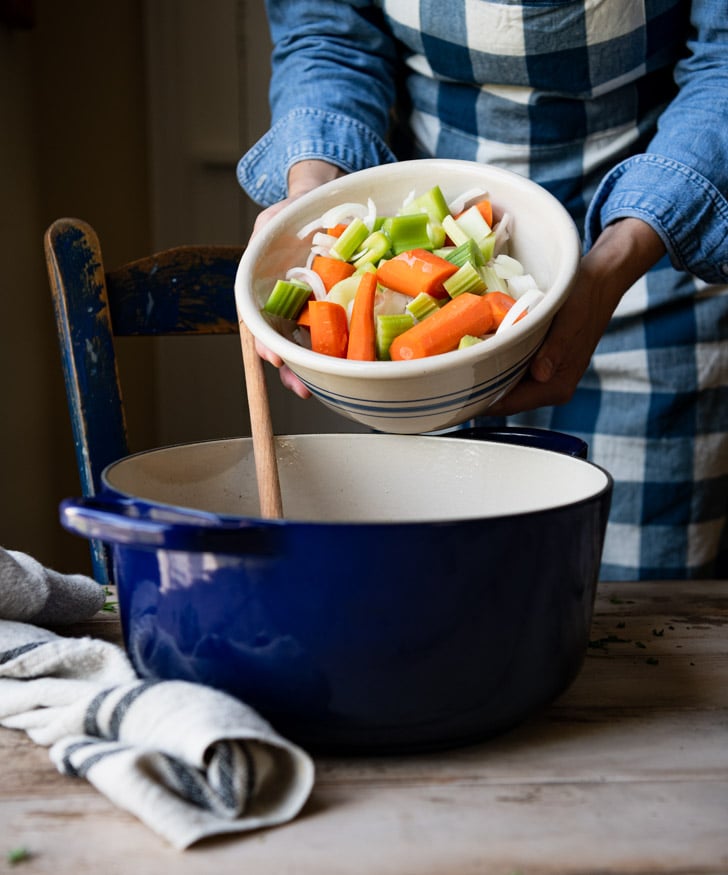
- Deglaze the pot with a bit of the broth, and then saute the veggies.
- Place the roast on top of the vegetables, add the remaining liquid and seasoning to the pot, and bring the mixture to a simmer.
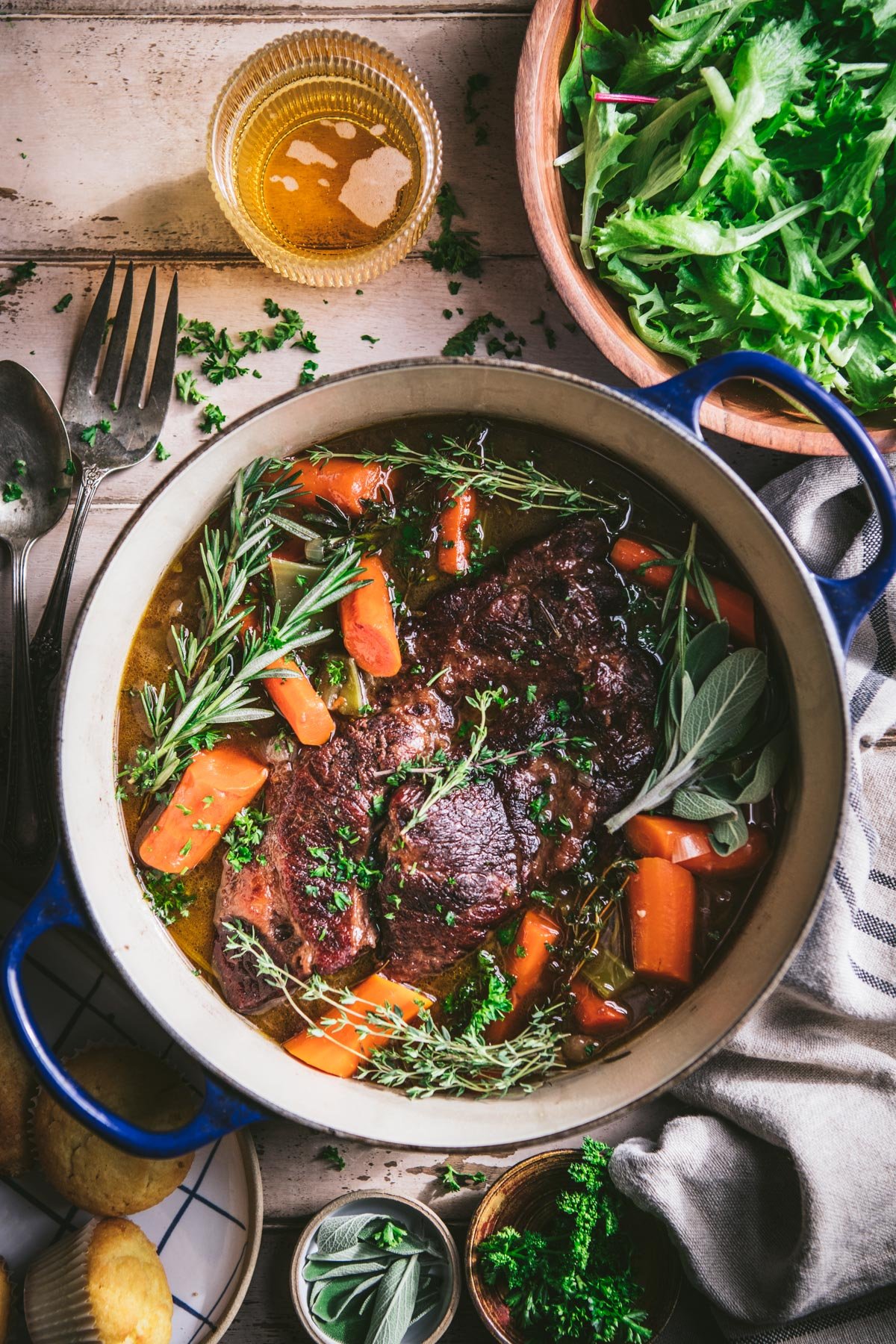
- Cover the Dutch oven with a lid, reduce the heat to medium-low, and cook at a gentle simmer for about 3 hours, or until the meat is fork-tender.
- Strain the juices and drippings from the pot, and whisk together a gravy if you like.
How long does it take for pot roast to get tender?
The total cooking time will vary depending on the size of your roast, and on the heat of your stovetop. When cooked over low or medium-low heat, a stovetop pot roast will typically require about 3 hours. You’ll know it’s done when a fork goes into the meat easily, and you can twist off a forkful of meat. If the roast is still firm, continue cooking for another hour or so.
Serving Suggestions
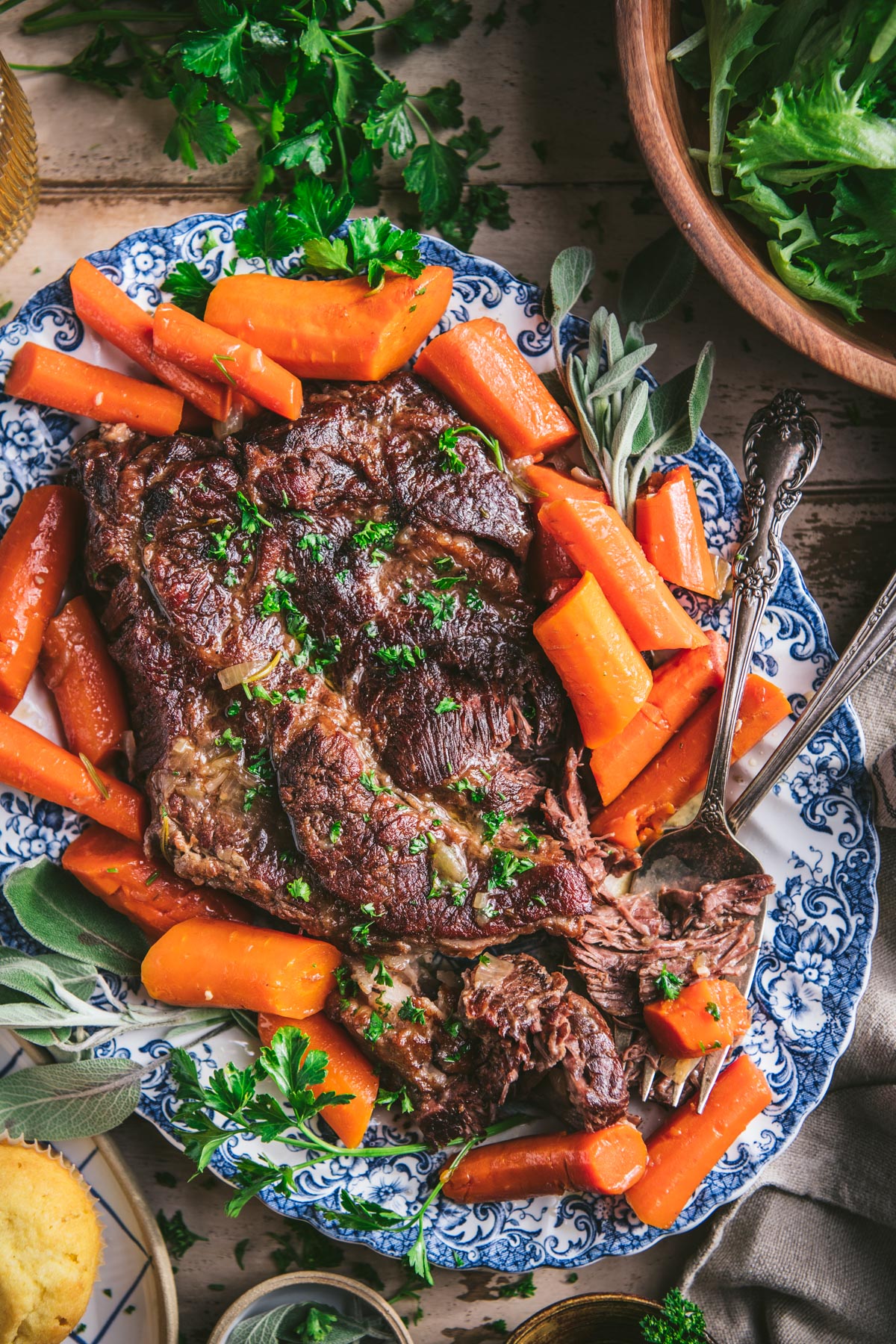
Serve this easy pot roast recipe with any of these sides (so many comfort food recipes!):
- 3-Ingredient Buttermilk Mashed Potatoes, Sour Cream and Chive Mashed Potatoes, Mashed Skin-On Red Potatoes, Rosemary Roasted Potatoes, Baked Potatoes, Potatoes au Gratin, or Aunt Bee’s 3-Ingredient Cheesy Potato Casserole
- Duke’s Homemade Mac and Cheese, Shells and Cheese, or Creamy Baked Mac and Cheese
- Jiffy Corn Casserole
- Egg Noodles
- Cornbread Stuffing or Sausage Stuffing
- Sweet Cornbread, Southern Cornbread, Cornbread with Cake Mix, Pumpkin Cornbread, Jiffy Cornbread with Creamed Corn, Jalapeno Cheddar Mexican Cornbread, Skillet Cornbread, Old-Fashioned Corn Sticks, or Honey Cornbread
- Corn Muffins or 3-Ingredient Sour Cream Muffins
- Pumpkin Muffins, Two-Ingredient Pumpkin Muffins, or Pumpkin Bread
- 3-Ingredient Buttermilk Biscuits, Butter Swim Biscuits, Flaky Biscuits, Sweet Potato Biscuits, Drop Biscuits, Cheddar Biscuits with Bacon and Chives, Cathead Biscuits, or Cheese Biscuits
- Southern-Style Green Beans, Roasted Green Beans, Arkansas Green Beans with Bacon, or Green Bean Casserole
- Creamed Peas
- Southern Collard Greens
- Sauteed Spinach or Creamed Spinach Casserole
- Easy Broccoli Casserole, Broccoli and Rice Casserole, or Broccoli and Cheese
- Apple and Butternut Squash Casserole or Southern Squash Casserole
- Sauteed Zucchini or Roasted Yellow Squash
- Brown Sugar Glazed Carrots
- Cranberry Orange Sauce
- Mixed Greens with Dijon Vinaigrette, Green Salad with Red Wine Vinaigrette, Wedge Salads, House Salad or Caesar Salad
- Roasted Cabbage or Fried Cabbage with Apples and Onion
Preparation and Storage
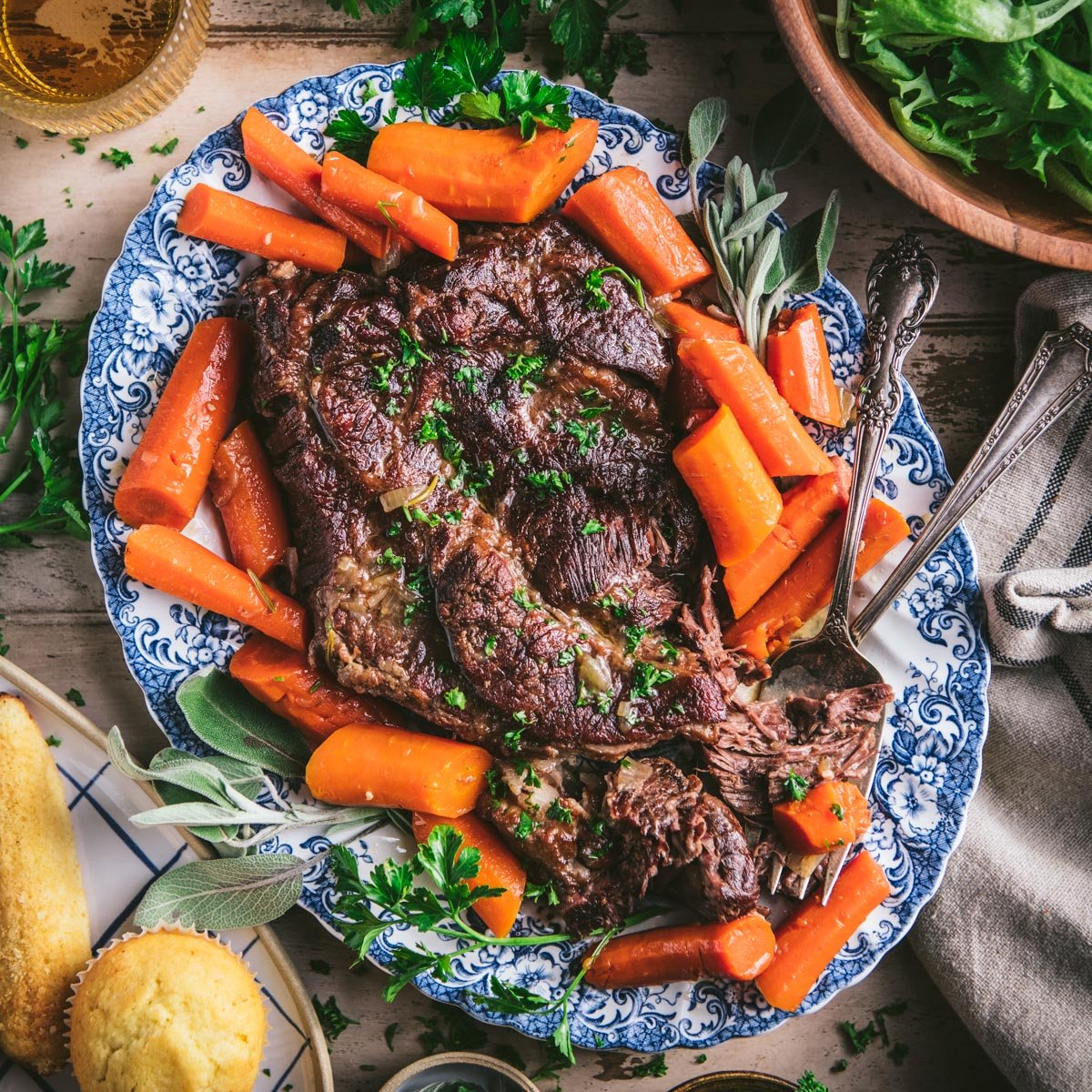
- Prep Ahead and Reheat: If you prepare the roast a day ahead, cover and refrigerate it overnight. The next day, skim off any solidified fat and reheat it gently over low heat on the stovetop.
- Store leftover pot roast in an airtight container in the refrigerator for up to 3 days.
- Wrapped tightly, you can freeze leftovers for up to 2 months.
Recipe Variations
- I typically prefer serving the roast with potatoes that I cook separately (such as mashed potatoes or roasted potatoes); however, if you’d like to add potatoes directly to the Dutch oven, wait to do so until the final hour of cooking. This way they don’t get too mushy and overdone. You’ll need about 3 medium peeled russet potatoes cut into eighths, or you can use unpeeled Yukon gold potatoes.
- Most grocery stores sell boneless chuck roasts that weigh about 3 pounds. Those are perfect for this recipe! I have also used a 4-lb. bone-in chuck roast from a local farm, which requires about the same cooking time as a 3-lb. boneless roast. The bone adds a lot of rich flavor to the juices in the pot, but the bone-in chuck roasts are harder to find in stores. If you use larger boneless roasts (such as 4-5 lbs.), you’ll need to increase the cooking time by about 1 hour.
- I love the added depth of flavor that you get from the red wine; however, you can substitute with additional beef broth in lieu of the red wine.

Tips for the Best Stove Top Pot Roast Recipe
- Searing the meat before adding it to the liquid and other ingredients helps to brown the surface and enhance the flavor. A hot pan creates a golden, caramelized crust through a process called the Maillard reaction, and will also lock in the meat’s juices. Plus, the browned bits from the bottom of the pot add great flavor to the gravy.
- Why is my pot roast tough? Undercooked pot roast will be tough and chewy. If you’re using tougher or bigger cuts of beef, you may need to increase the cooking time to give the meat fibers and connective tissue plenty of time to break down and become tender and juicy.
- Why is my pot roast dry? Cooking the meat for too long or at too high of a temperature can result in a dry pot roast.
- Cooking for a Smaller Family? This meat freezes really well! I like to package leftovers in individual containers, label them, and stash them in the freezer for later meals. The shredded beef is delicious served on sandwich rolls, but it also works well on salads, tacos, stuffed in baked potatoes, in quesadillas, or on pizza! Get creative and enjoy the leftovers in a variety of ways.
More Pot Roast Recipes to Try

Slow Cooker Pot Roast with Coke
8 hours hrs 55 minutes mins
Dutch Oven Pot Roast
3 hours hrs 40 minutes mins

Mississippi Pot Roast
3 hours hrs 40 minutes mins

Did you make this recipe?
If you enjoyed this recipe, please leave a comment with a 5-star review at the bottom of the post. Thank you!
Stovetop Pot Roast
Equipment
- 7.25 quart Dutch oven
Ingredients
- ⅓ cup all-purpose flour
- Kosher salt and ground black pepper, to taste
- 1 (3 lb.) boneless beef chuck roast
- 1 tablespoon butter
- 2 tablespoons olive oil
- 2 onions, thinly sliced
- 5 carrots, peeled and cut into 2-inch pieces
- 4 large ribs celery, cut into ½-inch crescents
- 2 cloves garlic, minced
- 3 cups beef broth, divided
- ½ cup red wine (or additional beef broth)
- 2 sprigs fresh thyme (or ¼ teaspoon dried)
- 2 sprigs fresh rosemary (or ¼ teaspoon dried)
- 2 bay leaves
OPTIONAL GRAVY:
- ¼ cup butter
- ¼ cup all-purpose flour
- 2 – 3 cups of juices/drippings from the pot (add beef broth if you don’t have enough liquid from the pot)
Instructions
- Mix the flour with a generous amount of salt and pepper on a sheet of waxed paper. Pat the roast dry; dredge it in the flour mixture on all sides.
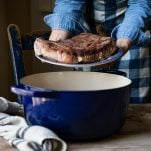
- Heat butter and olive oil in a large Dutch oven (at least 6 quarts or larger) over medium-high heat until it is hot but not smoking. Brown the meat to give it nice color (about 5 minutes per side). Transfer the meat to a plate.

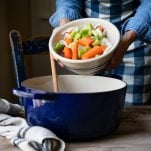
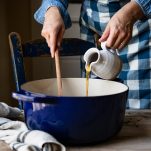
- Reduce the heat to medium and add 1 cup of the beef broth, scraping with a wooden spoon to deglaze the pan (loosening all the browned bits from the bottom). Add the onions, carrots, celery, and garlic to the pot. Cook, stirring, until the onions are translucent (about 10 minutes).
- Place the roast on top of the vegetables. Add the remaining two cups of beef broth, red wine, thyme, rosemary, and bay leaves. The liquid in the pot should come about halfway up the side of the roast. If necessary, add water or extra broth to reach this level. Bring the mixture to a simmer. Season with salt and pepper, cover with a lid, and reduce the heat to medium-low.
- Simmer the mixture gently on the stovetop for about 3 hours, or until the beef is fall-apart tender when pulled with a fork. As the roast cooks, occasionally check the pot to make sure that the liquid stays at a similar level (adding extra water or broth as necessary). Adjust the temperature to keep the liquid at a gentle simmer, but not a boil (you might need to simmer the pot over low heat instead of medium-low heat).

For the Optional Gravy:
- Strain the juices and drippings from the pot. Melt the butter in a skillet over medium heat until bubbly. Whisk in the flour and cook for 30 seconds. While continually whisking, gradually add the juices until the gravy reaches the desired consistency.
- Continue whisking while the gravy bubbles and cooks for 1-2 minutes. Season with additional salt and pepper, to taste.
Notes
- Searing the meat before adding it to the liquid and other ingredients helps to brown the surface and enhance the flavor. A hot pan creates a golden, caramelized crust through a process called the Maillard reaction, and will also lock in the meat’s juices. Plus, the browned bits from the bottom of the pot add great flavor to the gravy.
- Why is my pot roast tough? Undercooked pot roast will be tough and chewy. If you’re using tougher or bigger cuts of beef, you may need to increase the cooking time to give the meat fibers and connective tissue plenty of time to break down and become tender and juicy.
- Why is my pot roast dry? Cooking the meat for too long or at too high of a temperature can result in a dry pot roast.
- Cooking for a Smaller Family? This meat freezes really well! I like to package leftovers in individual containers, label them, and stash them in the freezer for later meals. The shredded beef is delicious served on sandwich rolls, but it also works well on salads, tacos, stuffed in baked potatoes, in quesadillas, or on pizza! Get creative and enjoy the leftovers in a variety of ways.









Finally, after searching for recipes all morning I know what I’m making for family dinner tonight! Getting prepared was a headache, as I needed stovetop repair service on Friday and now I’m falling behind. So better get cooking! So excited.
Fabulous!!!! Just triple the garlic.
Thank you, Karen!
This recipe is definitely a keeper! Delicious! husband and picky kids loved it
Thank you, Rachel! We’re so glad it was a hit!
how much salt/pepper to taste is “to tasted” in flour coating? should we taste the flour to determine that? thanks.
Hi Gina,
Great question! When a recipe says salt and pepper to taste in a flour coating, it means you should season the flour mixture lightly, based on your personal preference. You don’t actually need to taste the raw flour. Instead, think of how much seasoning you’d want for the overall dish.
As a guideline, a good starting point is about ½–1 teaspoon of salt and ¼–½ teaspoon of black pepper per cup of flour. From there, you can adjust to your liking. The idea is just to make sure the coating itself has some flavor, so the final dish isn’t bland.
We hope you enjoy!