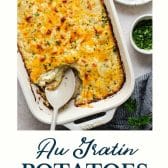
These easy au gratin potatoes feature thinly sliced potatoes baked in a rich, creamy cheese sauce made with sharp cheddar and nutty Gruyère. It’s a comforting, make-ahead side dish that’s earned a permanent spot on our holiday table and Sunday supper rotation alike.
More Cheesy Potato Sides

Scalloped vs. Au Gratin: What’s the Difference? Scalloped potatoes are baked in a creamy sauce without any cheese, giving them a lighter, casserole-like finish. Au gratin adds cheese both in the sauce and on top for that rich, golden crust. There’s also a French version called potatoes Dauphinoise, which skips the roux entirely and relies on cream and garlic alone. In short, au gratin is the creamier, cheesier version worth reaching for when you want something truly indulgent.
Before You Get Started
A few simple steps make the difference between good and great au gratin potatoes. Keep these in mind before you start:
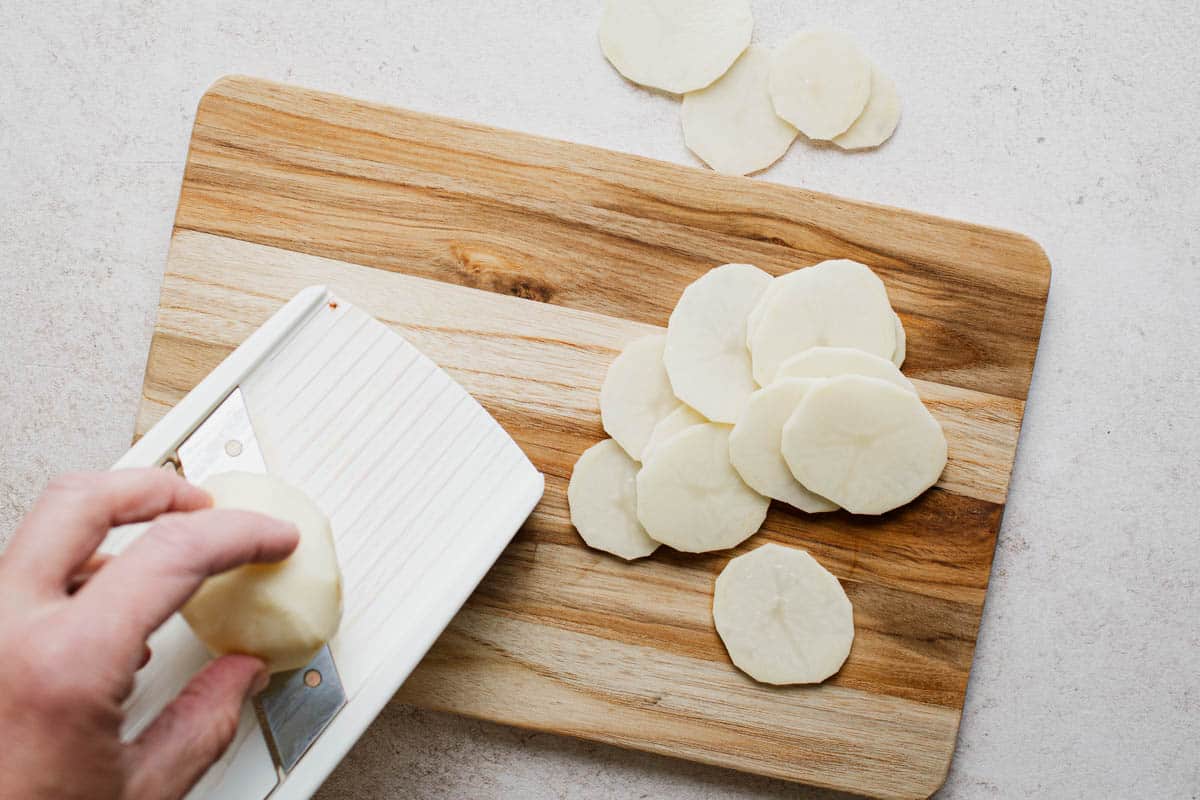
- Use a mandoline for even slices. Aim for ⅛-inch thickness throughout. Uneven slices mean some pieces finish cooking before others, which leads to an inconsistent texture across the dish. A mandoline makes this step quick and precise.
- Thicken the sauce before layering. Let the milk and cream mixture bubble and thicken in the skillet before you pour it over the potatoes. That step is what gives you a smooth, creamy result rather than a watery one.
- Let it rest before serving. After baking, give the dish 10 to 15 minutes before you dig in. The sauce firms up just enough to serve neatly and the flavors settle.
How to Make Au Gratin Potatoes
This recipe comes together in just a few easy steps. Before you start, note that russet potatoes give you the creamiest, richest sauce because of their higher starch content. Yukon Golds hold their shape a little better and give a slightly firmer result. Either works well here, so use what you prefer.
Step 1: Make the Sauce
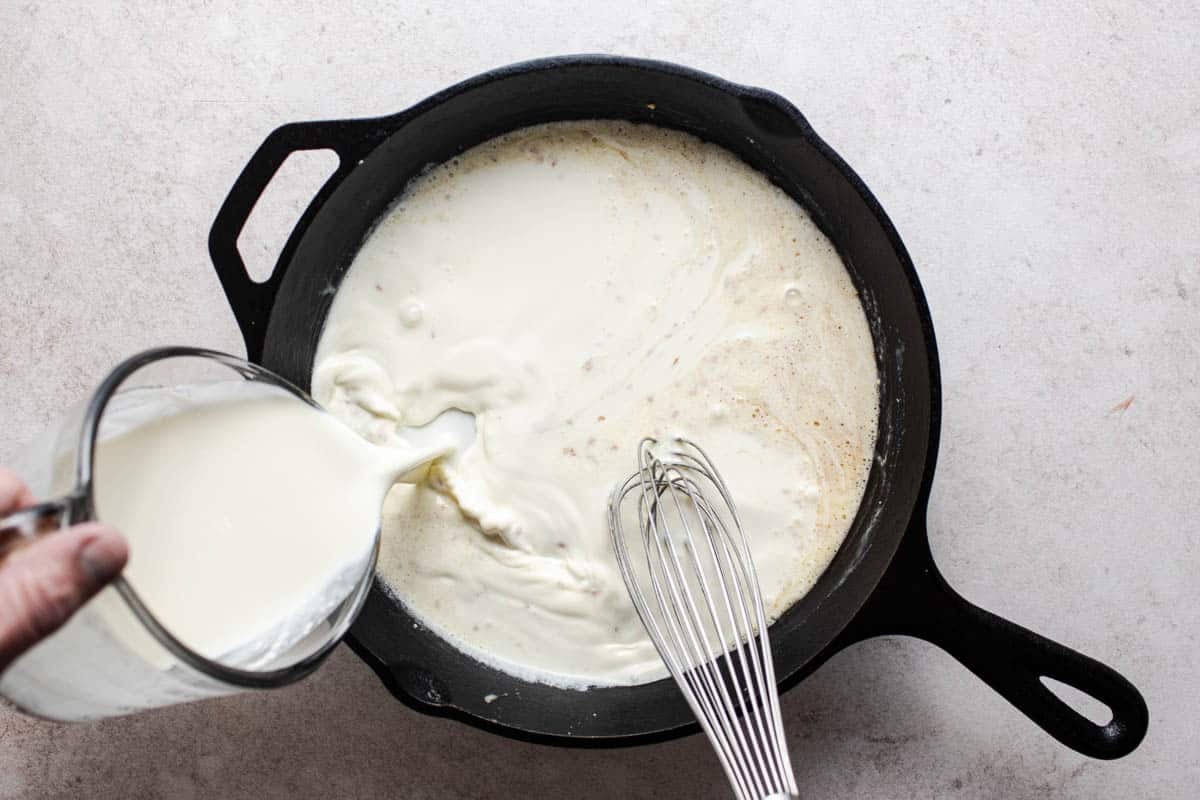
Melt butter in a large skillet over medium heat. Whisk in flour and garlic and cook for about a minute to get rid of the raw flour taste. Gradually pour in the milk and cream, whisking as you go. Let the mixture cook until it thickens, about 2 minutes.
Stir in thyme, salt, pepper, and nutmeg, then add half of each cheese. Whisk for another minute until the cheese is fully melted and the sauce is smooth.
⇢ Use freshly grated cheese here. Pre-shredded cheese contains anti-caking agents that can make the sauce grainy rather than silky. A block of cheddar and Gruyère grated on a box grater melts much more smoothly.
Step 2: Layer the Potatoes
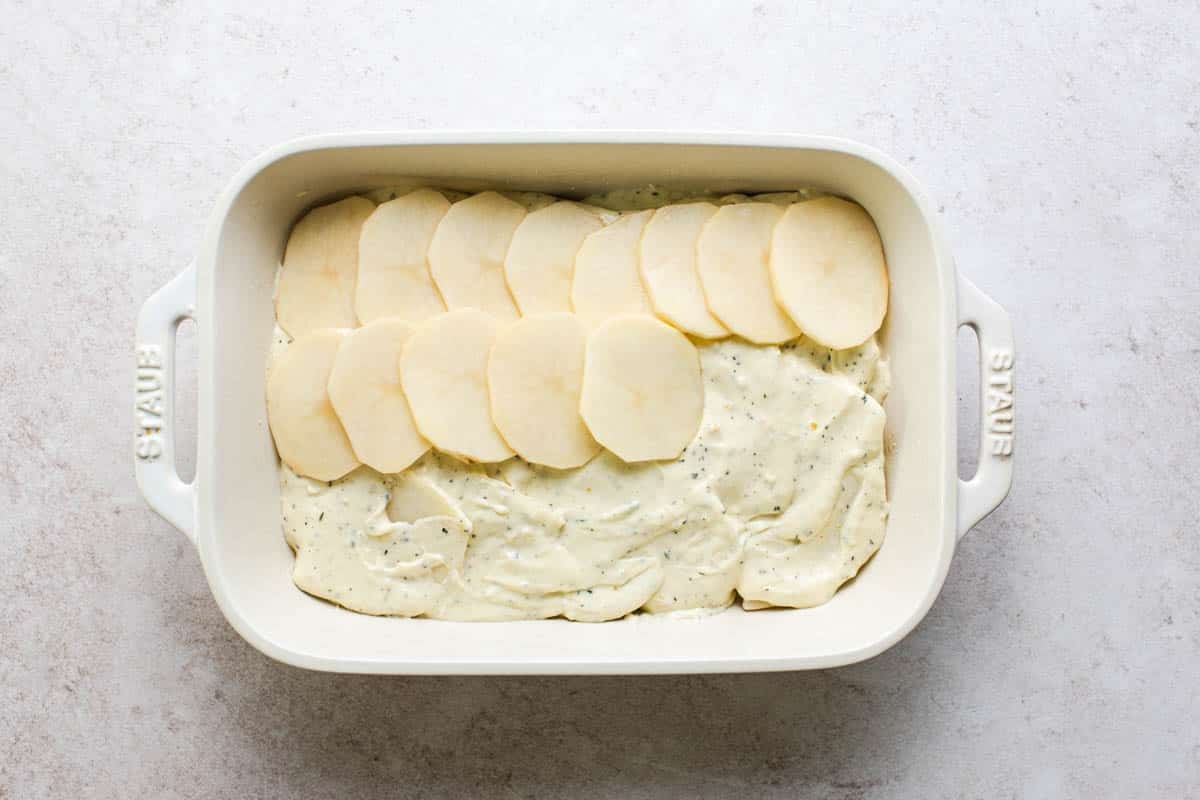
Arrange half the sliced potatoes in a greased 2-quart baking dish. Season lightly with salt. Pour half the sauce evenly over the top. Add the remaining potatoes, another pinch of salt, and pour the rest of the sauce over everything.
⇢ Want to add ham or onion? Scatter a handful of finely diced onion or bits of diced ham between the layers for a heartier version. It pairs beautifully with the cheese sauce.
Step 3: Bake Until Golden and Bubbling
Cover the dish and bake at 400°F for 50 to 60 minutes, until the potatoes are almost fully tender.
Remove the cover, sprinkle the remaining cheese over the top, and bake for another 15 to 20 minutes until the top is deep golden and bubbling around the edges.
To check for doneness, slide a knife into the center. It should pass through with little to no resistance. If the potatoes are still firm, cover loosely and give them another 10 minutes.
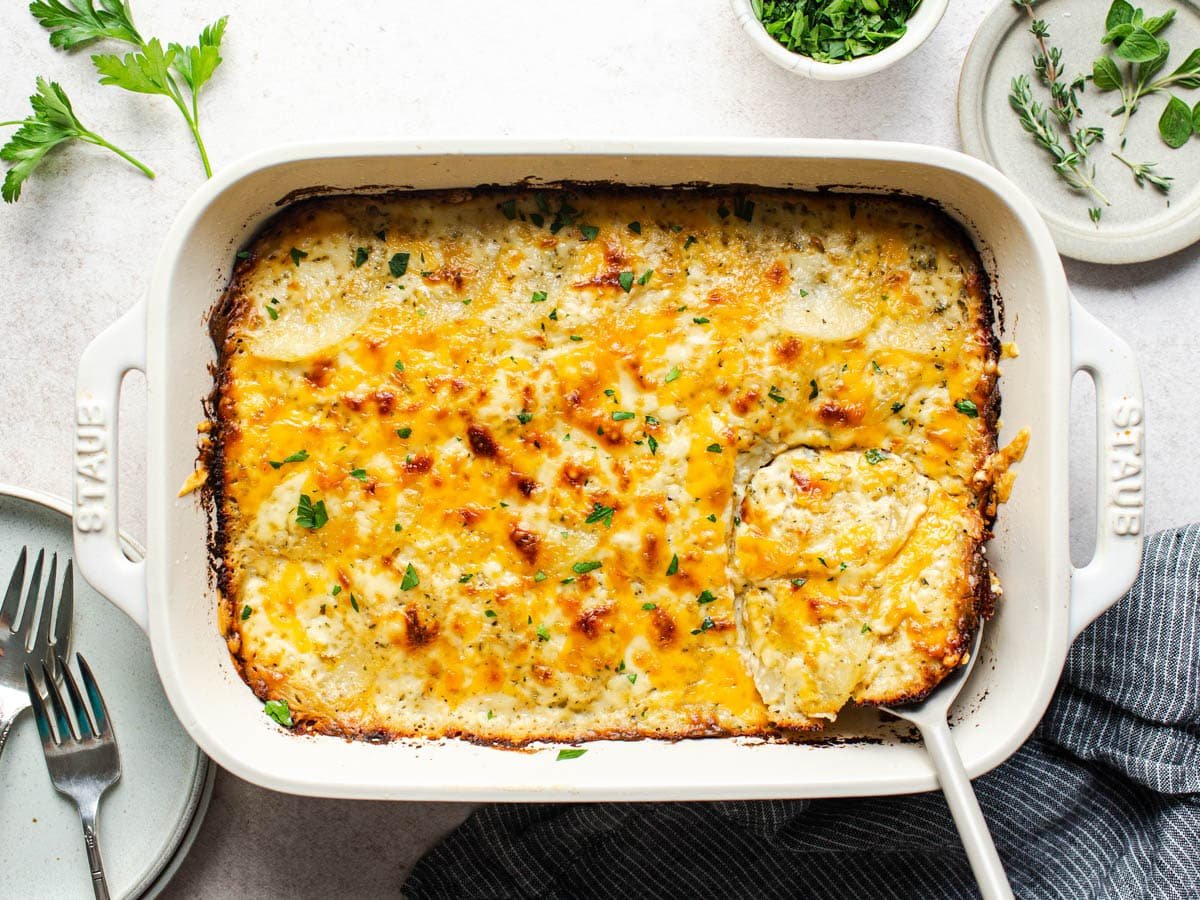
Once out of the oven, let the dish rest for 10 to 15 minutes before serving. This short wait lets the sauce set for clean, creamy scoops.

What Goes Well with Au Gratin Potatoes
These potatoes are a natural match for big, centerpiece proteins. They work beautifully alongside a holiday ham or roast, but hold their own on a regular weeknight too.
Great alongside these mains:
Storage, Make-Ahead & Reheating
Make-Ahead: Assemble the dish up to 24 hours before baking. Cover tightly and refrigerate. Let it sit at room temperature for about 30 minutes before putting it in the oven.
Refrigerator: Leftovers keep well for 3 to 4 days, covered, in the fridge.
Reheating: Warm in a 350°F oven, covered with foil, for 20 to 30 minutes until heated through. Leftover potatoes tend to absorb the sauce as they sit, so stir in a splash of milk or cream before reheating to restore that creamy texture.
Frequently Asked Questions
Why aren’t my potatoes getting soft?
A few things can cause this. The most common culprits are slices that are too thick and a sauce that was not hot enough before going into the oven. Make sure your slices are a consistent ⅛ inch, and let the sauce come to a good bubble before layering. Also check that your oven is fully preheated and that the dish is covered tightly during the first bake.
How do I keep the sauce from curdling?
Cook the roux fully before adding the dairy, whisk constantly once the milk and cream go in, and use gentle heat. Once the cheese is added, avoid letting the sauce boil. Freshly grated cheese also helps here since it melts more smoothly than pre-shredded.
What’s the best cheese to use?
A mix of sharp cheddar and Gruyère gives you the best flavor and melt. The cheddar adds bold, tangy flavor while Gruyère brings a nutty richness. If you cannot find Gruyère, Swiss or an all-cheddar version both work well.
Can I make these in a slow cooker?
It is possible, but with trade-offs. The slow cooker will not give you that golden, browned top that you get from finishing the dish uncovered in the oven. You may also end up with a thinner sauce since condensation drips back into the dish. If you do try it, line the lid with paper towels to absorb some of that extra moisture, and cook on HIGH for 2 to 4 hours until the potatoes are fork-tender. It is not my first choice, but it works in a pinch.
Made this for dinner for my boys. We all loved it. Thanks for the recipe will make again.
– John

More Potato Side Dishes to Try

Did you make this recipe?
If you enjoyed this recipe, please leave a comment with a 5-star review at the bottom of the post. Thank you!

Easy Au Gratin Potatoes Recipe
Equipment
Ingredients
- 3 tablespoons salted butter
- 3 tablespoons all-purpose flour
- 2 cloves garlic, minced
- 1 cup whole milk
- 1 cup heavy cream
- 1 ½ teaspoons minced fresh thyme leaves (or ½ teaspoon dried thyme)
- Kosher salt and ground black pepper, to taste
- ⅛ teaspoon freshly-grated nutmeg
- ½ cup grated cheddar cheese
- ½ cup grated Gruyere cheese
- 2 ½ lbs. russet potatoes (about 5 medium), peeled and sliced ⅛-inch thick (or sub Yukon Gold potatoes)
Instructions
- Preheat oven to 400°F. Grease a 2-quart baking dish and set aside.
- Melt the butter in a large skillet over medium heat. Whisk in the flour and garlic; cook for 1 minute. Gradually whisk in the milk and cream. Cook, whisking, until the sauce thickens, about 2 minutes.

- Add the thyme, salt, pepper, nutmeg, and half of each cheese. Whisk for about 1 minute until the cheese is fully melted. Taste and adjust seasoning as needed.
- Arrange half of the potatoes in the prepared baking dish. Season lightly with salt. Pour half the sauce over the top. Layer the remaining potatoes on top, season again, and pour the rest of the sauce over everything. Sprinkle with the remaining cheese.
- Cover and bake for 50 to 60 minutes, until the potatoes are just about tender. Remove the cover and bake for another 15 to 20 minutes until the top is golden and bubbling.
- Let the dish rest for 10 to 15 minutes before serving.



Notes
- Potato choice: Russet potatoes give the creamiest sauce due to their higher starch content. Yukon Golds work well too and hold their shape a bit more.
- Slice evenly: A mandoline makes ⅛-inch slices fast and consistent. Uneven slices cook unevenly.
- Grate your own cheese: Pre-shredded cheese contains anti-caking agents that can make the sauce grainy. Fresh-grated melts much more smoothly.
- Thicken the sauce first: Make sure the sauce is bubbling and thickened before layering. This prevents a watery finished dish.
- Cover during baking: Keeping the dish covered for the first part of baking traps steam and helps the potatoes cook through evenly.
- Rest before serving: The 10 to 15 minute rest lets the sauce firm up for cleaner, creamier scoops.
- Add-ins: A handful of finely diced onion or bits of diced ham between the layers makes a heartier version.
- Make-ahead: Assemble up to 24 hours ahead. Refrigerate covered. Let sit at room temperature for 30 minutes before baking.
- Storage: Leftovers keep for 3 to 4 days in the refrigerator, covered.
- Reheating: Warm at 350°F covered with foil for 20 to 30 minutes. Stir in a splash of milk or cream first if the sauce has thickened up.
Nutrition
Originally published in March, 2021, this post was updated in April, 2026.












Made this for dinner for my boys. We all loved it. Thanks for the recipe will make again.
Awesome! They’re on our Christmas dinner menu. So glad that you enjoyed them, John! 🙂
Wondering if I could do this in the crock pot to free up the oven merry Christmas
Hi, Sandy! Yes, that should work, however, you won’t get that “browned on top” finish that you get in the oven by removing the cover at the end. You might also end up with a thinner sauce, since there’s more condensation in the slow cooker, which drips down into the dish. Long story short — it wouldn’t be my first choice, but it would probably work in a “pinch.” Merry Christmas!
Great recipe!
Thanks, Melissa!
Can’t wait to try these with our Easter ham. Looking forward to this recipe.
Happy Easter, Shery! Hope you enjoy!
How long would you cook these in the crock pot? I have limited oven space too. I’m making these with your brown sugar bourbon glazed ham, and that gets the oven. Can’t wait.
Hi, Shery! The slow cooker should work, however, you won’t get that “browned on top” finish that you get in the oven by removing the cover at the end. You might also end up with a thinner sauce, since there’s more condensation in the slow cooker, which drips down into the dish. Long story short — it wouldn’t be my first choice, but it would probably work in a “pinch.” I know that some folks suggest lining the lid of your Crock Pot with paper towels to absorb that extra moisture, so you might try that.
I haven’t tested the recipe in a slow cooker, so it’s hard for me to offer specific cooking times. I would try about 2-4 hours on HIGH, and just watch the potatoes so that you can turn it off once they are tender. You don’t want to overcook them and have them turn to mush. Hope that helps!
I even saw recipes where some started all the ingredients in a huge pan on the stove. Then when my ham, your ham, is done and resting, I could finish it in the oven for that browned top. Any thoughts on that? Happy Easter.
I think that would probably work even better than the slow cooker. If you have a cast iron pan, you could simmer it on the stovetop until the potatoes are tender (just like you would in the oven), and then transfer the whole dish to the oven to finish and brown on top like you suggested. Hope you have a wonderful holiday!
I do have a large cast iron pan that will work. And everything will be easy to mix in that pan. Thanks for a quick response, even on a holiday.
Delicious Flavor – I cooked, according to directions, and the potatoes didn’t get as tender as they should have. I will try again – such a WONDERFUL, creamy dish!
Every oven is different. So, they very well might have needed a little more time. We’re so glad you still enjoyed it, Sharon!