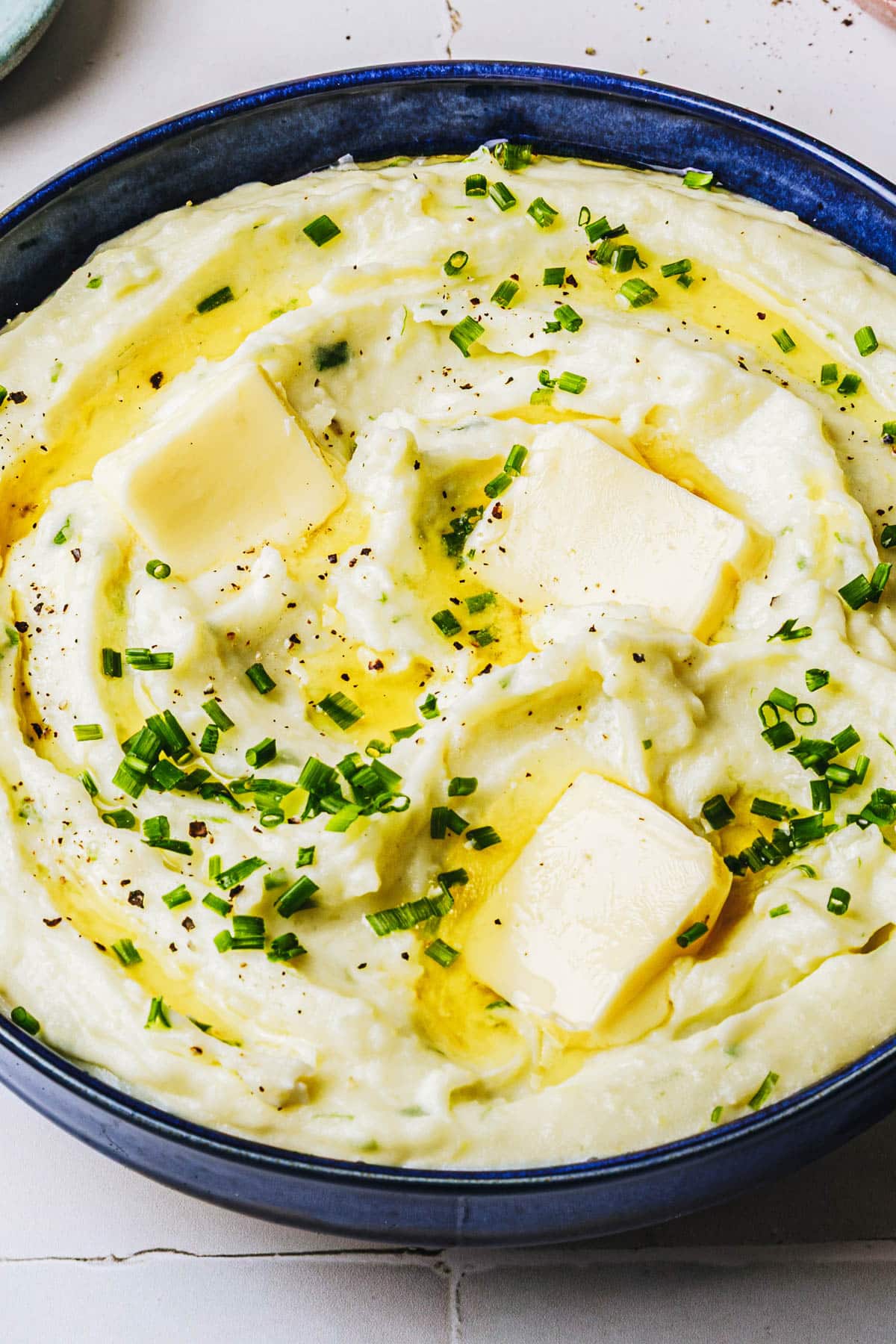
These sour cream mashed potatoes are rich, creamy, and perfectly fluffy every time. With just 5 simple ingredients and 30 minutes, the foolproof recipe gets its smooth texture and subtle tang from sour cream (no gluey potatoes in sight)!
Using buttery Yukon Gold potatoes and the right mashing technique ensures a smooth, creamy texture every time. For more potato sides, try my garlic mashed potatoes and mashed sweet potatoes, or browse all our potato side dishes.
Photos by BEA MORENO
Table of Contents
Before You Get Started
- Use Yukon Gold potatoes. They have less starch than Russets, which means they absorb less water when boiled and stay beautifully creamy when mashed. They also have a naturally buttery flavor that doesn’t need much help.
- Cut potatoes into uniform pieces. Evenly-sized 1-inch cubes ensure every piece cooks at the same rate, preventing some from turning mushy while others stay hard.
- Salt the water generously. This is your only chance to season the potatoes from the inside out. The water should taste like the ocean.
- Dry the potatoes completely before mashing. After draining, return the potatoes to the pot and shake over low heat for about 1 minute. Excess moisture prevents fluffy texture and can make potatoes gluey.
- Don’t overmix. Once you add the dairy, mix just until combined. Overworking releases too much starch and creates a gummy, paste-like texture instead of light, fluffy potatoes.
Why This Recipe Works
The secret to these creamy sour cream mashed potatoes is starting with starchy Yukon Golds, which mash smoothly without becoming gluey. Mashing them while warm and adding room-temperature butter, milk, and sour cream helps the potatoes absorb the fat evenly for a rich, fluffy texture.
How to Make Sour Cream Mashed Potatoes
Step 1: Boil the Potatoes
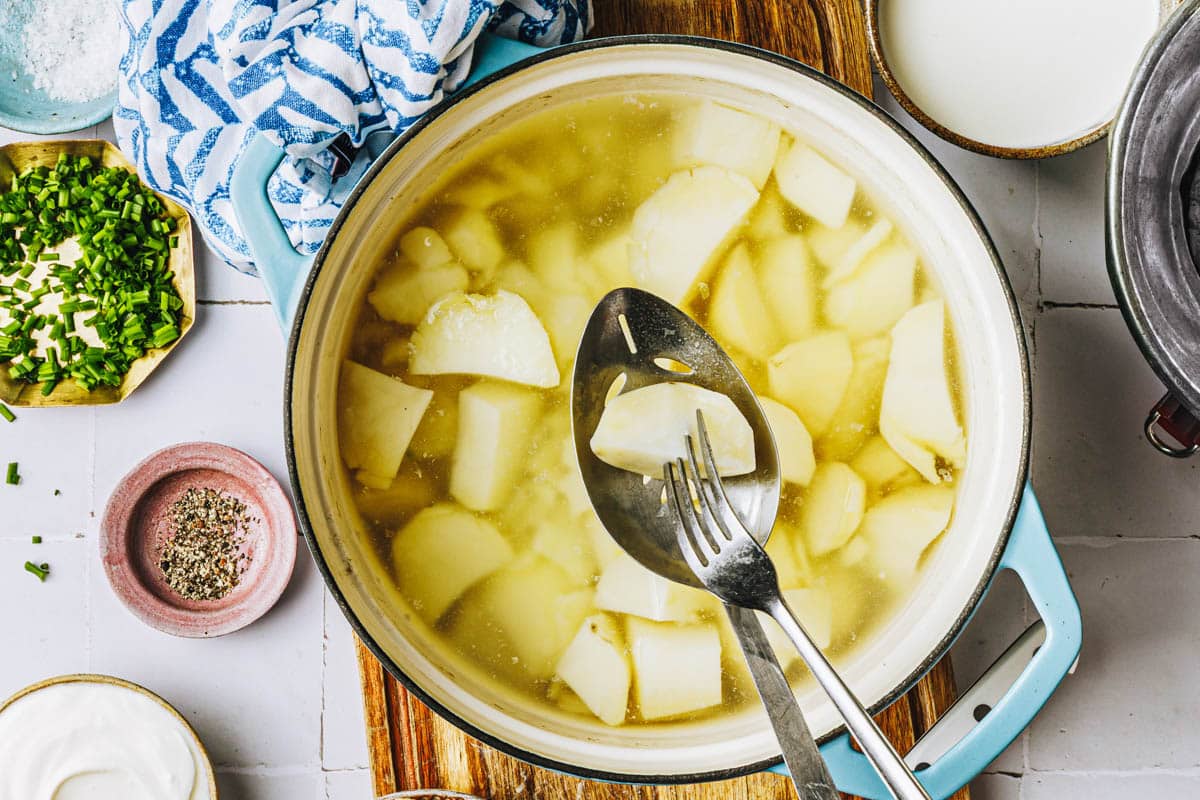
Start with the potatoes in a pot of cold, salted water. Bring it to a boil, then reduce to a simmer. This ensures even cooking from the outside in. Cook until the potatoes are very tender when pierced with a knife; about 10-12 minutes after the water starts simmering. You should be able to slide the knife in with almost no resistance.
** Pro Tip: Don’t skip salting the water generously. This is your main opportunity to season the potatoes themselves, not just the surface.
Step 2: Drain and Dry
Drain the potatoes thoroughly in a colander, then return them to the hot pot. Place the pot over low heat and gently shake for about 1 minute. You’ll see steam rising (that’s the excess moisture evaporating). This step is critical for fluffy texture.
** Quick Note: If the potatoes seem to be sticking or starting to brown, remove from heat immediately. You just want them dry, not fried.
Step 3: Mash the Potatoes
Use a potato masher, ricer, or food mill to mash the potatoes until smooth. A ricer gives you the fluffiest, smoothest texture, but a hand-held masher works great too. Avoid using a food processor or blender; these tools overwork the starches and create a gluey paste.
Step 4: Add Butter and Milk
Add the butter first and let it melt into the hot potatoes, then gradually add the half-and-half or milk. Start with about 1 cup and add more as needed until you reach your desired consistency. You want them creamy but not runny.
** Pro Tip: Add the dairy gradually. You can always add more, but you can’t take it away. Stop when the potatoes are smooth and hold their shape on a spoon.
Step 5: Fold in Sour Cream and Chives
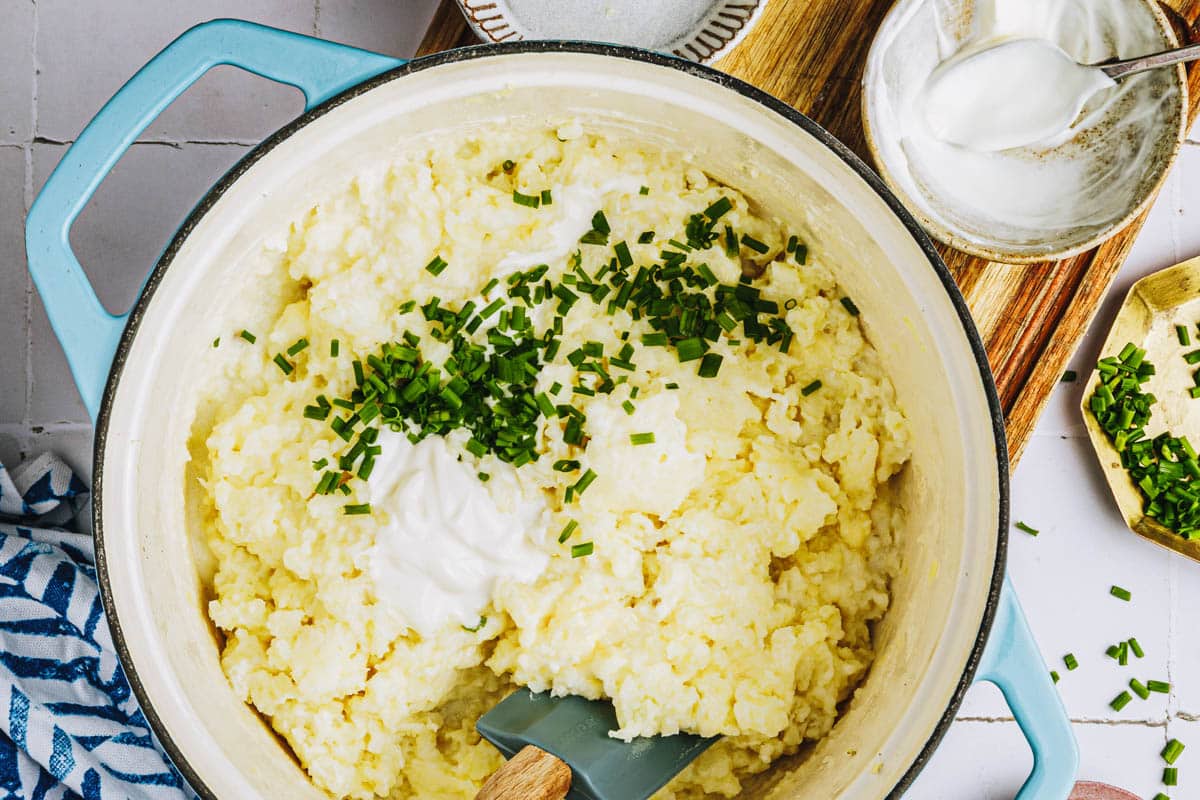
Gently whisk in the sour cream and fresh chives (if using) until just combined. The sour cream will make the potatoes extra thick and velvety. Taste and adjust seasoning with salt and pepper.
Step 6: Serve
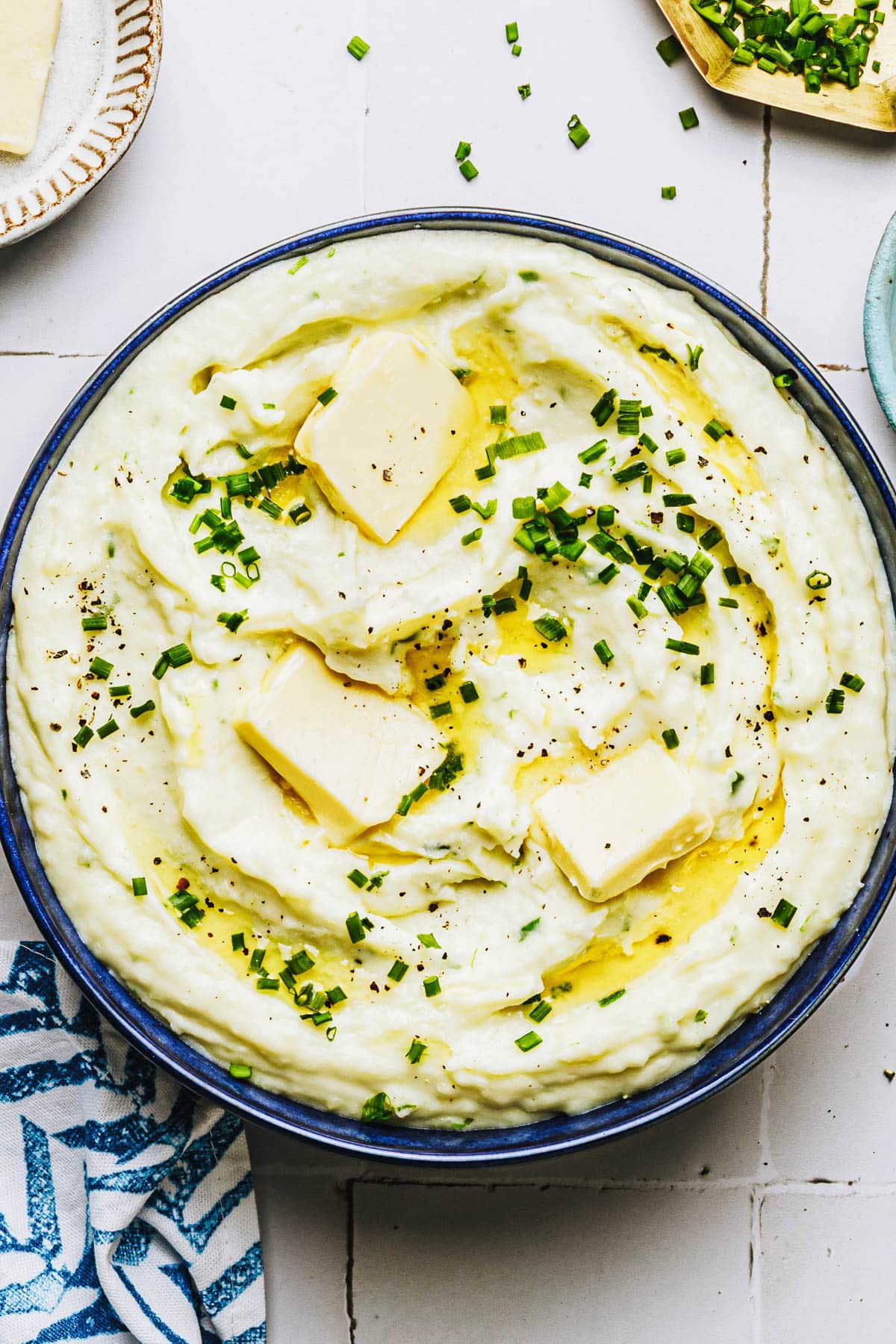
Transfer to a serving bowl and top with an extra pat of butter and a sprinkle of fresh chives if desired. Serve immediately while hot or follow the make-ahead instructions below.
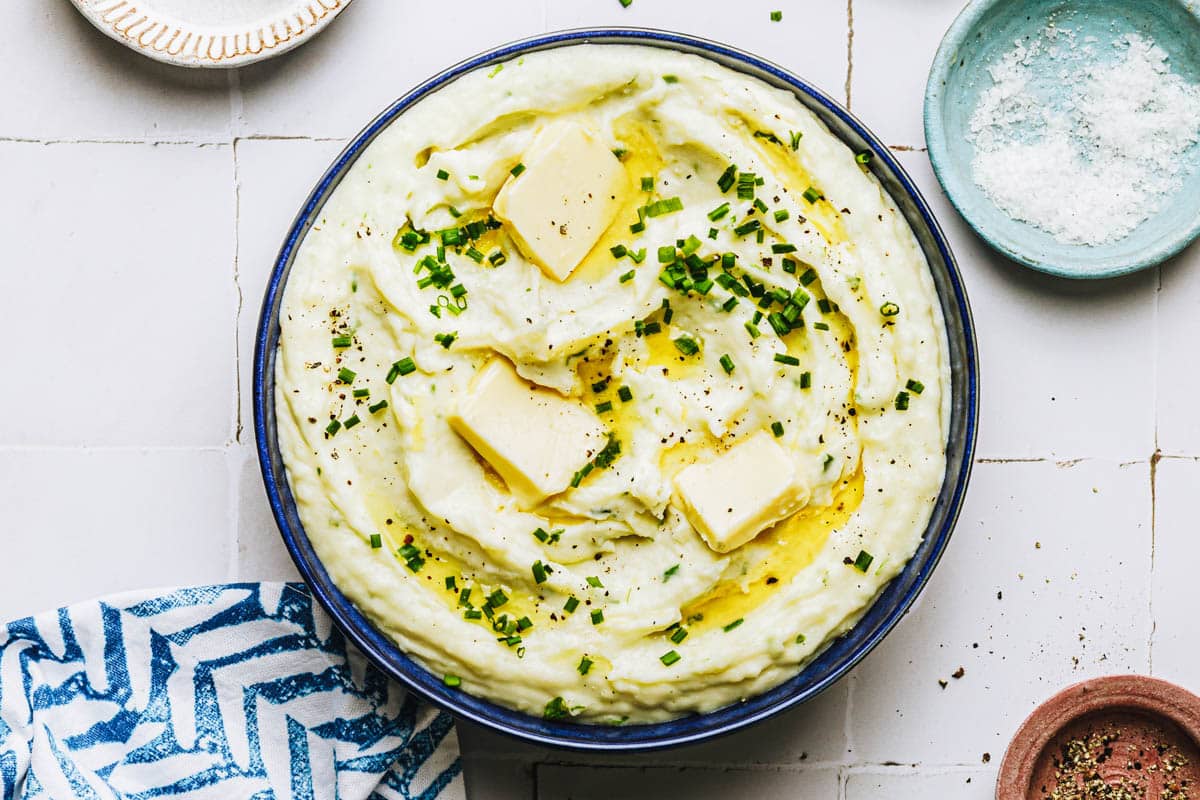
Tips for Perfect Mashed Potatoes
- Start with the right potatoes: Yukon Golds give a naturally creamy, buttery texture.
- Cut evenly: Cube potatoes into uniform pieces so they cook at the same rate.
- Salt the water: Seasoning from the start adds flavor to every bite.
- Drain well: Extra moisture leads to watery potatoes; let them dry briefly over low heat.
- Mash while hot: Warm potatoes absorb butter and dairy more easily.
- Use room-temperature ingredients: Butter, milk, and sour cream blend in smoothly without cooling the potatoes.
- Mash gently: Overworking the potatoes can make them gluey; stop once they’re smooth and creamy.
Variations
- Greek Yogurt Swap: Full-fat plain Greek yogurt can replace sour cream in equal amounts for a similar tang with slightly less richness.
- Cream Cheese Option: Add 4 ounces of softened cream cheese along with (or instead of) the sour cream for ultra-rich, restaurant-style mashed potatoes.
- Garlic Lovers: Stir in 2-3 cloves of roasted garlic or ½ teaspoon garlic powder for subtle garlic flavor.
- Loaded Mashed Potatoes: Top with shredded sharp cheddar cheese, crispy bacon bits, and extra chives for a loaded baked potato vibe.
- Herb Variations: Swap chives for fresh parsley, dill, or a combination of herbs.
- Dairy-Free Option: Use plant-based butter and unsweetened cashew cream or oat milk in place of dairy. Substitute sour cream with dairy-free sour cream or plain dairy-free yogurt.
- Smaller Batch: Cut all ingredients in half for about 4 servings. Cooking times remain the same.
What to Serve with Sour Cream Mashed Potatoes
These versatile mashed potatoes pair beautifully with almost any main dish. Here are some favorite combinations:
- Beef: Mississippi pot roast, slow cooker pot roast, ground beef stroganoff, grilled and marinated beef tenderloin, slow cooker Salisbury steak, homemade Salisbury steak, cast iron steak, cast iron filet mignon, old fashioned Sloppy Joes, beef tips and rice, southern meatloaf, or French onion soup meatballs
- Chicken: chicken Dijon, crispy fried chicken, chicken broccoli pasta casserole, or dump-and-bake chicken marsala
- Turkey: maple glazed turkey breast
- Pork: pineapple glazed ham, smothered pork chops, French onion pork chops, or sausage and cabbage
- Seafood: blackened salmon or grilled scallops
** Pro Tip: These mashed potatoes are also perfect for topping shepherd’s pie or serving alongside roasted root vegetables for a cozy vegetarian dinner.
Storage, Freezing & Make Ahead
Make-Ahead Tips:
- Prep the potatoes: Peel and dice potatoes up to 4 hours ahead. Store covered in cold water in the refrigerator to prevent browning. Drain and rinse before cooking.
- Make fully ahead: Prepare the mashed potatoes completely, cool to room temperature, then cover tightly and refrigerate for up to 3 days. Before reheating, let them sit at room temperature for 30 minutes.
Reheating Methods:
- Oven Method (Best for texture): Transfer the mashed potatoes to an oven-safe dish, cover with foil, and bake at 350°F for 25-30 minutes until heated through. Stir in 2-3 tablespoons of extra half-and-half or butter to refresh the creaminess before serving.
- Slow Cooker Method: Place potatoes in a slow cooker, add a splash of milk or cream, and heat on HIGH for 1 hour or LOW for 2 hours, stirring occasionally.
- Stovetop Method: Reheat in a saucepan over medium-low heat, stirring frequently and adding a splash of milk or cream as needed to restore the creamy texture.
- Microwave Method: Heat in a microwave-safe dish in 1-minute intervals, stirring between each interval, until hot. Add a little extra dairy to keep them from drying out.
Freezing:
- You can freeze mashed potatoes in an airtight container for up to 3 months, but be aware that the texture may become slightly grainy when thawed. To minimize this, add an extra tablespoon of butter or sour cream when reheating.
** Quick Note: Thaw frozen mashed potatoes in the refrigerator overnight before reheating using one of the methods above.
Frequently Asked Questions
When should I add sour cream to mashed potatoes?
Stir in the sour cream after mashing and adding the butter and milk, while the potatoes are still warm. This keeps them creamy and smooth.
How long should I boil potatoes for mashing?
Boil cubed potatoes for about 10-12 minutes, or until they’re very tender when pierced with a knife.
Why are my mashed potatoes gummy?
Overmixing releases too much starch, which makes them sticky. Mash gently and stop as soon as they’re smooth.
Can I make these mashed potatoes ahead of time?
Yes! Prepare them up to 1-2 days in advance, then reheat gently on the stove or in the microwave with a splash of milk.
Can I freeze mashed potatoes with sour cream?
Yes, but be aware that the texture may become slightly grainy when thawed. Let them cool, then freeze in an airtight container for up to 3 months. Thaw in the fridge and reheat until creamy again.
More Potato Recipes

Sour Cream Mashed Potatoes
Equipment
- Potato ricer or potato masher
Ingredients
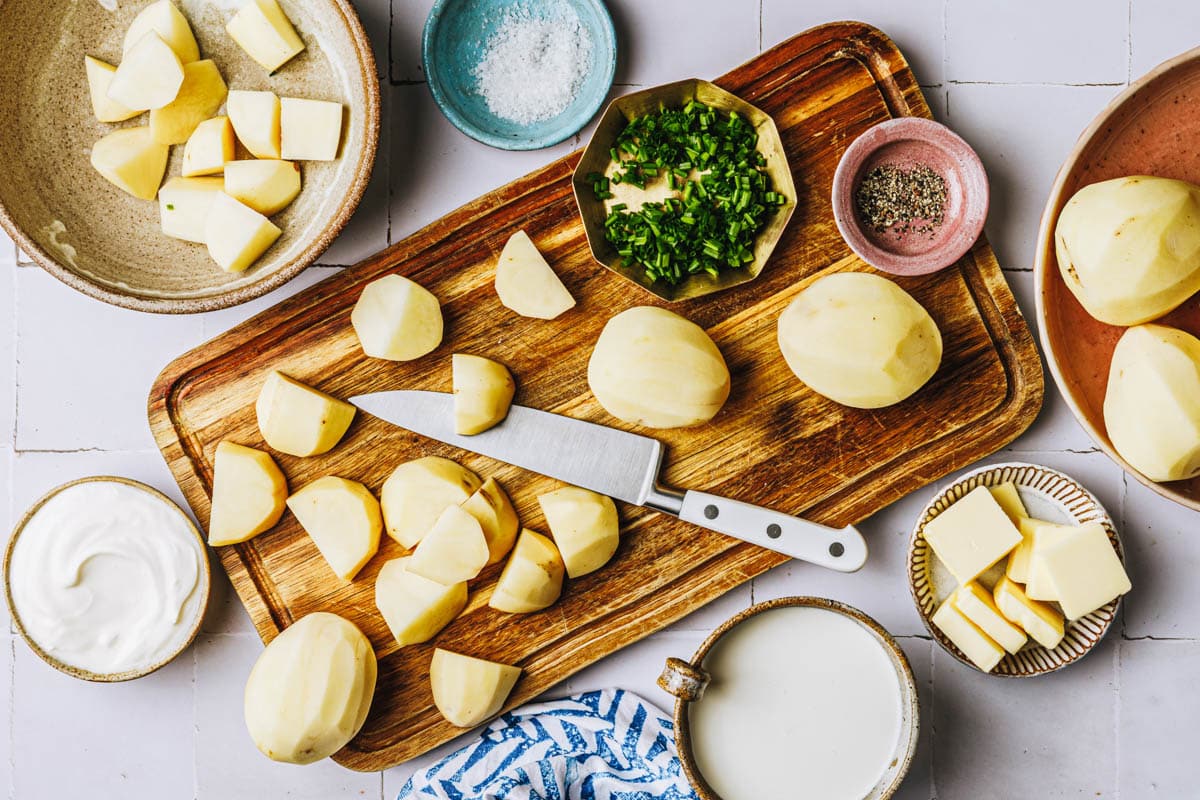
- 3 lbs. Yukon Gold potatoes, peeled and cubed into 1-inch pieces
- Kosher salt and freshly-ground black pepper, to taste
- 6 tablespoons salted butter, diced at room temperature (plus extra for topping)
- 1 ½ cups half-and-half, whole milk, or heavy cream, at room temperature
- ½ cup sour cream, at room temperature
- 2 tablespoons chopped fresh chives, plus extra for garnish
Instructions
- Place potatoes in a large pot. Add enough cold water to cover the potatoes by about 1 inch. Add plenty of salt to the water. Bring to a boil over high heat. Once the water boils, reduce the heat so that the water is simmering. Simmer uncovered until the potatoes are very tender when pierced with a knife, about 10-12 minutes. Drain the potatoes really well; return them to the pot.

- Turn the stove to low heat and gently shake the pan of potatoes over the low flame for about 1 minute, just to make sure that any excess moisture evaporates. You want really dry potatoes!
- Use a potato masher, potato ricer, or food mill to mash the potatoes. Add the butter and enough half-and-half or milk until the potatoes are very creamy (you might not need all of the milk, so add it gradually and stop when the potatoes reach the desired consistency). Whisk in the sour cream and chives until completely combined.
- Taste and season with salt and pepper. Transfer to a serving bowl and top with additional butter or chives, if desired.


Notes
- Use Yukon Gold potatoes for the creamiest texture with less risk of gumminess.
- Salt the water generously; it should taste like the ocean.
- Cut potatoes into uniform 1-inch cubes for even cooking.
- Drain well and dry the potatoes in the pot over low heat for 1 minute before mashing.
- Use a potato ricer or hand masher. I don’t recommend a food processor or blender.
- Bring all dairy to room temperature before adding to prevent separation or cooling.
- Add milk gradually until you reach the desired consistency. Start with 1 cup and add more as needed.
- Don’t overmix after adding dairy. Stir just until combined to prevent a gluey texture.
- Make ahead: Store covered in the refrigerator for up to 3 days. Reheat in a 350°F oven for 25-30 minutes, adding a splash of milk or cream.
Nutrition
Originally published in April, 2021, this post was updated in November, 2025.













Did you make this recipe?
If you enjoyed this recipe, please leave a comment with a 5-star review at the bottom of the post. Thank you!