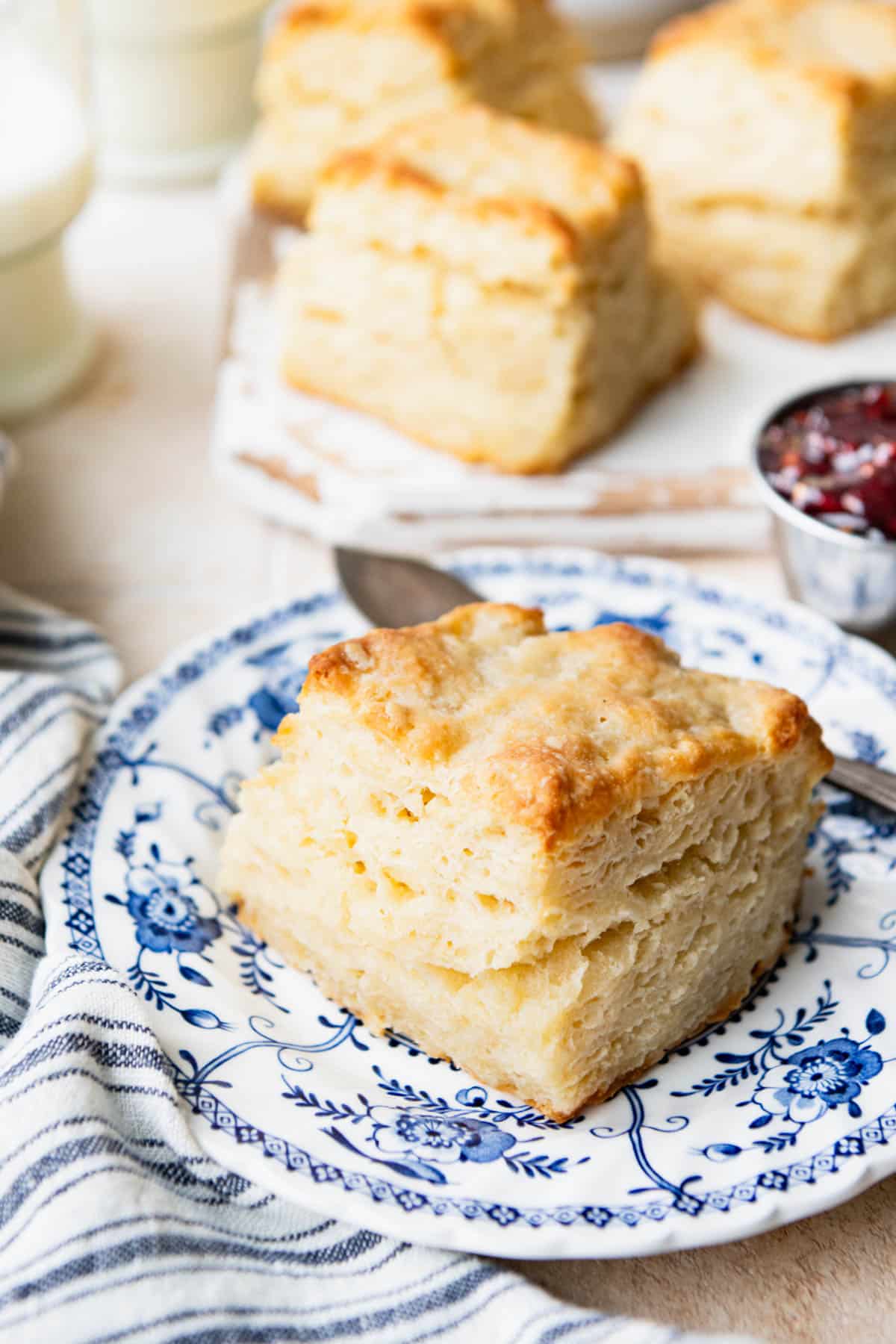
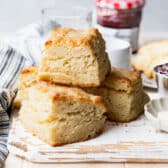
This Southern-style flaky biscuit recipe creates tall, buttery layers with a tender crumb that melts in your mouth. A few simple techniques (cold butter, gentle handling, and stacking the dough) guarantee light, fluffy biscuits every single time.
Buttery flaky biscuits made a regular appearance on our weekend breakfast table when I was growing up, and today I serve them to my own family at least once a week. If you love homemade biscuits, you might also enjoy Aunt Bee’s 3-ingredient biscuit recipe, easy buttermilk biscuits, or 7UP biscuits.
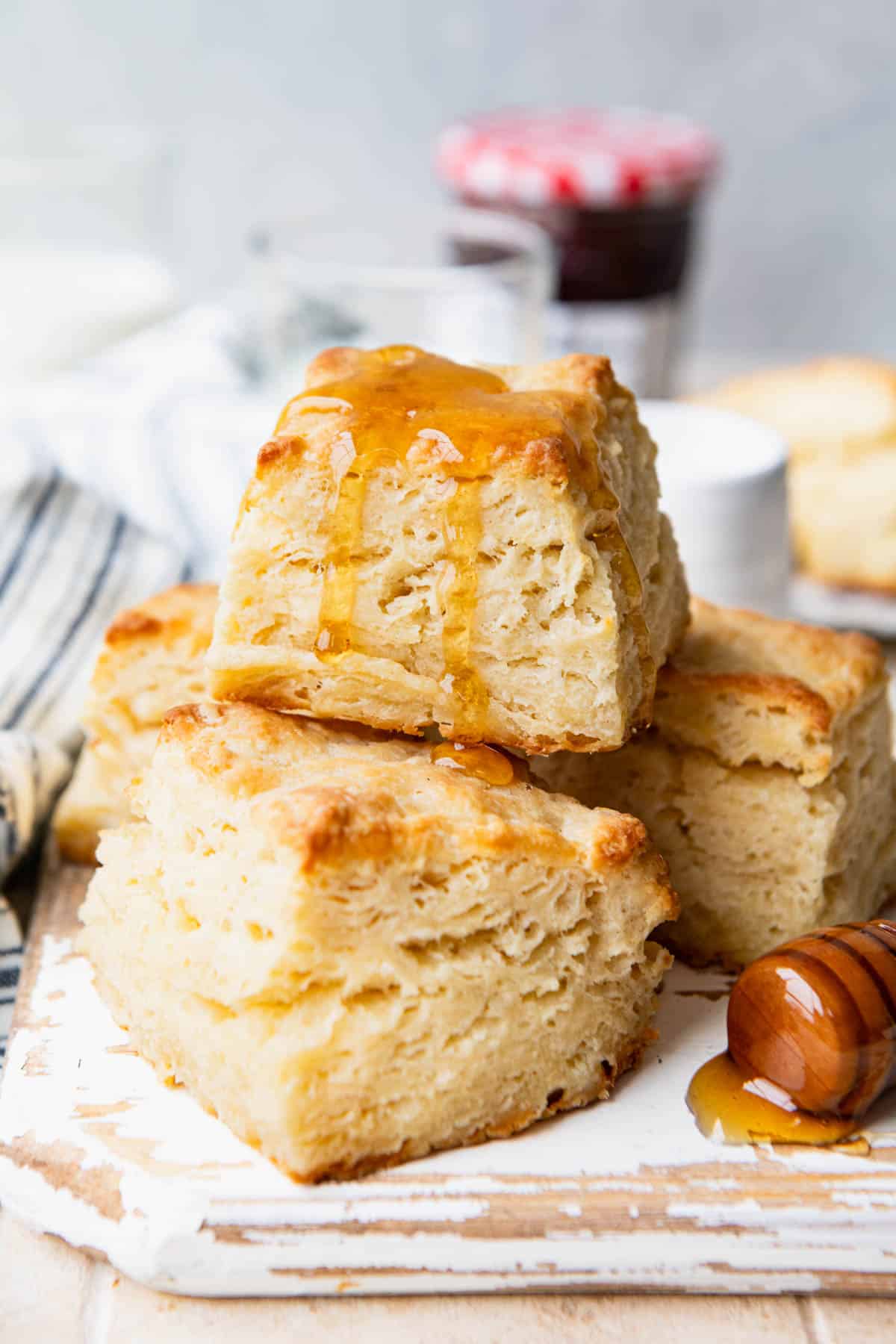
Table of Contents
Before You Get Started
A few key techniques make the difference between good biscuits and truly flaky, mile-high biscuits:
- Keep everything cold. Cold butter creates steam pockets in a hot oven, which is what gives biscuits their flaky layers. Freeze the cut biscuits for 15 minutes before baking for the best rise.
- Measure your flour correctly. Spoon flour into your measuring cup and level it off. Scooping directly from the bag packs the flour too tightly and leads to dense, dry biscuits.
- Don’t twist the cutter. When you twist a biscuit cutter (or press down and turn), you seal the edges and prevent the biscuits from rising tall. Press straight down and lift straight up. This recipe uses a knife or bench scraper instead, which avoids this issue entirely.
- Handle the dough gently. Overworking develops gluten and makes biscuits tough. Mix just until the dough comes together, and pat (don’t knead) when shaping.
How to Make Flaky Biscuits
Step 1: Mix the Dry Ingredients
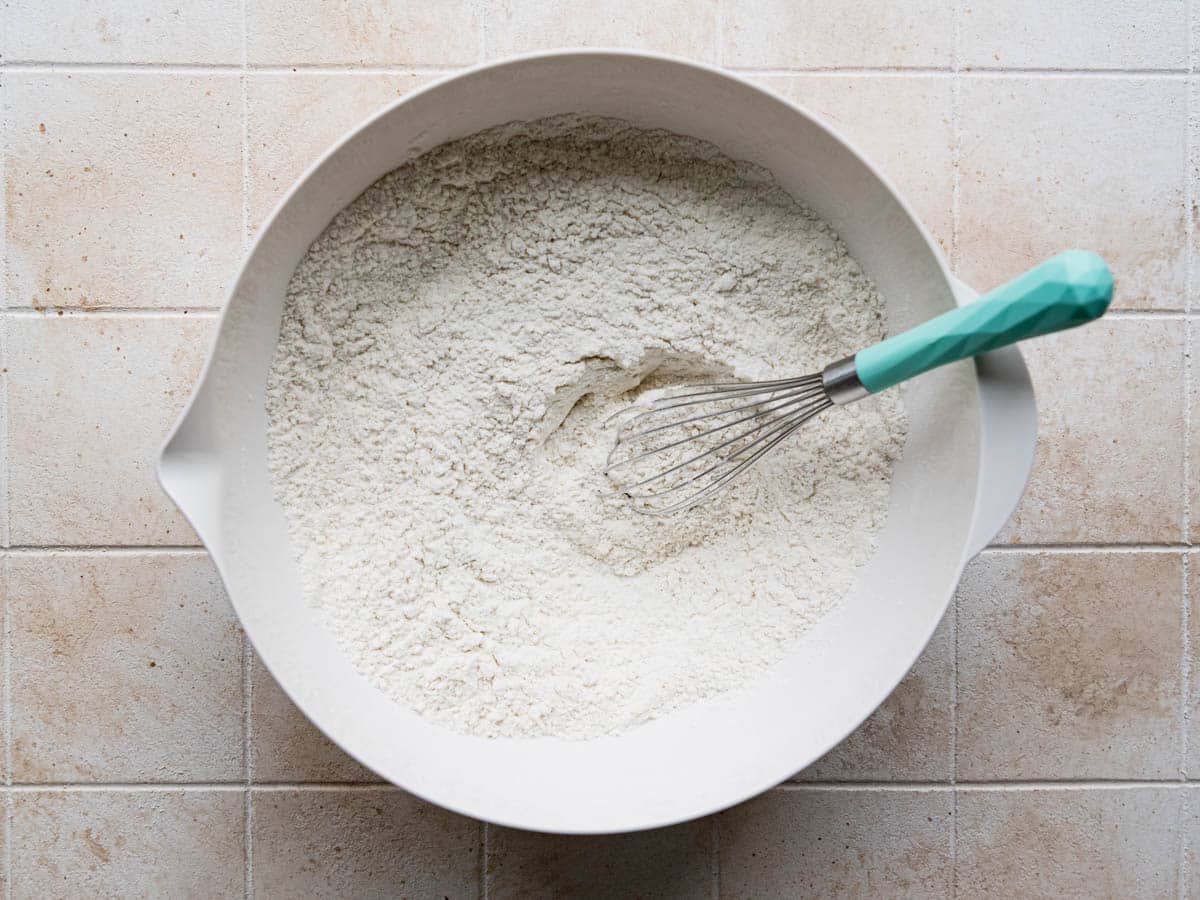
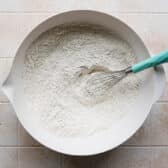
Whisk together flour, sugar, baking powder, salt, and baking soda in a large bowl. I prefer White Lily flour for that classic Southern biscuit texture (it’s a soft winter wheat with lower protein), but any all-purpose flour works.
Step 2: Cut in the Cold Butter
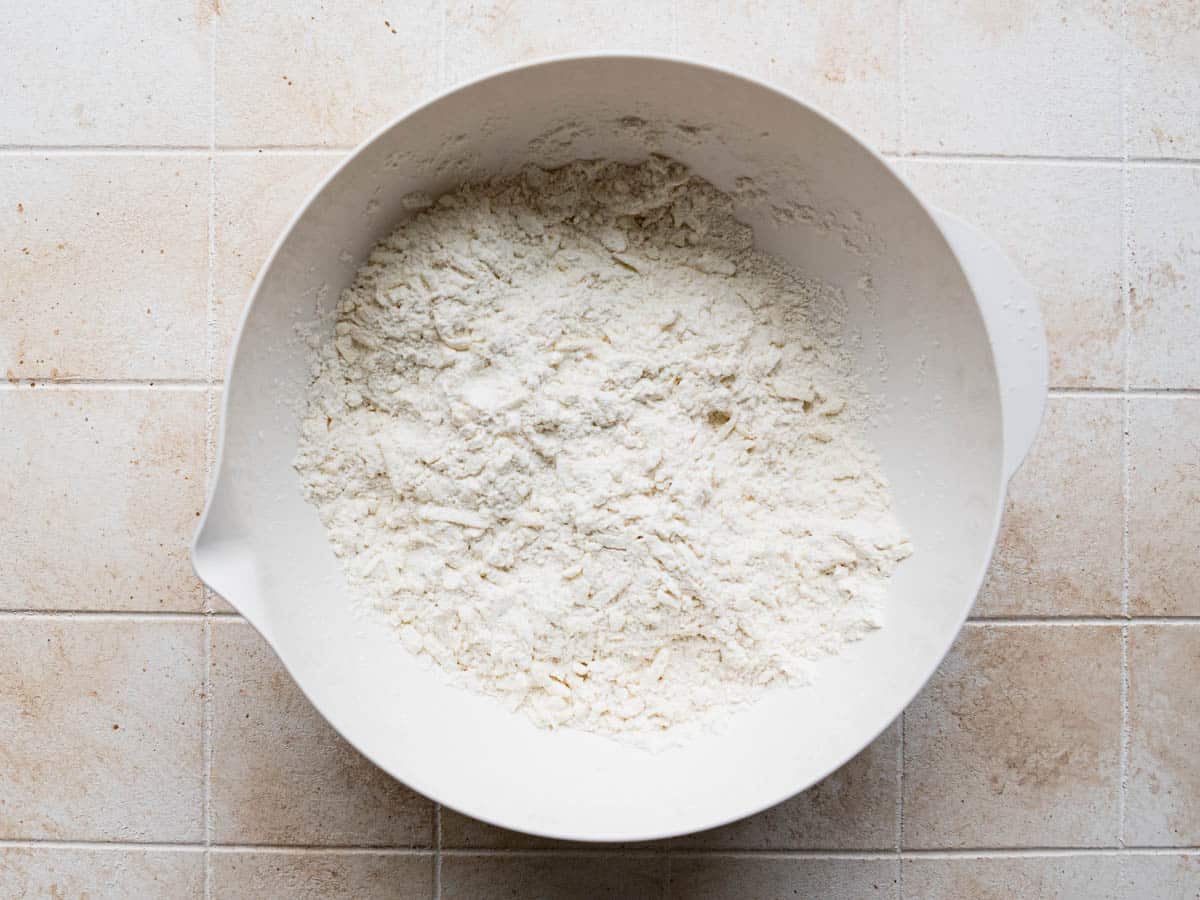
Toss the cubed butter in the flour mixture to coat, then use a pastry cutter, two forks, or the large holes of a box grater to work the butter into the flour. You want pieces about the size of peas. These butter bits are what create those flaky pockets.
** Pro Tip: My parents always grate the butter into the flour mixture on the large holes of a box grater, and then toss those butter pieces in the flour until coated. This is a great, easy trick that I often use, too!
Step 3: Add the Buttermilk
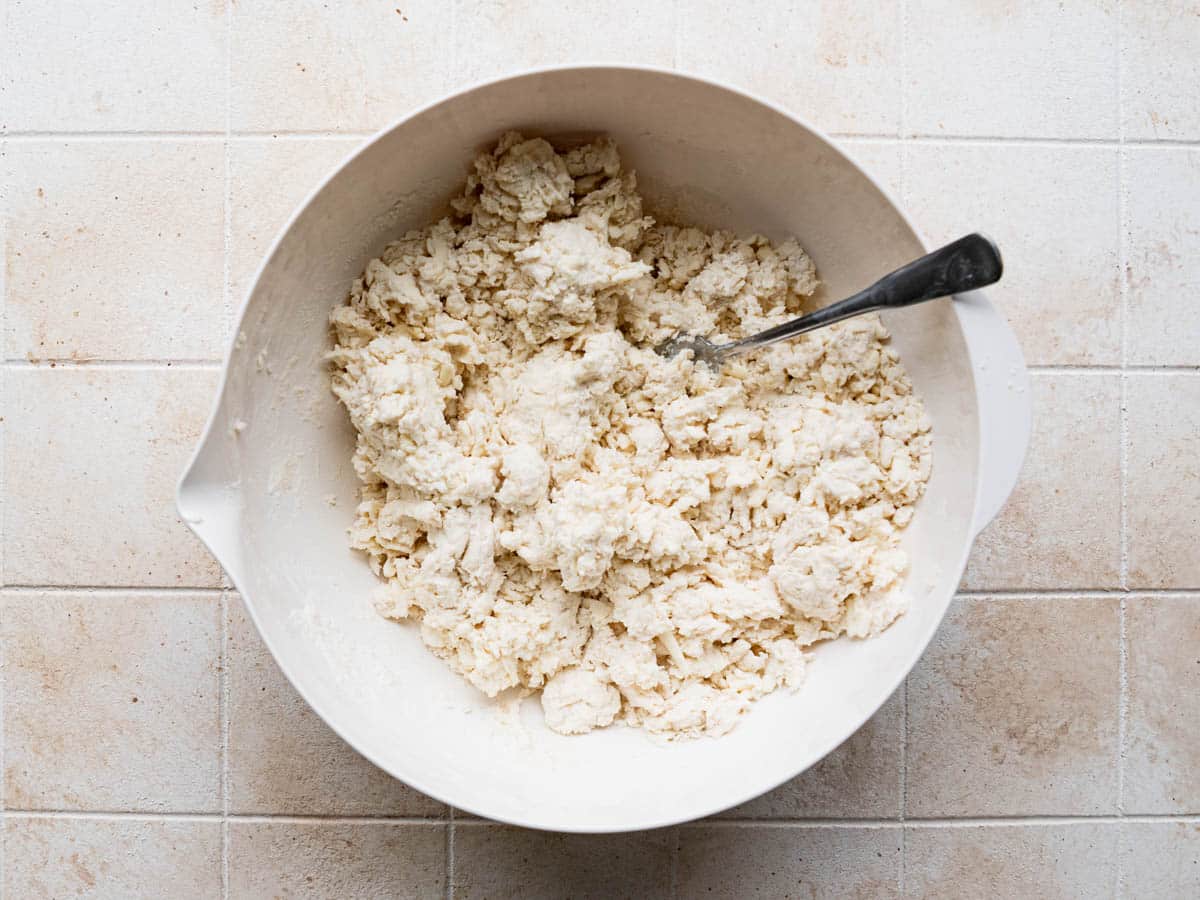
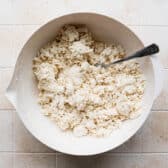
Start with 1 ¼ cups and stir with a fork just until a shaggy dough forms. The dough should be fairly dry (not wet or sticky) but hold together when pressed. If you see dry pockets of flour in the bottom of the bowl, add a little bit more buttermilk.
On humid days, you may need less liquid. On dry winter days, add a splash more buttermilk if the dough feels too crumbly.
** Quick Note: Buttermilk is essential here. The acid reacts with the leavening agents to help the biscuits rise and tenderizes the dough for a softer crumb.
Step 4: Stack and Fold the Dough
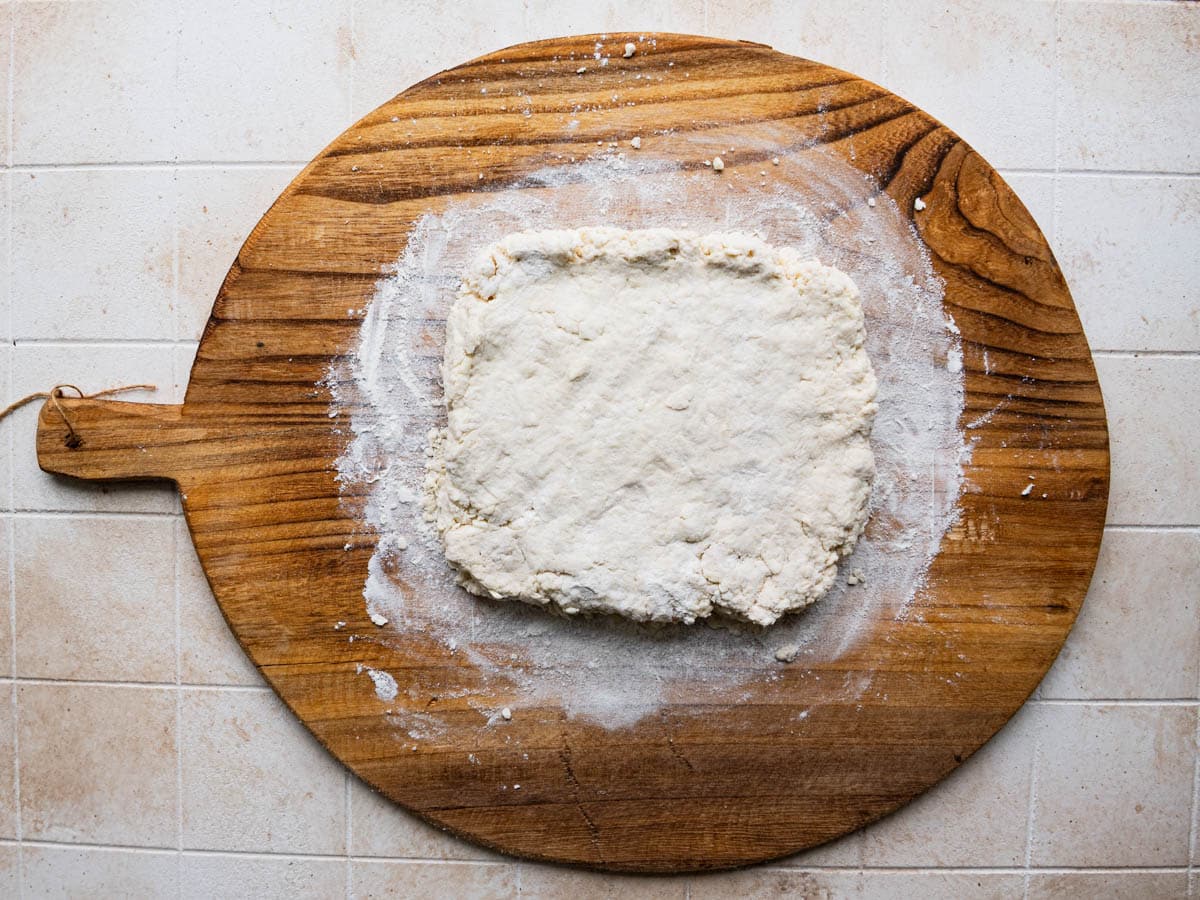
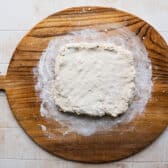
Turn the dough onto a lightly floured surface and pat it into an 8-inch square about 1 inch thick.
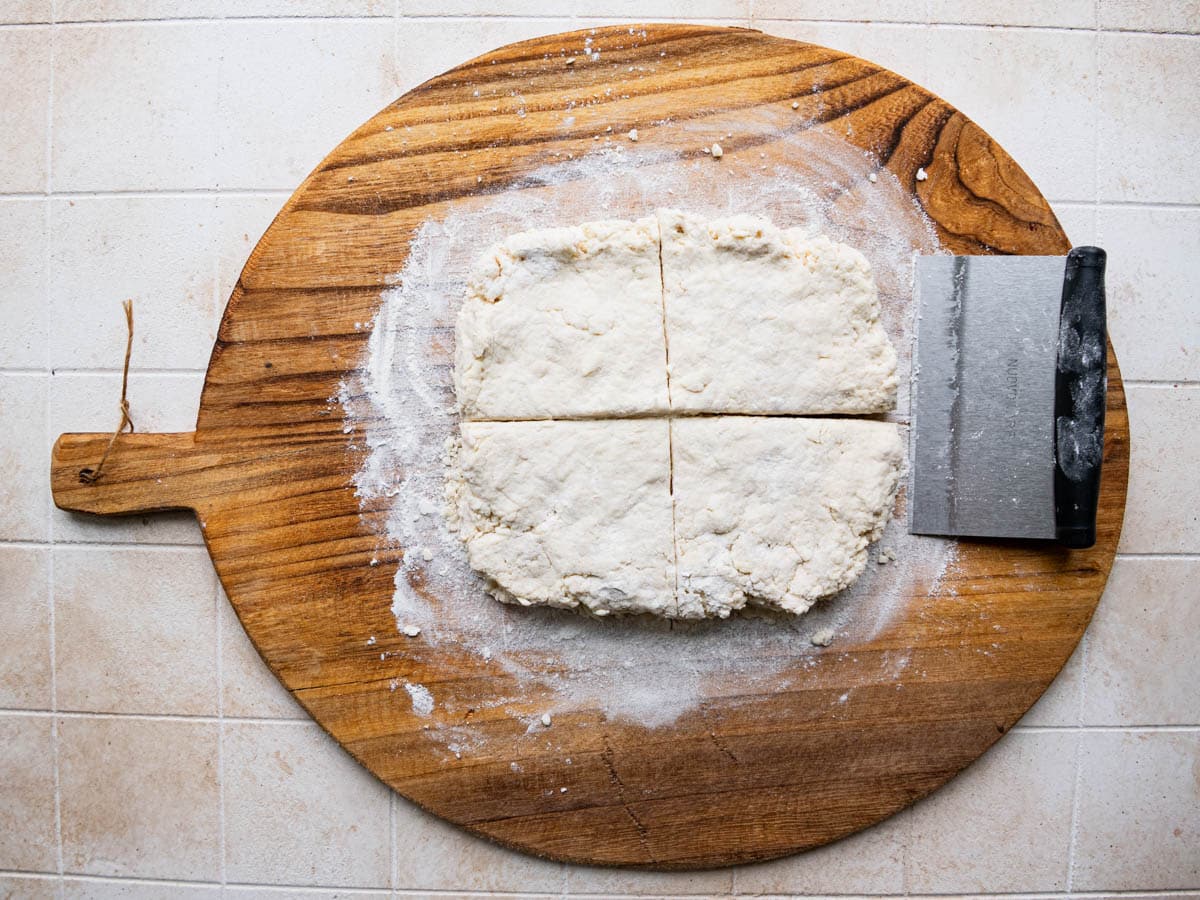
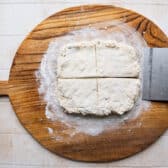
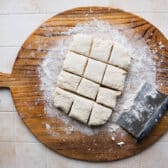
Use a bench scraper or large knife to cut the dough into 4 equal squares, then stack them on top of each other.
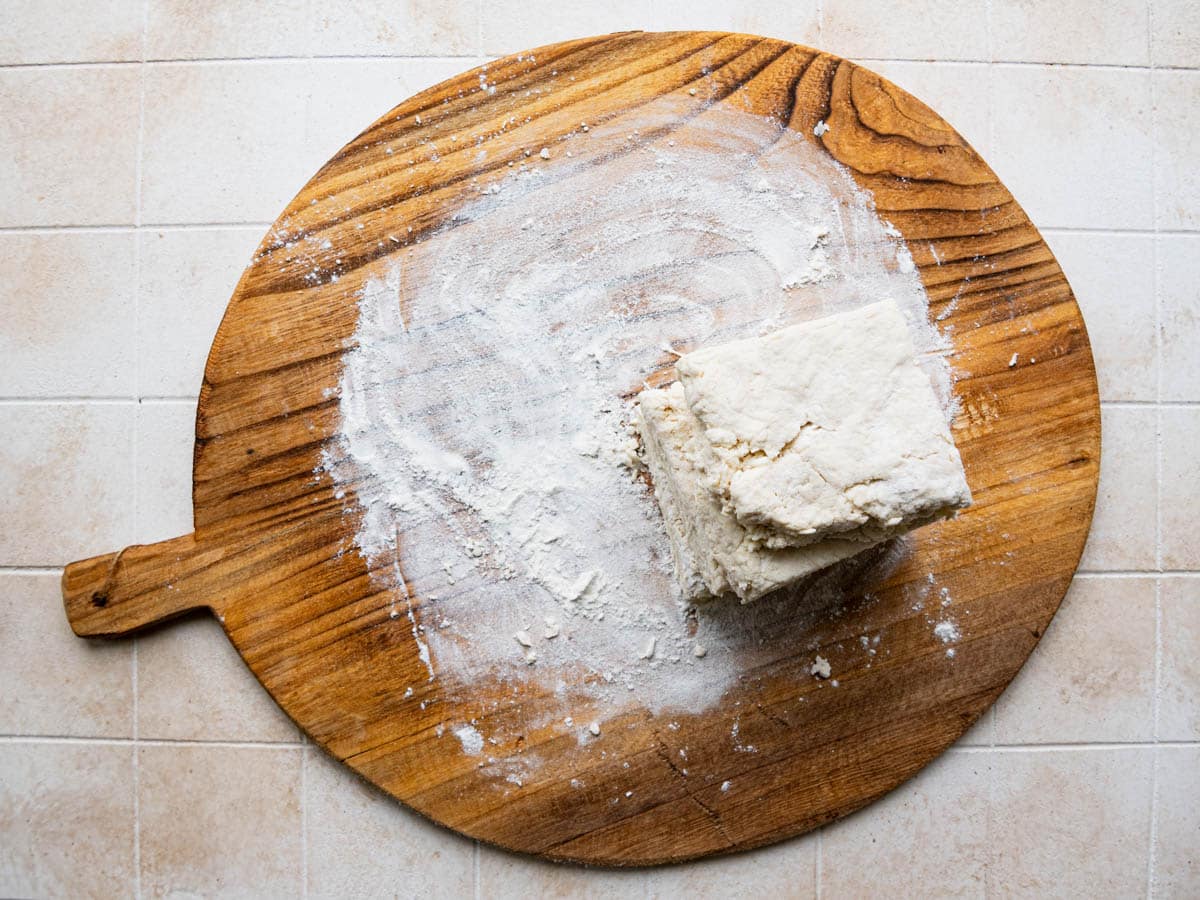
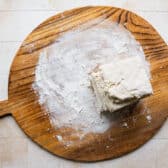
Pat back into an 8-inch square and repeat the cutting and stacking process two more times. This layering technique is what builds those visible flaky layers.
Step 5: Cut Into Squares
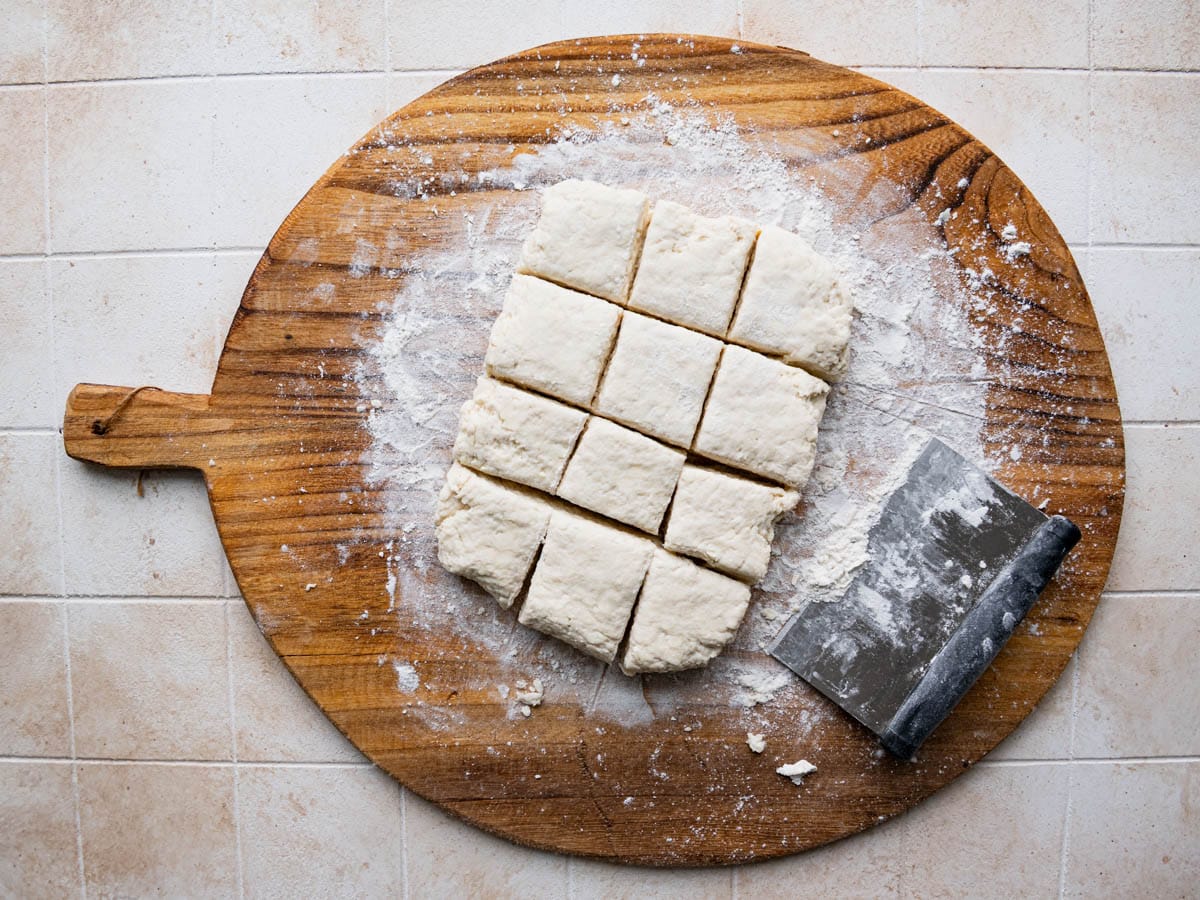
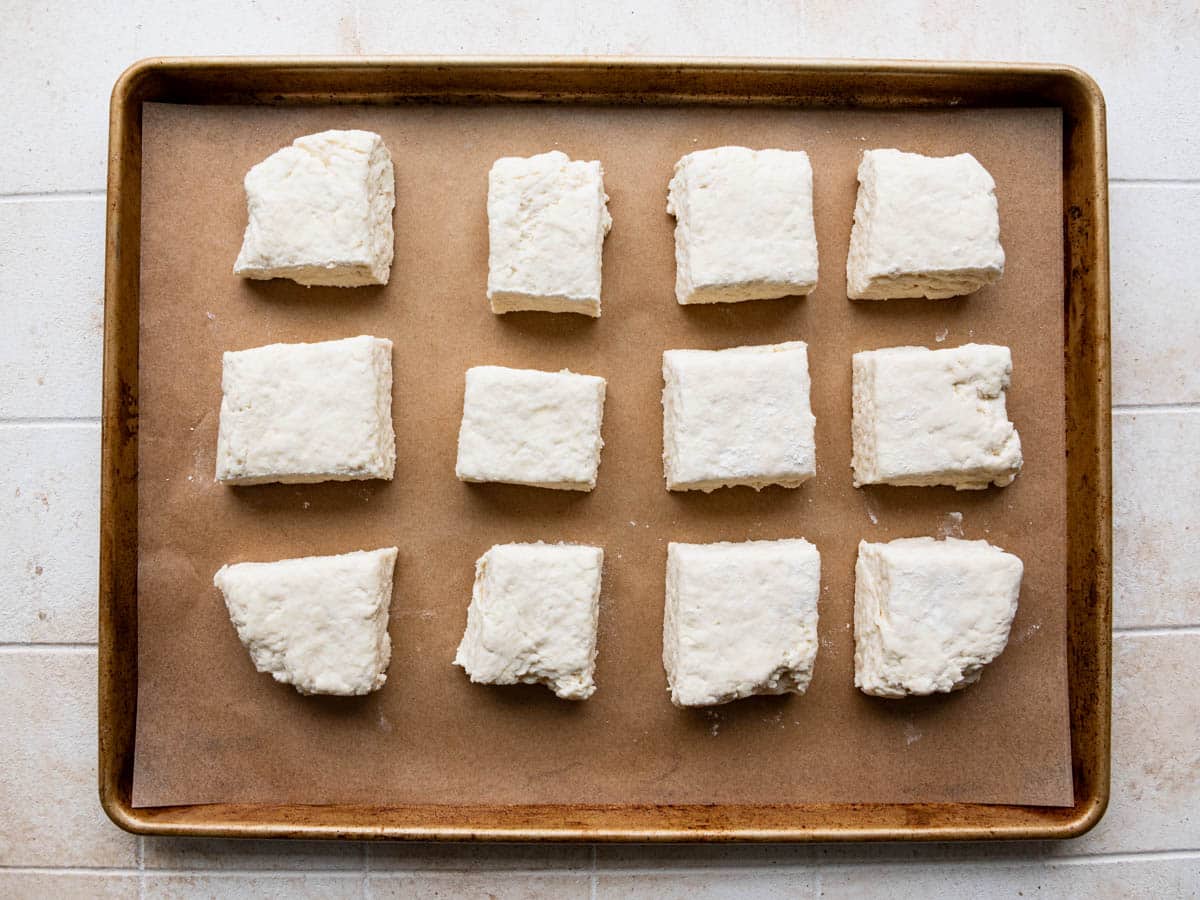
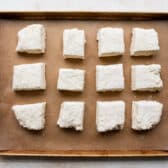
Use a floured knife or bench scraper to cut the dough into 12 to 16 squares (depending on how large you like your biscuits). Arrange them about ½ inch apart on a parchment-lined baking sheet.
Step 6: Freeze Before Baking
Pop the baking sheet in the freezer for 15 minutes while you preheat the oven to 425°F. This keeps the butter cold so it creates maximum steam and lift in the oven.
Step 7: Bake Until Golden
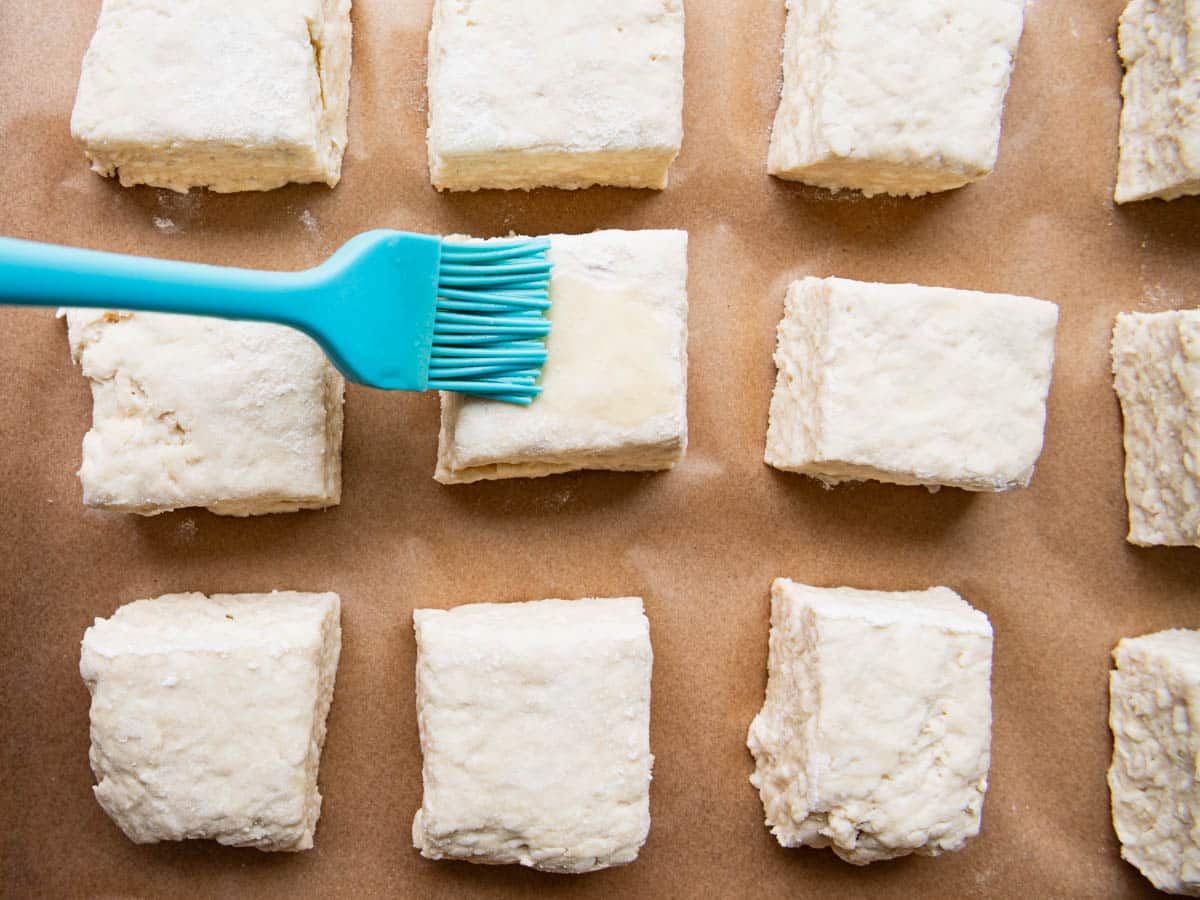
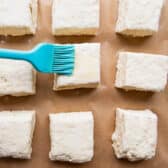
Brush the tops with half of the melted butter and bake for 15 to 18 minutes, until the tops are golden brown and the edges look set. The biscuits should feel light when you pick them up.
Step 8: Brush With Butter and Serve Warm
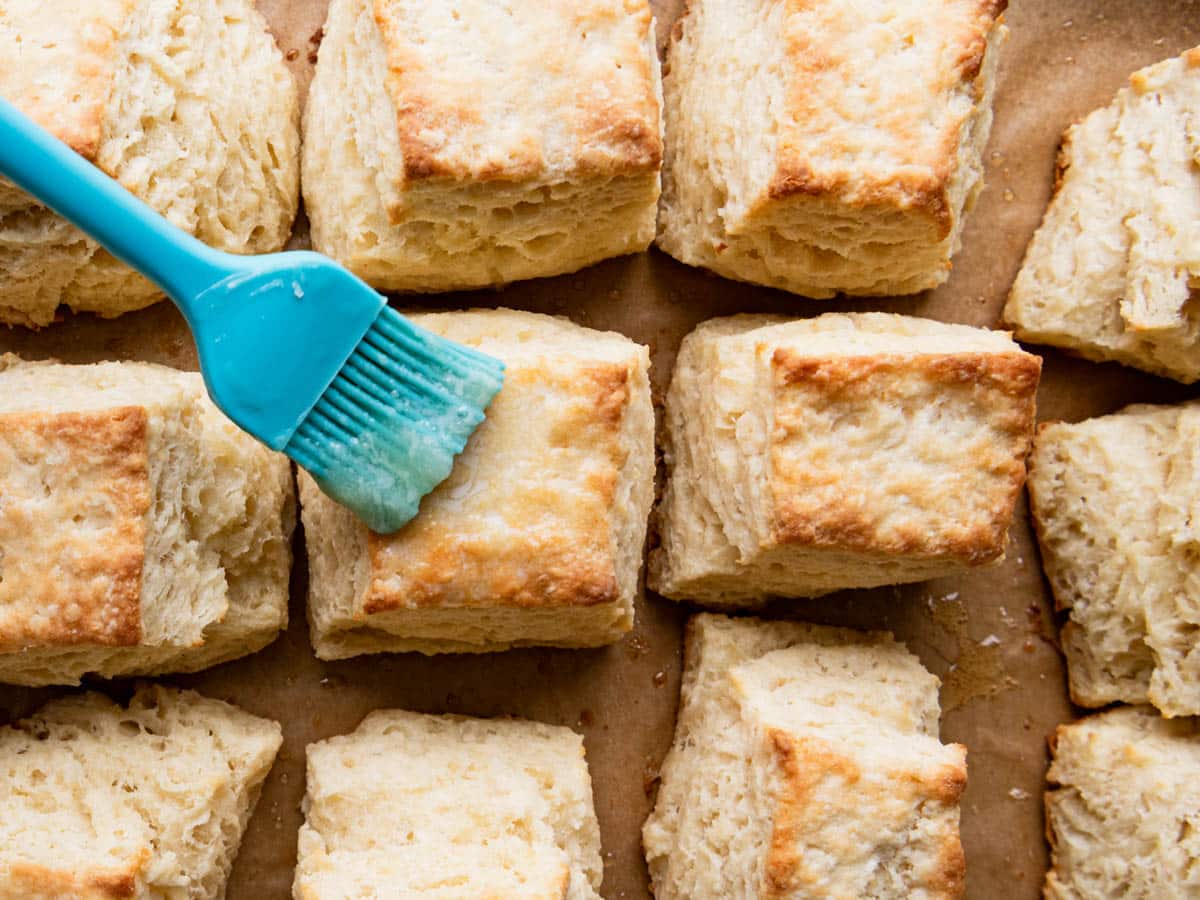
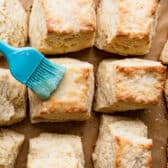
As soon as the biscuits come out of the oven, brush them with the remaining melted butter. Serve immediately for the best texture.
Oh my these are the most fantastic biscuits! I usually fail making biscuits not with this recipe, I followed your directions to the letter & they were perfect. Flaky, tall, tender!
– Annette
Serving Suggestions
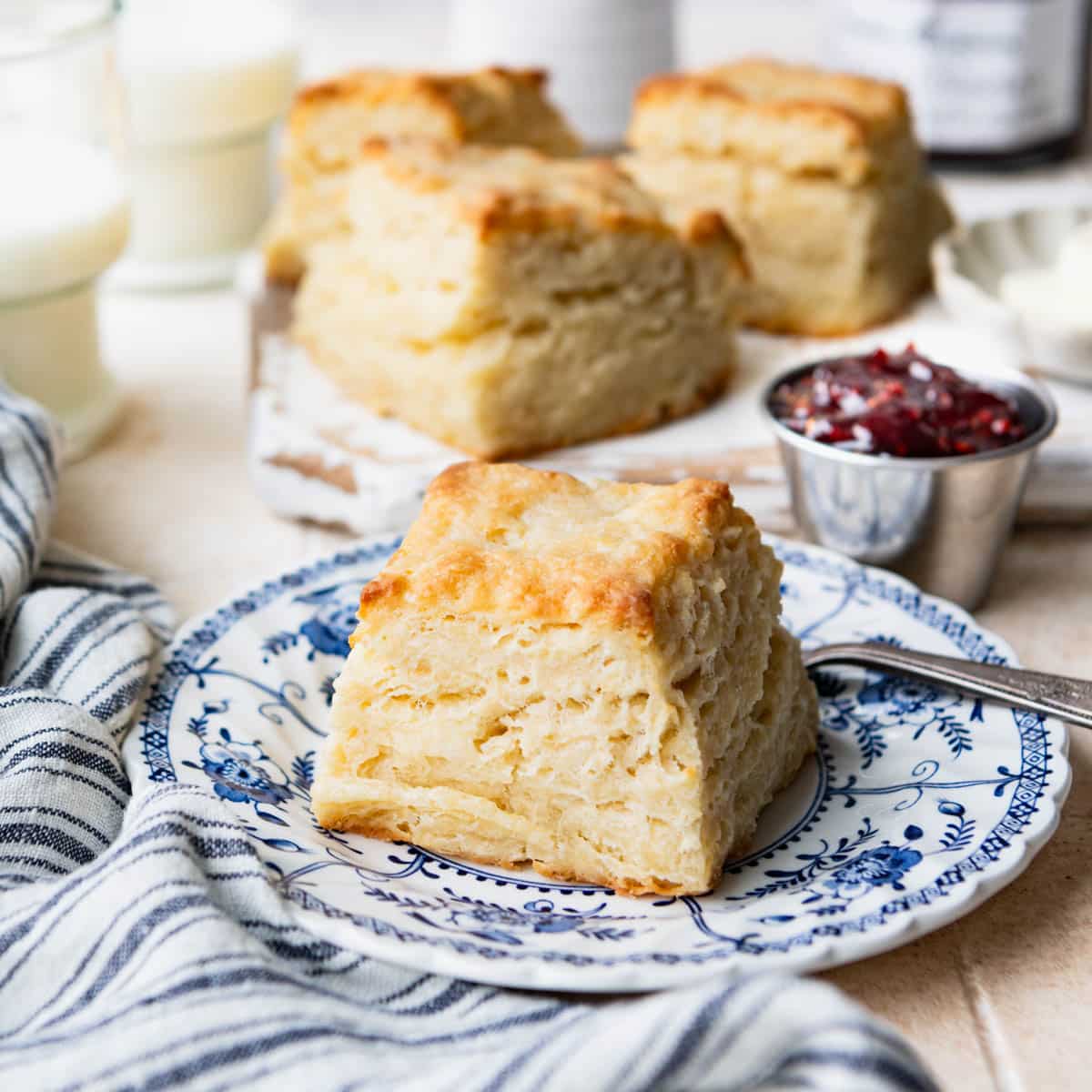
These buttery biscuits work for any meal. For breakfast or brunch, serve them warm with:
They’re also perfect for Biscuits and Gravy, Country Ham Biscuits, or with Corned Beef Hash.
At dinner, add them to the bread basket alongside soups and stews like Ham and Bean Soup, Ham Bone Soup, Beer Cheese Soup, Chicken and Dumpling Soup, Brunswick Stew, Bisque, Corn Chowder, Pork Chili, Beef Chili, or Chili Mac.
They’re also a natural pairing with Ground Beef Stroganoff, Crispy Fried Chicken, Dutch Oven Pot Roast, Slow Cooker Pot Roast, One Pot Chicken and Rice, Hamburger Casserole, American Chop Suey, or a Bisquick Chicken Pot Pie.
Storage, Freezing & Make Ahead
To store: Keep leftover biscuits in an airtight container at room temperature for up to 3 days. Reheat on a baking sheet in a 300°F oven for about 10 minutes to restore that fresh-baked texture.
To freeze baked biscuits: Let them cool completely, then wrap tightly and freeze for up to 3 months. Thaw on the counter or in the microwave for a few seconds, then reheat in the oven.
To freeze unbaked dough: Cut the biscuits and arrange them on a parchment-lined baking sheet. Freeze for about an hour until solid, then transfer to a freezer bag. Bake directly from frozen, adding about 5 extra minutes to the bake time.
Frequently Asked Questions
What makes biscuits flaky?
Flaky layers come from cold butter and the folding technique. When cold butter hits a hot oven, it creates steam that puffs up the dough and separates it into layers. Stacking and folding the dough multiple times builds even more visible layers.
Can I use regular milk instead of buttermilk?
You can make a buttermilk substitute by adding 1 tablespoon of lemon juice or white vinegar to a measuring cup, then adding enough milk to equal 1¼ cups. Let it sit for 5 minutes before using. The results will be very similar.
Why did my biscuits turn out flat or dense?
The most common causes are warm butter, overmixing, or too much flour. Make sure your butter is very cold (freeze it if needed), handle the dough as little as possible, and measure flour by spooning and leveling rather than scooping.
I can make anything, but my biscuits are always just ok. This recipe worked phenomenally and the whole dinner party was raving. Thank you for sharing! I’ll never use a different recipe again.
– Alden
More Biscuit Recipes to Try

Did you make this recipe?
If you enjoyed this recipe, please leave a comment with a 5-star review at the bottom of the post. Thank you!
Watch How to Make It
Flaky Biscuits
Ingredients
- 4 cups (500 g) all-purpose flour (I prefer White Lily brand)
- 2 tablespoons granulated sugar
- 1 ½ tablespoons baking powder
- 1 teaspoon kosher salt
- ¼ teaspoon baking soda
- 1 cup (2 sticks) very cold salted butter, cubed
- 1 ¼ cups very cold whole buttermilk, plus more as needed
- 2 tablespoons melted salted butter, divided
Instructions
- Line a baking sheet with parchment paper. In a large bowl, whisk together flour, sugar, baking powder, salt, and baking soda.

- Add cold butter and toss to coat in the flour. Use a pastry cutter or two forks to cut the butter into the flour mixture until the butter is the size of peas. (Alternatively, you can grate the butter into the flour mixture using the large holes on a box grater. Then toss the butter fingers in the flour mixture with your fingers).
- Add the buttermilk and stir with a fork just until a shaggy dough comes together. Gradually add a little more buttermilk if the dough is too crumbly. It will be fairly dry (not wet and sticky) but should hold together when pressed and you shouldn't see any dry flour at the bottom.
- Turn the dough onto a lightly floured surface. Gently pat into an 8-inch square about 1 inch thick.
- Use a bench scraper or large knife to cut the dough into 4 equal squares.
- Stack the squares on top of each other. Pat or roll into an 8-inch square again. Repeat two more times (cutting into 4 squares, stacking, and patting into a square).
- Use a floured knife or bench scraper to cut the dough into 12 to 16 squares.
- Arrange about ½ inch apart on the prepared baking sheet. Freeze for 15 minutes while you preheat the oven to 425°F.
- Brush the tops of the biscuits with half of the melted butter.
- Bake until golden brown, about 15 to 18 minutes. Brush the hot biscuits with the remaining melted butter.
- Serve warm.
Notes
- Measure flour correctly. Spoon flour into your measuring cup and level it off. Scooping from the bag packs the flour too tightly and results in dense biscuits.
- Keep butter cold. Cold butter is essential for flaky layers. If your kitchen is warm, pop the cubed butter in the freezer for 10 minutes before starting.
- Don’t skip the freeze. Freezing the cut biscuits for 15 minutes before baking helps them rise taller.
- Buttermilk substitute: Add 1 tablespoon of lemon juice or white vinegar to a measuring cup, then add enough milk to equal 1¼ cups. Stir and let sit 5 minutes before using.
- Storage: Keep leftovers in an airtight container at room temperature for up to 3 days. Reheat in a 300°F oven for about 10 minutes.
- Freezing: Freeze unbaked biscuits on a baking sheet until solid, then transfer to a freezer bag for up to 3 months. Bake from frozen, adding about 5 extra minutes.
Nutrition
Originally published in August, 2021, this post was updated in December, 2025.













I’ve never been able to master biscuits, always been my Achilles heel of baking.These were the best biscuits I’ve ever had! Thank you so much ☺️
This makes me so happy to hear, Tanya. Thanks for letting me know!
How do you keep the dough cutter so clean? I am constantly having to stop and unclog mine. Waiting for biscuits to come out of oven. I’m sure they’ll be great
It definitely gets clogged, Rob! In fact, in order to avoid that nuisance, I often use the large holes on a box cheese grater to grate the very cold butter into the flour mixture. That works equally well (as long as the butter is really cold)!
Very good but slightly burned on bottom. This happens every time I make biscuits, no matter the recipe, no matter the baking time. I use parchment paper and a thickish pan. I use two pans and rotate them bottom to top
I’m cursed! It’s not you, it’s me.
Sorry for over-reviewing, but pleasebnote that I used powdered buttermilk (with water) for my liquid. Also I only made a half batch by halving all ingredients, and I still have more than my wife and I can eat. We’ll finish them next week. KIDDING !!! Really great. I did neglect to stack them more than once. But they’re fine. I expected them to be raw on the inside because that usually happens to me. Not this time. Blair for President!!
That’s frustrating, I know. Do you have the same issue when baking cakes, bread, etc? I used to have that problem — my baked goods would get too dark on the bottom before they were done on top or in the middle. I was constantly annoyed and blaming myself. Guess what? I got a nicer, newer oven a few years ago and I’ve never had that problem again. So maybe it’s not you! It might just be that the heat doesn’t circulate as evenly as it should in your oven. 🙂
This recipe makes Emerson biscuits. As in, em’ are sum biscuits. I live in the mountains too.
I love that! Thank you! 🙂
Sorry for over-reviewing, but pleasebnote that I used powdered buttermilk (with water) for my liquid. Also I only made a half batch by halving all ingredients, and I still have more than my wife and I can eat. We’ll finish them next week. KIDDING !!! Really great. I did neglect to stack them more than once. But they’re fine. I expected them to be raw on the inside because that usually happens to me. Not this time. Blair for President!!
Hahaha! Thanks, Rob!
These buttermilk biscuits come out delicious! Thanks for sharing the recipe.
That’s awesome, Denia. Thank you for taking the time to let me know!
I have 2 bags of White Lily self rising flour, how would you recommend I change the baking powder measurement? Thank you!
Hi Jeanne! We haven’t tested this recipe with self-rising flour and can’t say for sure. However, the general rule of thumb is to remove 1 1/2 tsps of baking powder and 1/4 tsp salt for every cup of flour. We hope this helps and would love to know how it turns out if you give it a try!
Looks delicious, simple and just what I was looking for. Thank you.
You’re very welcome. We hope you enjoy!
Best flaky biscuits ever! Perfect delicate crunch!
Thank you, Adrianna! We’re so glad you enjoyed them.
Best biscuits I’ve ever had – we’ve made this our Saturday tradition and I think I’ve now made these five weekends in a row!! Question – my biscuits aren’t nearly as tall and fluffy as yours. Any idea why? What can I do to increase the fluff? Thank you!!
Hi, Bailey! I’m so glad that you enjoy them and that they’ve found a spot in your regular routine! That makes me so happy.
The art of the fluffy biscuit definitely takes some practice, and depends on a number of factors. Here’s what I’d say: make sure that your ingredients (especially your butter) are very cold. Chill the dough after cutting the biscuits to get everything nice and cold again. Measure your flour gently (spoon and level in the measuring cups, don’t scoop, which compacts the flour). Too much flour can make your biscuits heavy. Don’t overwork the dough — a gentle hand keeps them tender and fluffy.
I hope that helps!
Check, check, check on those tips. I could be overworking the dough. Would you recommend adding more buttermilk so I don’t overwork? Or is less moisture better? Thank you!
Hi Bailey!
In general, more buttermilk isn’t the answer for taller biscuits. Too much liquid can actually cause the dough to spread outward instead of rising up, which leads to shorter, flatter biscuits. If the dough feels very dry and crumbly, a tablespoon or two of extra buttermilk is fine, but it’s better to stop mixing earlier rather than add much more liquid!
Make sure you cut the biscuits straight down! Don’t twist the cutter or move the knife back and forth — whichever you’re using.
Exactly! Thanks, Cheri!