I still remember my mom setting a jar of tea out on the deck to brew in the afternoon sun. The method has not changed a bit: two ingredients, no stove, and a few hours of waiting! The only rule that really matters is the clock, and I will show you exactly where that line sits.
More cold drinks for hot days:

Before You Get Started
Sun tea is about as simple as a recipe gets, but the sun does the work slowly and that changes a few of the rules. These three make the difference between a great pitcher and one you should pour out:
- Stop at four hours. Sun tea never gets hot enough to kill bacteria, so the clock matters more than the color. Bring it in and refrigerate it right away.
- Use glass, not plastic. Hours in direct heat can pull flavor and chemicals out of a plastic pitcher and into your tea.
- Sweeten after brewing, not before. Sugar sitting in the jar gives bacteria something to feed on for the entire steep.
How to Make Sun Tea
Tea leaves release their flavor any time they get wet. Heat just speeds the process up. That is the whole idea behind sun tea, and it is also why the container and the timing matter more here than they do with a hot-brewed pitcher.
Step 1: Start With a Clean Glass Jar and Cold Water
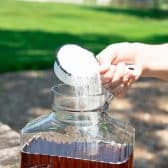
Wash the jar in hot, soapy water first, even if it looks clean. Fill it with cold filtered or distilled water.
Tap water is fine to drink, but it can carry a small bacterial load that a hot brew would take care of and a sun brew will not.
A half gallon jar with a lid is my usual choice. It holds eight cups, which is plenty for an afternoon and still fits in the refrigerator door.
⇢ Skip the plastic pitcher. Glass will not leach anything into the tea while it sits in the heat, and a lid keeps dust and insects out.
Step 2: Add the Tea Bags
For a half gallon, use 2 family-size tea bags or 8 regular-size bags. For a full gallon, double it to 4 family-size or 16 regular.
Ordinary supermarket iced tea bags work perfectly well here, and black tea is the traditional choice. Green tea and herbal blends both brew beautifully in the sun too, they just come out lighter.
Seal the lid before the jar goes outside.
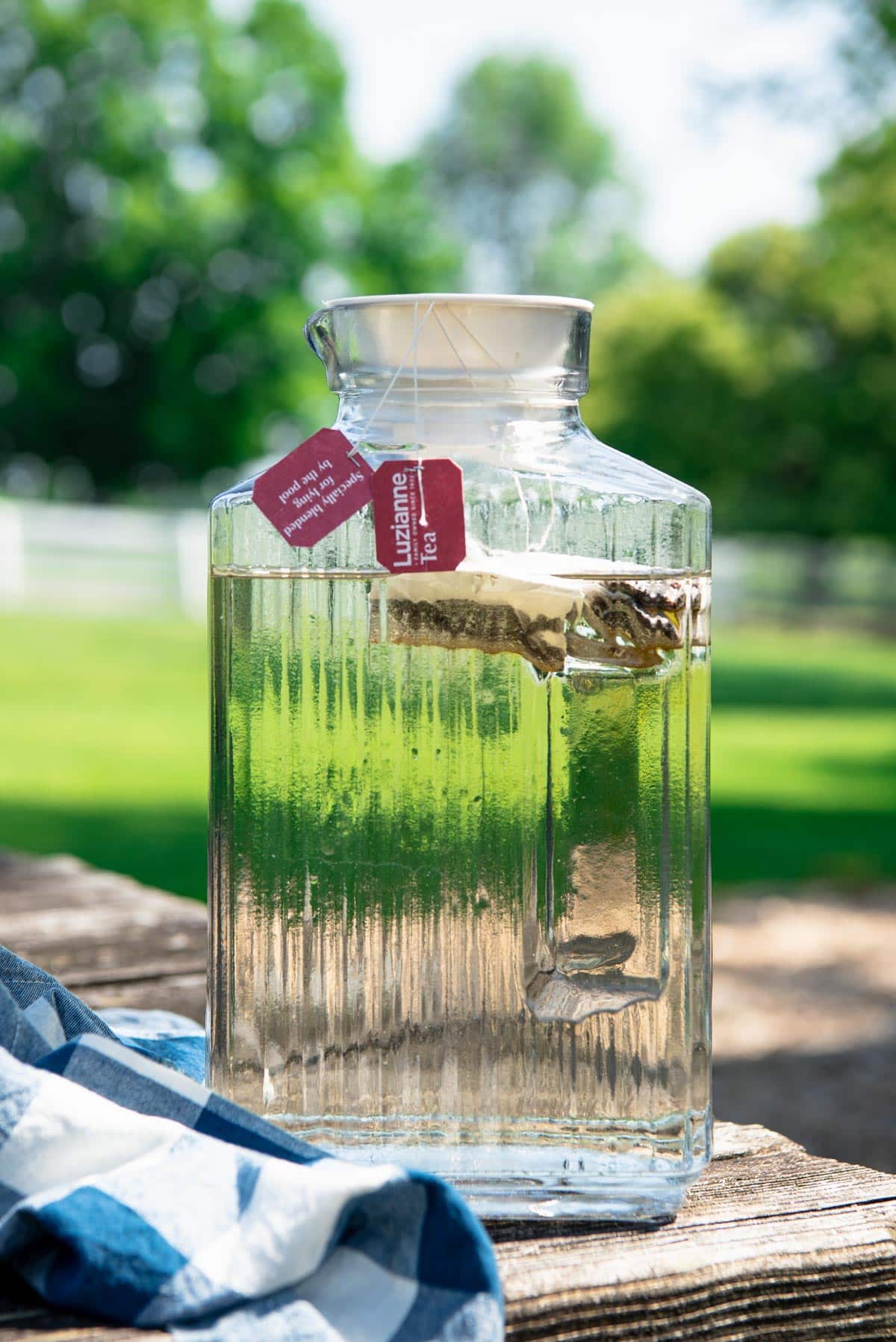
Step 3: Set it in Direct Sun and Watch the Color
Find the sunniest spot you have: a deck rail, a picnic table, a porch step. Then let the color tell you when it is ready rather than the timer.
On a genuinely hot day, an hour may be plenty. On a mild or partly cloudy afternoon, it can take three.
You are looking for a deep amber that is a shade or two lighter than hot-brewed tea. Sun tea is naturally milder, so do not wait for it to match the color of a fresh pot on the stove. It will not get there.
⇢ Four hours is the hard stop. Sun tea tops out around 130 degrees, which is warm enough to brew and far too cool to kill anything. Past four hours you are giving bacteria a comfortable place to multiply, so bring the jar in whether or not it hit the color you wanted.
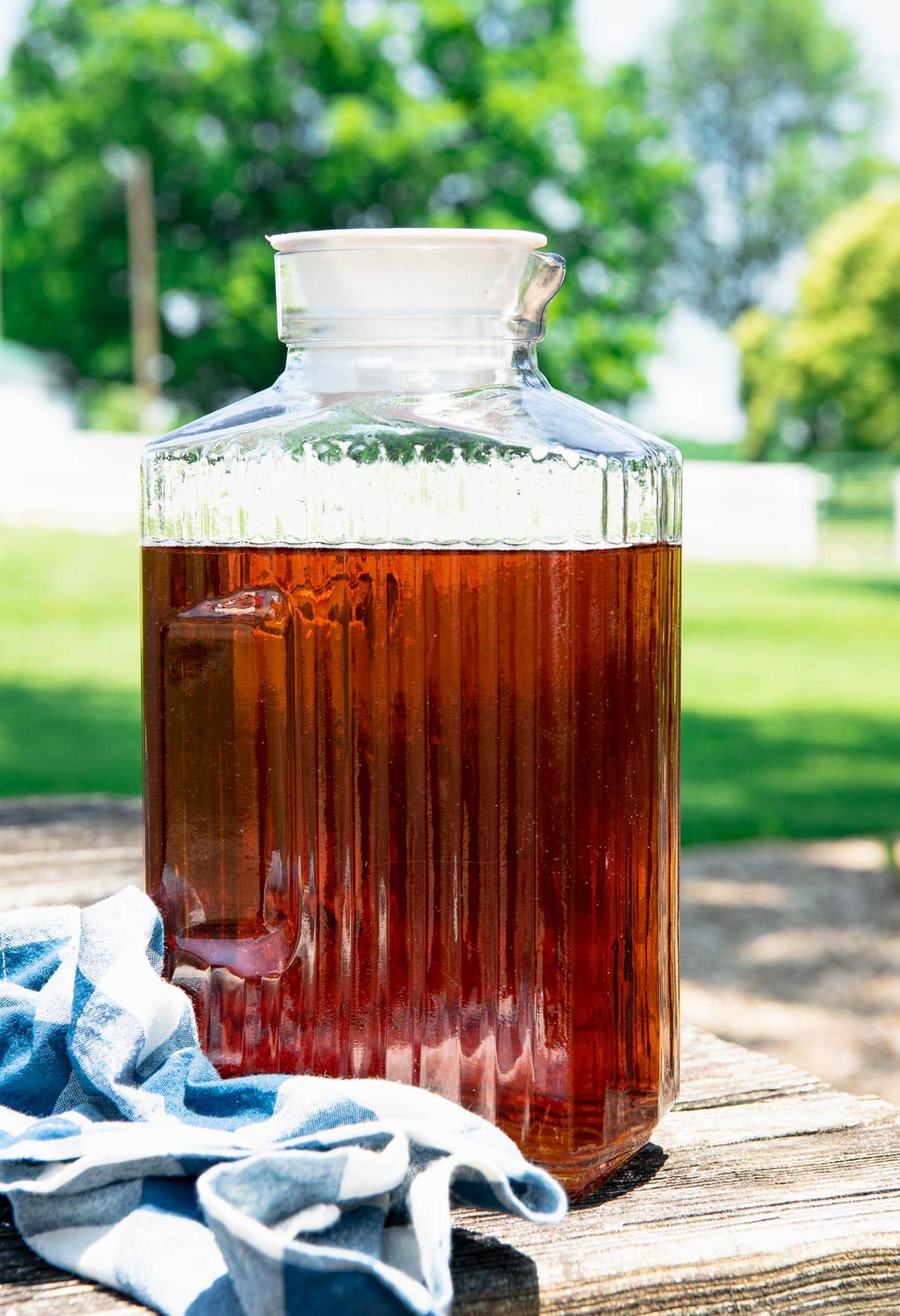
Step 4: Bring it in, Sweeten it, and Chill it
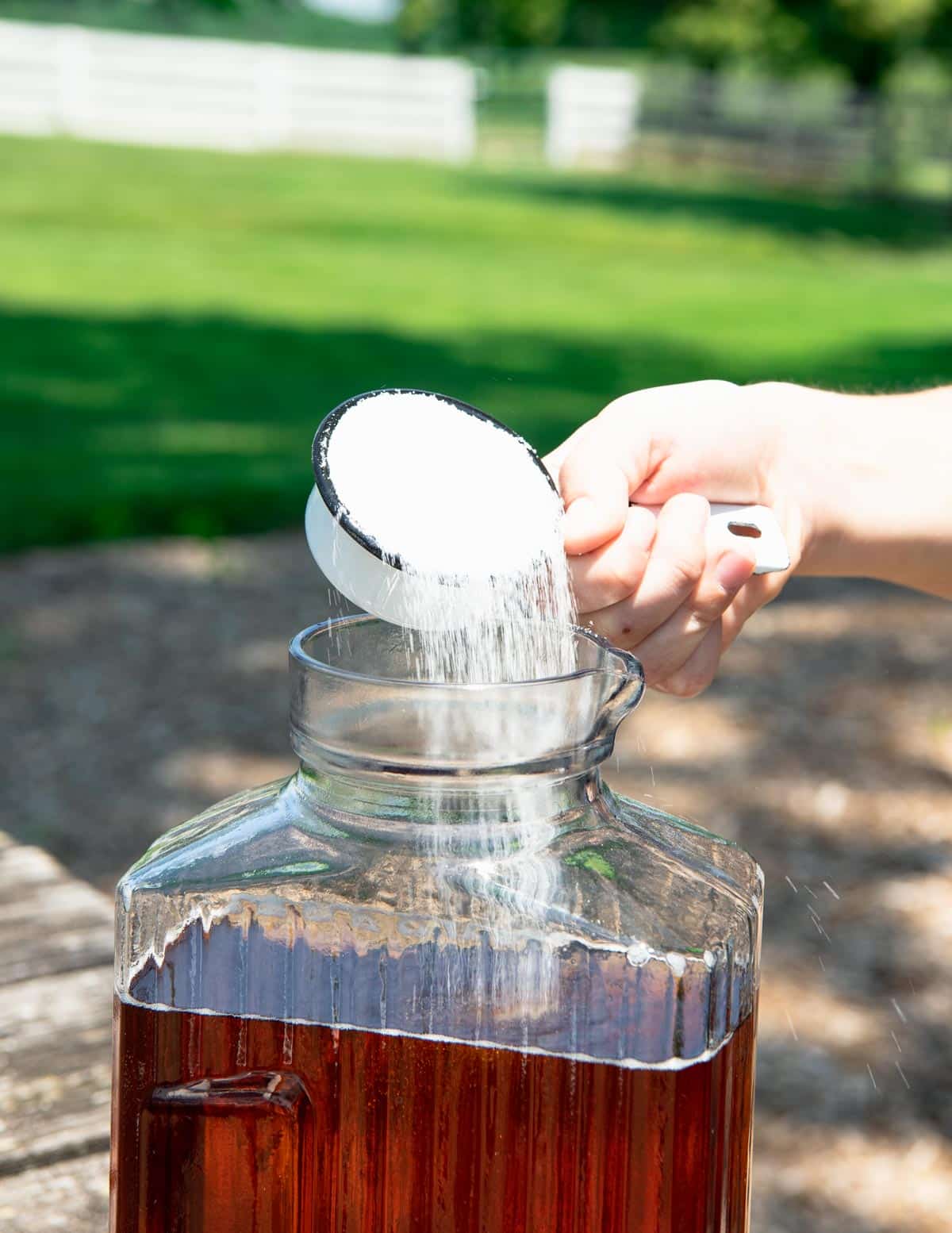
Pull the tea bags out and stir in your sweetener now, while the tea still has some warmth to help it dissolve.
For a half gallon, start with 1/4 cup of sugar for a hint of sweetness or 1/2 cup for something closer to a sweet tea. Honey, agave, and simple syrup all work.
Refrigerator right away: Warm tea sitting on the counter is the part of this recipe that actually causes trouble, not the sun.
Step 5: Serve Over Plenty of Ice
Pour it over a full glass of ice and garnish however you like.
Lemon wedges and fresh mint are the classics. Fresh basil is unexpected and very good, and a handful of berries dropped in the glass looks lovely on a table.

No Sun Today? Brew It in the Refrigerator
This is the method I actually reach for most often, and it is the safest version of cold-brewed tea there is. Bacteria barely multiply at refrigerator temperatures, so the four-hour limit does not apply.
Use the same ratio: 2 family-size tea bags per half gallon of cold water in a clean glass jar. Cover it, put it straight into the refrigerator, and let it steep for 8 to 12 hours. Overnight is easiest. Pull the bags in the morning, sweeten to taste, and it is ready.
The flavor is very close to sun tea, maybe a touch smoother, and you can start a jar on a rainy Tuesday in February if you want to.
Serving
Unsweetened sun tea poured half and half with lemonade makes an Arnold Palmer, which is the single best thing to do with a pitcher on a hot afternoon. If you have a crowd coming, set out a jar of tea, a jar of lemonade, and a bowl of ice and let people mix their own.
Leftover tea has a second life, too. My Sweet Tea Brined Chicken turns the last few cups into a brine that keeps grilled chicken remarkably juicy.
You can also freeze tea in an ice cube tray and use the cubes in the next pitcher so it never gets watered down.
Storage
Store: Keep sun tea covered in the refrigerator and drink it within 3 days. Because it was brewed without heat, it does not keep as long as hot-brewed tea, which is a good argument for making half gallon batches rather than gallons.
Check before you pour: If the tea looks cloudy in a thick or syrupy way, or if you see stringy strands drifting through it, pour it out. That texture is the clearest sign that bacteria have gotten a foothold. Ordinary cloudiness from tannins looks hazy and even, not ropy.
Freeze for later use: Sun tea does not freeze well as a drink, but it freezes beautifully in ice cube trays. Tea cubes keep the next pitcher from getting diluted, and they are useful in a brine or a marinade.
Frequently Asked Questions
Can I make sun tea on a cloudy day or in the winter?
Not in the sun, no. Without real heat the tea barely brews, and a jar sitting out lukewarm for hours is the worst of both worlds. Use the refrigerator method instead. Same ratio, 8 to 12 hours, and it is genuinely safer than sun brewing.
Can I use a plastic pitcher instead of glass?
I would not. Plastic sitting in direct sun for hours can release flavor compounds and chemicals into the tea, and it holds onto odors from whatever it stored last. If glass is not an option, brew in the refrigerator instead, where the heat is not a factor.
How do I know when sun tea is done?
Go by color rather than by the clock. When the tea reaches a deep amber, a shade or two lighter than a hot-brewed pot, it is ready. Pull one tea bag out and taste it if you are not sure. Just remember that four hours is the limit no matter how light it still looks.
How many tea bags do I need for a gallon?
Four family-size tea bags, or 16 regular-size bags. The half gallon batch in the recipe below uses 2 family-size or 8 regular, so the math scales straight up. If you like a stronger pitcher, add one extra bag rather than extending the steeping time.

More Backyard Favorites

Sun Tea
Equipment
- Half gallon glass jar or pitcher with a lid
Ingredients
- 1/2 gallon (8 cups) cold filtered or distilled water
- 2 family-size tea bags (or 8 regular-size tea bags)
- Optional: 1/4 to 1/2 cup granulated sugar, honey, agave, or simple syrup
- For serving: ice, lemon wedges, fresh mint
Instructions
- Fill the jar. Wash a half gallon glass jar or pitcher in hot, soapy water. Fill it with the cold filtered or distilled water.
- Add the tea bags and seal. Drop in the tea bags and cover the jar with a lid.

- Set it in the sun. Place the jar in a spot that gets direct sunlight and let it steep for 1 to 4 hours, until the tea reaches a deep amber color. Do not leave it out longer than 4 hours.
- Sweeten while warm. Remove the tea bags. Stir in the sweetener, if using, until it dissolves completely. Start with 1/4 cup for a hint of sweetness.
- Refrigerate right away. Move the jar to the refrigerator as soon as it comes inside. Serve over ice with lemon wedges and fresh mint.
Notes
- Four hours is the limit. Sun tea reaches roughly 130 degrees, which brews the tea but does not kill bacteria. Bring the jar in at four hours regardless of color, and refrigerate immediately.
- Glass only. Plastic can leach flavor and chemicals into the tea during hours of direct heat.
- Filtered or distilled water. A sun brew never gets hot enough to handle what tap water may carry.
- Refrigerator method. No sun, or would rather not chance it? Use the same ratio and steep in the refrigerator for 8 to 12 hours. Overnight is easiest, and the four-hour rule does not apply.
- Scaling up. For a full gallon, use 4 family-size tea bags (or 16 regular) and double the water.
- Sweeten after brewing. Sugar in the jar during the steep feeds bacteria. Stir it in once the tea is inside.
- Storage. Refrigerate for up to 3 days. Discard the tea if it looks thick, syrupy, or stringy.
- Make an Arnold Palmer. Pour unsweetened sun tea half and half with lemonade over ice.













Did you make this recipe?
If you enjoyed this recipe, please leave a comment with a 5-star review at the bottom of the post. Thank you!