Few desserts are as classically Southern as a lemon cream cheese pound cake. This one is rich and buttery with a moist, finely textured crumb, a thick golden crust, and a bright lemon glaze that makes every slice look and taste like something special. It’s the kind of cake you bake the night before a potluck or holiday gathering, and it only gets better as it sits.
More Lemon Dessert Recipes
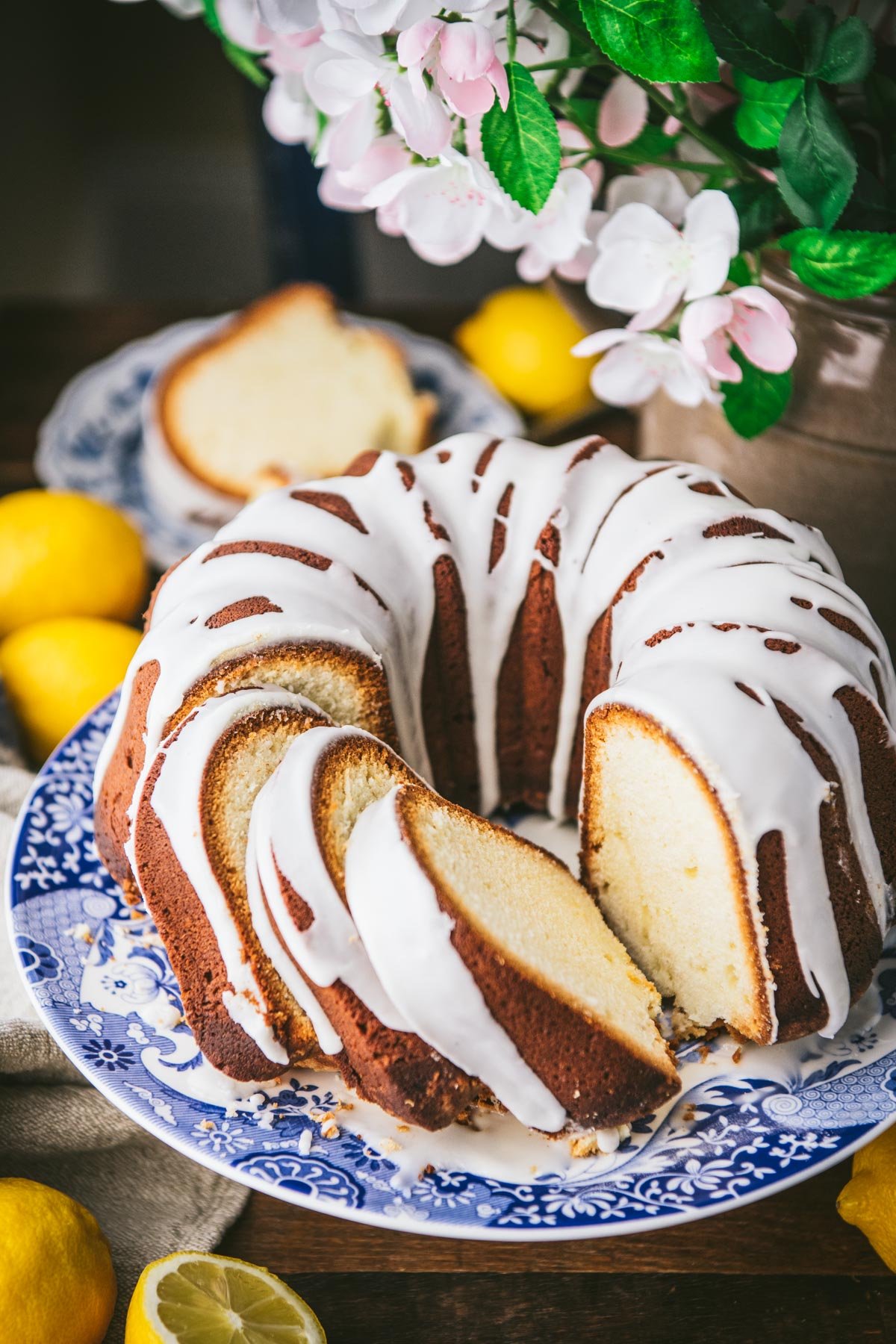
Before You Get Started
A few key tips will make a real difference with this cake. Keep these in mind before you start:
- Use room-temperature ingredients. Cold butter or cream cheese won’t cream smoothly, which affects volume and texture. Pull everything out at least an hour before you start.
- Use cake flour, not all-purpose. Cake flour is what gives this cake its finer, more tender crumb. Swans Down is a reliable brand to look for.
- Zest only the outer layer of the lemon. The yellow peel holds all the essential oils and bright citrus flavor. Stop before you hit the white pith underneath, which is bitter.
How to Make Lemon Cream Cheese Pound Cake
This recipe comes together in a stand mixer with just a few straightforward steps. Plan for about 20 minutes of hands-on prep, plus a long, slow bake that fills the kitchen with the most wonderful smell.
Step 1: Prep the Pan
Grease a Bundt pan or tube pan really well, then dust with flour, or use a nonstick baking spray with flour. Set it aside.
→ Do not preheat the oven. This recipe starts the cake in a cold oven, which is covered in Step 6 below.
→ No Bundt pan? Use two 8½ x 4½-inch loaf pans instead. You can also halve the recipe to make a single loaf.
Step 2: Cream the Butter, Sugar, and Cream Cheese
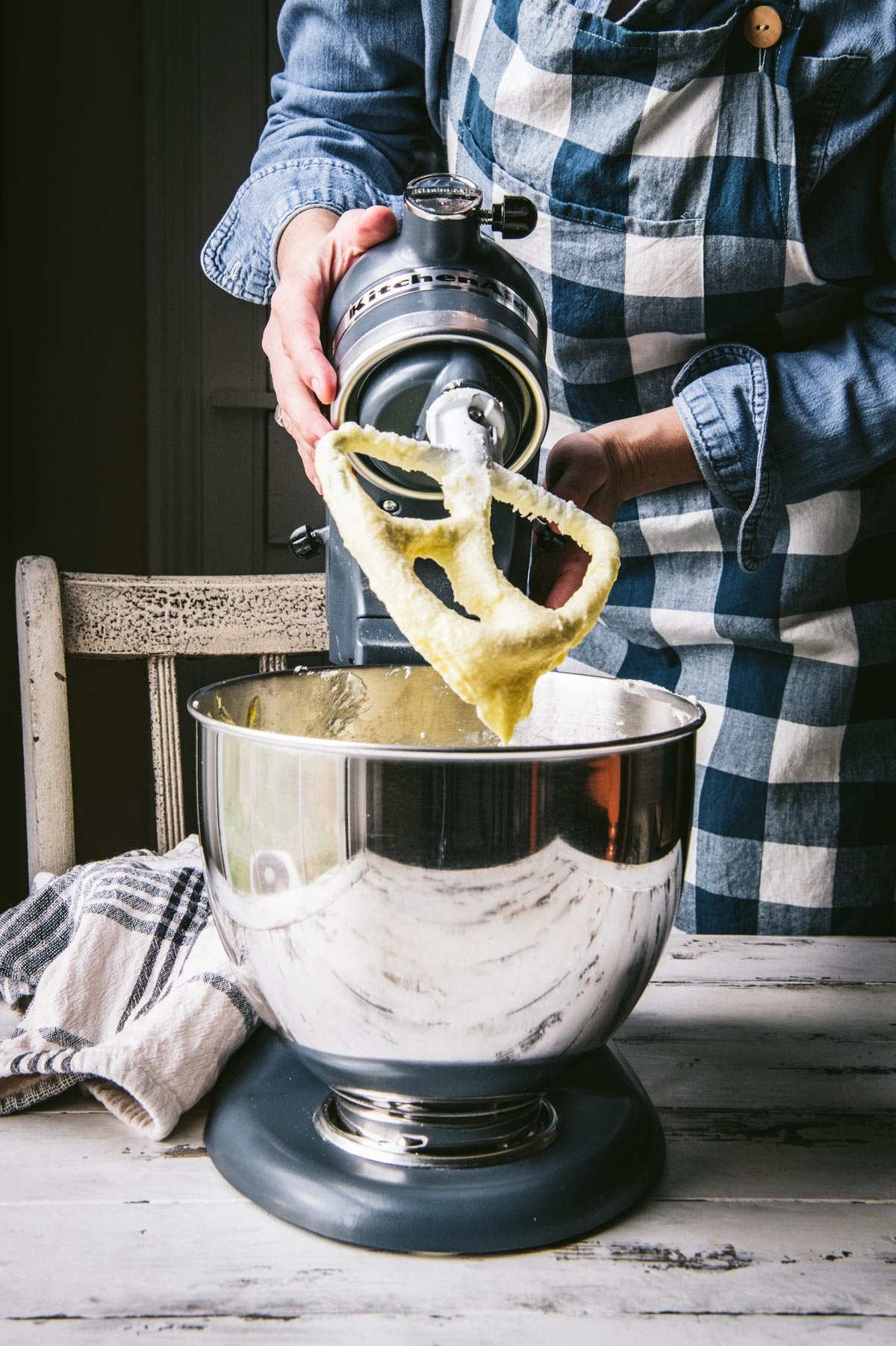
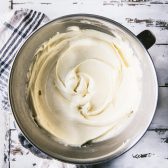
In the bowl of a stand mixer fitted with the paddle attachment, beat the butter and sugar on medium-high speed until light and fluffy, about 3 to 4 minutes.
Don’t rush this step. Whipping air into the batter here is part of how the cake rises.
Add the cream cheese and beat for another 30 seconds until smooth.
⇢ Use a block of full-fat cream cheese. Spreadable cream cheese from a tub or whipped cream cheese won’t give you the right texture. Philadelphia block-style is the standard here.
Step 3: Add the Eggs and Flour
With the mixer on low, add the eggs one at a time, mixing well after each addition. Scrape the sides and bottom of the bowl periodically so everything blends evenly.
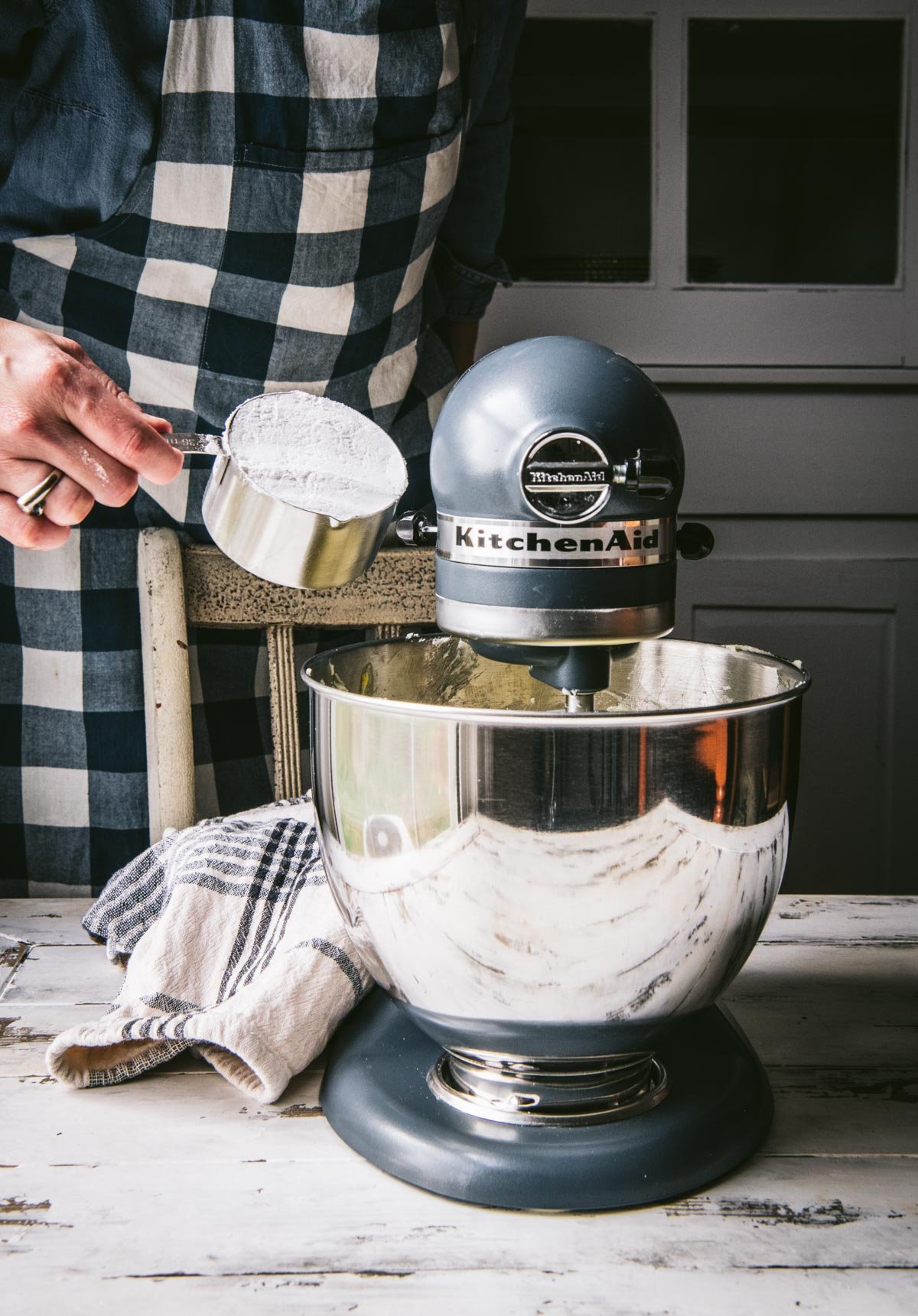
Once all the eggs are incorporated, gradually add the cake flour on low speed, scraping the bowl as needed. Mix just until combined, about 1 minute total. Overmixing at this stage can tighten the crumb, so stop as soon as you don’t see dry flour.
→ Measure the flour correctly. Spoon it into the measuring cup and level it off with the straight edge of a knife. Scooping directly from the bag packs in too much flour and can result in a dry cake.
Step 5: Add the Flavorings
Add the salt, vanilla extract, lemon zest, and lemon juice, then beat until smooth. For a more pronounced lemon flavor, add the zest of a third lemon here. A little extra zest goes a long way.
→ Using lemon extract instead of fresh zest? Start with 1 teaspoon and add more to taste. If you’re using unsalted butter, add an extra ½ to ¾ teaspoon of salt to the batter at this step as well.
Step 6: Bake
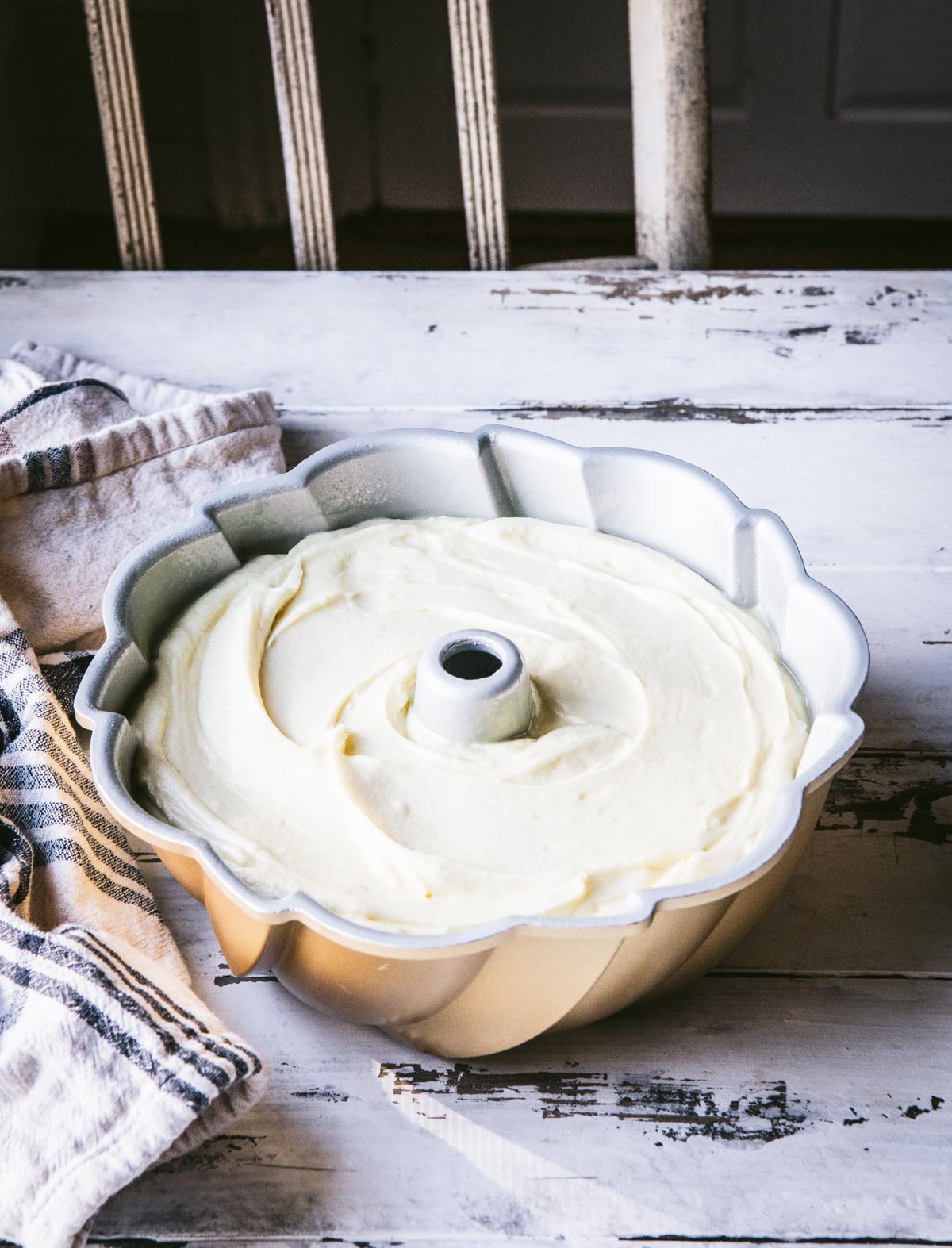
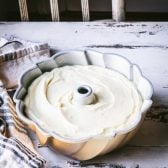
Transfer the batter to the prepared pan and tap it on the counter a couple of times to release any large air bubbles.
Place the pan on a rack in the lower third of the cold oven. Close the door, then set the temperature to 300°F.
Bake until a toothpick inserted in the center comes out clean, about 1 hour 50 minutes to 2 hours.
→ Starting in a cold oven is intentional. The gradual heat buildup gives this cake its signature thick, caramelized crust and fine, even crumb inside. It’s one of the things that sets this recipe apart from my Cream Cheese Pound Cake, which uses a preheated oven instead. Both methods work beautifully; the cold oven approach just produces a slightly deeper crust.
Step 7: Cool and Glaze
Let the cake cool in the pan for 10 to 15 minutes, then invert onto a serving plate or wire rack to cool completely. Don’t leave it in the pan longer than that. Condensation will start to form and soften the crust.
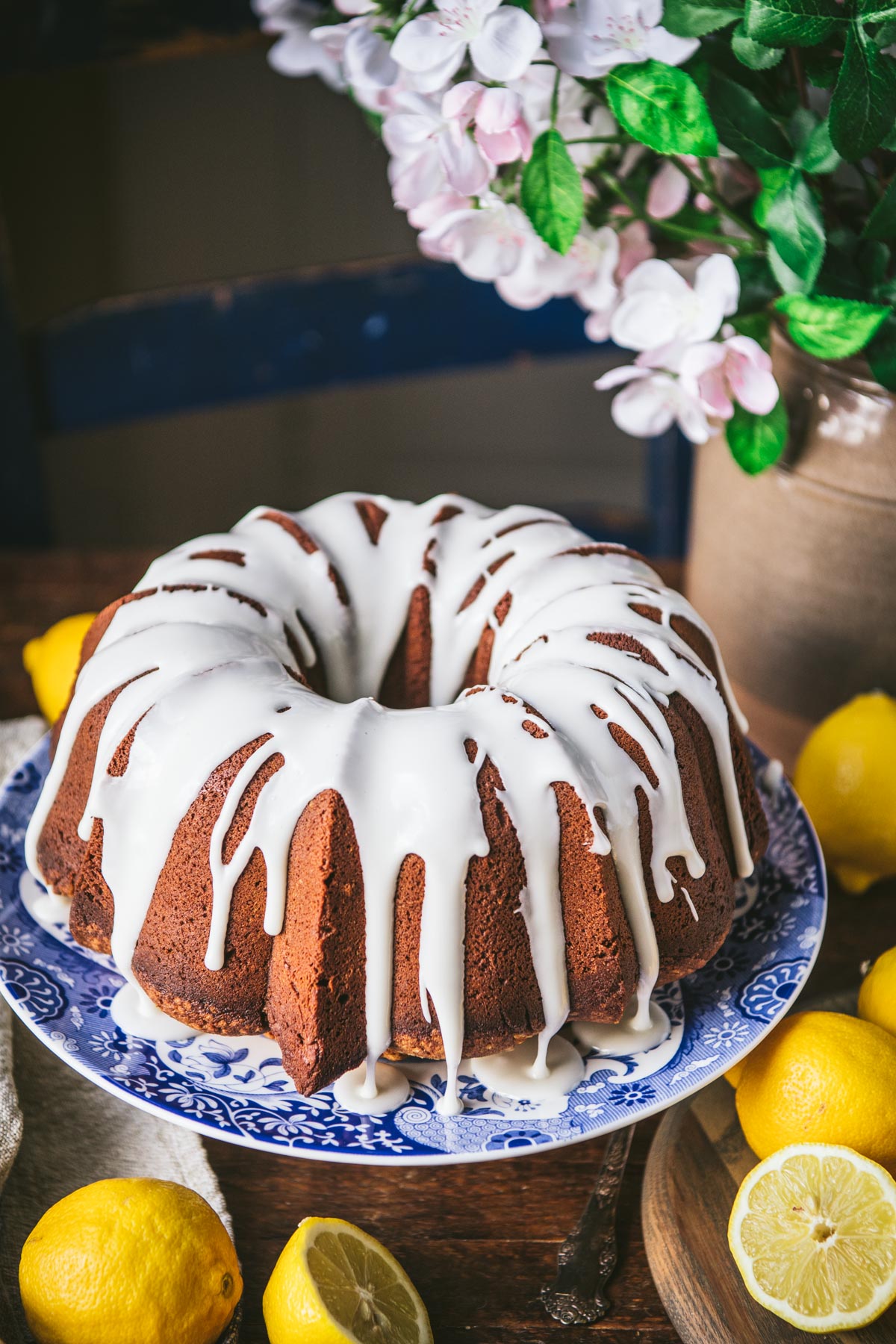
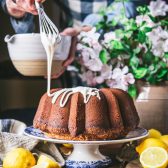
Once the cake is fully cooled, dust with powdered sugar or drizzle with the lemon glaze.
To make the glaze, whisk together 1¼ cups confectioners’ sugar, 2 to 3 tablespoons of fresh lemon juice, and 1 teaspoon of vanilla extract until smooth and pourable. Add more lemon juice to thin it or more sugar to thicken. Pour over the cooled cake and let it set before slicing.
The lemon glaze gives the cake an extra hit of citrus flavor and a beautiful finish. A simple dusting of powdered sugar is more understated. Either way, the cake stands on its own.
How to Serve
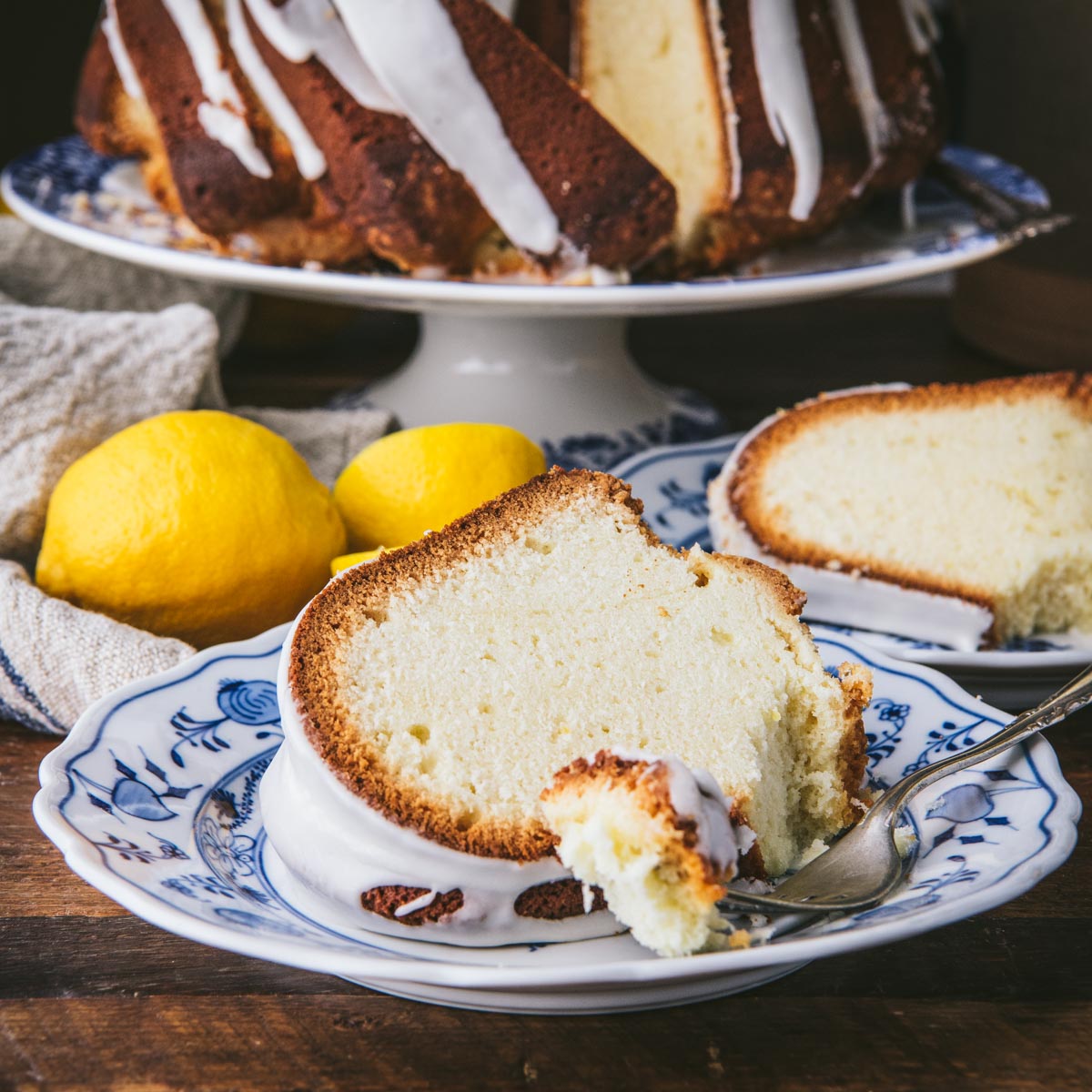
This cake is wonderful on its own, sliced and served at room temperature. For a slightly fancier presentation, add fresh berries and a dollop of whipped cream alongside each slice, or pair with a scoop of vanilla ice cream. It’s a natural fit for Easter dessert tables, church potlucks, and Sunday suppers.
Want a fruit variation on this same cake?
My Blueberry Pound Cake uses the same base method with fresh blueberries folded in.
Storage and Make-Ahead
Make-Ahead: This cake improves with time. Baking it a day in advance gives the flavors a chance to come together and makes the crumb even more moist.
Refrigerator: Wrapped tightly in plastic wrap, the cake stays fresh at room temperature for 4 to 5 days. Refrigerate for up to 1 week if you need more time. Room temperature is the better option when possible, since refrigerating can slightly alter the texture.
Freezer: Wrap the fully cooled cake in a layer of plastic wrap, then a layer of aluminum foil. Freeze for up to 3 months. Thaw at room temperature and add the glaze after thawing if possible.
Frequently Asked Questions
Why did my lemon cream cheese pound cake fall in the middle?
The most likely cause is over-measuring the flour. Too much flour creates a heavier batter that can collapse as it bakes. Measuring by the spoon-and-level method (rather than scooping directly from the bag) makes a real difference here. Opening the oven door before the cake is fully set or bumping the pan during baking can also cause the center to sink. Resist opening the door for at least the first 90 minutes.
Why is my lemon pound cake dry?
A dry pound cake usually comes down to one of three things: too much flour, over-mixing after the flour is added, or baking too long. This recipe uses the cold oven method, which helps. The slow, gradual heat buildup is gentler on the batter and helps the interior stay moist. If your cake came out dry, also check that your oven temperature is accurate with an oven thermometer.
Can I use all-purpose flour instead of cake flour?
Cake flour is worth seeking out for this recipe. It has a lower protein content than all-purpose, which is what gives the crumb its fine, tender texture. Substituting all-purpose flour will still produce a good cake, but the crumb will be slightly denser and less delicate. Swans Down is the most widely available cake flour and easy to find at most grocery stores.
Can I make this pound cake in a loaf pan instead of a Bundt pan?
Yes. Use two 8½ x 4½-inch loaf pans. The baking time will be shorter, so start checking for doneness around the 1-hour mark. A toothpick inserted in the center should come out clean. You can also halve the full recipe to make a single loaf.
More Southern Pound Cake Recipes
Watch How to Make It

Lemon Cream Cheese Pound Cake
Equipment
Ingredients
Cake:
- 3 cups granulated sugar
- 1 ½ cups (3 sticks) salted butter, softened at room temperature
- 1 (8 ounce) package full-fat cream cheese, softened at room temperature
- 6 large eggs, at room temperature
- 3 cups bleached cake flour (such as Swans Down)
- ⅛ teaspoon kosher salt
- 1 tablespoon pure vanilla extract
- Zest from 2 lemons (or up to 3 for stronger lemon flavor)
- 1 tablespoon freshly squeezed lemon juice
- Powdered sugar, for dusting (optional)
Optional Lemon Glaze:
- 1 ¼ cups confectioners’ sugar
- 2 to 3 tablespoons freshly squeezed lemon juice
- 1 teaspoon vanilla extract
Instructions
- Grease and lightly flour a Bundt pan or tube pan; set aside. Do not preheat the oven.
- In the bowl of a stand mixer fitted with the paddle attachment, beat the butter and sugar on medium-high speed until light and fluffy, about 3 to 4 minutes. Add the cream cheese and beat until smooth, about 30 seconds.

- With the mixer on low, add the eggs one at a time, mixing well after each addition. Scrape the sides and bottom of the bowl as needed.
- Gradually add the cake flour on low speed, scraping the bowl as needed. Mix just until combined, about 1 minute total.
- Add the salt, vanilla extract, lemon zest, and lemon juice. Beat until smooth.
- Transfer the batter to the prepared pan. Tap the pan on the counter a couple of times to release air bubbles.
- Place the pan on a rack in the lower third of the cold oven. Close the oven and set the temperature to 300°F. Bake until a toothpick inserted in the center comes out clean, about 1 hour 50 minutes to 2 hours.
- Cool in the pan for 10 to 15 minutes, then invert onto a serving plate or wire rack to cool completely.
- Dust with powdered sugar or drizzle with lemon glaze. To make the glaze, whisk together the confectioners' sugar, 2 tablespoons of lemon juice, and vanilla extract until a thick, pourable glaze forms. Add more lemon juice to thin or more sugar to thicken. Drizzle over the cooled cake.


Notes
- Start in a cold oven. This is not a typo. Placing the pan in a cold oven before turning it on creates the thick, caramelized crust that’s the hallmark of this recipe.
- Use a block of full-fat cream cheese. Spreadable or whipped cream cheese from a tub will not give you the right texture.
- Measure the flour correctly. Spoon it into the measuring cup and level off with a knife. Packing in too much flour results in a dry, dense cake.
- Room-temperature ingredients are important. Cold butter or eggs won’t blend smoothly, which affects volume and texture.
- Zest only the yellow part of the lemon. The white pith underneath is bitter. For more lemon flavor, zest a third lemon and add it to the batter.
- Don’t leave the cake in the pan too long. About 10 to 15 minutes is ideal. Condensation will form after that and soften the crust.
- Make it ahead. This cake is best made 1 day in advance. The flavor deepens and the crumb gets even more moist as it rests.
- Storage: Covered at room temperature for 4 to 5 days; refrigerated for up to 1 week; frozen (tightly wrapped) for up to 3 months.
- Loaf pan option: No Bundt pan? Use two 8½ x 4½-inch loaf pans and check for doneness starting at the 1-hour mark.
- Unsalted butter: Add an extra ½ to ¾ teaspoon of salt to the batter if substituting.
Nutrition
Originally published in March, 2023, this post was updated in April, 2026.













Did you make this recipe?
If you enjoyed this recipe, please leave a comment with a 5-star review at the bottom of the post. Thank you!