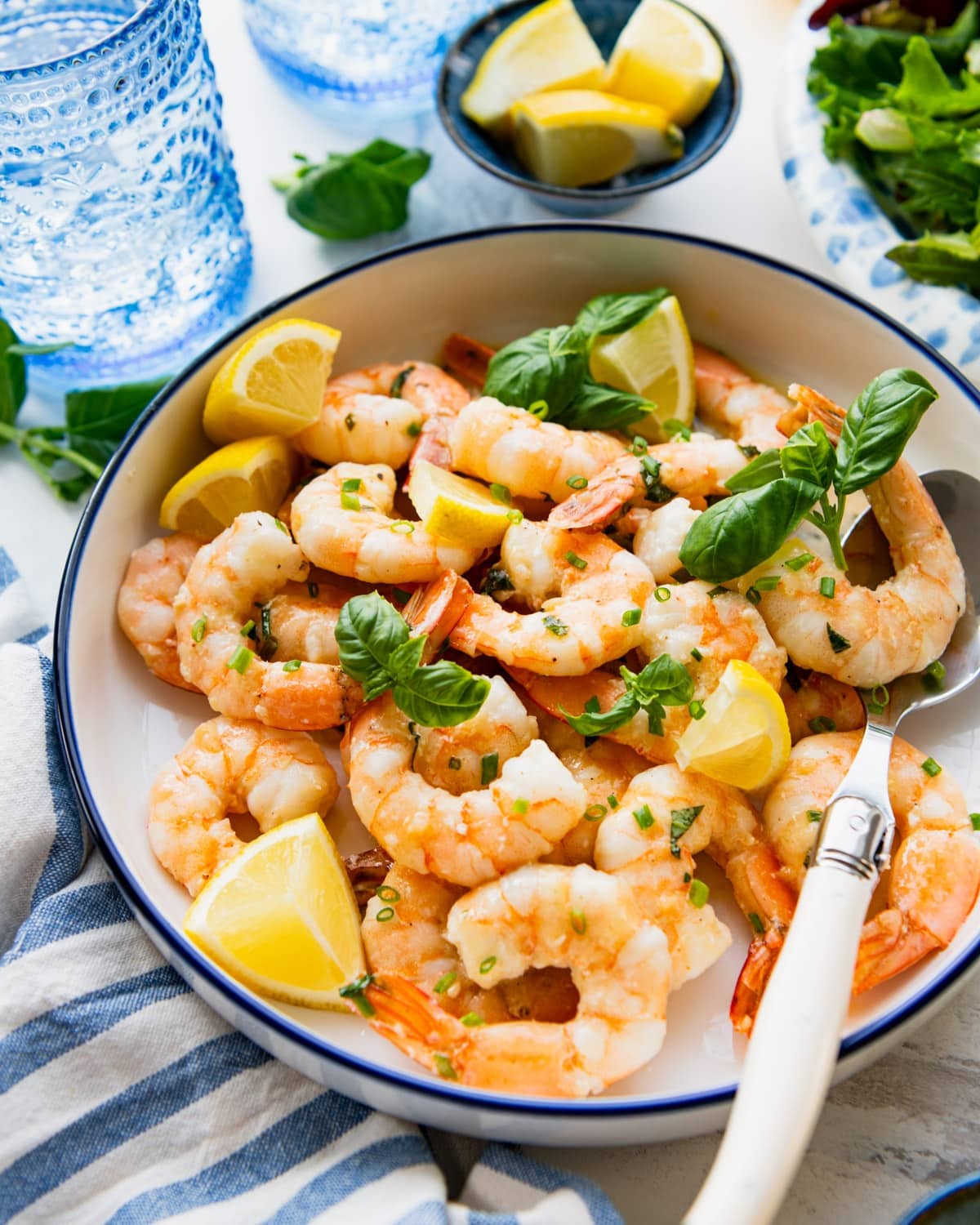
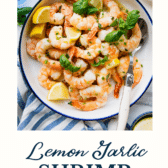
This lemon garlic shrimp is a 15-minute skillet dinner for busy nights. The shrimp sear quickly in a hot pan, then get tossed in a buttery sauce made with fresh lemon, honey, Dijon, and a splash of white vinegar. It’s bright, a little rich, and seriously good over rice or pasta!
More Easy Shrimp Dinners
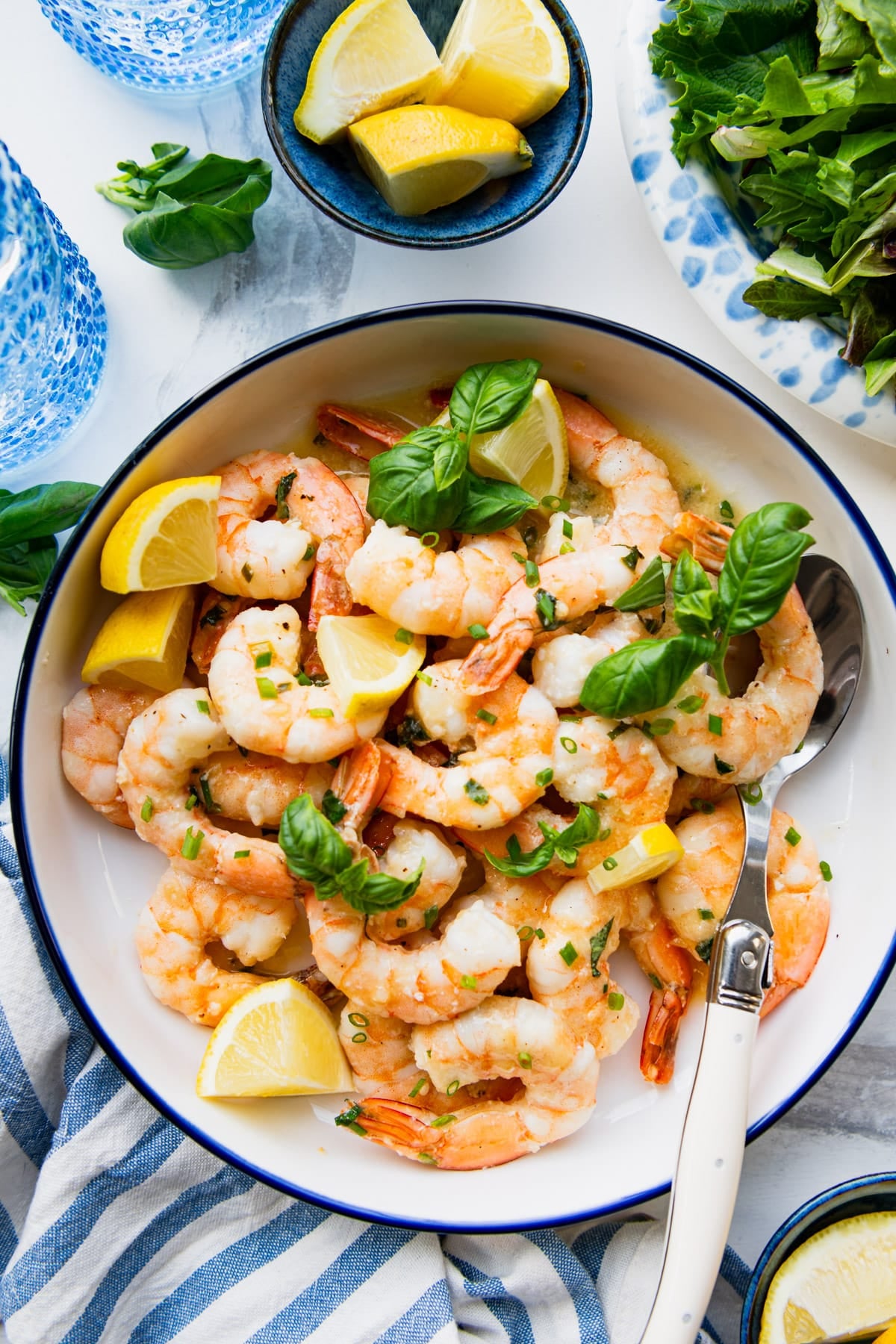
Table of Contents
Before You Get Started
- Pat the shrimp dry. This is the single biggest thing you can do for a better result. Wet shrimp steam instead of sear, and you’ll miss out on that golden, slightly caramelized exterior. Pat them dry with paper towels before seasoning.
- Don’t overcook the shrimp. Shrimp cook in 1-2 minutes per side; that’s it! You’re looking for pink and opaque with a gentle curl. If they curl into a tight C or O, they’ve gone too far and will be rubbery. Pull them off the heat just as they turn opaque and finish in the sauce.
- Add the lemon to the sauce, not a marinade. Lemon juice is acidic enough to chemically “cook” raw shrimp if they sit in it too long. That’s why it goes into the pan sauce rather than a marinade. You get all the bright citrus flavor without the texture turning chalky.
How to Make Lemon Garlic Shrimp
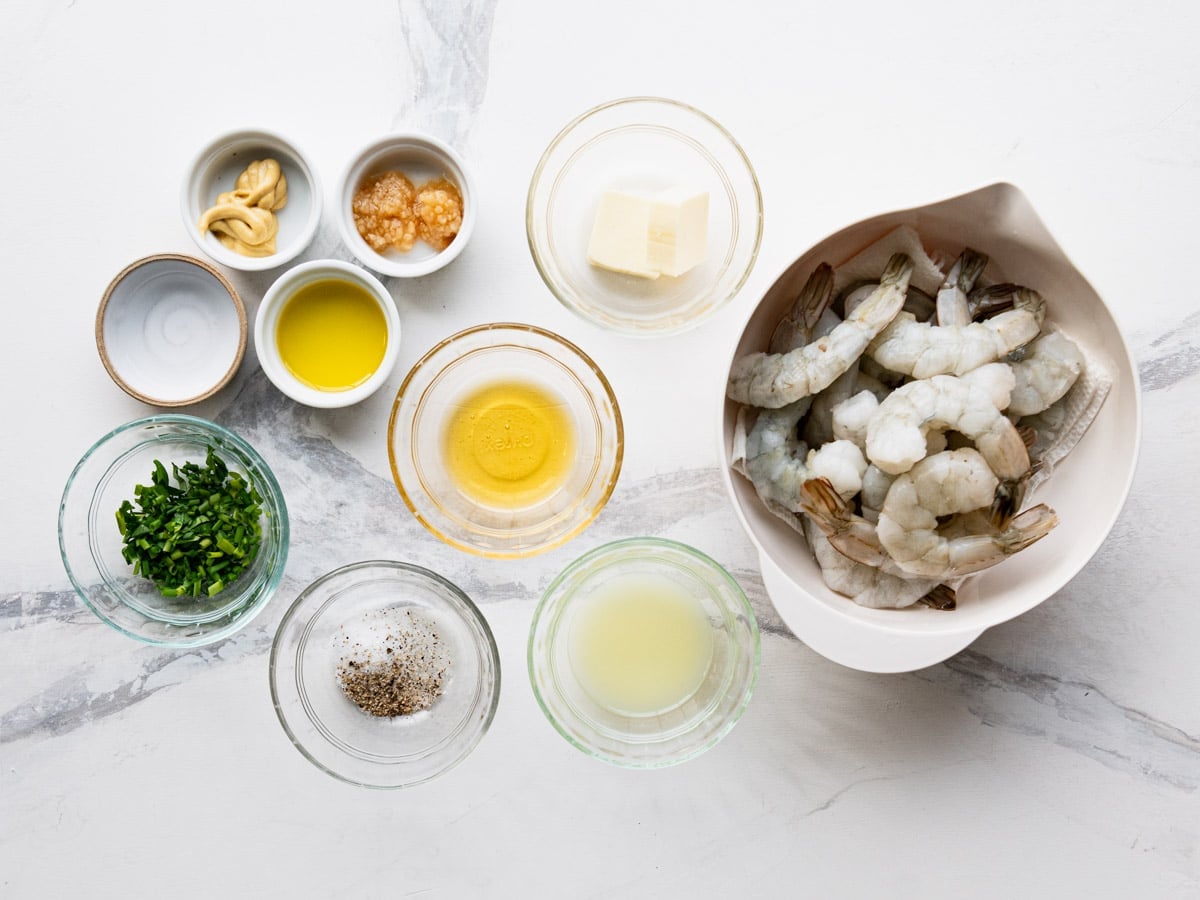
This dish moves quickly, so it helps to have everything prepped before you start. Get the shrimp dried and seasoned, the sauce ingredients whisked together, and the garlic minced. The actual cook time is about 5-7 minutes!
Step 1: Season the Shrimp
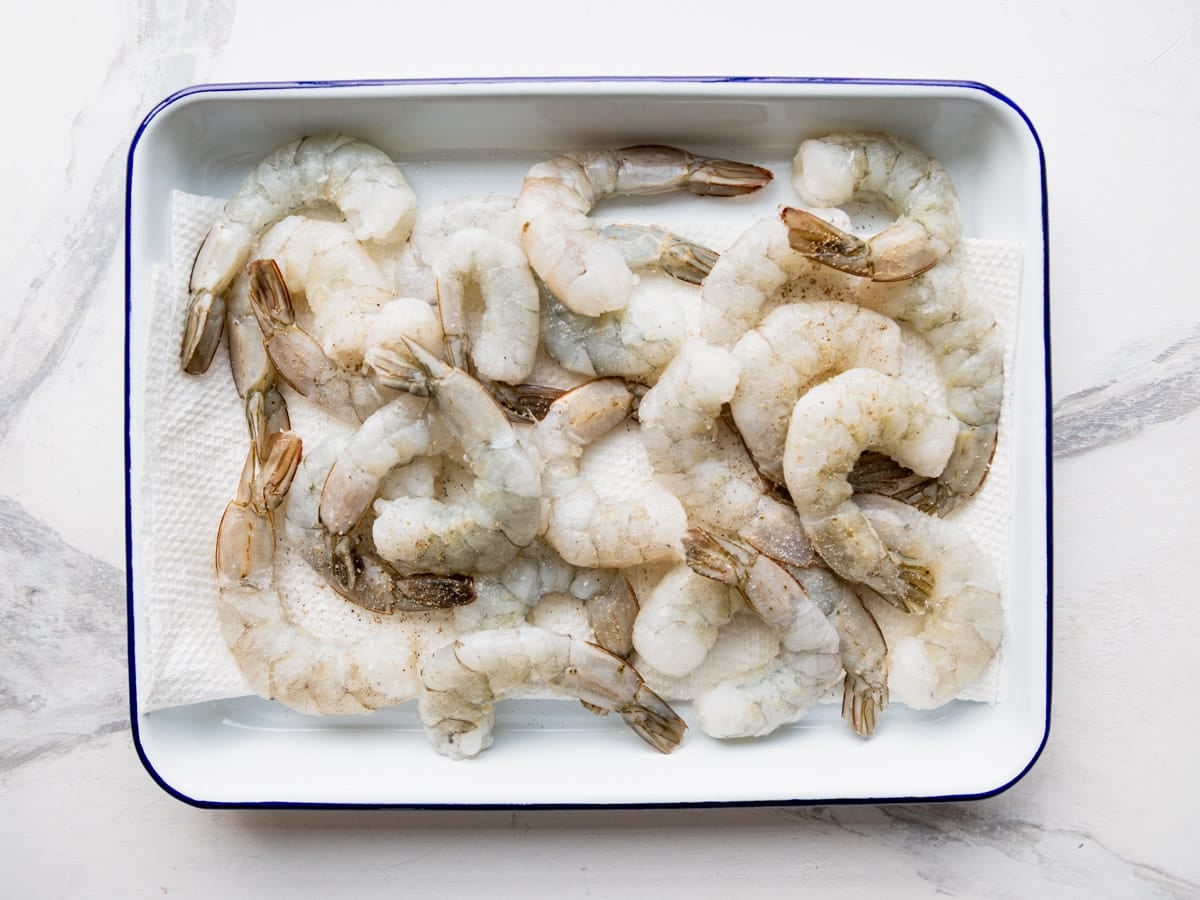
Pat the shrimp dry with paper towels and arrange them on a plate or cutting board. Drying the shrimp helps them sear properly in the hot skillet instead of steaming. Season them lightly on both sides with kosher salt and black pepper.
⭢ Large or jumbo shrimp work best for this recipe because they have a meaty taste and texture, and they give you a little more time in the pan before overcooking.
Step 2: Sear the Shrimp
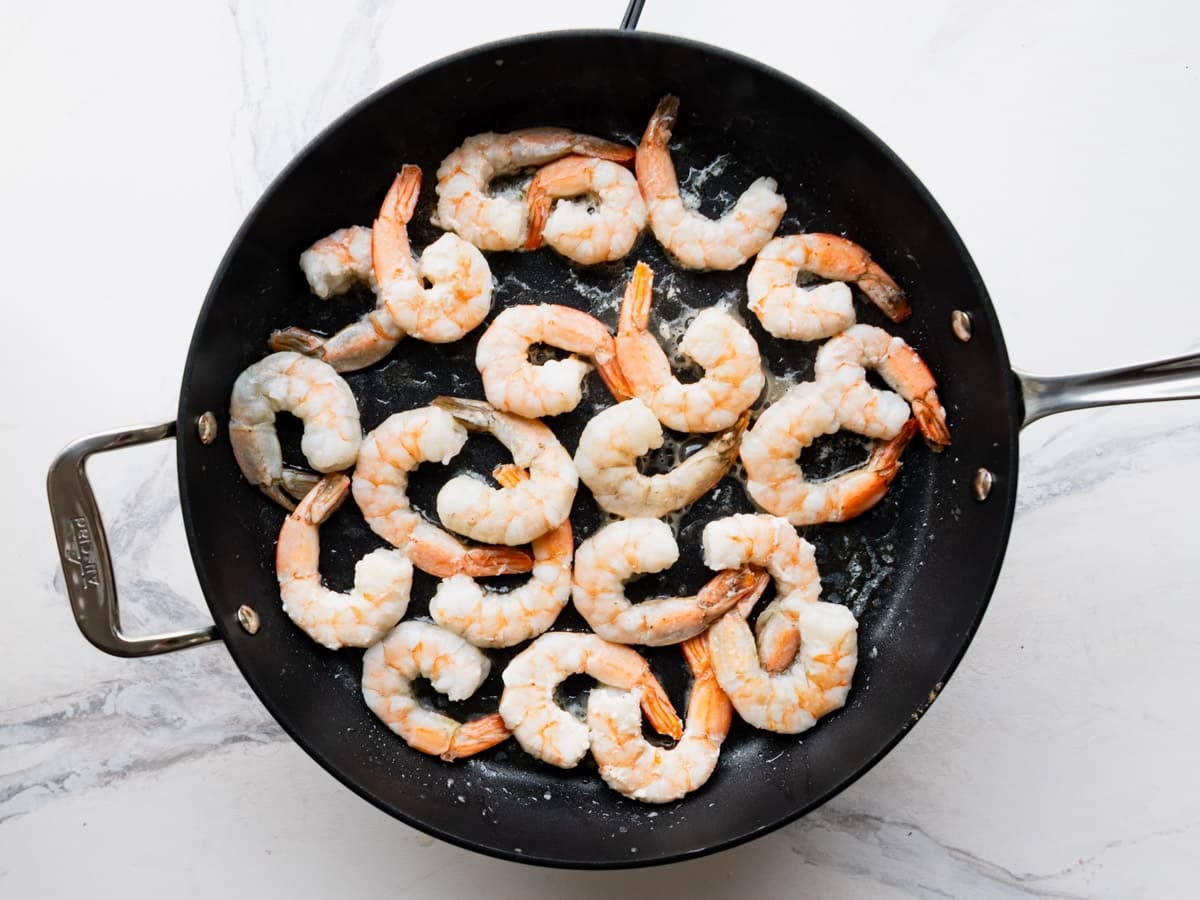
Heat the olive oil and 1 tablespoon of butter in a large skillet over medium-high heat. When the butter is melted and the pan is hot, add the shrimp in a single layer so they are not piled on top of each other. Cook for about 1 to 2 minutes per side, just until the shrimp turn pink and opaque.
Transfer the shrimp to a plate once they are cooked. They will finish warming through when they are added back to the sauce.
⭢ Doneness Check: The shrimp are ready when they turn pink and opaque with a gentle C-shape. If they curl into a tight C or an O, they have cooked too long. Pull them off the heat as soon as they turn opaque.
Step 3: Make the Lemon Garlic Sauce
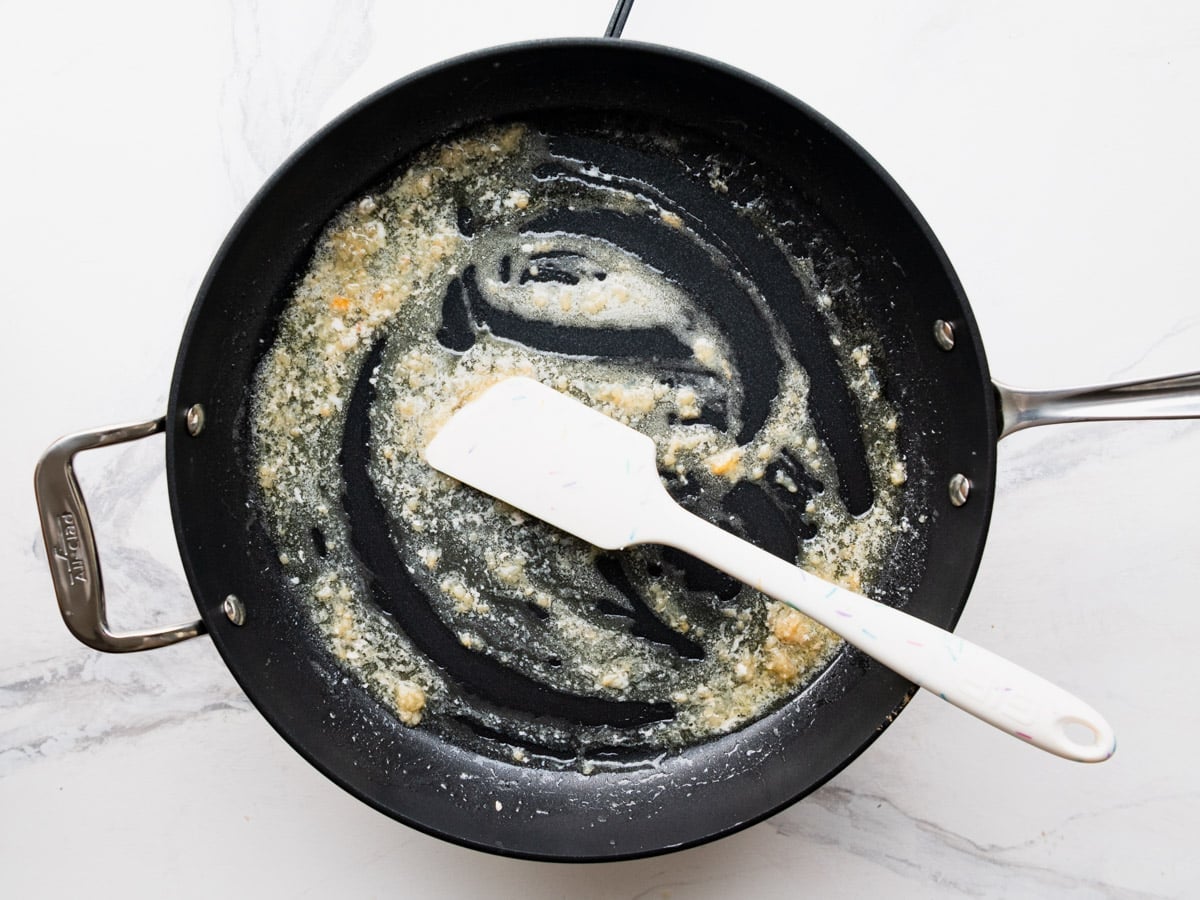
Reduce the heat to medium. Add the remaining butter and the minced garlic to the skillet and cook for about 30 seconds, just until fragrant.
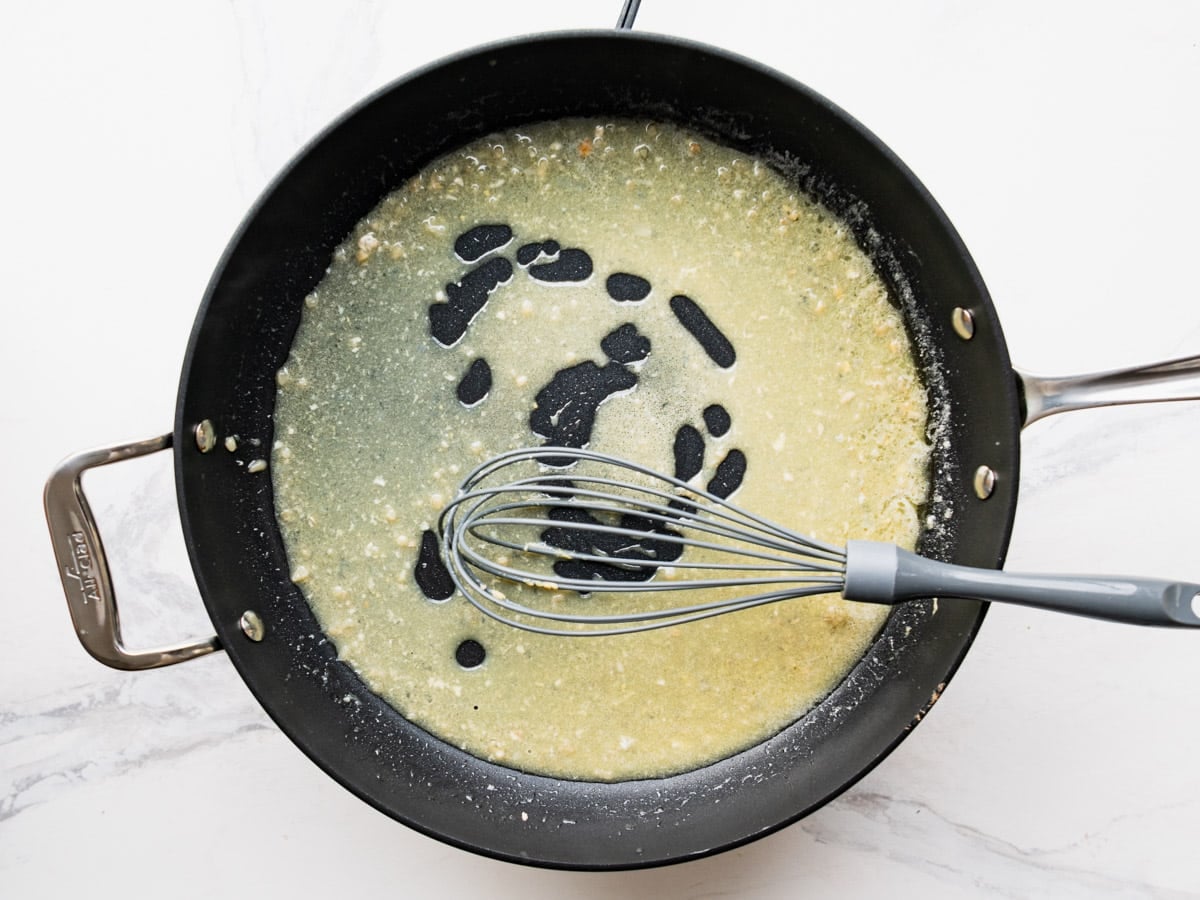
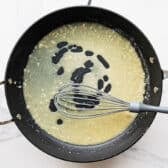
Whisk in the lemon juice, honey, Dijon mustard, and white vinegar. Let the sauce simmer for 1 to 2 minutes until it begins to come together and thicken slightly. The sauce may look thin at first, but it will develop body as it simmers.
Each ingredient plays a role in balancing the flavor. The honey softens the sharpness of the lemon, the Dijon adds depth and helps the sauce emulsify, and the vinegar brightens everything without adding more citrus.
⭢ Watch the Garlic: Garlic can burn quickly over high heat. Keep the heat at medium and cook it just until fragrant. About 30 seconds is plenty.
Step 4: Finish the Dish
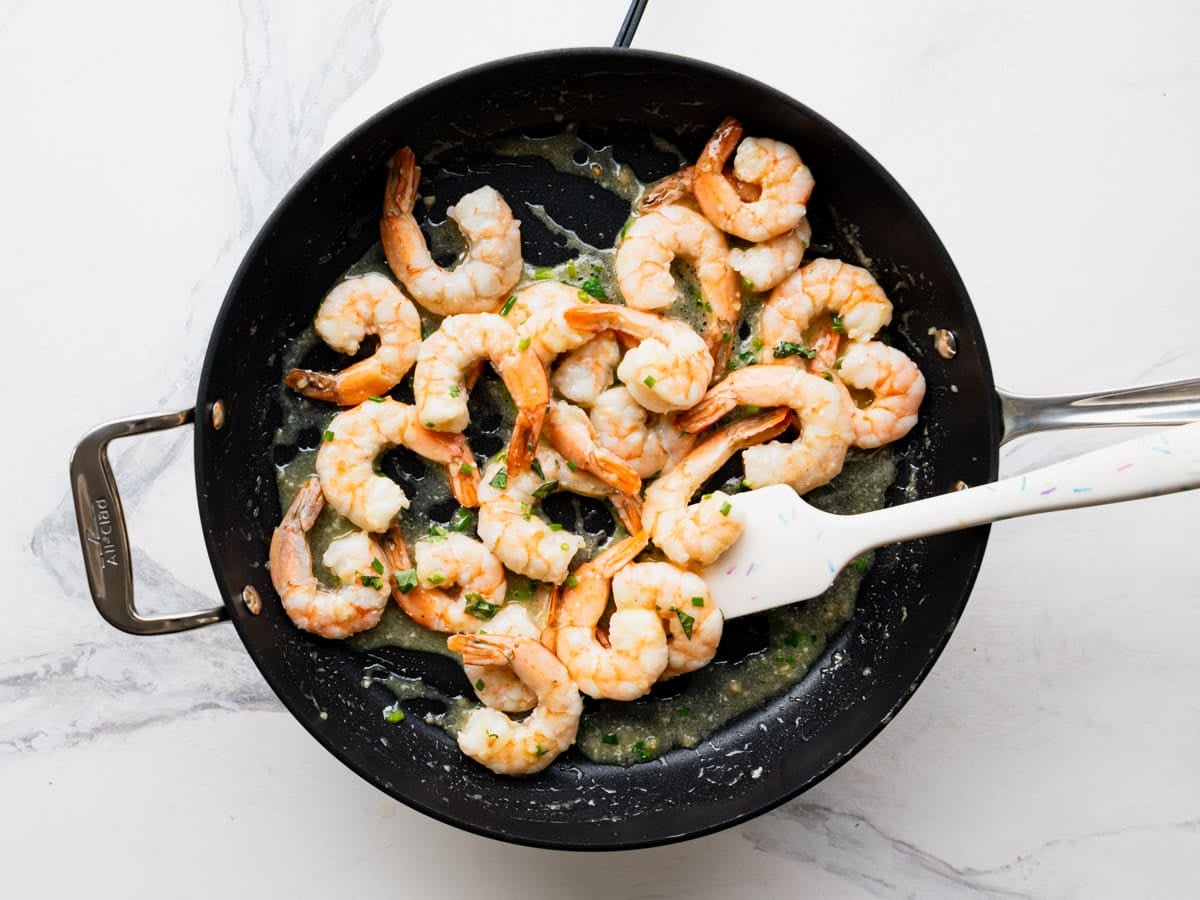
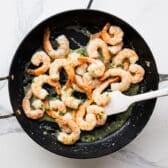
Return the shrimp to the skillet and toss them gently in the sauce until they are well coated. Stir in the fresh chives and basil, then taste the sauce and adjust the seasoning if needed.
⭢ The herbs are best stirred in right at the end, either just before removing the pan from the heat or immediately after. This keeps their color bright and their flavor fresh. If you do not have basil or chives on hand, fresh parsley works beautifully here as well.
Step 5: Serve
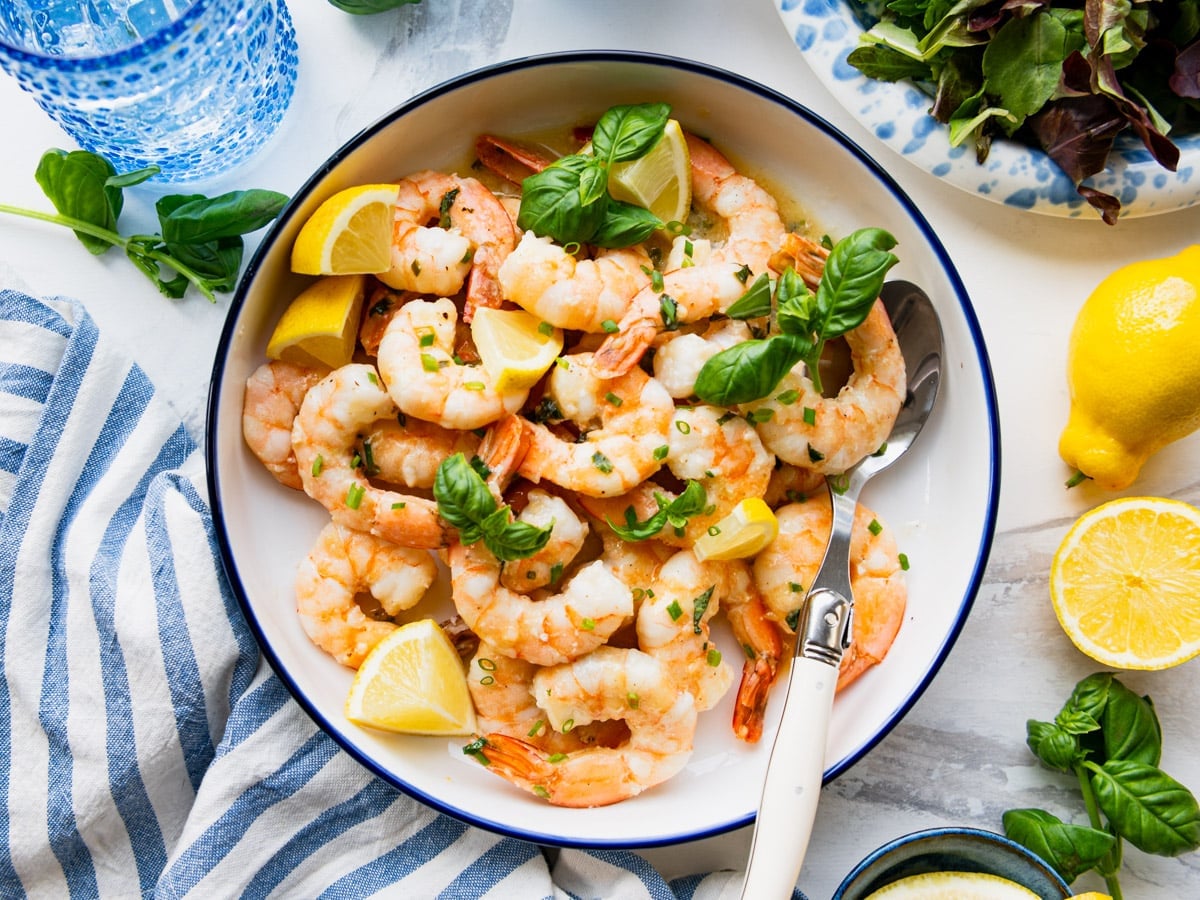
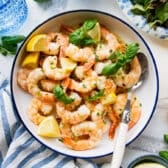
Serve the lemon garlic shrimp right away while it is hot. Spoon the shrimp and sauce over rice or pasta, or serve it with crusty bread to soak up the sauce. Garnish with lemon wedges and a sprinkle of extra herbs if you like.
This dish is best enjoyed immediately since shrimp can become rubbery if they sit too long.
Variations
- Spice it up: Add a pinch of red pepper flakes to the sauce for heat.
- Swap the herbs: Parsley is the classic choice here and works great if you don’t have chives or basil on hand.
- Add a splash of white wine: Substitute dry white wine for the white vinegar if you have it open. This adds a subtle depth to the sauce.
- Lime for lemon: Fresh lime juice can sub for lemon juice, providing a different flavor profile (a little more floral and tropical).
What to Serve with Lemon Garlic Shrimp
This shrimp is very versatile, so it works well with a variety of sides. Here are some of our favorites to round out the meal:
Breads and Starches:
- Stick of Butter Rice or Rice Pilaf are both excellent.
- Angel hair pasta, linguine, and easy dinner rolls also work beautifully to soak up the sauce.
- Garlic Mashed Potatoes are a more unexpected but really satisfying pairing.
Vegetables:
- Oven Roasted Asparagus
- A simple green salad dressed in Lemon Vinaigrette.
Storage and Reheating
Leftovers: Store leftovers in an airtight container in the refrigerator for up to 2 days.
How to Reheat: Warm gently in a skillet over low heat with a splash of butter or water (the microwave tends to make shrimp rubbery).
Freezing: Shrimp are not ideal for freezing, since their texture changes significantly when thawed after cooking.
Make Ahead: The sauce components (lemon juice, honey, Dijon, vinegar) can be whisked together and stored in the fridge for up to a day ahead. The shrimp should be cooked fresh.
Frequently Asked Questions
When should I add the lemon to the shrimp?
Lemon juice is acidic enough to chemically denature raw shrimp protein if they sit in it too long. Even 20-30 minutes in straight lemon juice can turn the texture chalky and mealy, similar to ceviche. That’s why this recipe adds the lemon directly to the pan sauce rather than in a marinade. You get all the bright citrus flavor without affecting the texture. A quick squeeze of lemon wedges at the table is always a nice finishing touch, too.
Can I use frozen shrimp?
Yes! Most shrimp sold fresh at the seafood counter has actually been previously frozen and thawed, so buying it frozen and thawing at home is totally fine and sometimes fresher. Thaw overnight in the fridge or quickly under cold running water. The most important step: pat them very dry before cooking. Frozen shrimp release more moisture as they thaw, and any extra liquid in the pan will steam rather than sear.
How do I know when the shrimp are done?
Shrimp cook fast (usually 1-2 minutes per side over medium-high heat). You’re looking for three things: the color changes from gray/translucent to pink, the flesh turns opaque (not glassy), and the shrimp curls into a loose C-shape. If it curls into a tight C or an O, it’s overcooked and will be rubbery. When in doubt, pull them slightly early; they’ll carry over a little and finish in the sauce.
More Easy Shrimp Recipes
Watch How to Make It
Lemon Garlic Shrimp
Equipment
Ingredients
- 1 lb. raw jumbo shrimp, peeled and deveined
- Kosher salt and ground black pepper, to taste
- 1 tablespoon olive oil
- 2 tablespoons salted butter, divided
- 2 cloves garlic, minced (about 2 teaspoons)
- 2 tablespoons fresh lemon juice
- 1 tablespoon honey
- 1 ½ teaspoons Dijon mustard
- 1 ½ teaspoons white vinegar
- 1 tablespoon chopped fresh chives (or 1 teaspoon dried)
- 1 tablespoon chopped fresh basil (or 1 teaspoon dried)
- Optional garnish: lemon wedges; extra herbs
Instructions
- Season the shrimp: Pat the shrimp dry with paper towels and season lightly with salt and pepper.

- Sear the shrimp: Heat the olive oil and 1 tablespoon of butter in a large skillet over medium-high heat. Add the shrimp in a single layer and cook for 1-2 minutes per side, just until pink and opaque. Transfer to a plate.
- Make the sauce: Reduce heat to medium. Add the remaining 1 tablespoon butter and garlic to the skillet. Cook for about 30 seconds, until fragrant. Whisk in the lemon juice, honey, Dijon mustard, and vinegar. Simmer for 1-2 minutes, until warmed through and slightly thickened.
- Finish the dish: Return the shrimp to the skillet and toss to coat in the sauce. Stir in the chives and basil. Taste and adjust seasoning if needed.
- Serve: Garnish with lemon wedges or extra herbs. Serve immediately over rice, pasta, mashed potatoes, or with warm bread to soak up the sauce.
Notes
- Shrimp size: Jumbo or large shrimp work best here. They give you a little extra time in the pan before overcooking. Avoid small or medium shrimp for this recipe.
- Fresh vs. frozen shrimp: Frozen shrimp works great. Thaw overnight in the fridge or under cold running water. Pat very dry before cooking to ensure a good sear.
- Doneness: Shrimp are done when they turn pink, opaque, and curl into a gentle C-shape. A tight curl means overcooked. Pull them just as they turn opaque.
- Don’t skip patting dry: Moisture on the shrimp causes steaming rather than searing. This step makes a real difference in flavor and texture.
- Lemon: Fresh lemon juice is recommended. About half a large lemon gives you the 2 tablespoons you need. Avoid adding lemon to the shrimp before cooking; it can turn the texture chalky.
- Herb swaps: Parsley is a natural substitute for the chives and basil if that’s what you have on hand. Use 2 tablespoons fresh or 2 teaspoons dried.
- Add heat: Stir a pinch of red pepper flakes into the sauce with the garlic for a mild kick.
- White wine variation: Swap the white vinegar for a splash of dry white wine if you have a bottle open. It adds subtle depth to the sauce.
- Make-ahead tip: Whisk together the lemon juice, honey, Dijon, and vinegar up to a day ahead and store in the fridge. Cook the shrimp fresh.
- Storage: Refrigerate leftovers in an airtight container for up to 2 days. Reheat gently in a skillet over low heat. Shrimp does not freeze well once cooked.











Did you make this recipe?
If you enjoyed this recipe, please leave a comment with a 5-star review at the bottom of the post. Thank you!