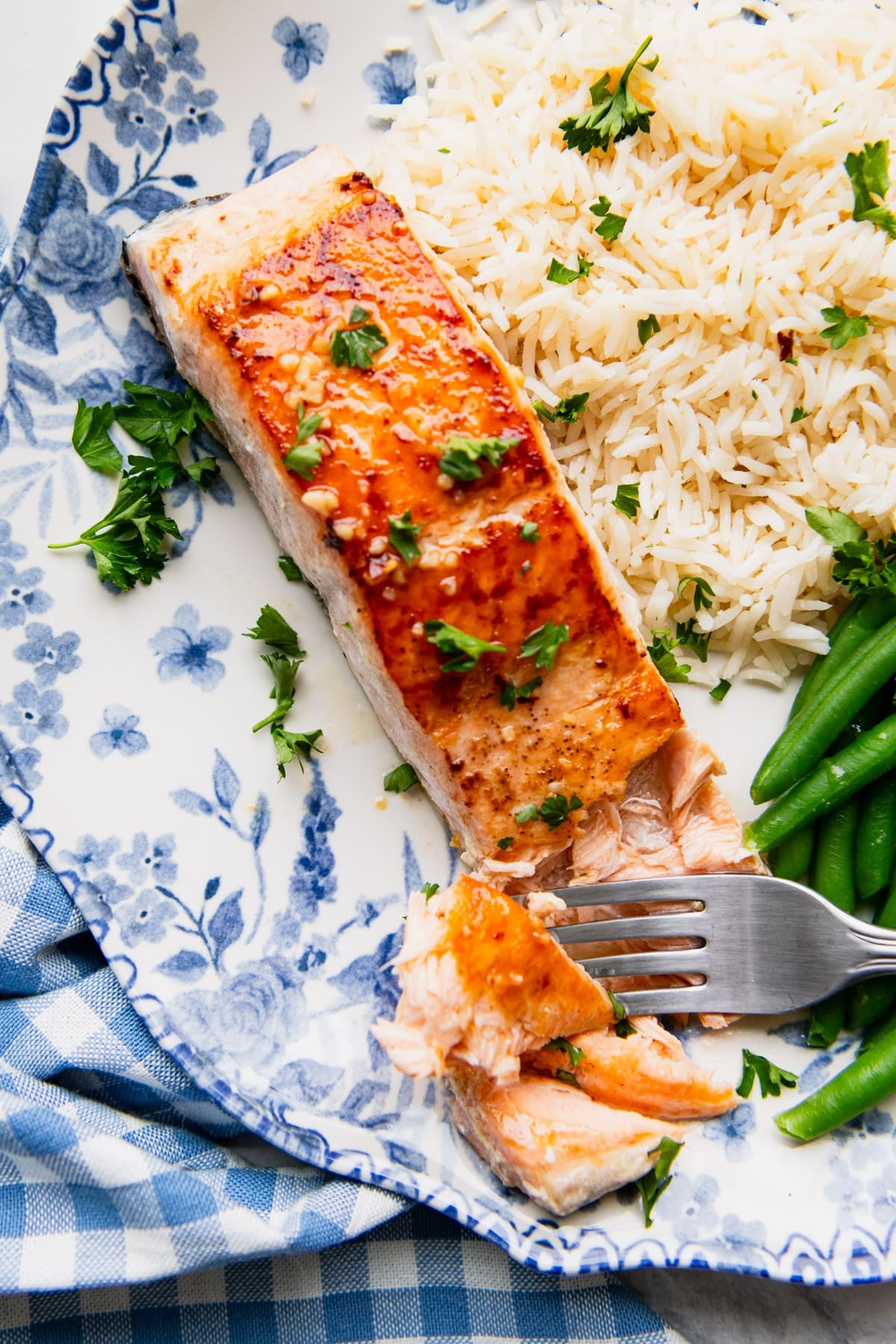
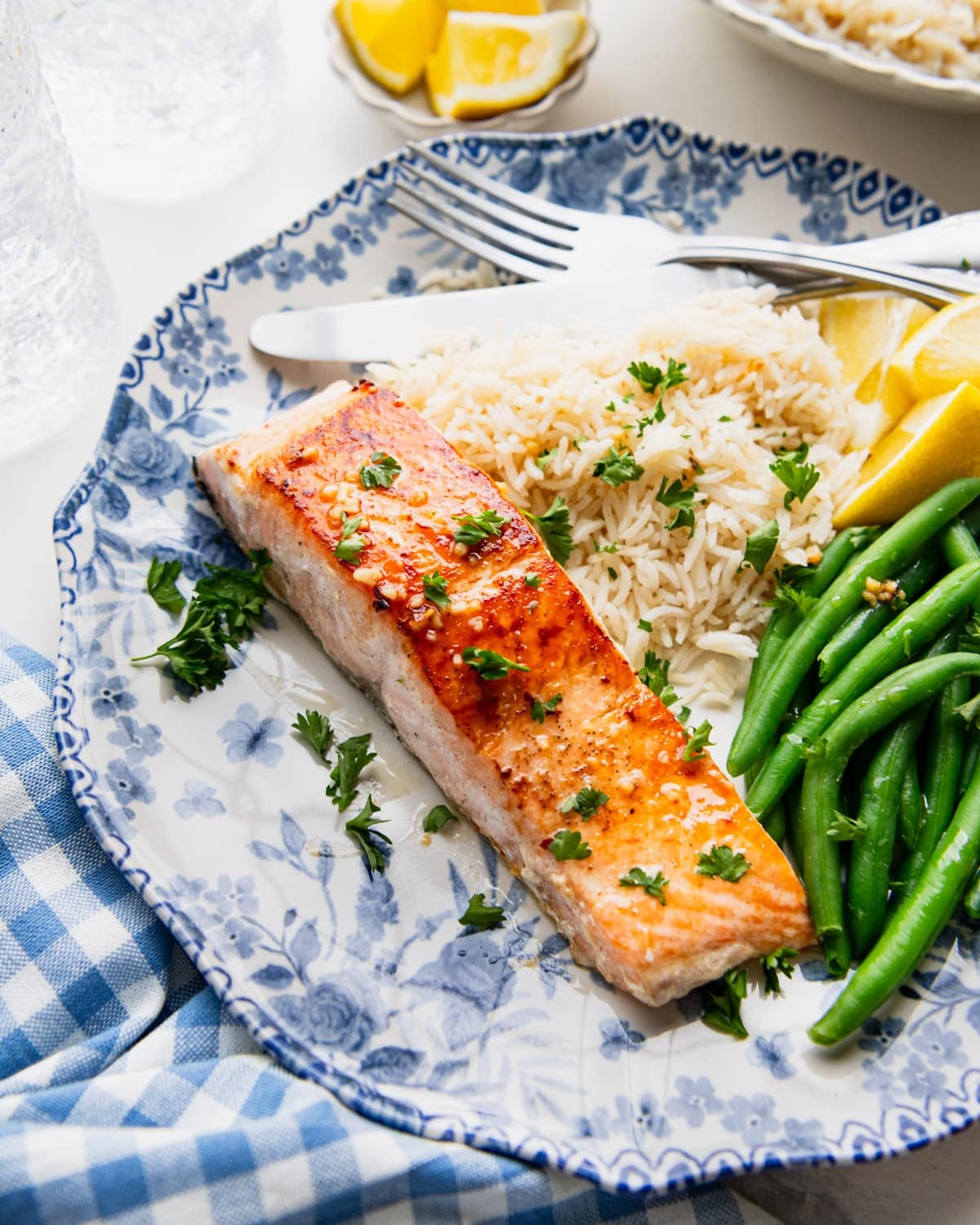
This pan-seared garlic butter salmon is one of those dinners that feels way more impressive than the effort it takes. Golden and crispy on the outside, tender and buttery inside, with a rich garlic sauce you’ll want to spoon over everything. It’s on the table in 25 minutes and made entirely in one skillet!
More quick salmon dinners
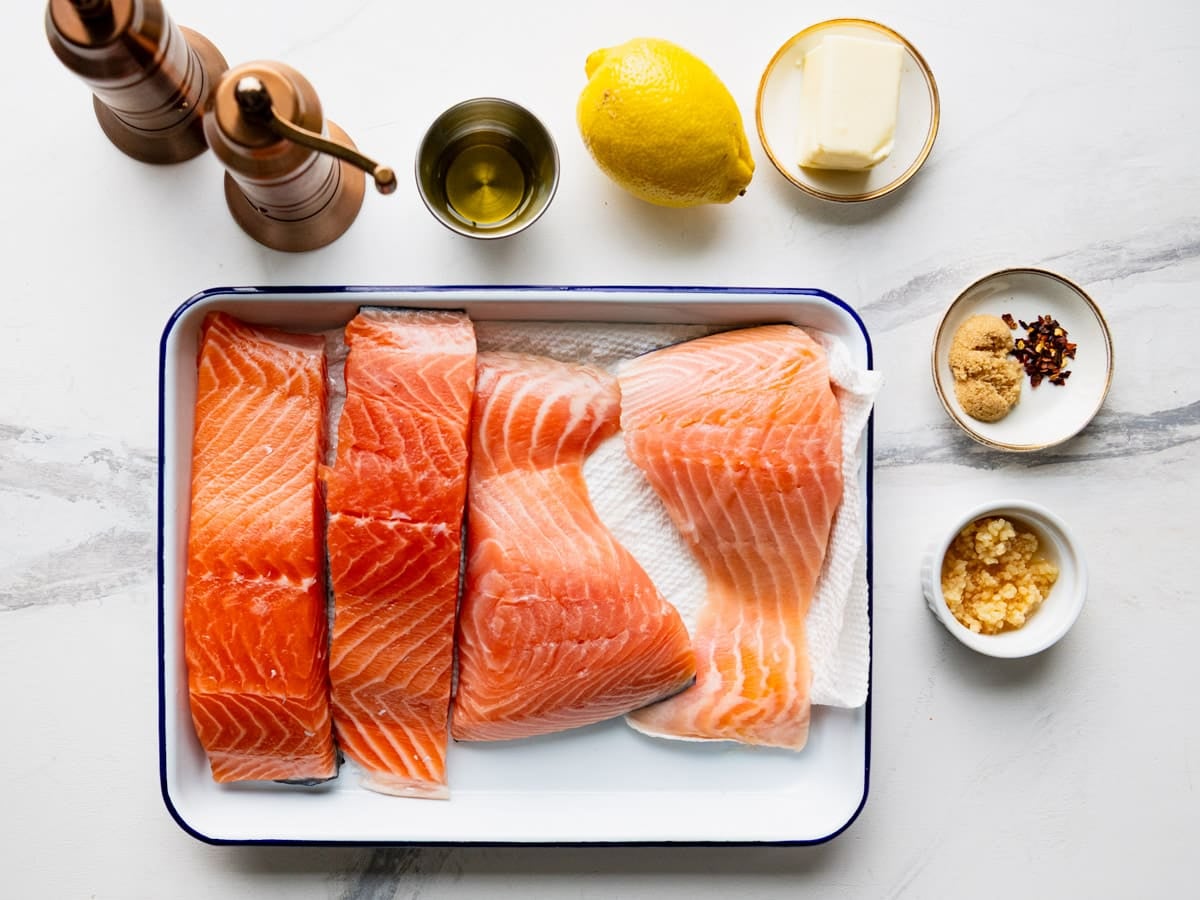
Before You Get Started
This is a fast recipe, but a few details make a real difference between good salmon and great salmon. Here’s what to know before you start:
⇢ Pat the salmon very dry. This is the single most important step. Moisture on the surface of the fish steams instead of sears, and you lose the golden crust that makes this recipe worth making. Press the fillets firmly with paper towels on all sides before seasoning.
⇢ Skin-on and skinless salmon fillets will both work. Skin-on fillets are more forgiving in the skillet. The skin acts as a buffer between the flesh and the heat, making the flip easier and helping the fish cook more evenly. Skinless works fine too, but it requires a little more care.
⇢ Use a two-stage butter approach. The recipe calls for 1 tablespoon of butter in the skillet for searing and 2 tablespoons for the sauce. This is intentional. Butter burns at high heat, so using a small amount for the initial sear (alongside olive oil) keeps the pan hot without scorching. The rest goes in after you reduce the heat to build the sauce.
How to Make Garlic Butter Salmon
Here’s a quick look at the process before you dive in. The whole thing comes together in one skillet, from searing the fish to making the sauce, so cleanup is minimal!
Step 1: Season the Salmon
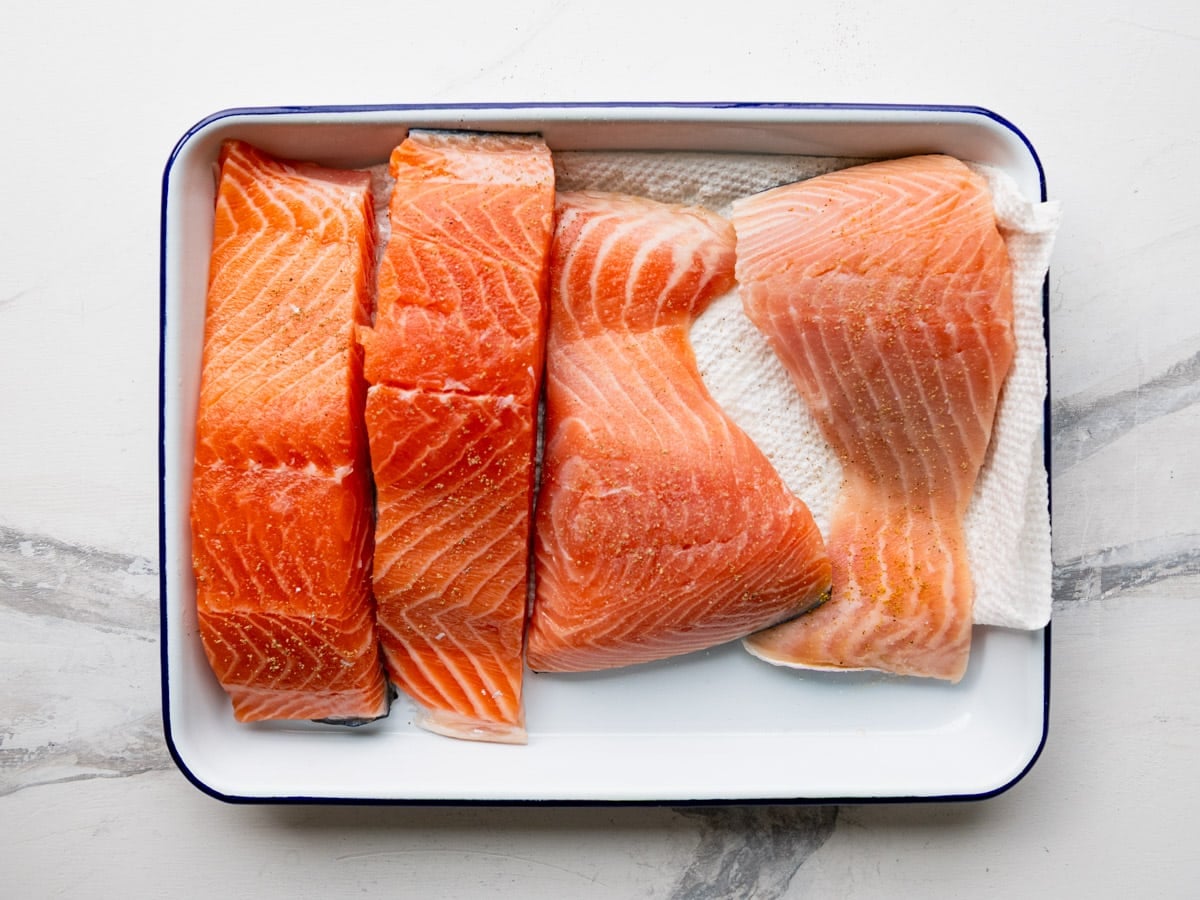
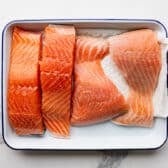
Start by patting the salmon fillets very dry with paper towels. This step really matters, because a dry surface is what helps you get that beautiful golden crust in the skillet instead of steaming the fish.
Season both sides with kosher salt and black pepper just before cooking.
⇢ Try not to season the salmon too far in advance. Salt pulls moisture to the surface, so seasoning right before the fillets hit the pan helps keep the outside dry and gives you the cleanest sear.
Step 2: Sear the Salmon
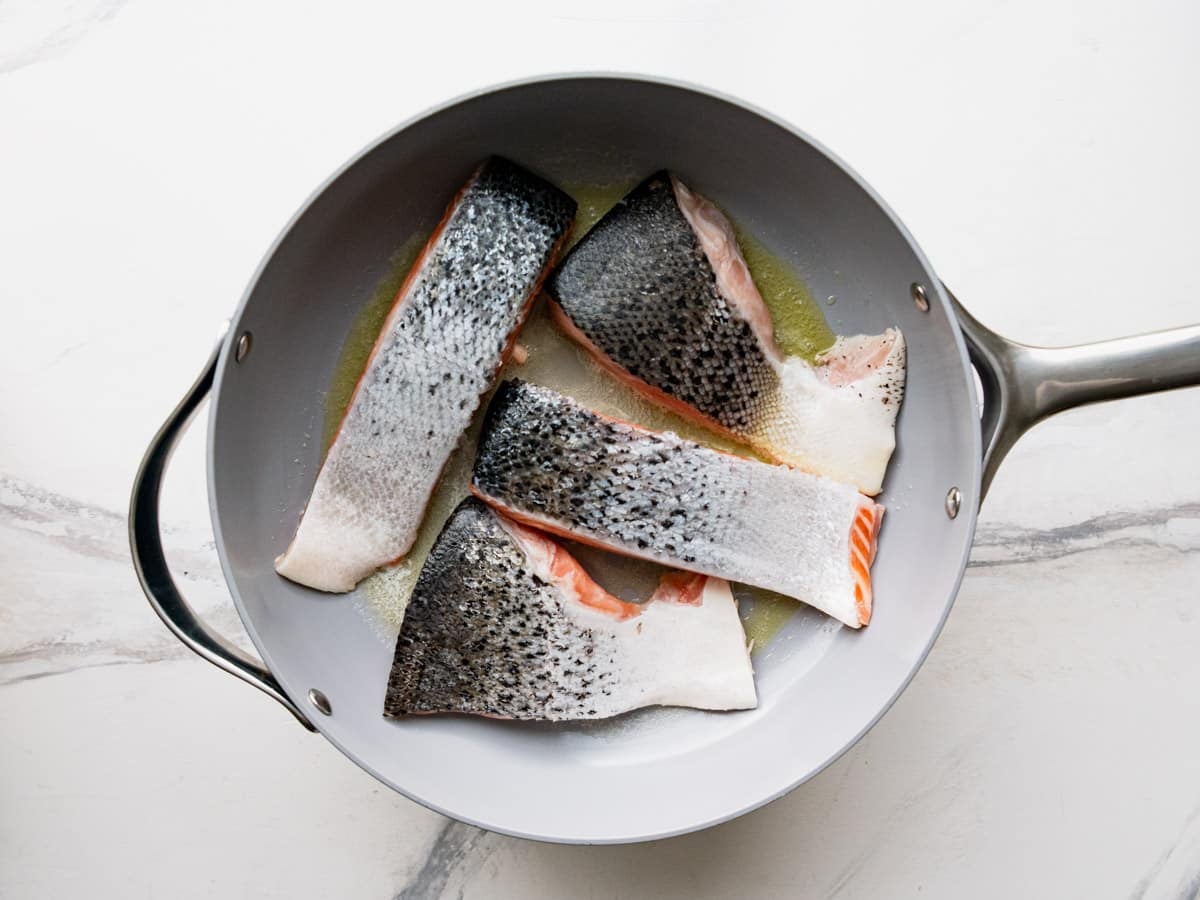
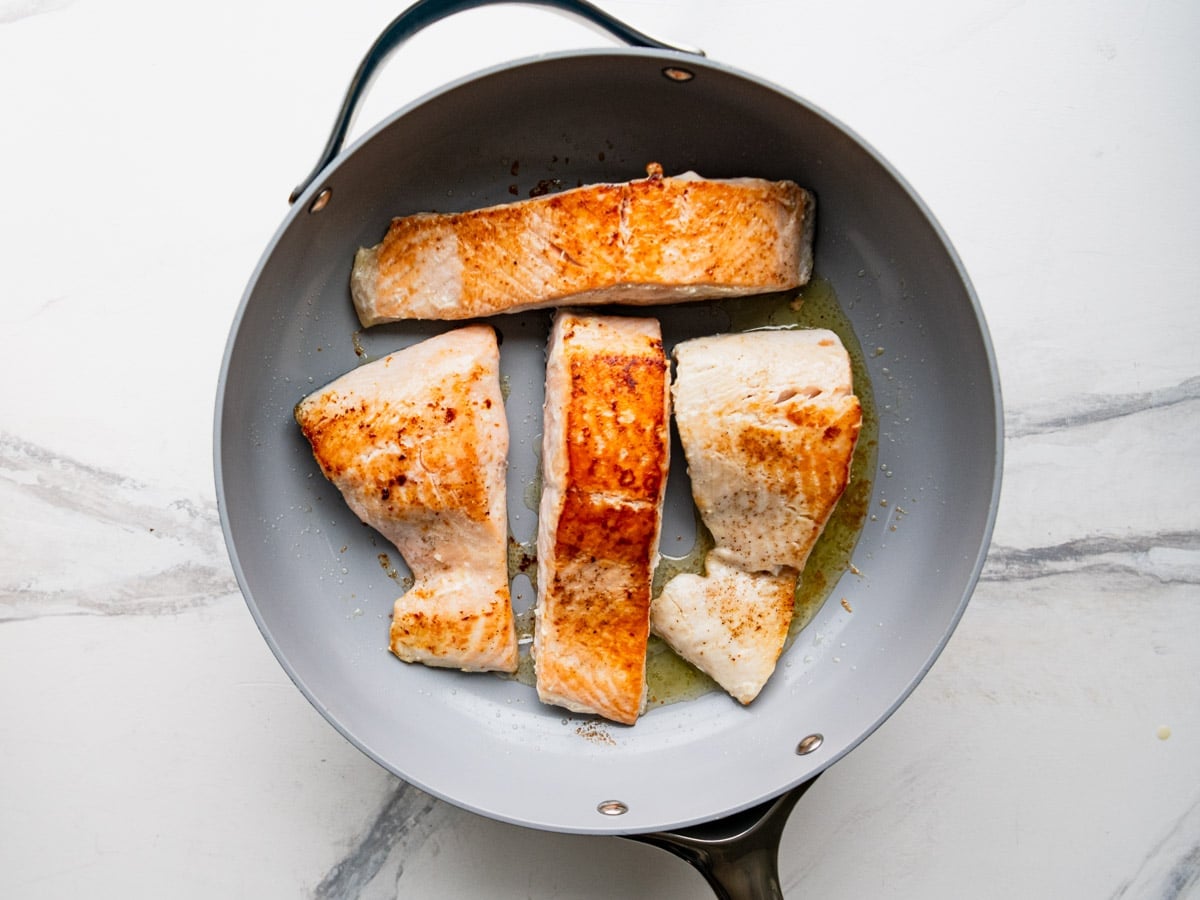
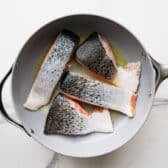
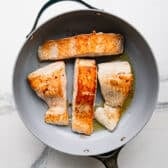
Heat the olive oil and 1 tablespoon of butter in a large nonstick or well-seasoned skillet over medium-high heat. Once the butter is melted and the pan is hot, add the salmon skin-side up, so the flesh side is down in the pan. Let it cook without moving for about 4 minutes.
⇢ You’re looking for a deep golden crust before you flip it. That rich color is the best visual cue that the salmon has properly seared and will release easily from the pan.
Flip the fillets, reduce the heat to medium, and cook for another 4 to 5 minutes, or until the fish flakes easily with a fork at the thickest part. If you like to go by temperature, the USDA recommends 145°F, although many home cooks prefer about 125 to 130°F for a more tender center.
Transfer the cooked salmon to a plate while you make the sauce. That short rest is perfectly fine and won’t cool the fish down much.
Love the crispy skillet method? My Blackened Salmon uses the same approach with a bold Cajun spice crust.
Step 3: Make the Garlic Butter Sauce
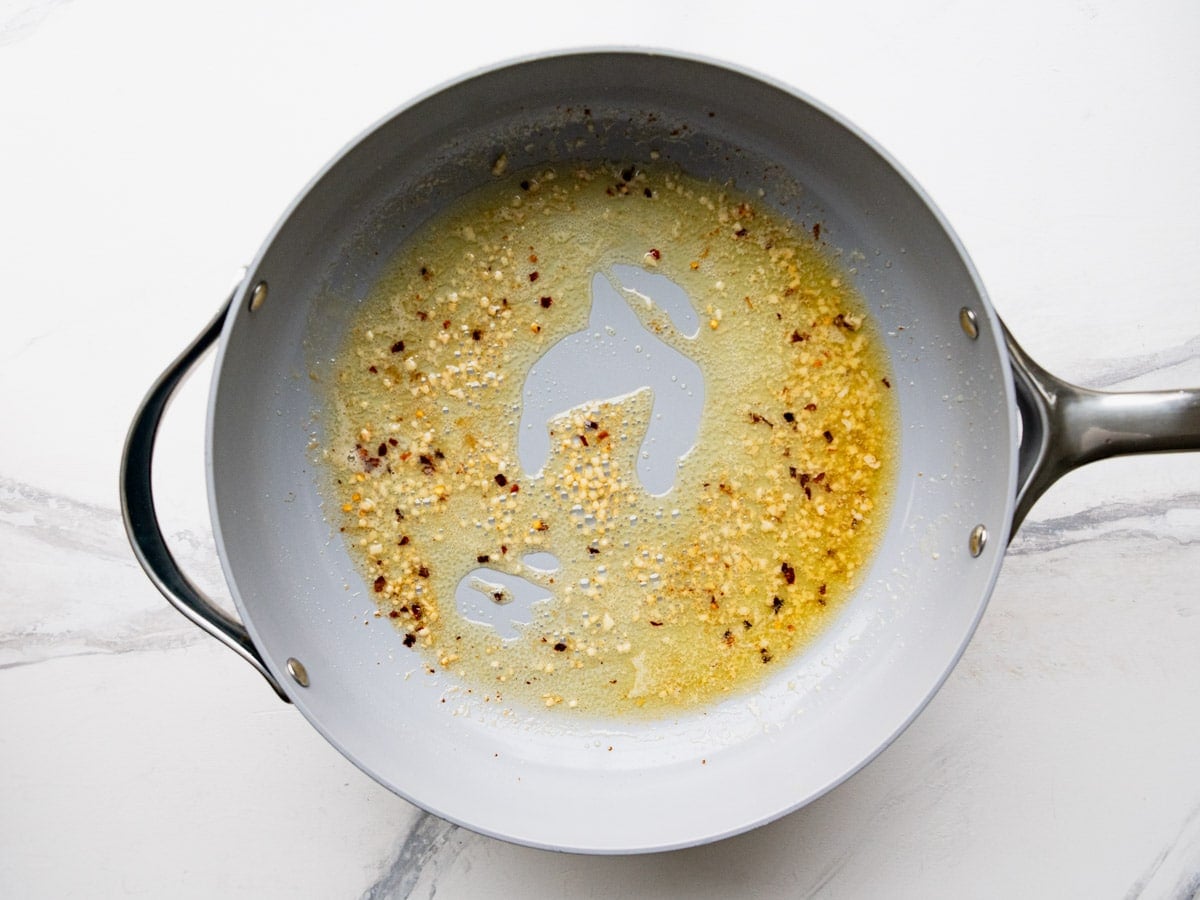
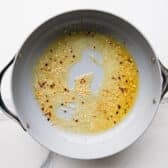
Reduce the heat to medium-low after removing the salmon from the skillet. Add the remaining 2 tablespoons of butter, then stir in the minced garlic and cook for about 30 seconds, just until fragrant. Be careful not to let it burn.
⇢ Garlic goes from fragrant to bitter quickly at high heat. Keep the burner on medium-low and watch it. Thirty seconds is usually enough before you add the liquids.
Once fragrant, stir in the lemon juice, honey or brown sugar, and red pepper flakes. The little bit of sweetness does more than sweeten the sauce. It balances the lemon and helps the buttery mixture cling nicely to the salmon when you spoon it over the top.
Step 4: Finish and Serve
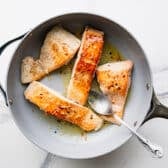
Return the salmon to the skillet and spoon the garlic butter sauce generously over each fillet. Let everything warm through for 1 to 2 minutes so the fish can soak up some of that flavor. Garnish with fresh parsley and serve with lemon wedges on the side.
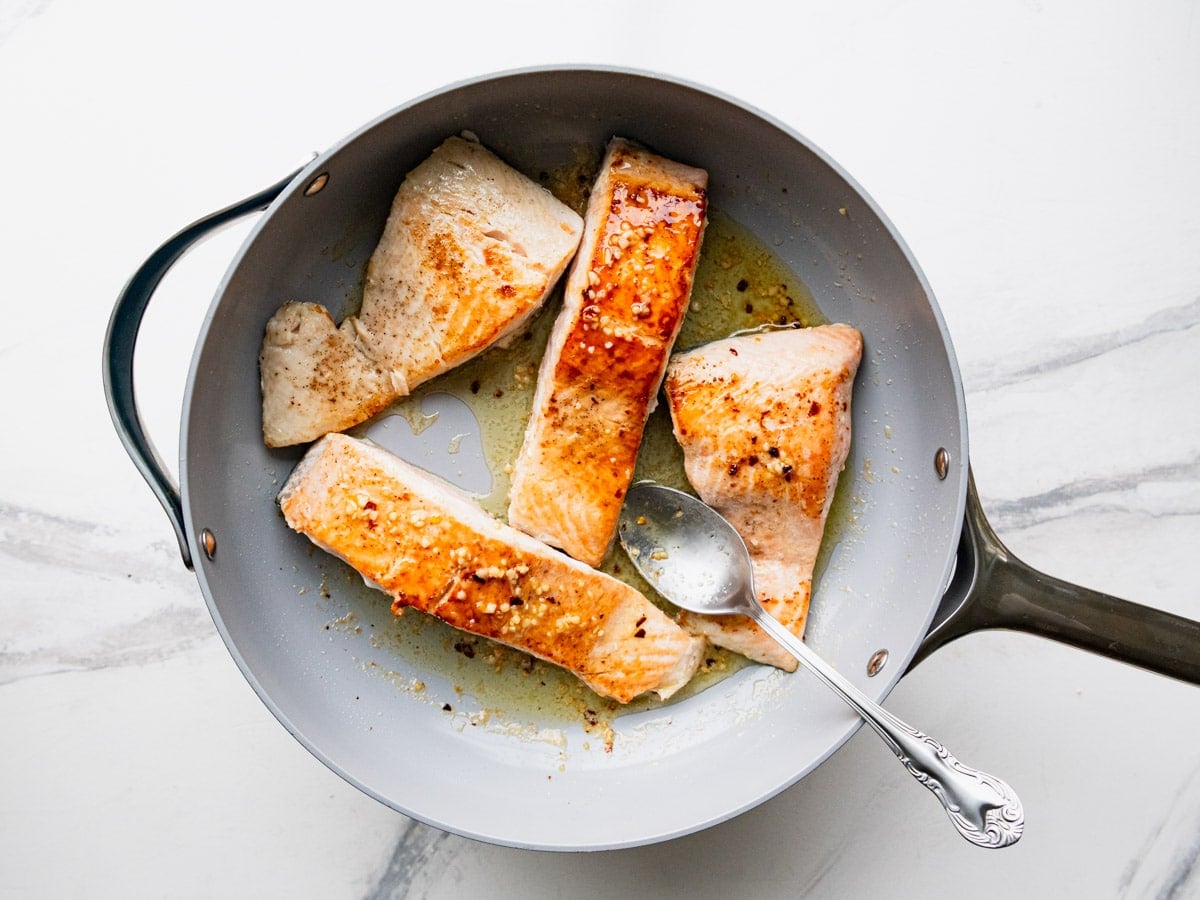
Don’t rush this final step. Spooning the sauce over the salmon for an extra 30 seconds or so is what gives it that glossy, restaurant-style finish. Be sure to drizzle any extra sauce over the top just before serving.
What to Serve with Garlic Butter Salmon
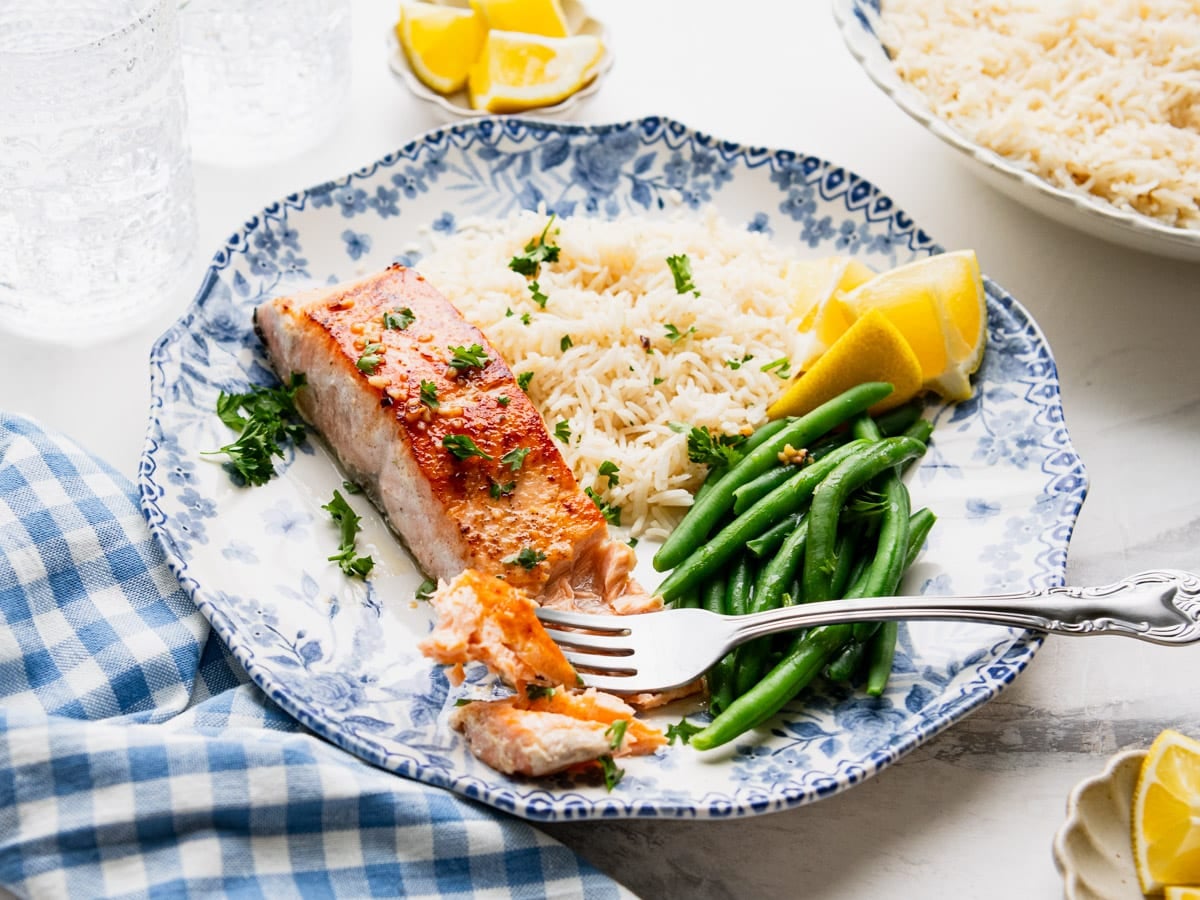
The garlic butter sauce in this recipe is rich and lemon-forward, so it pairs best with sides that can soak it up or offer a fresh contrast.
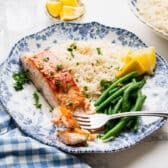
A bed of white rice or rice pilaf is the natural first choice. The sauce makes every bite delicious!
Also Great Alongside These:
Storage, Freezing, & Make-Ahead
- Refrigerator: Store leftover salmon in an airtight container for up to 2 days
- Reheating: Low and slow is key. Reheat gently in a skillet over low heat or in a 275°F oven for about 10-12 minutes. Avoid the microwave if possible, as it tends to overcook the fish and dry it out.
- Freezing: Cooked salmon can be frozen for up to 3 months. Thaw overnight in the refrigerator before reheating.
- Make-ahead: This recipe is best served fresh. The sauce is quick to make, so there’s little advantage to prepping ahead. Leftovers are still excellent, especially flaked over rice or tossed into pasta the next day.
Have leftovers? Garlic butter salmon is great in my Creamy Salmon Pasta, in Salmon Patties, or flaked over a simple green salad.
Frequently Asked Questions
How do I know when the salmon is done?
The most reliable visual test is the flake. Press gently at the thickest part of the fillet with a fork. If it separates into clean flakes, it’s done. If it resists and looks translucent in the center, give it another minute. If you prefer to use a thermometer, the USDA recommends an internal temperature of 145°F, though many cooks prefer 125-130°F for a more tender, moist center. Both of these methods work great!
Can I use skinless salmon?
Yes. Skinless fillets work in this recipe, though skin-on is slightly more forgiving. The skin acts as a buffer between the flesh and the hot skillet, making the flip easier and helping the fish stay moist. If using skinless, be a bit more careful when flipping and use a wide, thin spatula.
Can I use frozen salmon?
Yes, but thaw it completely first. Pat it very dry before seasoning, since thawed frozen fish tends to hold more moisture. For a quick thaw, place sealed fillets in a bowl of cold water for 20-30 minutes. Don’t cook salmon from frozen in this recipe. The moisture prevents a proper sear.
More Salmon Recipes
- Dijon Mustard Salmon
- Honey Maple Glazed Salmon
- Sheet Pan Maple Glazed Salmon
- Poached Salmon
- Salmon Sandwich (another great way to use any leftover fillets)

Did you make this recipe?
If you enjoyed this recipe, please leave a comment with a 5-star review at the bottom of the post. Thank you!
Watch How to Make It
Garlic Butter Salmon
Equipment
Ingredients
- 4 salmon fillets (about 5-6 ounces each), skin-on or skinless
- Kosher salt and ground black pepper, to taste
- 1 tablespoon olive oil
- 3 tablespoons salted butter, divided
- 3 cloves garlic, minced (about 1 tablespoon)
- 1 tablespoon lemon juice, plus lemon wedges for serving
- 1 teaspoon honey or brown sugar
- ¼ teaspoon crushed red pepper flakes or a pinch of cayenne (optional)
- 1 tablespoon chopped fresh parsley (optional)
Instructions
- Pat the salmon very dry with paper towels. Season both sides with salt and pepper.

- Heat the olive oil and 1 tablespoon of butter in a large nonstick or well-seasoned skillet over medium-high heat. Add the salmon flesh-side down and cook, without moving, until golden and crisp, about 4 minutes.
- Carefully flip the fillets and reduce the heat to medium. Continue cooking just until the fish flakes easily with a fork, about 4-5 more minutes. Transfer to a plate.
- Reduce the heat to medium-low. Add the remaining 2 tablespoons of butter to the skillet. Stir in the garlic and cook for about 30 seconds, just until fragrant. Add the lemon juice, honey (or brown sugar), and red pepper flakes. Stir until smooth.
- Return the salmon to the skillet and spoon the garlic butter sauce generously over each fillet. Let warm through for 1-2 minutes.
- Garnish with fresh parsley and serve with lemon wedges. Spoon extra sauce over each piece just before serving.
Notes
- Dry the salmon thoroughly. Patting the fillets dry before searing is the key to a golden crust. Moisture prevents browning.
- Don’t move the salmon while it sears. Leave the fillets undisturbed until they release naturally from the pan. If they stick, they need more time.
- Butter, divided. The recipe uses 1 tablespoon of butter for searing and 2 tablespoons for the sauce. This keeps the butter from burning at high heat while still delivering full garlic butter flavor in the sauce.
- Doneness cue. The salmon is done when it flakes easily with a fork at its thickest part. For a temperature reading, the USDA recommends 145°F. Many cooks prefer 125-130°F for a more tender, moist center.
- Skin-on vs. skinless. Either works. Skin-on is more forgiving at the flip. The skin protects the flesh and helps the fillet cook evenly. Skinless requires a bit more care when turning.
- Honey or brown sugar. Both add a hint of sweetness that balances the lemon and helps the sauce cling to the fish. Use whichever you have on hand.
- Red pepper flakes. These are optional but add a gentle heat that plays well with the lemon and butter. Start with ¼ teaspoon and adjust to taste.
- Storage. Refrigerate leftovers in an airtight container for up to 2 days. Reheat gently in a skillet over low heat or in a 275°F oven for 10-12 minutes. Cooked salmon can also be frozen for up to 3 months.













⭐️ Looking for More Like This?
Check out our collection of 30-Minute Skillet Dinners for more ideas.