This creamy chicken and wild rice soup is the one I start making the minute the mornings turn cool. A spoonful of flour cooked into the butter is what gives it that thick, spoon-coating body, no canned soup required. And because the chicken and rice are already cooked, dinner’s done in about 45 minutes!
More chicken soups:

Before You Get Started
Two things make or break this soup, and both come down to how you handle the dairy and the rice. Read these before you start cooking:
- Bring the cream to room temperature. Set it on the counter when you start chopping. Cold half-and-half hitting hot soup is what makes it curdle, and once it separates there’s no bringing it back.
- Keep the heat low once the cream goes in. You’re warming the soup through, not cooking it. A boil after the dairy is added will break it just as surely as cold cream will.
- Cook the rice separately, never in the pot. Wild rice takes far longer than this soup does. For the best texture, the rice needs to be fully cooked when you add it to the pot.
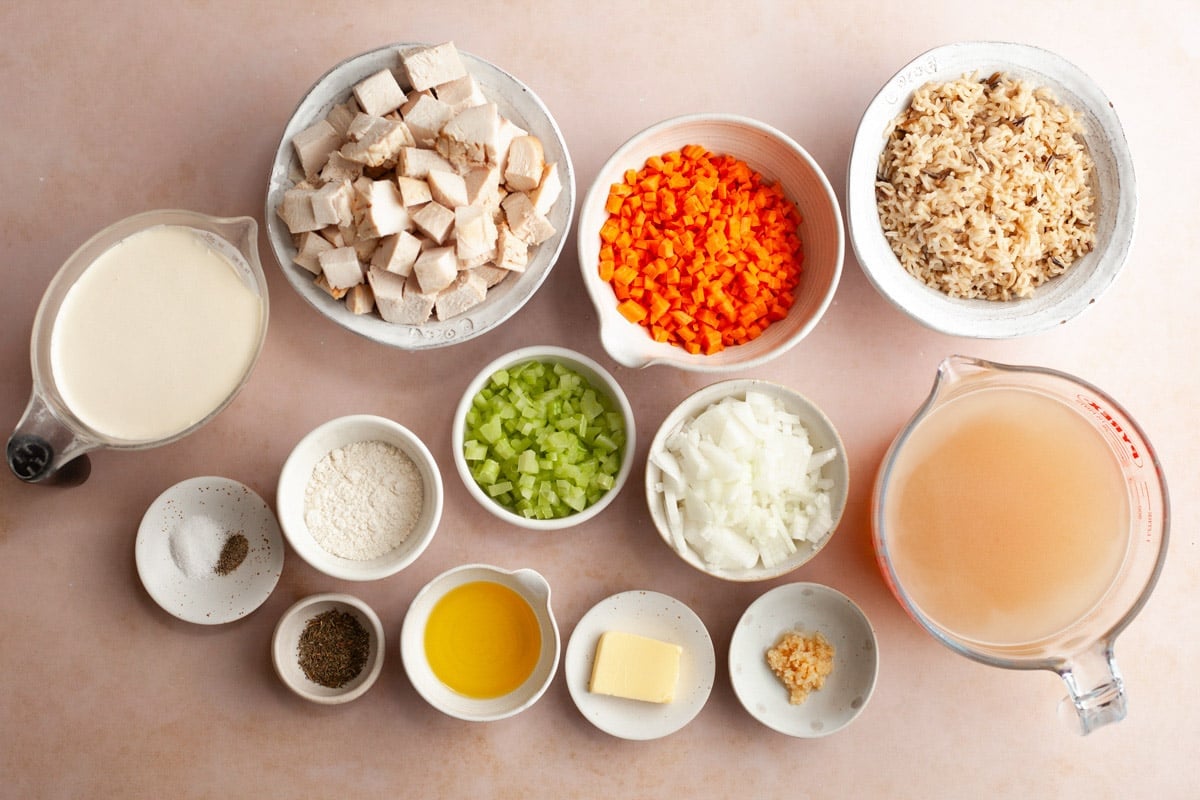
How to Make Chicken and Wild Rice Soup
Once the chicken and rice are ready, the soup itself takes about half an hour. There’s only one step that really needs your full attention.
Step 1: Get the Chicken and Rice Ready
Cook the rice according to the package directions, seasoning packet and all, then set it aside. I use a box of long grain and wild rice mix here on purpose.
The seasoning packet adds a savory depth that carries into the finished soup, and cooking it separately means the grains come out right every single time. If you’d rather use plain wild rice or a wild rice blend, that works too. Cook it separately the same way.
The chicken goes in already cooked, so this is a great place to use whatever you’ve got. Rotisserie chicken, leftover roast chicken, poached breasts, shredded chicken from the slow cooker.
You’ll need about four cups, diced or shredded, whichever texture you like better in a bowl of soup.
No cooked chicken on hand? My Slow Cooker Shredded Chicken gives you plenty with almost no hands-on time.
Step 2: Soften the Vegetables
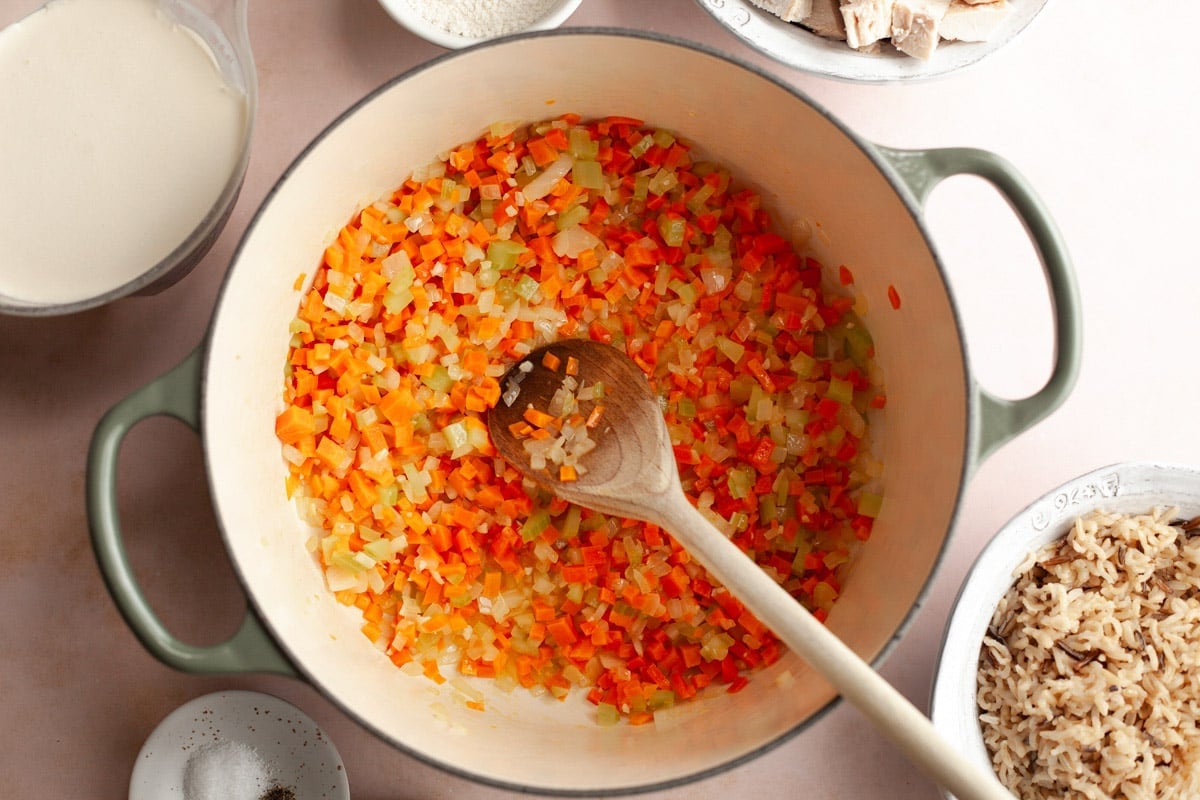
Heat the butter and olive oil in a large Dutch oven over medium heat until the butter melts. The oil isn’t there for flavor. It raises the smoke point just enough that the butter won’t brown before the vegetables are ready.
Add the onion, carrots, celery, and garlic all at once. Cook for 5 to 7 minutes, stirring now and then, until the onions turn soft and translucent. You’re not looking for color here, just tenderness.
Step 3: Make the Roux
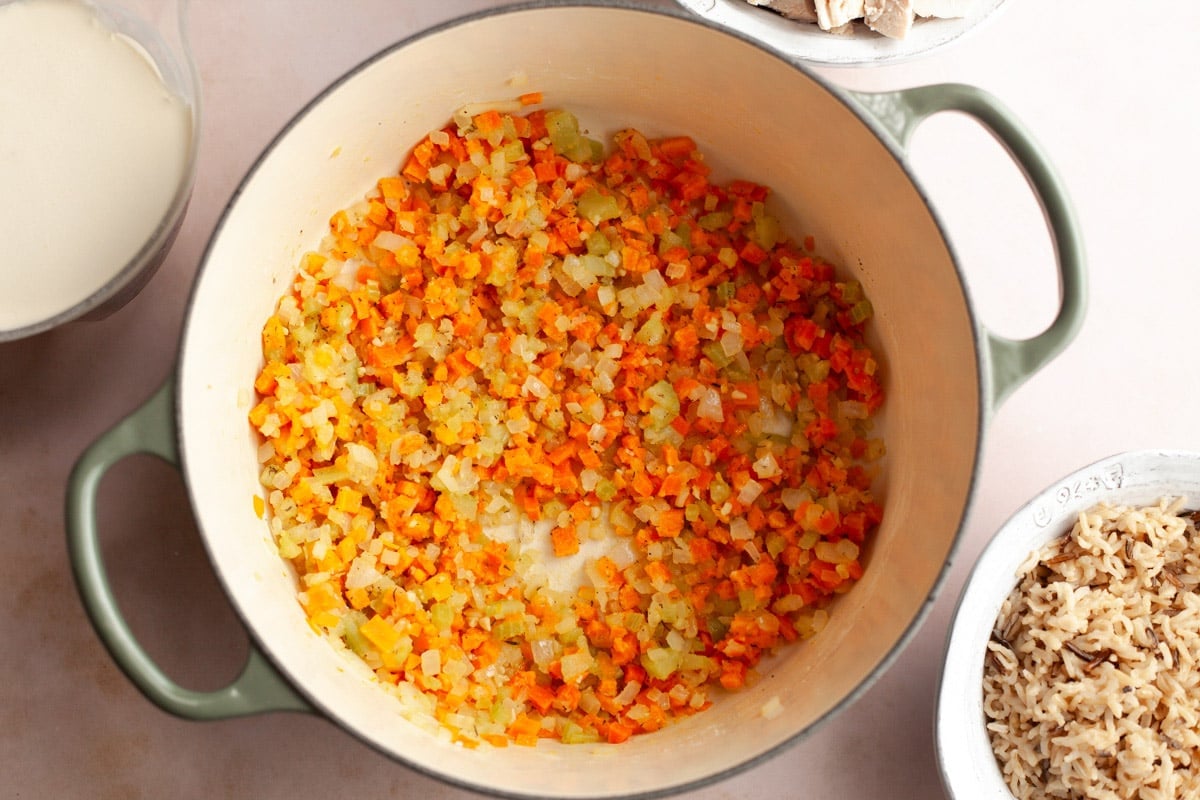
Sprinkle the flour over the vegetables along with the thyme, salt, and pepper. Stir constantly for a full minute. It’ll look like the flour is just coating everything in the pot, and that’s exactly right.
The constant stirring is doing two jobs: You’re cooking off the raw flour taste, and you’re setting up the thickening that happens in the next step. Don’t shortcut it. If you do, you’ll taste the flour in the finished soup no matter how much cream goes in later.
Step 4: Add the Broth and Thicken
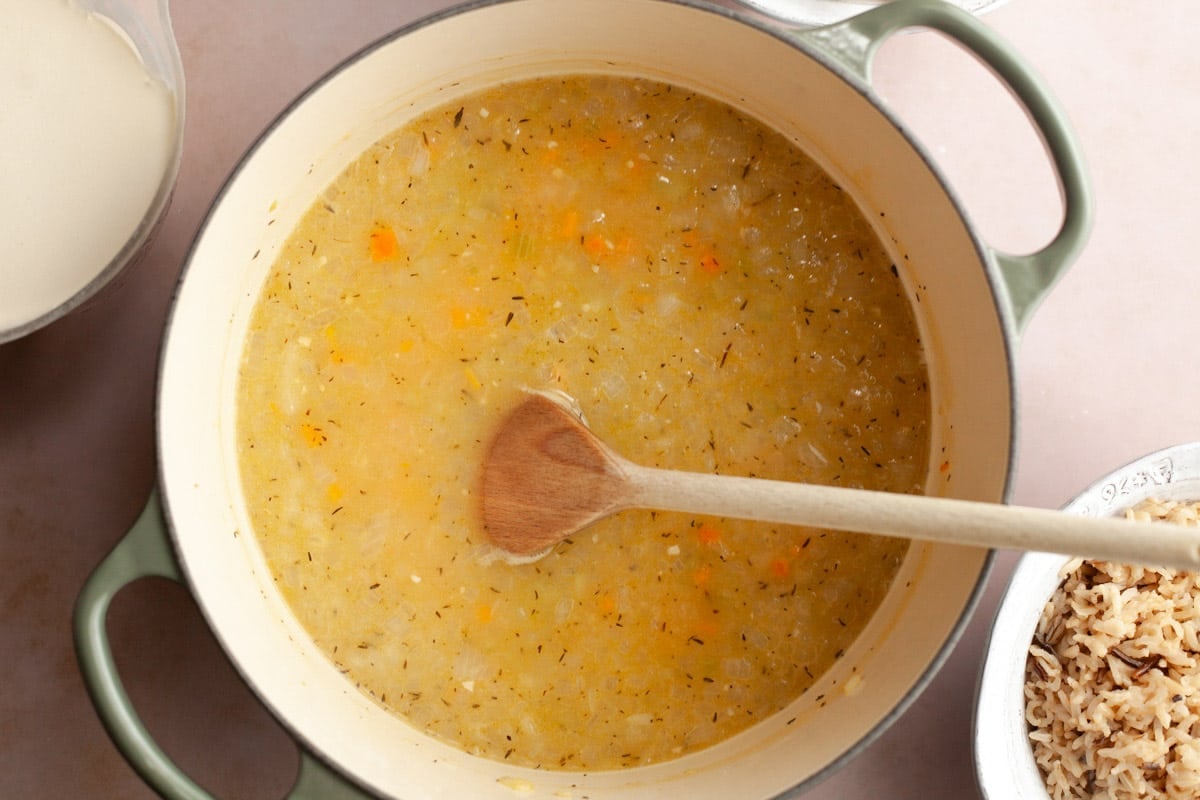
Pour in the broth gradually, stirring the whole time so the flour doesn’t clump. Bring it up to a boil, then cook and stir for about 2 minutes. You’ll feel it thicken. Pull the spoon out and it should hold a coating instead of running clean.
The broth flavor comes through clearly in the finished soup, so use one you actually like. If you keep a batch in the freezer, my Chicken Broth is the one I reach for.
Step 5: Stir in the Chicken, Rice, and Cream
Turn the heat down to low first. This matters more than anything else in this step.
Add the cooked chicken, the cooked rice, and the room temperature half-and-half or cream. Stir gently until everything’s warmed through, and stop there. No bubbling, no simmering, nothing that looks like a boil.
The soup will be thick, which is how I like it. If you want it looser, stir in extra broth a splash at a time until it’s right.
Taste it before it goes in bowls and add more salt and pepper if it needs it. Broths vary a lot, so this last taste is worth doing every time.

Ways to Change It Up
The soup is good as written, but here are the changes I actually make depending on what’s in the kitchen:
- Fresh herbs on top. A handful of parsley or thyme scattered over each bowl right before serving brightens everything and gives you a little color against all that cream.
- Mushrooms for something earthier. Add sliced mushrooms with the onions and carrots, and give them a couple of extra minutes to release their liquid before the flour goes in.
- Turkey instead of chicken. It works cup for cup, and dark meat holds up especially well. This is a delicious way to use up leftover turkey during the week after Thanksgiving!
- A looser, brothier bowl. Start with an extra cup of broth in step 4 rather than adding it at the end, and you’ll get a thinner soup without watering down the flavor.
Try it another way
Same flavors, different format! My Chicken and Wild Rice Casserole turns all of this into an oven-baked supper to enjoy with a fork.
If you’re looking for family-friendly, classic comfort food, this is it! When my kids aren’t feeling well or we just need a cozy meal to reheat throughout the week, a pot of creamy chicken and wild rice soup is the perfect solution.
What to Serve Alongside
Bread is the answer here! You’ll want something to soak up that creamy broth, and a warm loaf on the table turns it into a proper dinner. A simple green salad rounds things out if you want an extra vegetable on the side.
Serve it with:
Storing and Reheating
There’s one quirk worth knowing about before you put the leftovers away.
In the fridge: Leftovers keep in an airtight container for 3 to 4 days.
It thickens overnight: Between the roux and the rice, what was a creamy soup at dinner can be closer to a casserole by morning! That’s normal, and it’s easy to fix.
Reheating: Warm it gently over low heat and stir in a splash of broth until it loosens back up. Don’t let it boil, for the same reason you didn’t let it boil the first time.
→ I don’t recommend freezing this one: Cream-based soups separate when they thaw, and the rice turns soft and loses its texture. If you want to get ahead anyway, freeze the soup before the dairy and rice go in. Make it through the broth step, freeze that base, then thaw it and finish with the chicken, rice, and cream when you’re ready to eat.
Frequently Asked Questions
Can I use plain wild rice instead of a long grain and wild rice mix?
Absolutely. Cook it separately according to the package directions, and know that it takes longer than white rice does. You’ll want to taste the finished soup carefully, since you’re missing the seasoning packet. A little extra salt and a pinch more thyme usually gets it where it needs to be.
My soup is thinner than I want. How do I thicken it?
Let it simmer a few extra minutes at the end of step 4, before the cream goes in. That’s where the thickening happens. Keep in mind that the soup thickens slightly as it sits off the heat, too.
Can I make this without heavy cream?
Half-and-half is what I use most of the time, and heavy cream gives you the richest version. I don’t recommend regular milk. It’s too thin to give the soup any body, and it’s more likely to separate on you. Evaporated milk is the closest workaround if that’s what’s in the pantry.
Can I use leftover turkey instead of chicken?
Yes, cup for cup. Dark meat is especially good here, and this is one of my favorite things to do with what’s left after Thanksgiving.

More Soups and Stews for Chilly Nights
Watch How to Make It

Creamy Chicken and Wild Rice Soup
Ingredients
- 2 tablespoons butter
- 2 tablespoons olive oil
- 1 small onion, diced (about 1 cup)
- 1 cup peeled and diced carrots (about 2 medium)
- ½ cup diced celery (about 1 large stalk)
- 2 garlic cloves, minced (about 2 teaspoons)
- ¼ cup all-purpose flour
- ½ teaspoon dried thyme
- ½ teaspoon kosher salt
- ¼ teaspoon black pepper
- 4 cups chicken broth, plus 1 to 2 cups extra to thin the soup if necessary
- 4 cups cooked, diced chicken
- 3 to 4 cups cooked wild rice, prepared with the seasoning mix (such as a box of Ben's Original Long Grain & Wild Rice, or 2 microwaveable pouches of the Ready Rice version)
- 2 cups half-and-half or heavy cream, at room temperature
Instructions
- In a large Dutch oven, heat the butter and olive oil over medium heat until the butter melts.
- Add the onion, carrots, celery, and garlic. Saute until the onions are translucent, about 5 to 7 minutes.

- Stir in the flour, thyme, salt, and pepper. Cook for 1 minute, stirring constantly.
- Gradually add the broth, stirring constantly. Bring to a boil, then cook and stir for 2 minutes, or until slightly thickened.
- Reduce the heat to low. Add the cooked chicken, cooked rice, and half-and-half or heavy cream. Stir over low heat just until warmed through. Do not boil.
- Taste and season with additional salt and pepper if necessary. If the soup is thicker than you'd like, stir in extra broth until it reaches the desired consistency.





Notes
- Cook the rice ahead: Prepare it according to the package directions, seasoning packet included, before you start the soup. The microwaveable version is a great shortcut!
- Use half-and-half or heavy cream. Milk is too thin here and is more likely to separate.
- Bring the dairy to room temperature. Cold cream hitting hot soup is the most common cause of curdling.
- Never boil after the cream goes in. Warm the soup through over low heat and stop there.
- Any cooked chicken works: Rotisserie, leftover roast chicken, poached breasts, or slow cooker shredded chicken.
- Thin it to taste: The soup is thick. Add an extra cup or two of broth a splash at a time until it’s where you want it.
- Season at the end: Broths vary in saltiness, so taste before you add more.
- It thickens overnight. Reheat gently over low heat with a splash of broth stirred in.
- Garnish with fresh herbs: Parsley or thyme adds color and a bright finish.













Did you make this recipe?
If you enjoyed this recipe, please leave a comment with a 5-star review at the bottom of the post. Thank you!