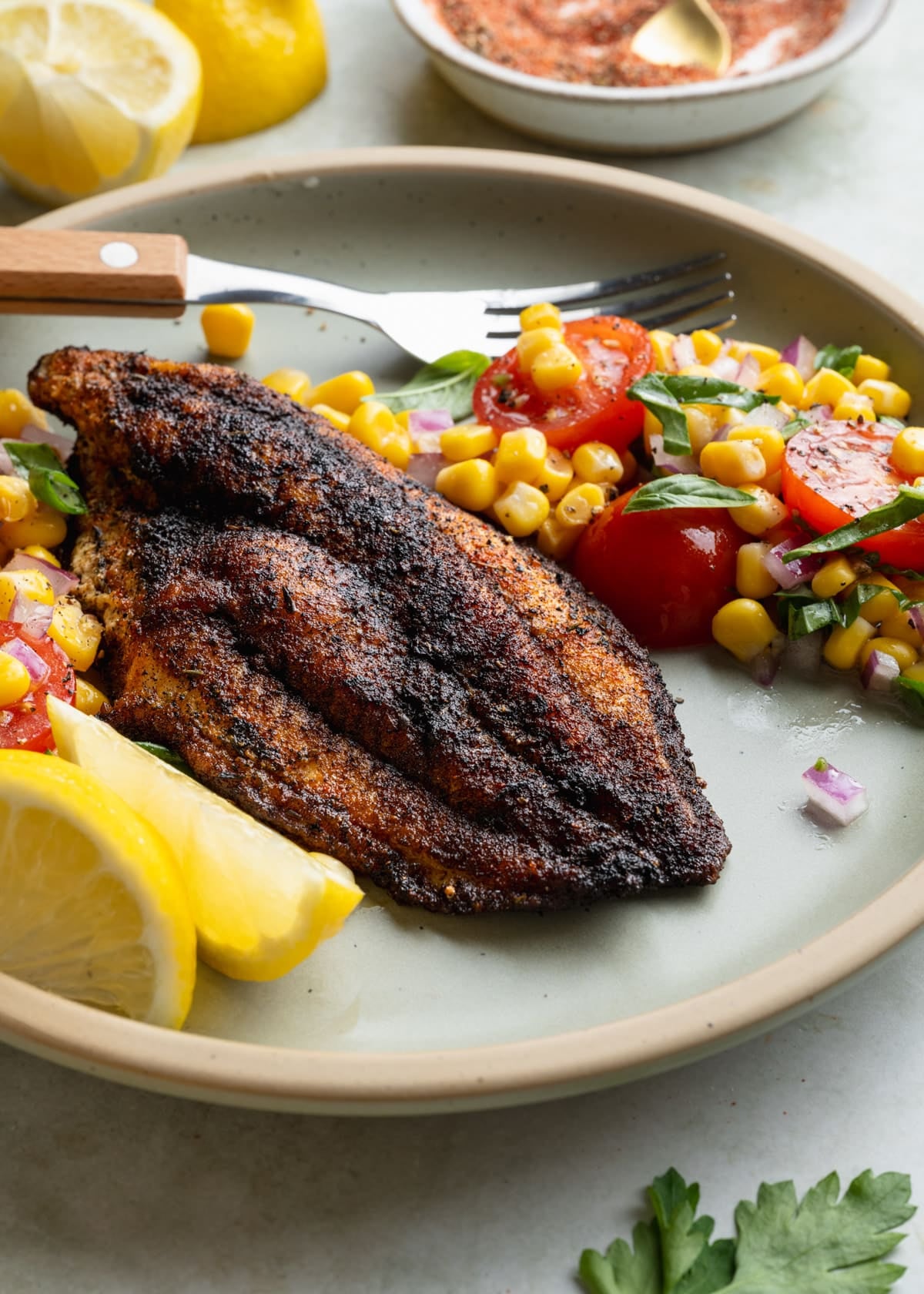
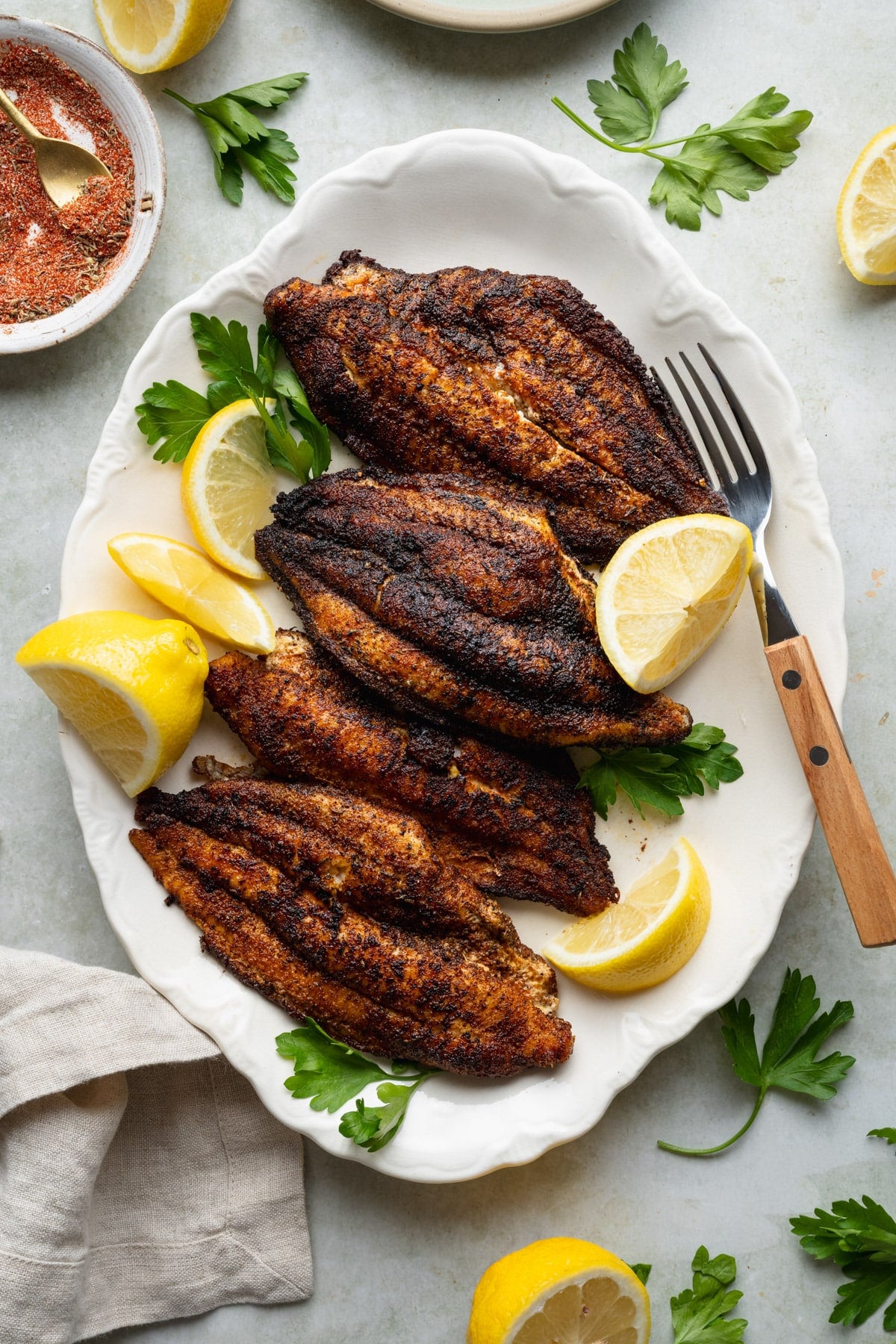
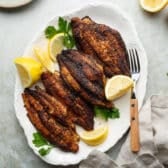
Blackened catfish tastes like it came straight from a Cajun kitchen, but it only needs one cast-iron skillet and about 20 minutes! A bold homemade spice blend and a screaming-hot pan give the fillets a dark, crisp crust while the inside stays tender and flaky. Finish with a squeeze of lemon for a restaurant-quality plate any night of the week!
More Southern Seafood Dinners:
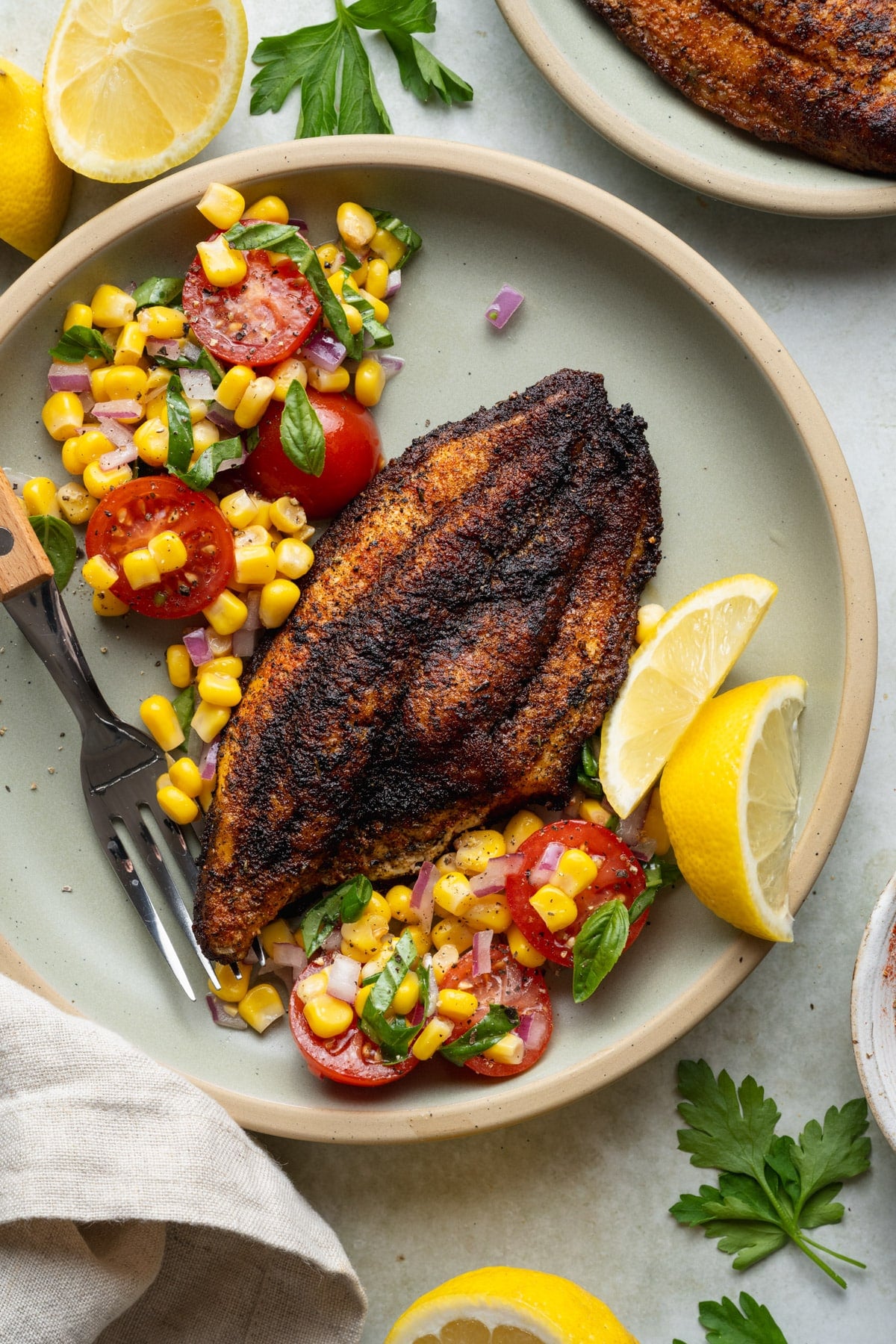
Before You Get Started
Keep these tips in mind for perfect blackened catfish every time:
- Get the pan really hot. Heat the cast iron until it is just about smoking so the fillets sear into a dark crust instead of steaming.
- Pat the fillets bone-dry. Dry fish grabs the butter and seasoning better and browns faster and crispier.
- Be ready for a little smoke. Blackening kicks up smoke, so run the exhaust fan, crack a window, or move to an outdoor burner if you have one.
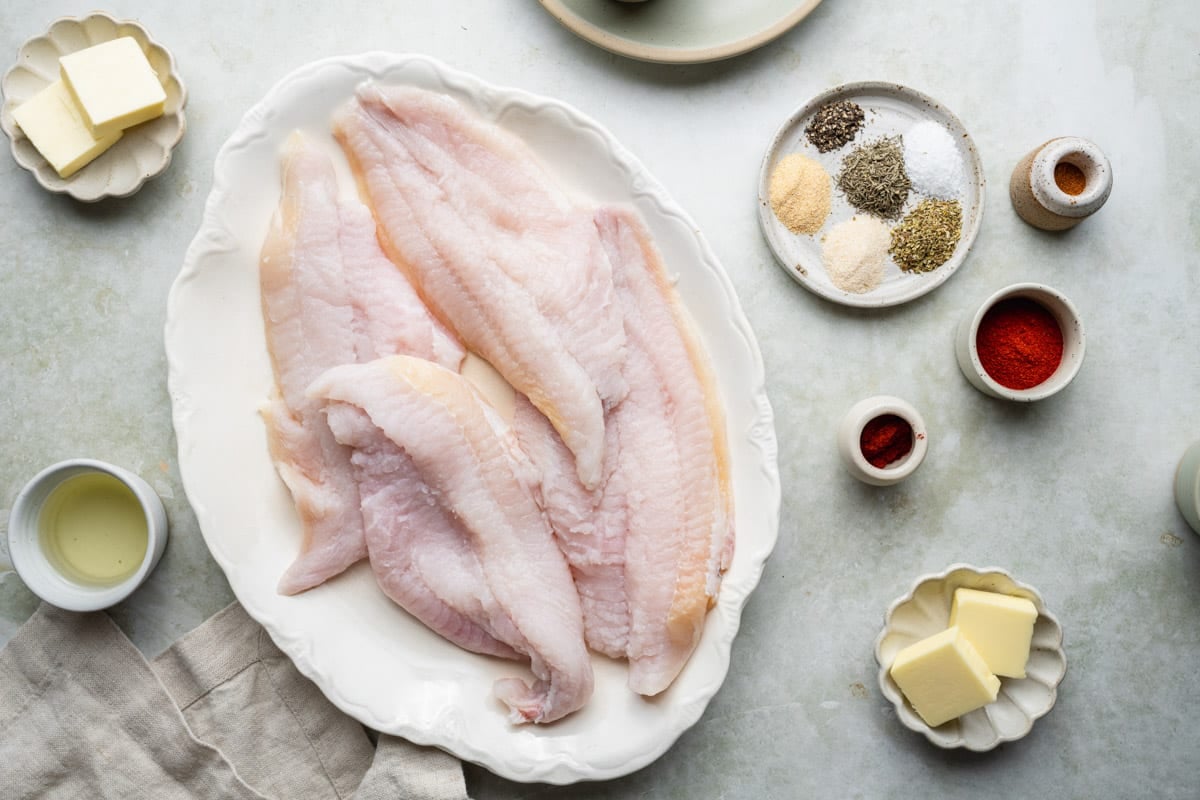
How to Make Blackened Catfish
Blackened catfish comes together in about 15 minutes, so it’s worth having everything measured and ready before you turn on the stove.
“Blackened” doesn’t mean the fish is burned. It’s a Cajun cooking technique that uses a bold blend of spices seared over high heat until they form a deep, flavorful crust while the fish inside stays tender and flaky.
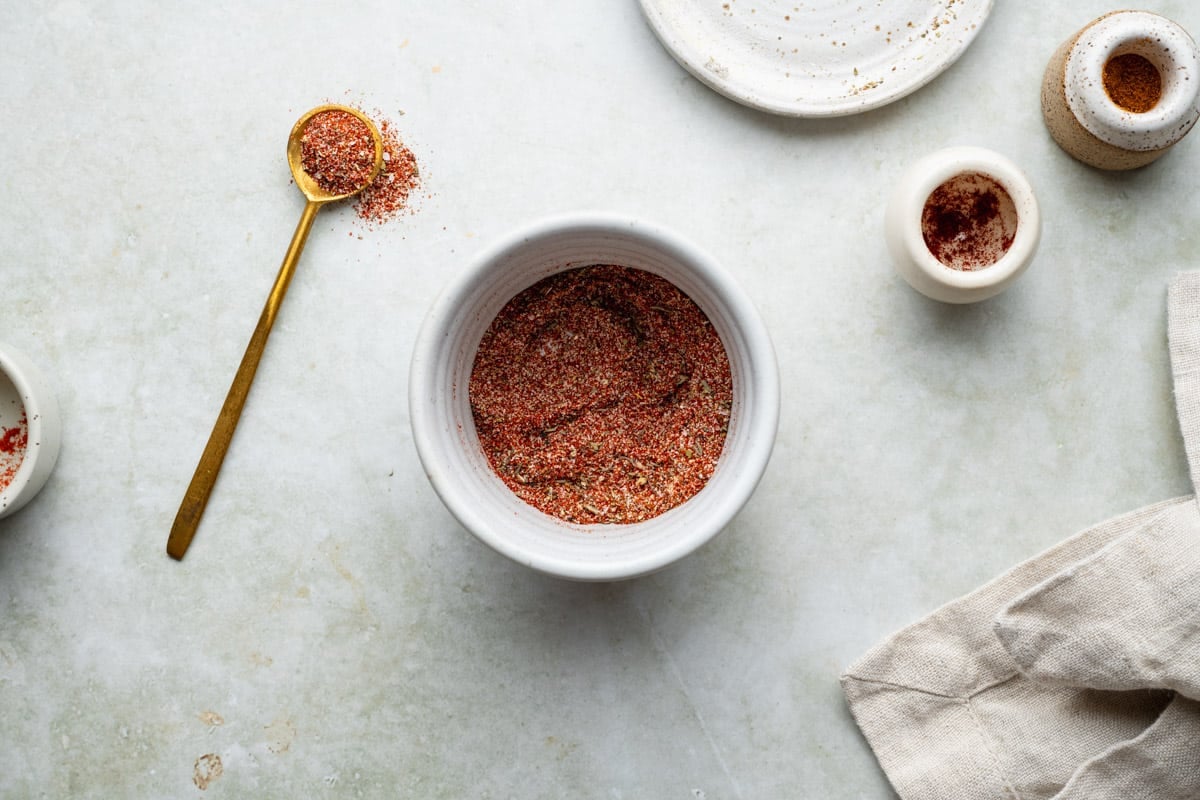
Step 1: Make the Blackening Seasoning
In a small bowl, stir together the smoked paprika, sweet paprika, garlic powder, onion powder, dried thyme, dried oregano, kosher salt, black pepper, and cayenne pepper.
⭢ Adjust the cayenne to suit your family’s taste. Use less for a mild fillet or add a little extra if you like more heat.
⭢ If you’re short on time, a good-quality store-bought Cajun or blackening seasoning will work just fine. Just be aware that many blends are saltier than homemade, so taste and adjust as needed.
Prefer to keep a batch ready to go?
My Blackened Seasoning makes enough for several dinners.
Step 2: Season the Catfish
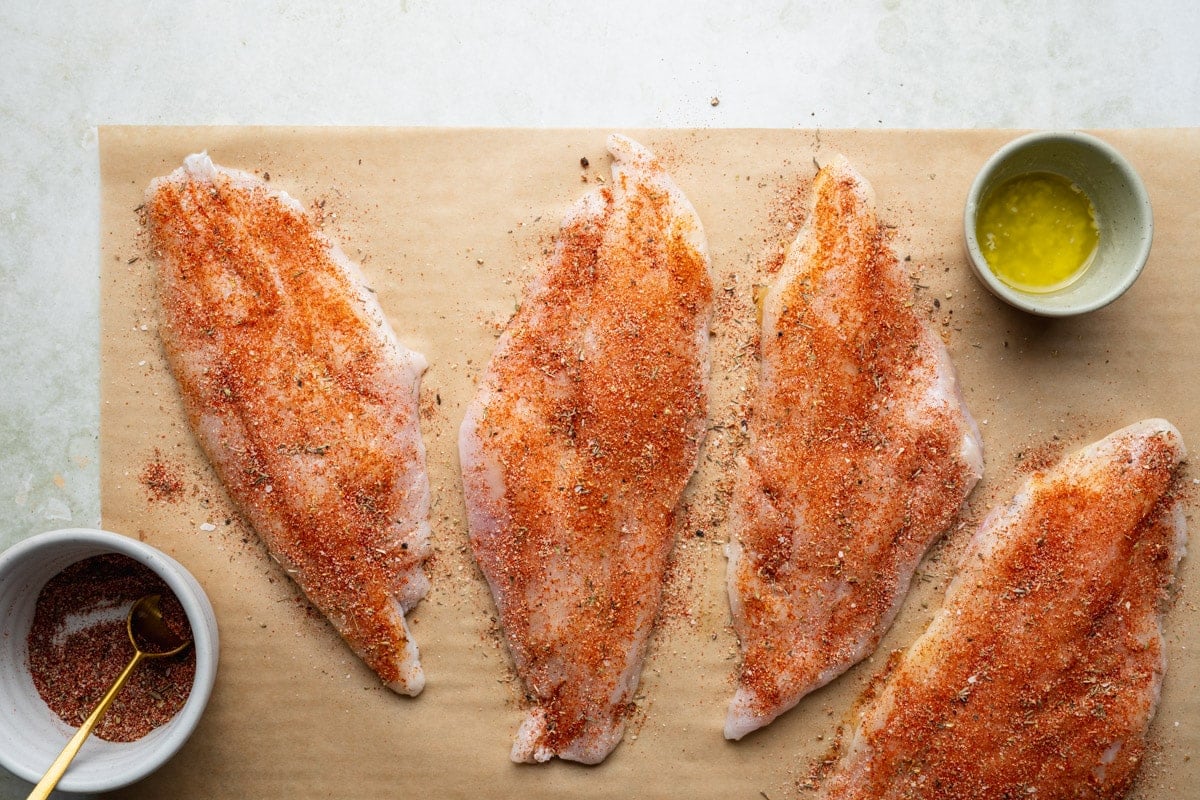
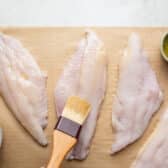
Pat the catfish fillets completely dry with paper towels. Brush both sides with melted butter,
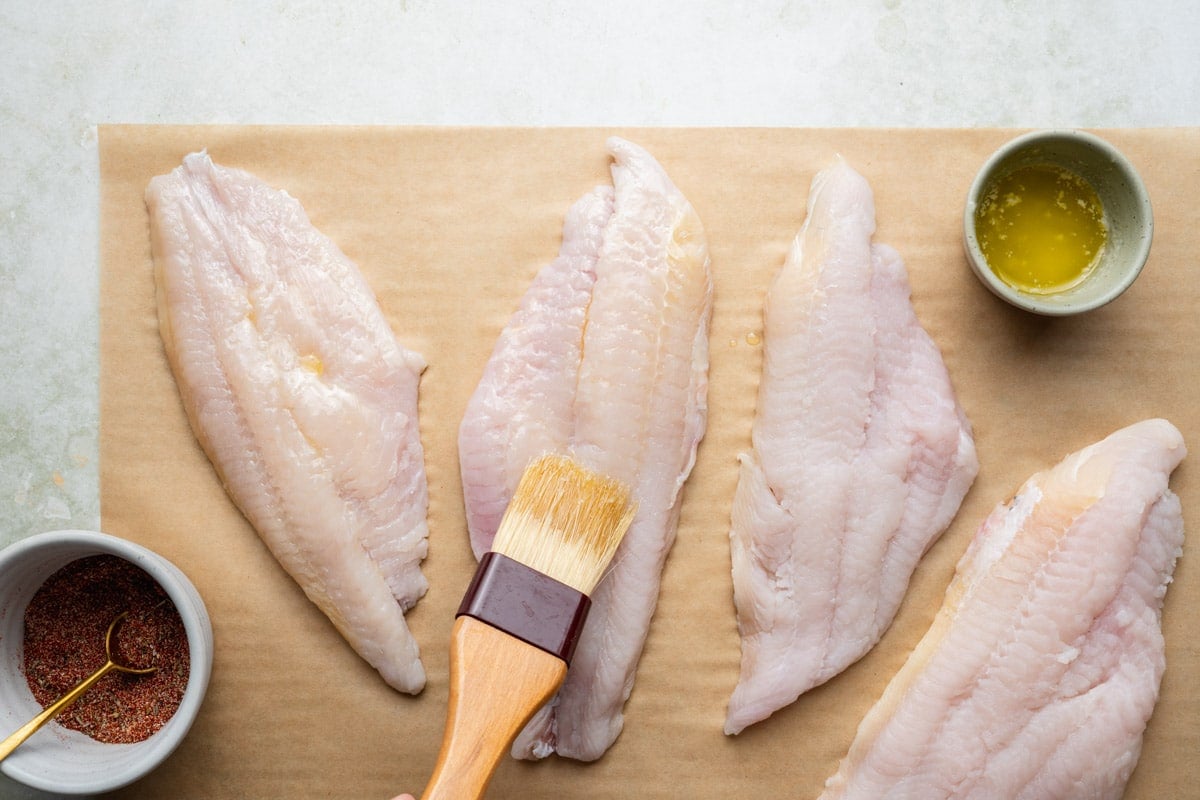
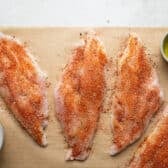
then sprinkle the seasoning evenly over each fillet, pressing gently so it sticks.
⭢ The butter does more than add rich flavor. It helps the spices cling to the fish and creates the beautifully browned crust that makes blackened catfish so good.
Step 3: Heat the Skillet
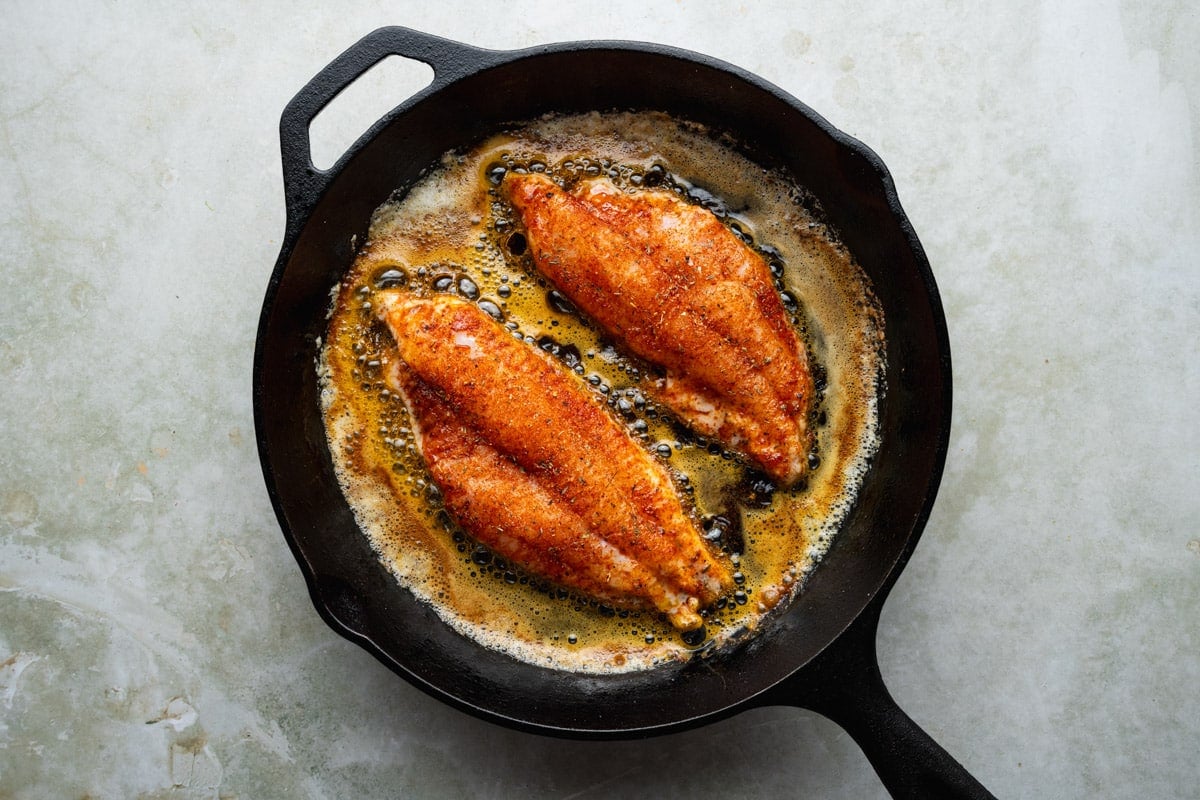
Heat the remaining butter and the oil in a large cast iron skillet over medium-high heat until the pan is very hot. You should hear a steady sizzle as soon as the fish touches the surface.
⭢ Using a little oil with the butter raises the overall smoke point, giving you the rich flavor of butter while helping prevent it from burning too quickly.
Step 4: Sear the First Side
Carefully place the catfish fillets in the skillet, laying them away from you to avoid splattering. Cook for 3 to 4 minutes without moving the fish until a dark, flavorful crust develops.
⭢ Resist the temptation to lift or slide the fillets to check underneath. Leaving them undisturbed allows the crust to develop and helps the fish release naturally from the pan.
Step 5: Flip and Finish
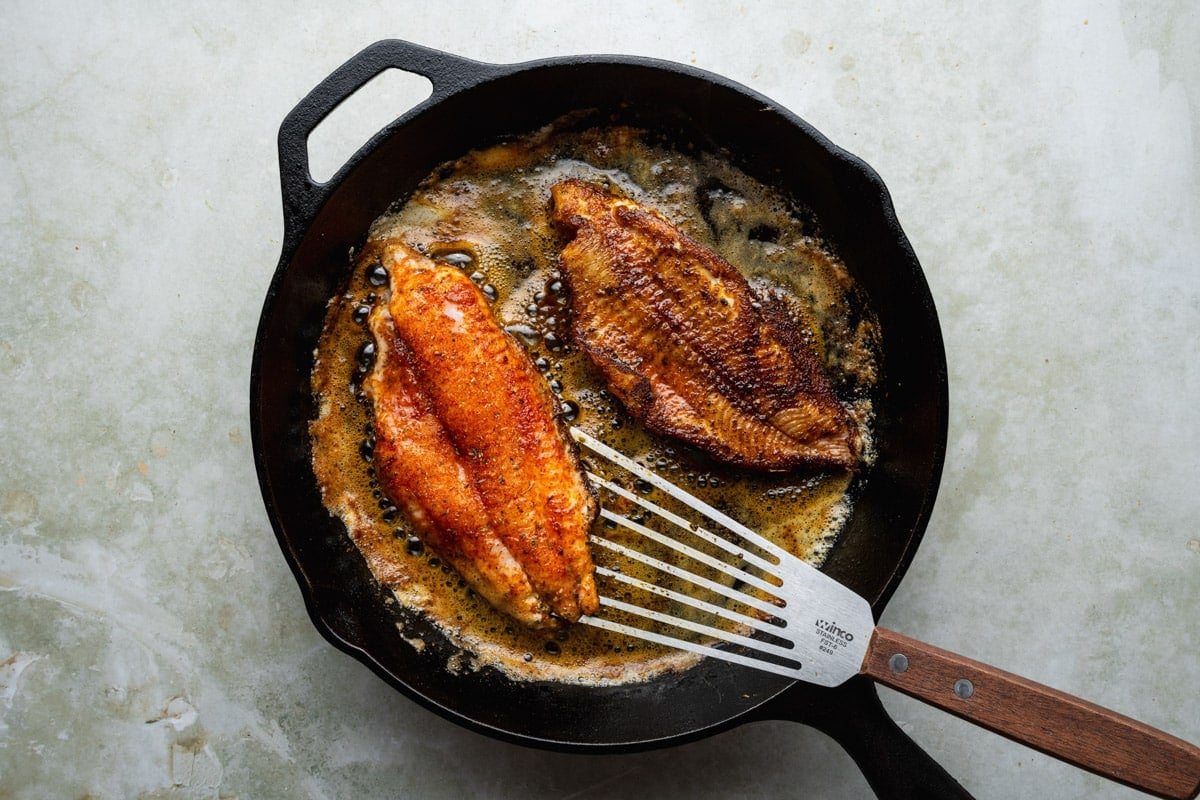
Gently flip the fillets with a thin fish spatula and cook for another 2 to 4 minutes, depending on their thickness.
⭢ The catfish is done when it flakes easily with a fork and reaches an internal temperature of 145°F.
For the juiciest results, remove the fish as soon as it reaches 145°F. Cooking much beyond that point can dry out the delicate fillets.
Step 6: Serve
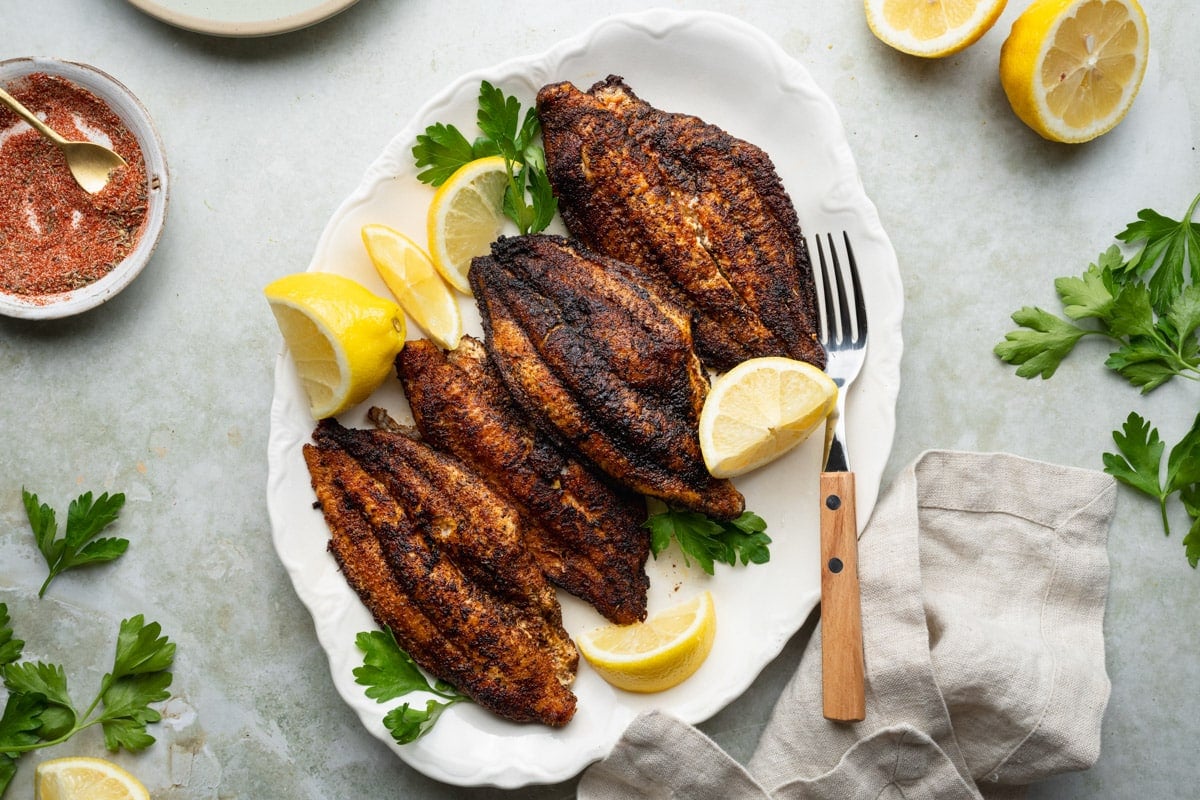
Transfer the blackened catfish to a serving platter and garnish with fresh parsley and lemon wedges. A squeeze of fresh lemon brightens the rich spices and balances the buttery crust perfectly.
Love that bold blackened crust?
Use the same technique for other proteins, too. My Blackened Chicken is another easy family favorite.
Serving Suggestions
Blackened catfish plays well with classic Southern sides. For a plate that feels like a fish-house dinner, start with a scoop of rice or a creamy slaw, then add a vegetable and something to soak up the buttery pan juices. A few favorites that work here:
Storage & Reheating
Storing: Refrigerate leftovers in an airtight container for up to a few days.
Reheating: Warm gently in a skillet or a hot oven to keep the crust. The microwave softens the crust and can overcook the fish, so I don’t recommend that method.
Best Fresh: Blackened catfish is at its best straight out of the pan while it’s still crispy.
Frequently Asked Questions
How do I get the blackening seasoning to stick to the fish?
Pat the catfish fillets completely dry with paper towels, then brush them with melted butter before adding the seasoning. Gently press the spice mixture onto the fish so it adheres well and forms a flavorful crust as it cooks.
Can I use a different fish, like tilapia or cod?
Yes! This method works well with other firm white fish such as tilapia, cod, haddock, or mahi mahi. Just adjust the cooking time based on the thickness of the fillets, since thinner fish will cook more quickly than thick pieces of catfish.
What if I don’t have a cast-iron skillet?
A heavy stainless steel or other heavy-bottomed, oven-safe skillet is the next best option because it can handle the high heat needed for blackening. Nonstick pans are not ideal since they don’t develop the same deeply browned crust that cast iron does.
More Southern Seafood to Try

Blackened Catfish
Ingredients
- 4 catfish fillets (about 5-6 ounces each)
- 1 teaspoon smoked paprika
- 1 teaspoon sweet paprika
- ½ teaspoon garlic powder
- ½ teaspoon onion powder
- ½ teaspoon dried thyme
- ½ teaspoon dried oregano
- ½ teaspoon kosher salt
- ¼ teaspoon ground black pepper
- ¼-½ teaspoon cayenne pepper, to taste
- 4 tablespoons salted butter, divided
- 1 tablespoon vegetable oil
Optional for serving:
- Lemon wedges
- Chopped fresh parsley
Instructions
- Make the Seasoning: In a small bowl, stir together the smoked paprika, sweet paprika, garlic powder, onion powder, thyme, oregano, salt, black pepper, and cayenne.

- Season the Catfish: Pat the catfish fillets dry with paper towels. Melt 2 tablespoons of butter in a small bowl. Brush both sides of the fish with the melted butter.
- Sprinkle the seasoning evenly over both sides of the fillets, pressing or rubbing gently so it adheres.
- Sear the Fish: Heat the remaining 2 tablespoons of butter and 1 tablespoon of oil a large cast iron skillet over medium-high heat until very hot.
- Carefully place the catfish fillets in the skillet. Cook for 3-4 minutes without moving them, until a dark crust forms on the bottom.
- Gently flip the fillets. Cook for another 2-4 minutes, depending on thickness, until the fish flakes easily with a fork and reaches an internal temperature of 145°F.
- Serve: Transfer to a serving platter and serve with lemon wedges and fresh parsley.



Notes
- Adjust the heat: Start with ¼ teaspoon cayenne (or less) for mild or use the full ½ teaspoon for more kick.
- Pat it dry: Dry fillets brown better and hold the seasoning.
- Get the pan hot: A very hot skillet is what forms the dark crust, so preheat well.
- Don’t move the fish: Let it sear undisturbed for the full 3 to 4 minutes before flipping.
- Doneness: Pull the catfish right at 145°F so it stays tender.
- Expect smoke: Blackening smokes, so ventilate the kitchen or use an outdoor burner.
- Store-bought shortcut: A good Cajun or blackening blend can stand in for the homemade seasoning.
- Fish swaps: Tilapia or cod work well; adjust the cook time for thickness.













Did you make this recipe?
If you enjoyed this recipe, please leave a comment with a 5-star review at the bottom of the post. Thank you!