This Louisiana chicken and sausage gumbo has a rich, dark roux, smoky sausage, and the classic “holy trinity” of onions, celery, and bell peppers. It’s hearty, deeply flavorful, and easier to make than you might think. Serve it with a scoop of warm rice for the ultimate Cajun comfort food.
If you love this style of cooking, try my slow cooker gumbo with chicken, sausage, and shrimp, a pot of Virginia chicken gumbo with ham, or browse more Southern recipes for cozy dinner inspiration.
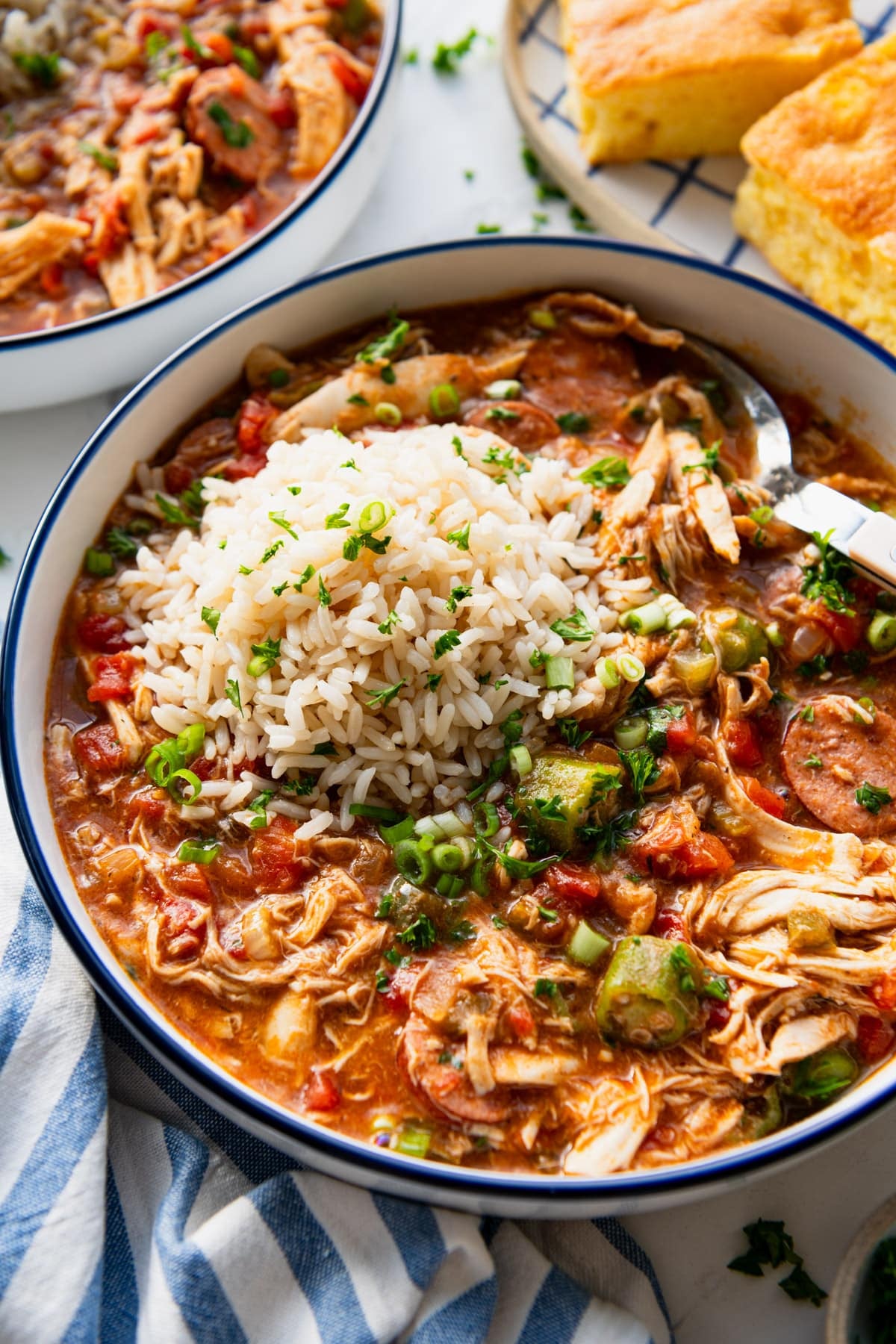
Table of Contents
Before You Get Started
A few things will set you up for gumbo success:
- Have your vegetables chopped before you start. Once the roux gets going, you’ll need to add them quickly to stop the cooking. No time to grab a knife mid-stir.
- Don’t rush the roux. Stir constantly over medium-low heat and watch for a deep golden or peanut butter color. It takes about 15 minutes. If it smells burnt or has black specks, start over. And if you want an even bolder, deeper flavor, cook the roux a little longer (until it reaches a chocolate color).
- Use rotisserie chicken for a major shortcut. It’s already cooked and easy to shred, saving you 20+ minutes of prep. Leftover chicken or turkey works great too.
- Choose your sausage based on heat preference. Andouille is traditional with a smoky, spicy kick. Kielbasa is milder and more kid-friendly.
The Roux
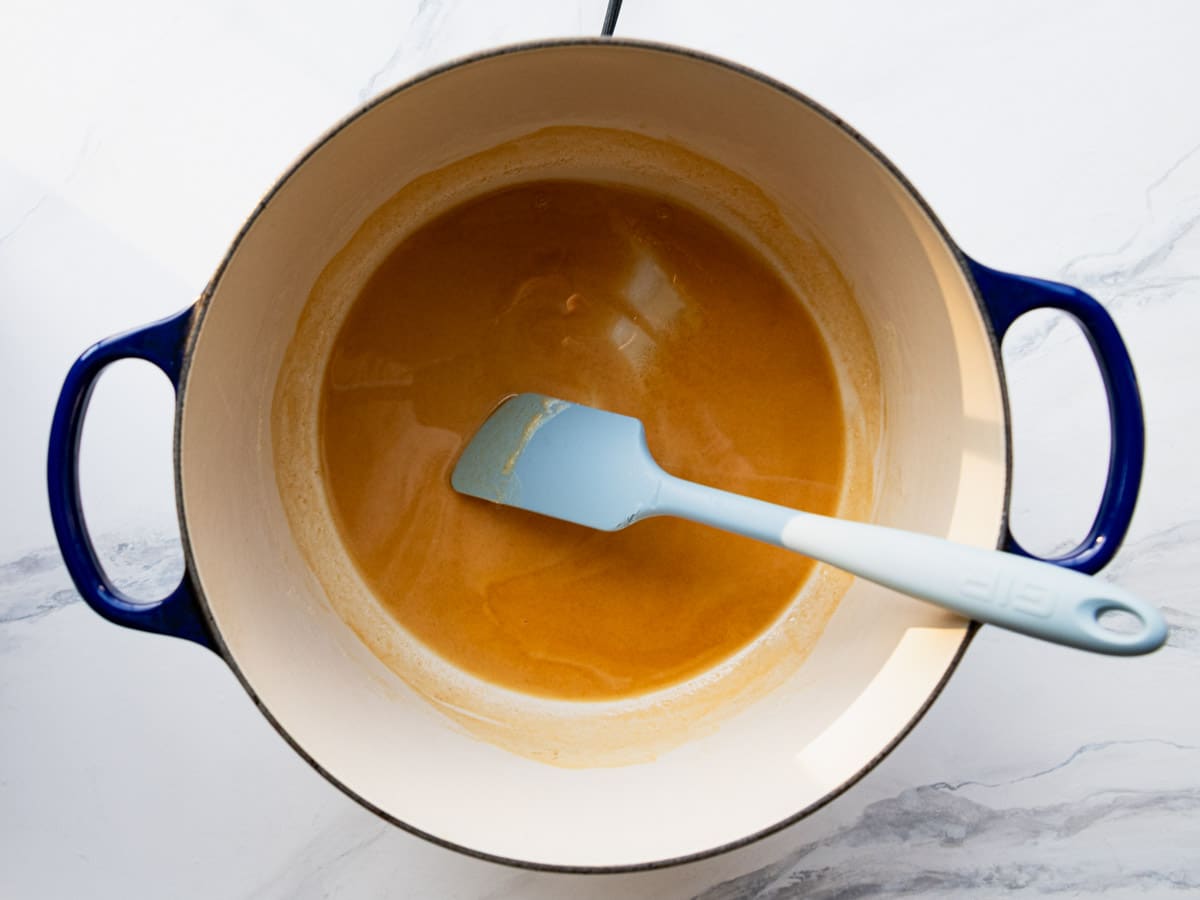
The roux is the soul of gumbo. It’s a simple mixture of fat and flour cooked low and slow until it deepens in color and develops a rich, toasty flavor. For this recipe, you’re aiming for a golden to peanut butter color, which takes at least 15 minutes of steady stirring.
Start with melted butter over medium-low heat. Sprinkle in the flour and whisk constantly. The mixture will look pale and pasty at first, then gradually darken. You’ll smell a nutty, toasted aroma as it cooks. The most traditional gumbo recipes use an even darker roux for a deeper, bolder flavor. If you like, you can continue cooking and stirring your roux until it reaches this darker color (looks like chocolate).
Watch the heat carefully. If the roux starts to smoke or develops black specks, it’s burned and you’ll need to start over. Burned roux tastes bitter and can ruin the whole pot.
Once it reaches that golden-brown color, add your chopped vegetables immediately. They’ll sizzle and stop the roux from cooking further. From there, the hardest part is done.
Choosing Your Sausage
Sausage adds smoky depth and heartiness to gumbo. You have options depending on your flavor preference:
- Andouille is the most traditional choice. It’s a smoked Cajun sausage with a sharp, peppery kick that stands up to the bold flavors in the pot.
- Kielbasa is a great mild alternative. I use it often because my kids prefer the gentler flavor. Any smoked Polish sausage works well.
- Chorizo adds a different kind of heat with its paprika-forward spice. Spanish chorizo (cured) works better here than Mexican chorizo (raw).
- Other smoked sausage will work in a pinch. Look for something with good smoky flavor that will hold up during simmering.
Slice the sausage into thin rounds (about ¼-inch thick) so they cook evenly and distribute well throughout the gumbo.
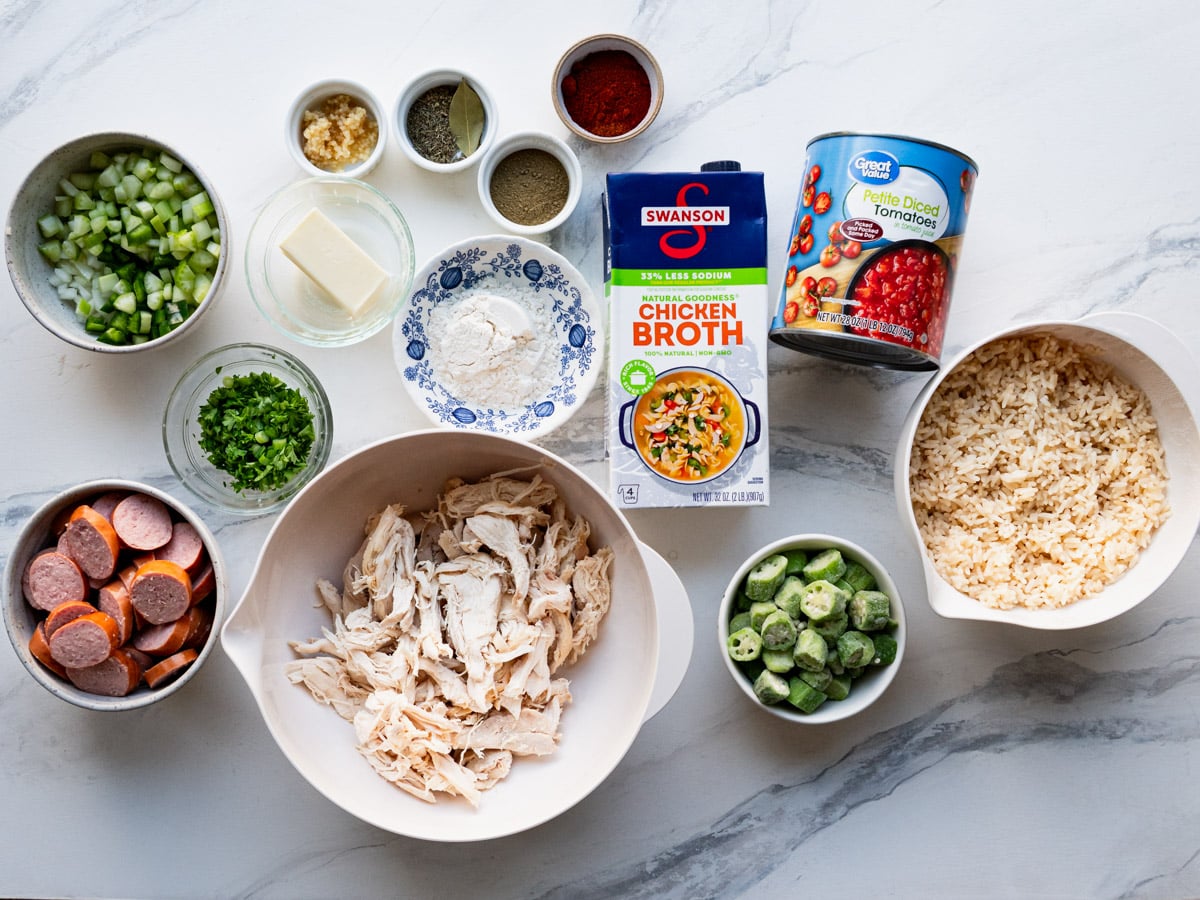
How to Make Chicken and Sausage Gumbo
This gumbo comes together in one pot and simmers into a thick, flavorful stew. Here’s how to make it step by step.
Step 1: Make the Roux
Melt the butter in a large Dutch oven over medium-low heat.
Sprinkle in the flour and stir constantly with a wooden spoon or whisk. Keep stirring for about 15 minutes, until the mixture turns a deep golden color, like peanut butter. It should smell nutty and toasted, not burned.
Step 2: Build the Flavor Base
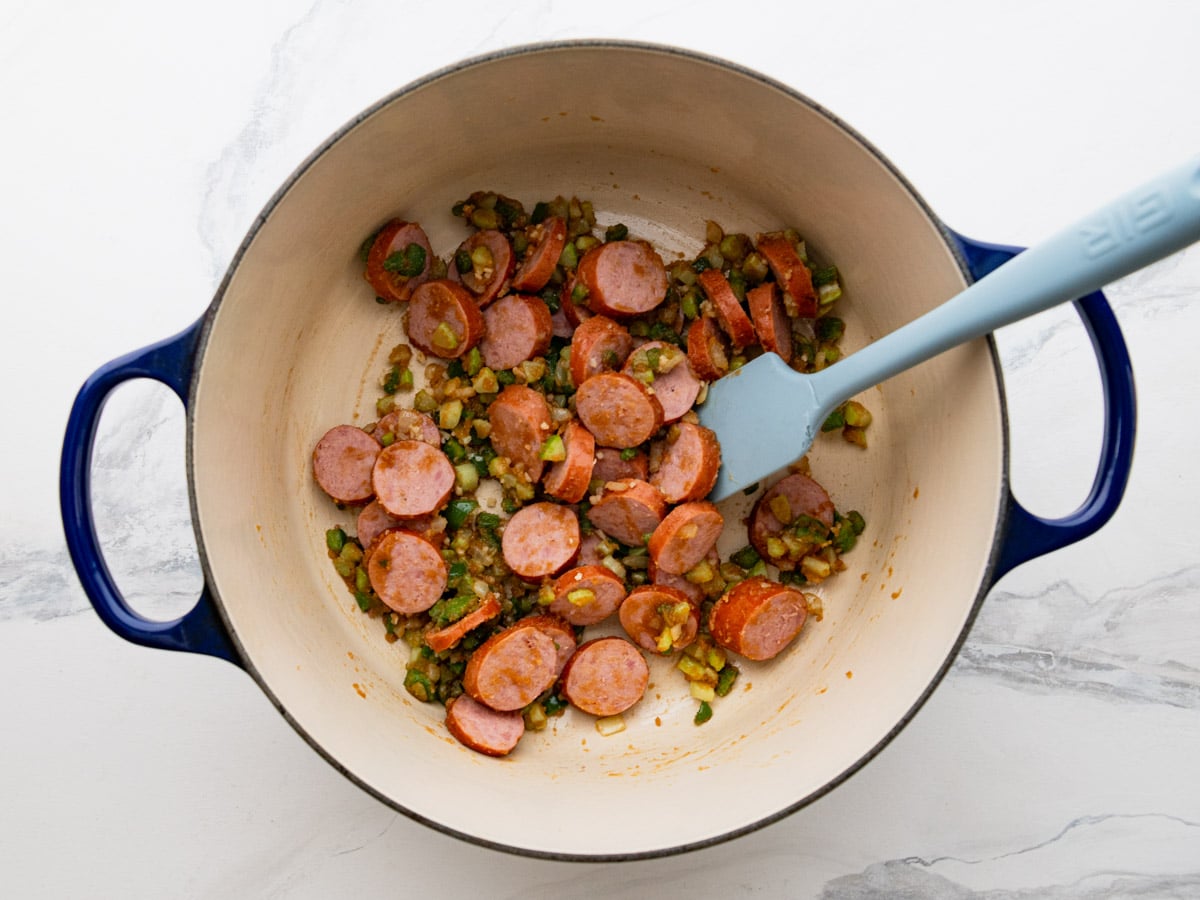
Add the diced onion, bell pepper, and celery to the pot. The vegetables will sizzle when they hit the hot roux.
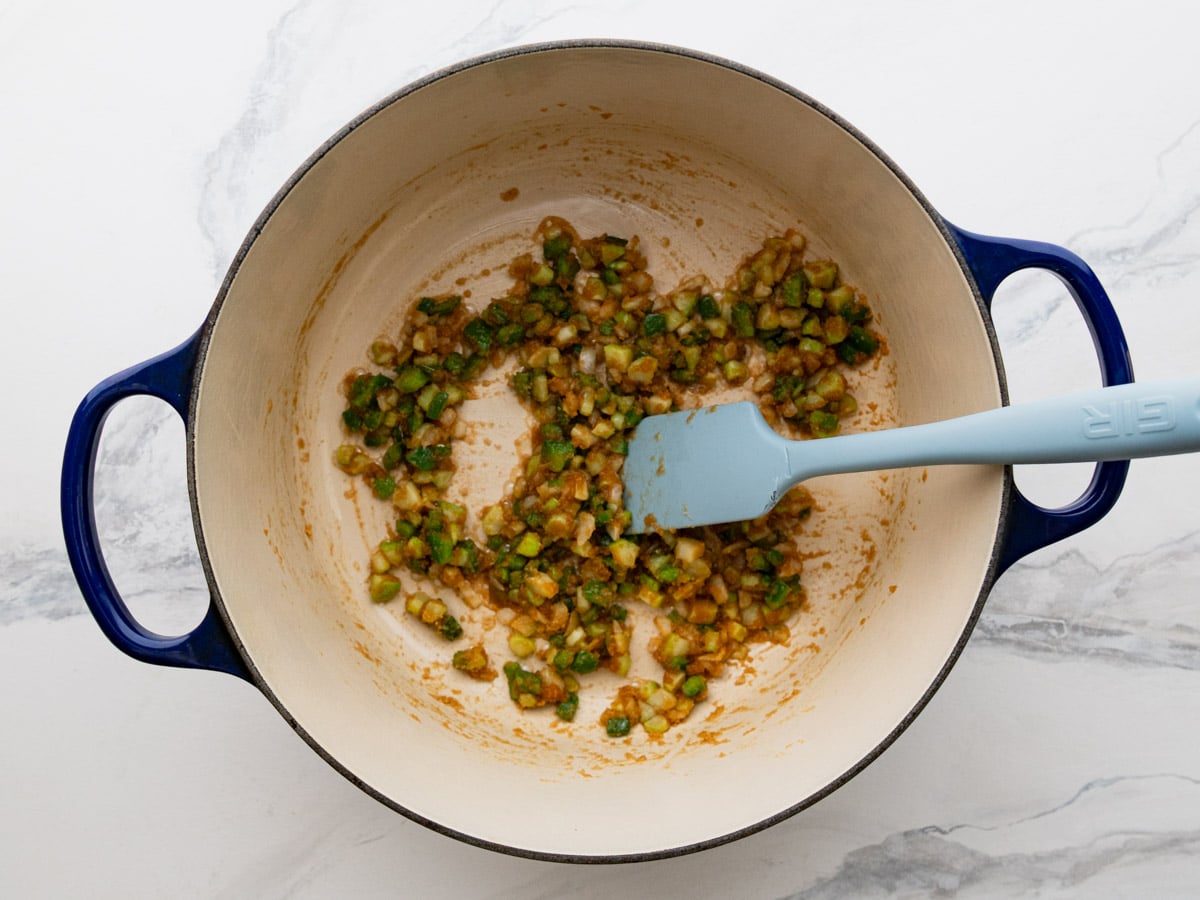
Increase the heat to medium and cook for about 5 minutes, stirring often, until softened. Stir in the garlic and sliced sausage and cook for 1 more minute.
Step 3: Add the Liquids and Simmer
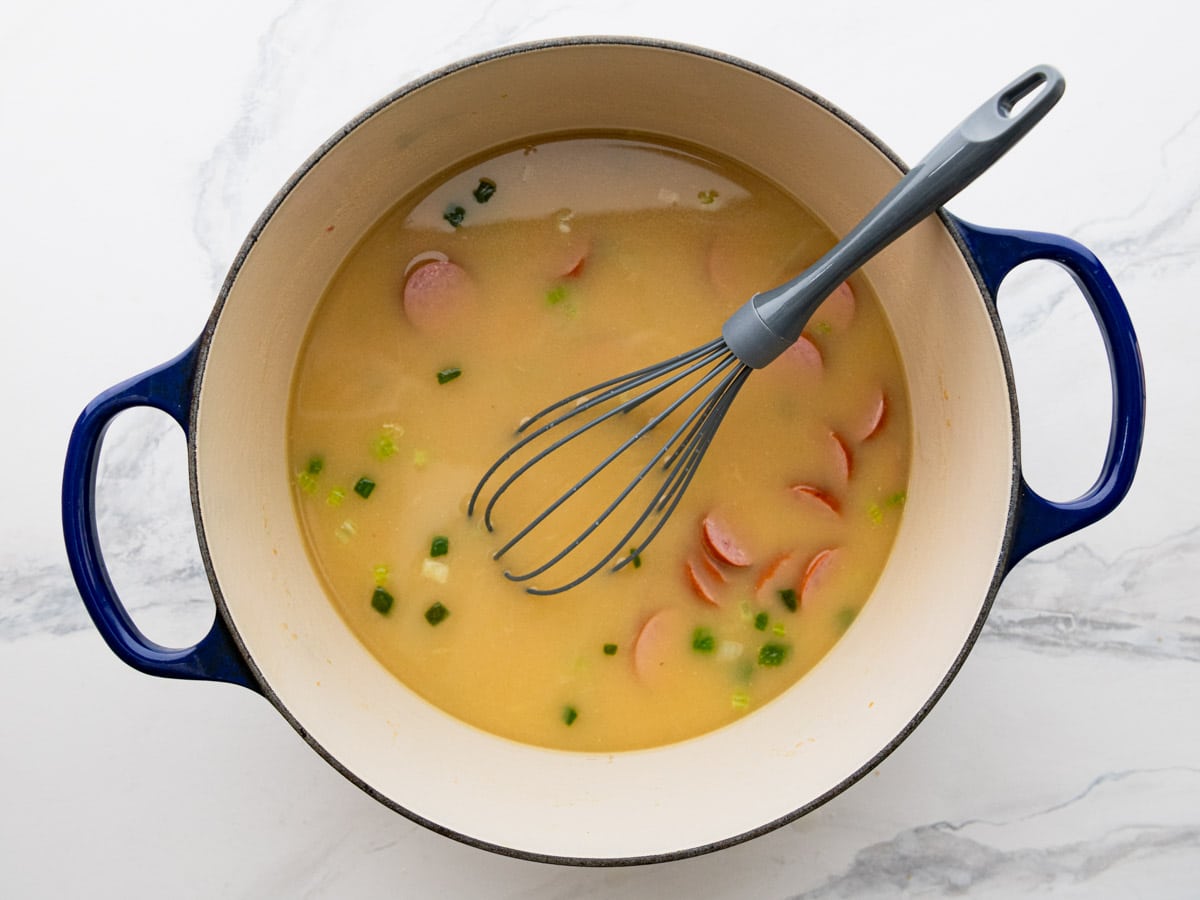
Whisk in the chicken broth gradually, scraping up any bits from the bottom of the pot.
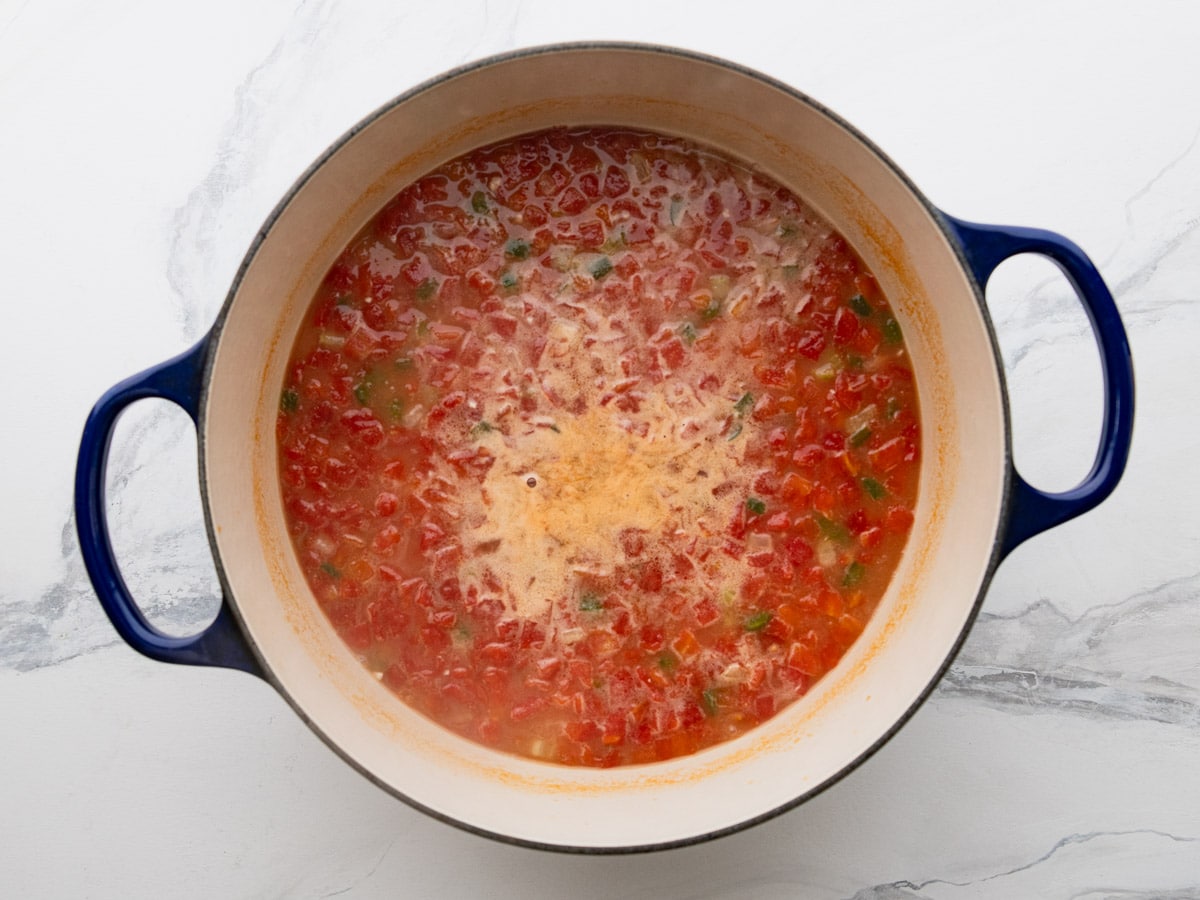
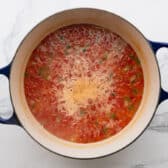
Add the diced tomatoes with their juices. Increase heat to bring the mixture to a boil, then reduce heat to low.
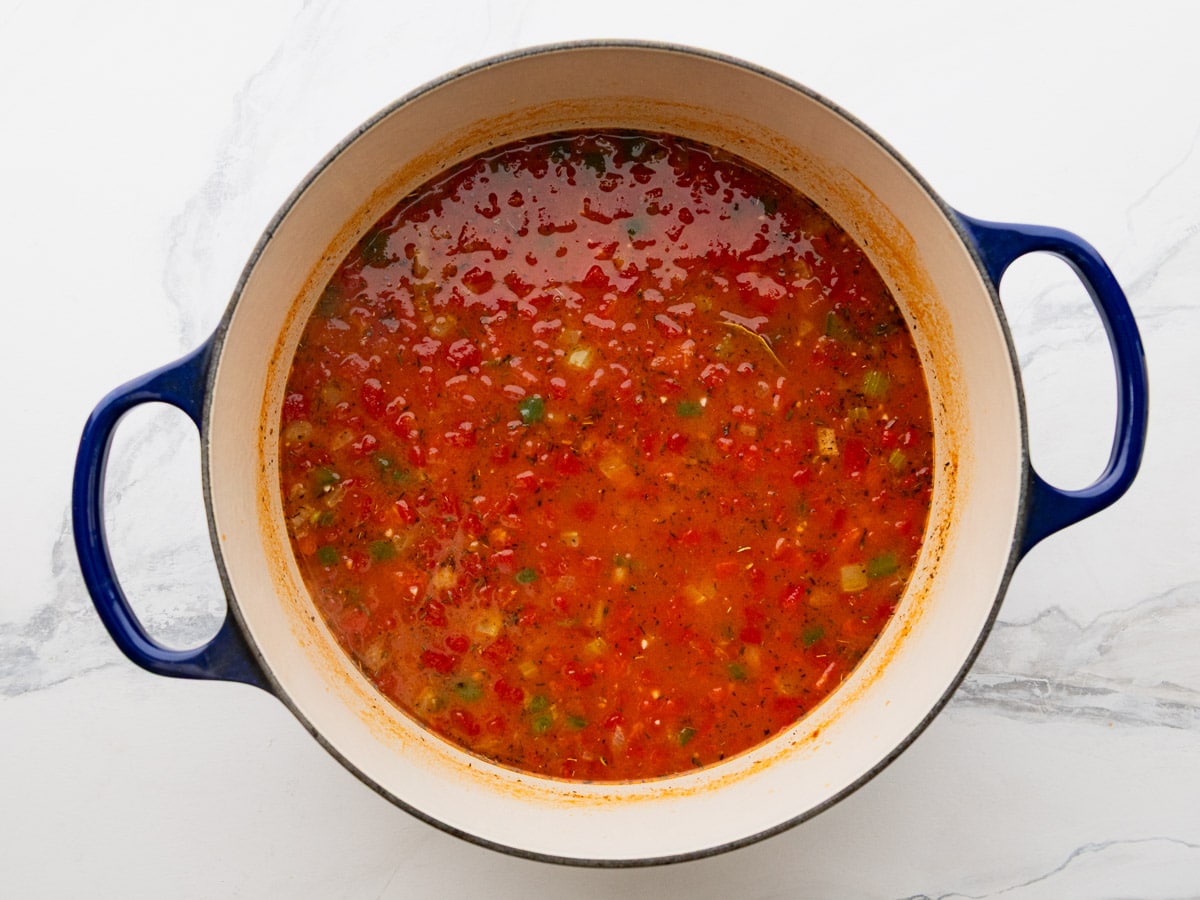
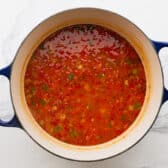
Stir in the thyme, oregano, bay leaf, paprika, and cayenne. Let the gumbo simmer uncovered for 30 minutes, stirring occasionally. The broth will thicken and the flavors will deepen.
Step 4: Finish with Chicken and Okra
Add the shredded chicken and okra to the pot. Stir to combine and return to a simmer.
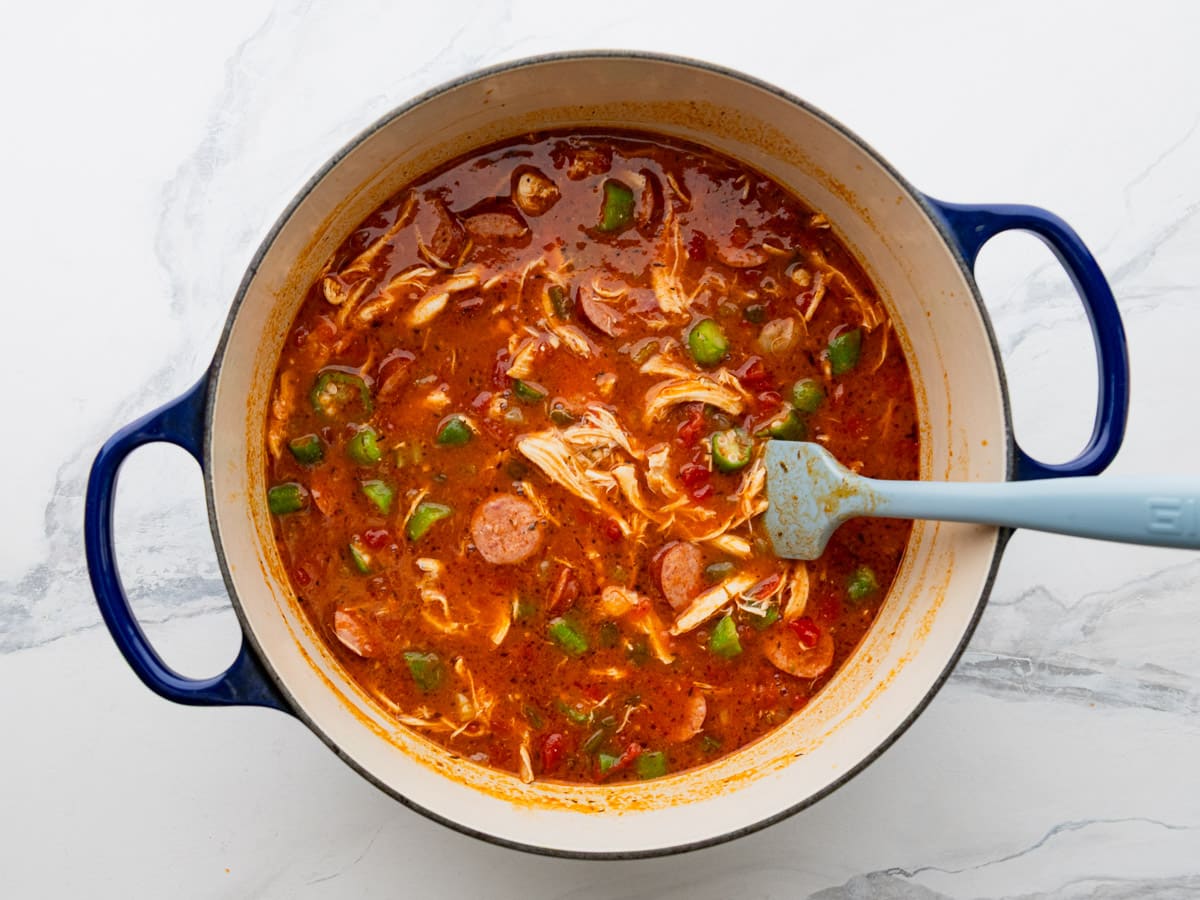
Cook for 10 more minutes, until the okra is tender and the chicken is heated through. Remove the bay leaf.
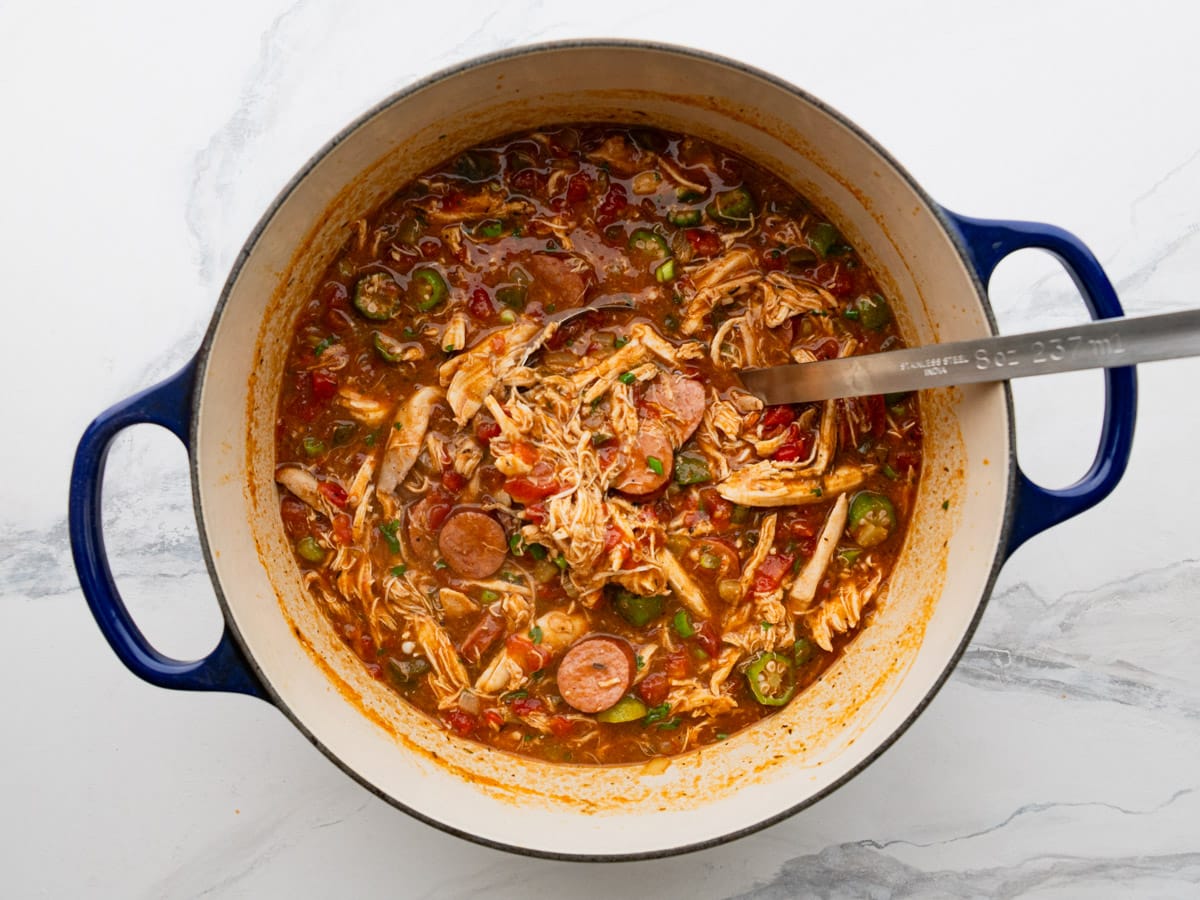
⇢ Add a Touch of Brightness: Take the pot off the heat and stir in the green onions, fresh parsley, and filé powder. Taste and adjust the seasoning with salt or more cayenne if you like it spicier.
Step 5: Serve
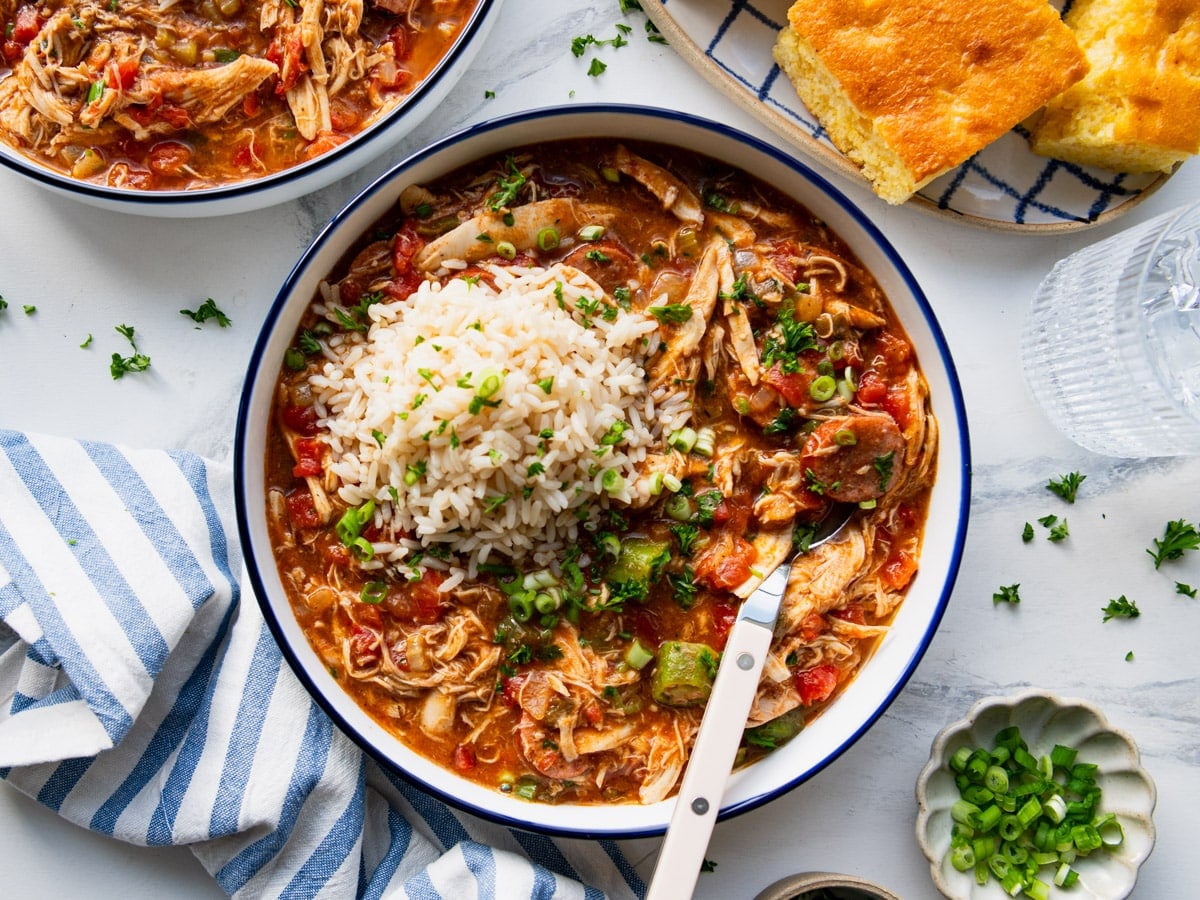
Ladle the gumbo into bowls and top each serving with a scoop of warm white rice. The rice soaks up the rich broth and balances the bold flavors perfectly.
Serving Suggestions
Chicken and sausage gumbo is traditionally served over warm, fluffy white rice. A scoop right in the center of the bowl is the classic presentation.
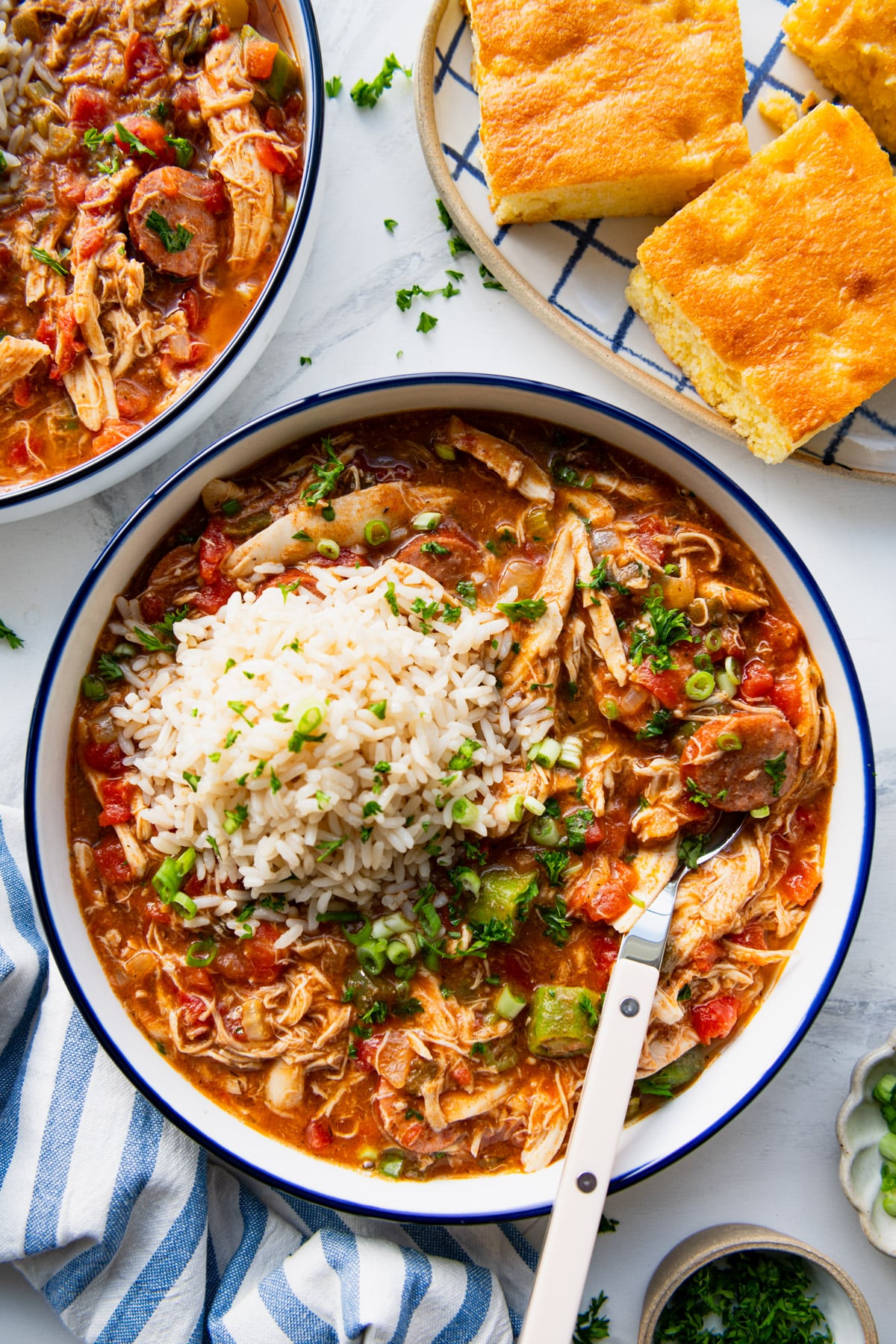
For bread on the side, try cheese biscuits, cast iron cornbread, hush puppies, or buttermilk biscuits. Something to soak up that flavorful broth is always welcome.
If you want a rice with a little more flavor, rice pilaf makes a nice change. And a simple side of coleslaw adds a cool, crunchy contrast to the warm, rich gumbo.
Storage and Reheating
Gumbo is a great make-ahead meal and actually tastes even better the next day as the flavors continue to meld.
To store: Let the gumbo cool to room temperature, then transfer to an airtight container. It will keep in the refrigerator for 3 to 4 days.
To freeze: Gumbo freezes well for up to 3 months. Thaw overnight in the refrigerator before reheating.
To reheat: Warm the gumbo in a pot over low heat, stirring occasionally, until heated through. Add a splash of chicken broth if it’s thickened too much. You can also reheat individual portions in the microwave for 1 to 2 minutes.
Note: Store the rice separately if possible. It can get mushy when stored in the gumbo liquid.
Recipe Variations
- Swap the protein: Use about 1 ½ pounds of shrimp, crab, or oysters instead of chicken for a seafood gumbo. Add shellfish toward the end of cooking so it doesn’t overcook.
- Adjust the heat: Add more cayenne or serve with hot sauce on the side for extra kick. Reduce or omit the cayenne for a milder version.
- Use frozen okra: If you can’t find fresh okra, frozen sliced okra works well. No need to thaw it first.
- Add umami depth: A splash of Worcestershire sauce stirred in at the end adds a subtle savory boost.
- Make it in the slow cooker: You’ll need to make the roux separately on the stovetop, but otherwise it’s a hands-off meal. Check out my slow cooker gumbo recipe for the full method.
I made this gumbo for my sister and her husband who love my cooking. She shared some with her neighbor as well, and I’ve been asked to make this again. I did add more heat to it but it went over so well, I will be making this one more often for sure! Thank you for sharing!
– Priscilla
Frequently Asked Questions
What kind of sausage is best for chicken and sausage gumbo?
Andouille is the traditional choice with its smoky, spicy Cajun flavor. Kielbasa or other smoked sausage works well if you prefer something milder. The key is using a smoked sausage that will hold its shape and add depth to the broth.
Do you cook the chicken before adding it to gumbo?
Yes, the chicken should be cooked before it goes in the pot. Rotisserie chicken is the easiest option since it’s already done. You can also boil boneless, skinless chicken breasts or thighs for 15 to 18 minutes, then shred. The chicken simmers in the gumbo just long enough to heat through and absorb flavor.
How dark should the roux be for gumbo?
For this recipe, aim for a golden to peanut butter color, which takes about 15 minutes. A darker “chocolate” roux has more intense flavor but takes much longer (up to an hour) and is easier to burn. The golden roux gives you rich flavor with less risk.
How do I fix gumbo that’s too thin or too thick?
If it’s too thin, let it simmer uncovered a bit longer to reduce, or stir in a small amount of filé powder at the end. If it’s too thick, add a splash of chicken broth and stir until you reach the consistency you want.
More Cajun and Creole Favorites

Did you make this recipe?
If you enjoyed this recipe, please leave a comment with a 5-star review at the bottom of the post. Thank you!
Watch How to Make It

Chicken and Sausage Gumbo
Equipment
Ingredients
- ¼ cup salted butter
- ¼ cup all-purpose flour
- ¼ cup finely diced onion
- ½ cup finely diced green bell pepper
- ½ cup finely diced celery
- 2 cloves garlic, minced (about 2 teaspoons)
- 12 ounces andouille, kielbasa, or other smoked sausage, cut into ¼-inch-thick pieces
- 4 cups chicken broth
- 1 (28 ounce) can petite diced tomatoes, not drained
- 1 teaspoon dried thyme
- ½ teaspoon dried oregano
- 1 bay leaf
- 2 teaspoons paprika
- ¼ teaspoon cayenne pepper (or more, to taste)
- 3 cups cooked, shredded chicken (such as from a rotisserie chicken)
- 1 cup cut okra (frozen is fine)
- 2 green onions (white and green parts), chopped
- ¼ cup chopped fresh parsley
- 2 teaspoons filé powder
- Kosher salt, to taste
- 4 cups cooked long-grain white rice
Instructions
- Make the roux: Melt butter in a large Dutch oven over medium-low heat. Sprinkle flour over top and stir constantly until the mixture turns a deep golden color, like peanut butter or dark caramel, about 15 minutes. Watch carefully and stir constantly to prevent burning. For an even bolder flavor, continue cooking and stirring the roux until it reaches a deeper chocolate color (optional).

- Cook the vegetables: Add onion, bell pepper, and celery to the pot. Increase heat to medium and cook, stirring often, until softened, about 5 minutes.
- Stir in garlic and sausage and cook for 1 more minute.
- Add the liquids: Whisk in the chicken broth gradually until smooth.
- Add the diced tomatoes with their juices. Increase heat and bring to a boil.
- Simmer: Reduce heat to low. Stir in thyme, oregano, bay leaf, paprika, and cayenne. Simmer uncovered for 30 minutes, stirring occasionally.
- Add chicken and okra: Stir in the shredded chicken and okra. Return to a simmer and cook for 10 more minutes. Remove bay leaf.
- Finish: Remove pot from heat. Stir in green onions, parsley, and filé powder. Taste and season with salt and additional cayenne if desired.
- Serve: Ladle into bowls and top each serving with a scoop of warm rice.







Notes
- Watch the roux carefully. Stir constantly and keep the heat at medium-low. If you see black specks or smell burning, the roux is ruined and you’ll need to start over.
- Rotisserie chicken is the easiest shortcut. You can also boil 1½ pounds of boneless, skinless chicken breasts or thighs for 15 to 18 minutes, then shred.
- Don’t skip both okra and filé powder. They’re traditional thickeners that also add flavor. You can omit one, but not both, or your gumbo won’t have the right texture.
- Andouille is traditional, but kielbasa works great if you prefer milder flavor or are cooking for kids.
- Store gumbo and rice separately if possible. The rice can get mushy when stored in the liquid.
- Gumbo keeps well. Refrigerate for 3 to 4 days or freeze for up to 3 months. Reheat over low heat, adding a splash of broth if needed.
- Adjust the heat to your taste. Add more cayenne while cooking or serve with hot sauce on the side.
- This tastes even better the next day as the flavors continue to develop.
Nutrition
Originally published in February, 2021, this post was updated in February, 2026.













I made this gumbo for my sister and her husband who love my cooking. She shared some with her neighbor as well, and I’ve been asked to make this again. I did add more heat to it but it went over so well, I will be making this one more often for sure! Thank you for sharing!
That’s so great to hear, Priscilla! Thanks for your kind note and for taking the time to let me know. 🙂
We had just gotten back from Galveston Texas where we tried our first Gumbo==it was fantastic and we wanted to try and make it
We found your recipe for Chicken and Sausage Gumbo and tweeked it a little–not quite as spicy–but have made it the sane way since and LOVE IT
Will continue to follow you for more recipes
Thank you, Norma! I’m so glad that you approve of this version! 🙂
Really delicious. It does make a whole lot. 6 servings easily serves 8-10 average folk (not teenage boys). Easy.
So glad you liked it, Leslie. Thank you!
There is okra in this… is file powder really needed… I’m not inclined to get a jar of this just to use a small bit just for this recipe.
Hi Scott,
The filé powder is a traditional thickener and also adds flavor. You can get away with omitting the powder if you include the okra, but the taste and texture won’t be quite the same. We hope you enjoy the recipe!