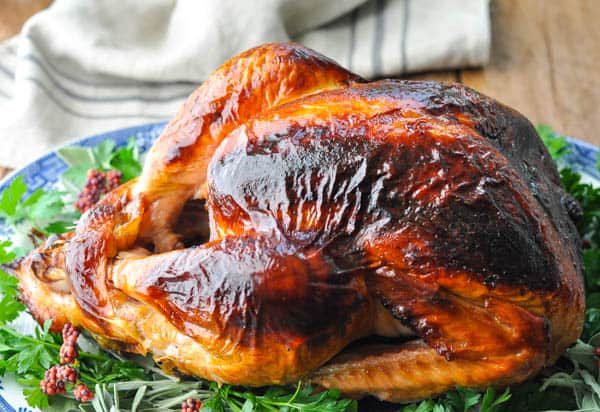
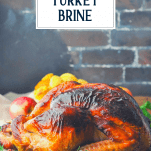
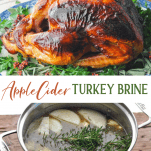
This apple cider turkey brine creates a moist, flavorful, and tender roasted turkey with a rich brown, crispy skin. You’ll love the sweet and savory combination of apple cider, orange juice, onion, garlic, rosemary, thyme and bay leaves. It’s the perfect holiday entrée for your Thanksgiving or Christmas table!
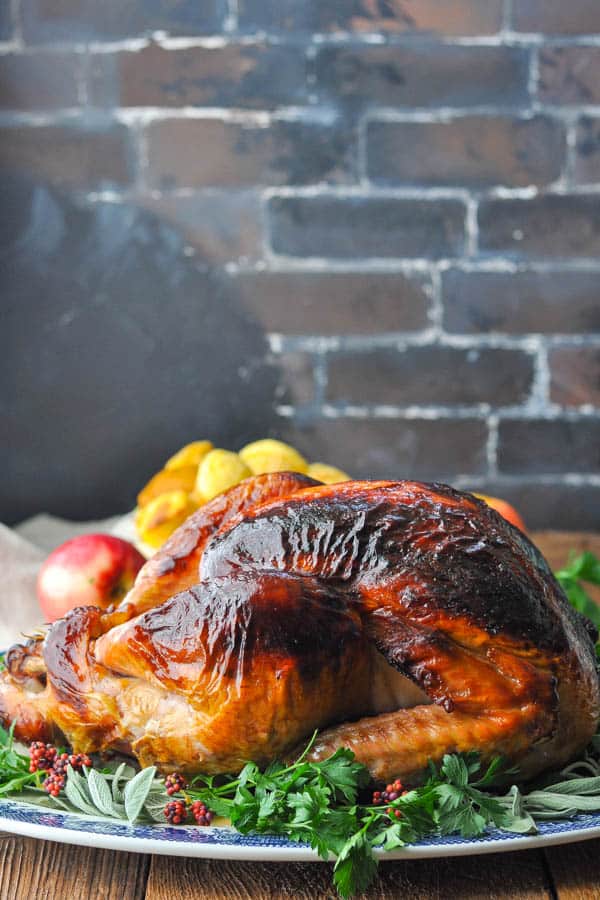
The Best Turkey Brine Recipe
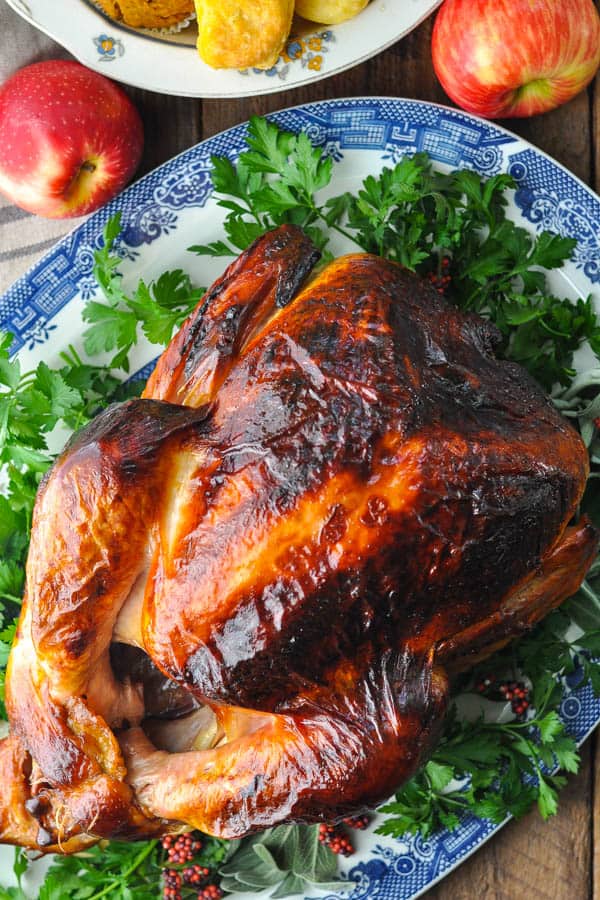
For a truly special meal, a simple turkey brine is the way to go! Nothing compares to the juicy, tender meat after it marinates in a salty, herb-infused solution overnight. This oven roasted turkey is practically impossible to mess up! No more dry white meat or undercooked dark meat. The entire bird is moist and flavorful on the inside, and super-crispy on the outside. Pair it with green bean casserole, sweet potatoes, cranberry sauce and cornbread for the ultimate Thanksgiving dinner!
Why You Should Brine a Turkey
Brining was a food preservation technique originally used in the days before refrigeration. In short, a brine is a bath of salty, flavorful liquid. The salt in the brine seasons the turkey and changes the structure of its proteins, allowing them to absorb and hold on to more moisture. While you can certainly skip a step and roast a turkey without brining it first, a brined turkey is more tender and moist, and less chewy than a non-brined turkey. Plus, when you’re working with a brined turkey, even if you overcook it a bit, it should still come out nice and juicy.
Poultry benefits greatly from the brining process, which is why you often see turkeys brined before roasting on Thanksgiving. But don’t wait until a holiday to brine your meat! Lean chicken is also a great candidate for brining, since (like a turkey) it doesn’t have much fat to contribute moisture and flavor.
Brine Ratio
A basic brine ratio is ¼ cup of kosher salt per 4 cups (1 quart) of water. Brines often include sugar, so the apple cider in this recipe accounts for some of the liquid, as well as the sugar. It’s a multi-tasker!
What type of turkey is best for brining?
This versatile apple cider turkey brine works well with whole turkeys, turkey legs, turkey breasts, or even whole chickens. If using a whole turkey that’s larger than 16 lbs., you’ll likely need to roast the turkey covered with foil for most of the cooking time, or else the skin on the turkey will burn over the longer cooking time.
If you’re brining and roasting a bone-in turkey breast, you can find the roasting instructions here. Remember, a brined turkey breast tends to cook slightly faster than regular un-brined turkey breasts, so keep a close eye on the temperature of your meat as it roasts.
What is the best container to brine a turkey in?
Before you get started, it’s important to make sure that you have a large enough container to hold a big turkey and a good amount of brine. You’ll also need plenty of room in the refrigerator to store the brine overnight! Since most standard stock pots or Dutch ovens aren’t quite big enough, you will likely need to find some other vessel for brining the turkey. I use a large plastic brining container, but other good options include brining bags, a cooler, or an inexpensive 5-gallon bucket that you can pick up at the hardware store. Anything similar will work!
How to Brine a Turkey
This process truly could not be easier! If you can boil water, then you can make a simple brine for turkey. Just remember to prepare the brine well in advance, because it needs plenty of time to cool before you add the turkey.
Ingredients for Easy Turkey Brine
- Apple cider
- Water
- Coarse kosher salt (do not use table salt)
- Juice from an orange
- Pepper
- Bay leaves
- Rosemary
- Thyme
- Garlic
- Onion
Step 1: Simmer Brine
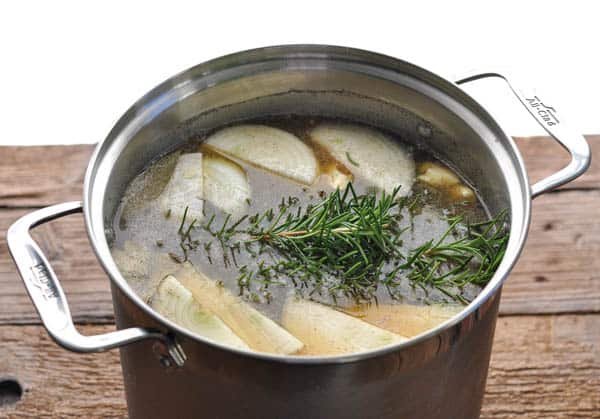
Combine all of the brine ingredients in a large pot. If your pot isn’t quite big enough to accommodate all of the liquid, that’s fine! You can add the remaining cool water to the brining container later. Bring to a simmer over high heat, whisking to make sure the salt dissolves.
Step 2: Cool
Remove the pot from the heat and allow the brine to cool completely before you add the meat.
Step 3: Add Turkey
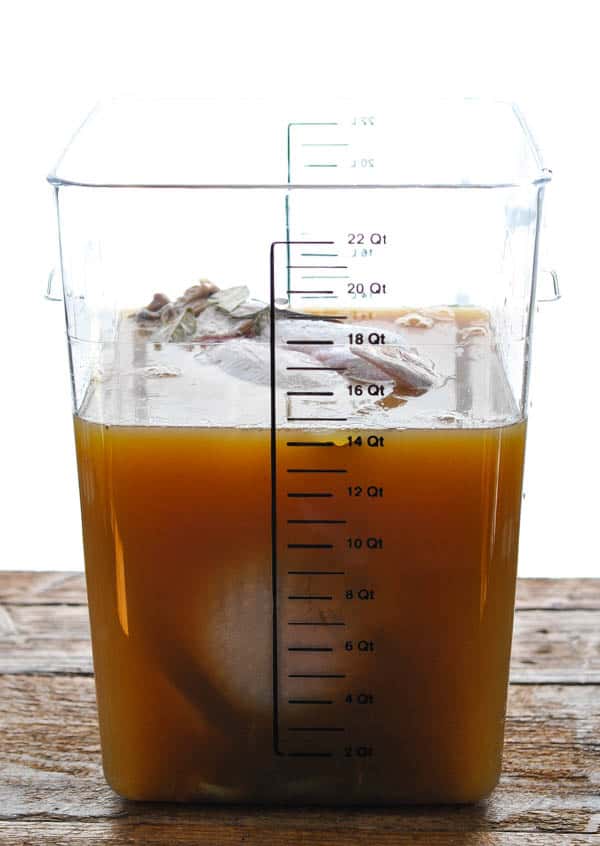
Once the brine is cool, add the turkey and submerge it in the liquid. Cover and refrigerate.
How long should you brine turkey?
You can brine a large bird for up to 24 hours, but 12-14 hours is perfectly sufficient as well. There is some acid in the brine (thanks to the apple cider and orange juice), so brining the turkey for longer than about 24 hours may result in mushy meat.
How to Roast a Turkey in the Oven
Once you’ve brined the turkey, give it a rinse under cold water and pat it dry. Since the turkey has absorbed so much salt and flavor from the brine, you do not need to season the meat again.
When ready to roast, tie the legs together, tuck the wings underneath, and brush the outside of the turkey with melted butter. Place the turkey (breast-side up) on a rack in a large roasting pan and bake in a 350 degree F oven until the thickest part of the breast registers 165 degrees and thickest part of the thigh registers 170 to 175 degrees on an instant-read thermometer.
How Long to Cook a Brined Turkey
The total cooking time will vary depending on the size of your turkey, on how cold your turkey is when it goes into the oven, and on your individual oven. Brined turkeys tend to cook a bit faster than un-brined turkeys, so it’s best to start checking the temperature of the breast and thigh meat halfway through your estimated cooking time. Always use an instant-read thermometer to accurately know when your turkey is done.
The following cooking times are only estimates. If your turkey is not close to room temperature when it goes into the oven, it will take longer to cook. If it is at room temperature, it may take less time to cook. So again — check the temperature early.
- 12 -14 lb. turkey – 2 ½ – 3 hours hours at 350 degrees F
- 15-16 lb. turkey – 3 – 3 ½ hours at 350 degrees F
Stuffing a Brined Turkey
Yes, you can stuff a brined turkey just like you would stuff an un-brined turkey. Stuffed turkeys require a longer cooking time, and you should always make sure that the stuffing reaches a temperature of 165 degrees F before you remove the turkey from the oven.
What to serve with Oven Roasted Turkey
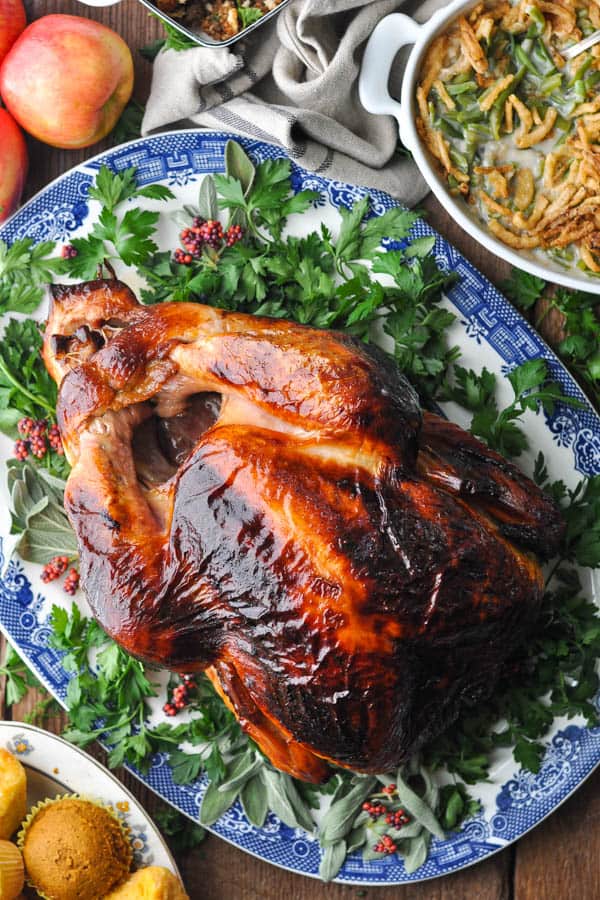
An apple cider brined turkey goes well with just about any of your favorite holiday sides. Try these delicious options:
- Bisquick Sausage Balls
- Easy Green Bean Casserole
- Broccoli Casserole
- Apple and Butternut Squash Casserole or Squash Casserole
- Cornbread Stuffing or Sausage Stuffing
- Sweet Potato Casserole or Mashed Sweet Potatoes
- Make-Ahead Garlic Mashed Potatoes or Cheesy Party Potatoes
- 2-Ingredient Pumpkin Muffins or Pumpkin Bread
- Skillet Cornbread or Corn Muffins
- Cranberry Sauce or Cranberry Relish
- Southern Baked Mac and Cheese, Creamy Baked Mac and Cheese or Crock Pot Mac and Cheese
- Jiffy Corn Casserole
- Ambrosia Salad, Pink Salad, or Cherry Fluff Salad
- Old-Fashioned Cranberry Muffins
- Stick of Butter Rice
- Roasted Root Vegetables
- Easy Apple Pie or Pecan Pie Bars
- Chocolate Pudding Pie
Storage
Roasted turkey will keep in an airtight container in the refrigerator for 3-4 days. You can’t beat a leftover turkey sandwich the day after Thanksgiving! Wrapped tightly, the turkey will last in the freezer for up to 3 months.
Tips for the Best Turkey Brine Recipe Ever
- Before brining, confirm that your turkey hasn’t already been brined or injected with a saline solution. Turkeys labeled “kosher,” “enhanced,” or “self-basting” are usually already brined, in which case you would not want to use an additional apple cider brine on the same meat.
- If starting with a frozen turkey, allow plenty of time for the turkey to thaw. It’s fine if the turkey is partially frozen when it goes in the brine since it will continue to thaw overnight. In general, 4-12 pound turkeys need about 1-3 days to thaw in the fridge, while 12-16 pound turkeys need at least 3-4 days to thaw.
- Allow the brine plenty of time to cool before adding the turkey. Never place a raw turkey in hot or warm brine.
- Make sure that the turkey is fully submerged in the brine. If the turkey floats up a little bit in the brining container (like mine does!), just move the turkey around a couple of times during the brining period to make sure that it’s evenly treated.
- Rinse the turkey after brining. Discard the brine solution, rinse the turkey under cold water, and pat dry. The meat has absorbed the flavor and plenty of salt during the brining process. Making sure that it’s really dry will help the skin get nice and crispy in the oven.
- The sugar in the apple cider, along with the butter on the skin, will cause the skin to crisp up and turn a rich, flavorful brown color pretty quickly. Keep a close eye on the bird. As soon as it reaches your preferred brown color, tent the turkey with foil to prevent excessive burning.
Recipes for Leftover Turkey
- Aunt Bee’s Leftover Turkey Casserole
- Wild Rice and Leftover Turkey Soup
- Turkey Pot Pie Pockets
- One Pot Turkey Jambalaya with Shrimp
- Turkey Noodle Soup

Did you make this recipe?
If you enjoyed this recipe, please leave a comment with a 5-star review at the bottom of the post. Thank you!
Apple Cider Turkey Brine
Ingredients
FOR THE BRINE:
- 4 cups apple cider
- 1 ¾ gallons water (28 cups)
- 2 cups coarse kosher salt (do not use table salt)
- Juice from 1 orange
- 1 tablespoon pepper
- 3 dried bay leaves
- 6 sprigs fresh rosemary
- 8 sprigs fresh thyme
- 8 cloves garlic, smashed and peeled
- 1 small onion, thinly sliced
FOR ROASTING:
- 1 (12-16 lb.) whole turkey, fresh or frozen and thawed, giblets and neck removed
- 2 tablespoons butter, melted
- 1 cup water
Instructions
- In a large pot, combine apple cider, water, orange juice, kosher salt, pepper, bay leaves, rosemary, thyme, garlic and onion. Bring to a simmer over high heat. You do not need to rapidly boil the liquid; just whisk to make sure that the salt is dissolved. Remove from heat and allow the brine to cool completely (this can take quite a few hours).
- Add turkey to cool brine, cover and refrigerate for 12-14 hours (or up to 24 hours).
- Before removing turkey from brine, adjust oven rack to lowest position. Heat oven to 350 degrees F.
- Place a rack in a large roasting pan. You can line the roasting pan with foil first, for easy cleanup. Place 1 cup of water in the bottom of the pan. Set aside.
- Remove turkey from brine and rinse under cool water. Pat inside and outside of the turkey dry with paper towels. Tie legs with kitchen twine, and tuck wing tips behind back. Brush outside of the turkey with melted butter. Set turkey breast-side up on the rack in the roasting pan.
- Roast turkey, uncovered, until thickest part of the breast registers 165 degrees and thickest part of thigh registers 170 to 175 degrees on instant-read thermometer. Keep a close eye on the turkey after the first 30-60 minutes of roasting – the skin will get dark quickly. Once the skin is nicely browned to your liking, tent the turkey with foil (shiny side up) to prevent burning while it finishes cooking.
- The total cooking time will vary depending on the size of your turkey, on how cold your turkey is when it goes in the oven, and on your individual oven. The following cooking times are only estimates. If your turkey is not close to room temperature when it goes in the oven, it will take longer to cook. If it is at room temp, it may take less time to cook. So check the temperature early. A brined 12 -14 lb. turkey needs about 2 ½ – 3 hours in a 350 degree F oven, while a 15-16 lb. turkey will likely require closer to 3 – 3 ½ hours. Again, I've had a brined 15-lb. turkey cook in as little as about 2 ½ hours, so it's always best to check the temperature of the meat early.
- Transfer turkey to a cutting board and allow to rest for 30-40 minutes. Carve and serve.
Notes
- Before brining, confirm that your turkey hasn’t already been brined or injected with a saline solution. Turkeys labeled “kosher,” “enhanced,” or “self-basting,” are usually already brined, in which case you would not want to use an additional apple cider brine on the same meat.
- If starting with a frozen turkey, allow plenty of time for the turkey to thaw. It’s fine if the turkey is partially frozen when it goes in the brine since it will continue to thaw overnight. In general, 4-12 pound turkeys need about 1-3 days to thaw in the fridge, while 12-16 pound turkeys need at least 3-4 days to thaw.
- Allow the brine plenty of time to cool before adding the turkey. Never place a raw turkey in hot or warm brine.
- The sugar in the apple cider, along with the butter on the skin, will cause the skin to crisp up and turn a rich, flavorful brown color pretty quickly. Keep a close eye on the bird. As soon as it starts to get dark, tent the turkey with foil to prevent excessive burning.









H
What type of onion do you recommend?
White or yellow would be best!
Thank you
What if I don’t have any kosher salt but I have pink Himalayan fine salt? Will that work??
Yes, that should be fine!
Just wondering what the issue with table salt would be
Hi, Kristina! Table salt has a saltier flavor than kosher salt, so you’d definitely need to adjust the ratio (likely about half as much table salt). Also, the larger, flakier crystals of kosher salt dissolve more evenly in the brine, allowing for better salt distribution on the turkey. Hope you’ll give it a try!