Nothing tastes more like summer than a cold glass of blackberry lemonade, and this old-fashioned version never touches the stove! The berries sit in a mason jar with sugar and boiling water until they give up all their juice, then fresh lemon goes in at the end. Sweet, tart, deep purple, and about ten minutes of actual work!
More homemade summer drinks:
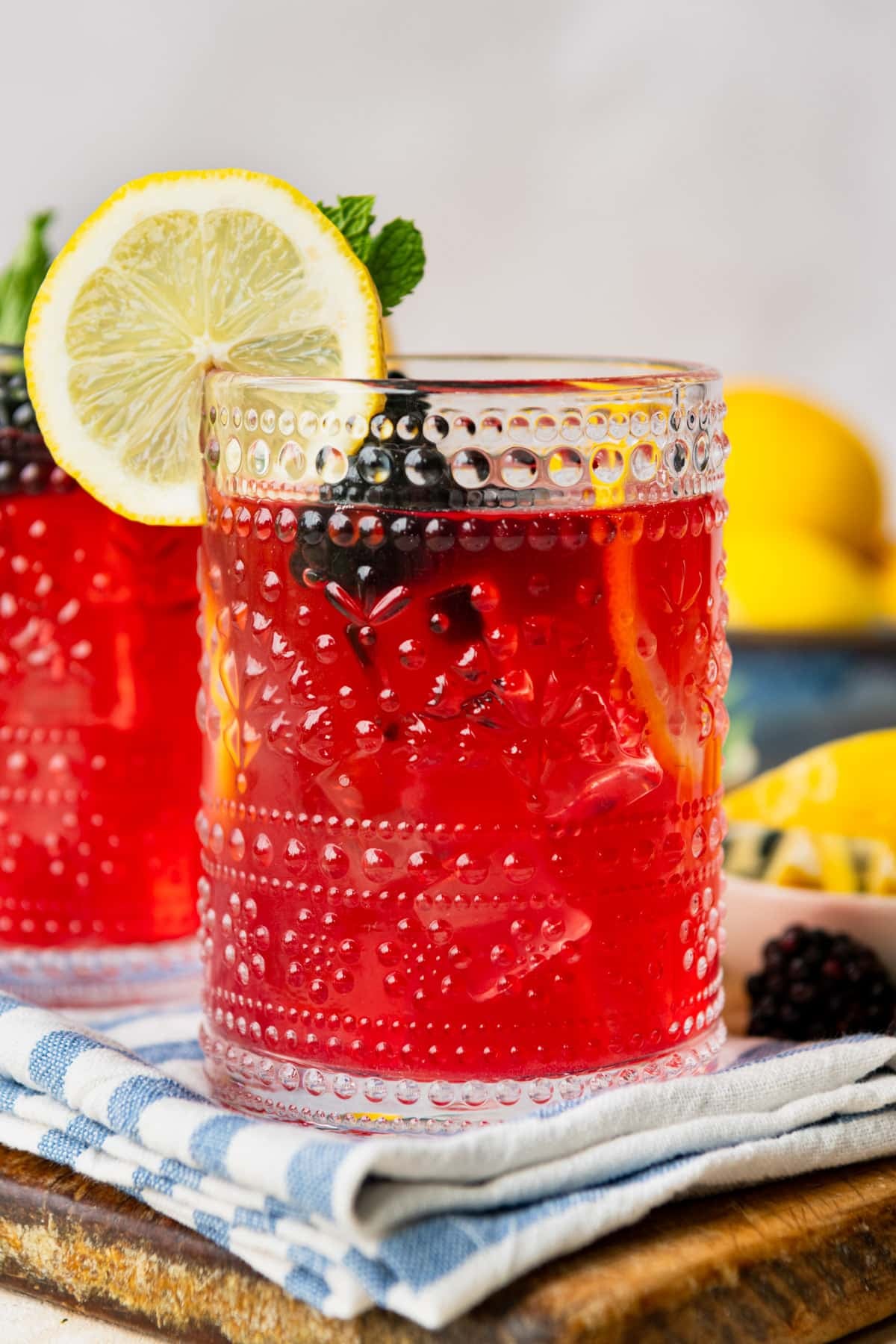
Table of Contents
Before You Get Started
Three things make the difference between a jar of pale, thin juice and a pitcher worth pouring for company:
- Start with 1/2 cup of sugar. That’s how I like it, on the tart side. Go up to a full cup for a sweeter glass, but don’t drop below 1/2 cup or the berries won’t release their juice.
- Use water at a full boil. Hot tap water won’t dissolve the sugar completely or soften the fruit the way boiling water does.
- Give the berries four full hours. The liquid should be dark purple and the berries pale and collapsed. Overnight is even better.
How to Make Blackberry Lemonade
This method came out of an antique community cookbook I found at our local library here in rural Central Virginia, where it was filed as “Blackberry Ade.” The original didn’t use lemon at all, so that part is mine.
There’s no cooking and nothing to blend: sugar and hot water do the work of pulling the juice out of the fruit.
Step 1: Fill the Jar
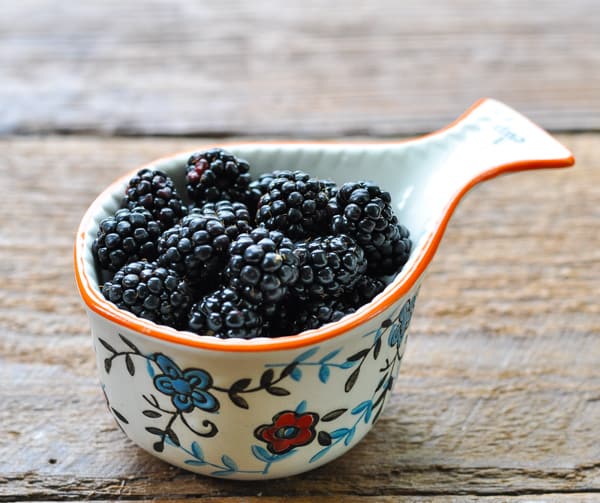
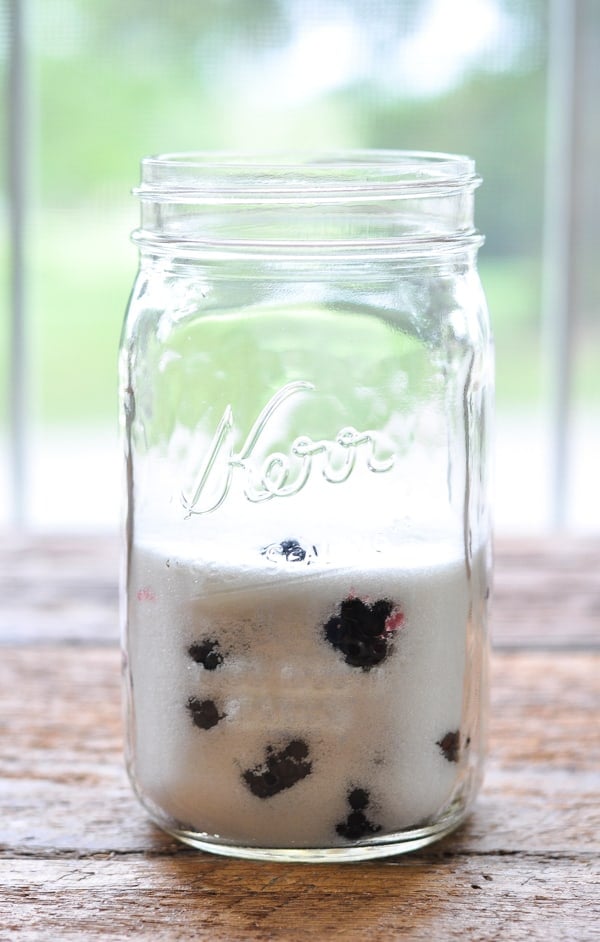
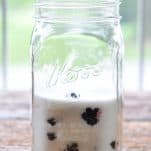
Put the blackberries and sugar in a quart-size mason jar. That’s it for prep.
Taste a berry first. Wild blackberries run tarter and grocery-store berries run sweeter, so let yours decide where you land in the sugar range.
Step 2: Add Boiling Water and Stir
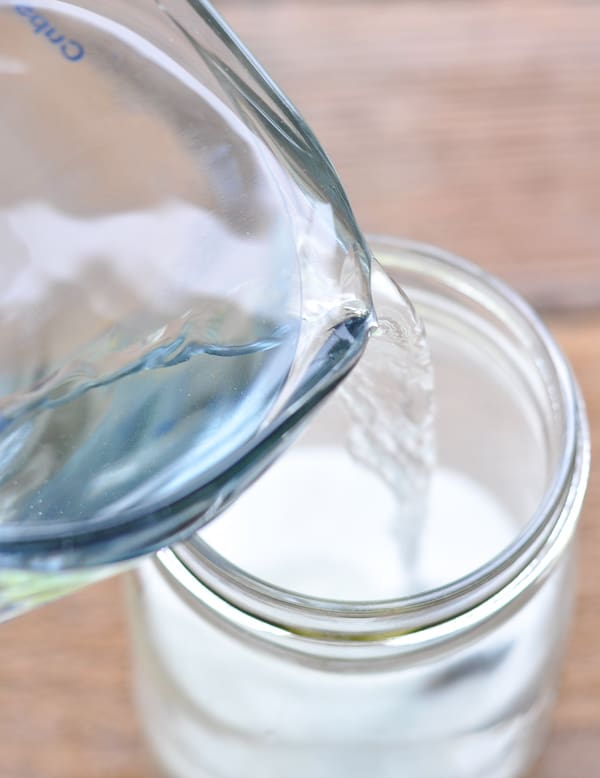
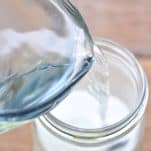
Fill the jar with boiling water, about 2 1/2 cups.
Boil the water in the microwave. A glass measuring cup on high for 5 to 7 minutes gets you there, and it’s one less pot to wash.
Use a long spoon and stir gently until the sugar dissolves, which takes only a few seconds.
Step 3: Let it Sit
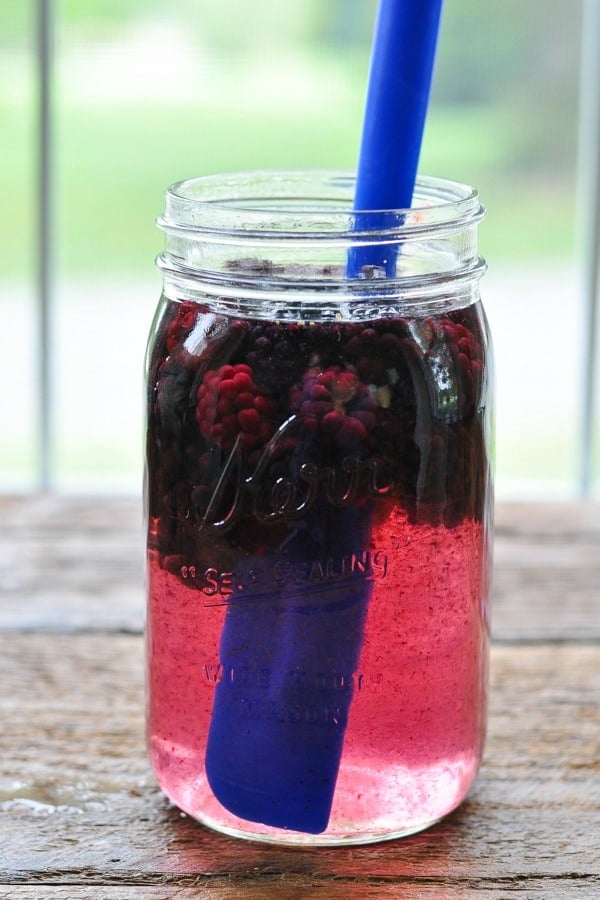
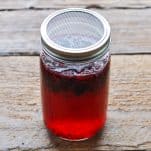
Leave the jar on the counter at room temperature for at least 4 hours, or overnight if that’s easier. You’ll see the liquid turn from cloudy pink to deep purple as the berries soften and collapse.
Making a big batch: A quart jar holds exactly one batch, so use two jars or a half-gallon jar and scale everything up together.
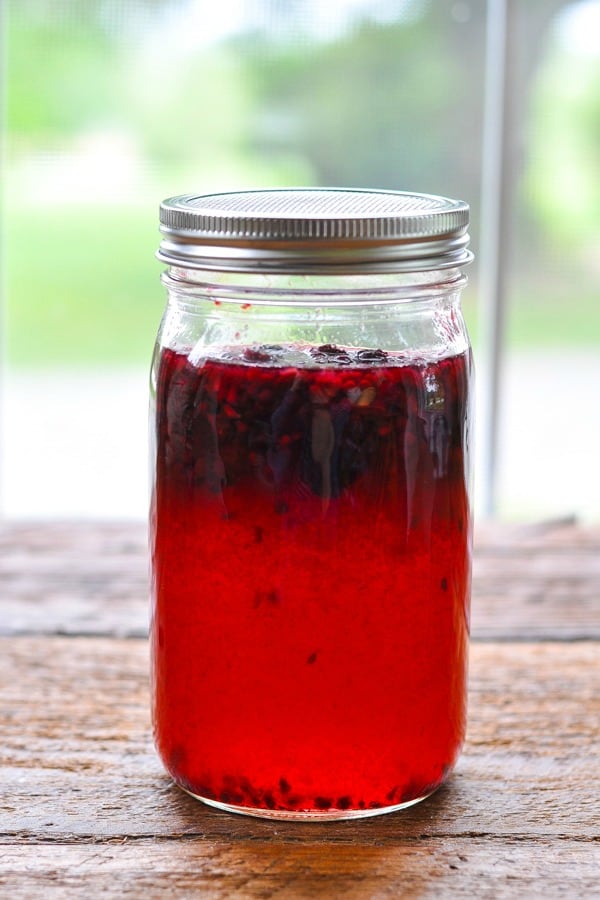
Step 4: Mash, Strain, and Add the Lemon
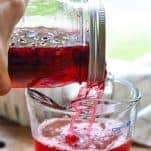
Mash the berries gently with a wooden spoon or the back of a spatula, then pour everything through a fine mesh sieve.
⇢ Don’t force the pulp through: Pressing hard turns the lemonade cloudy and pushes bitterness and seed grit into the glass.
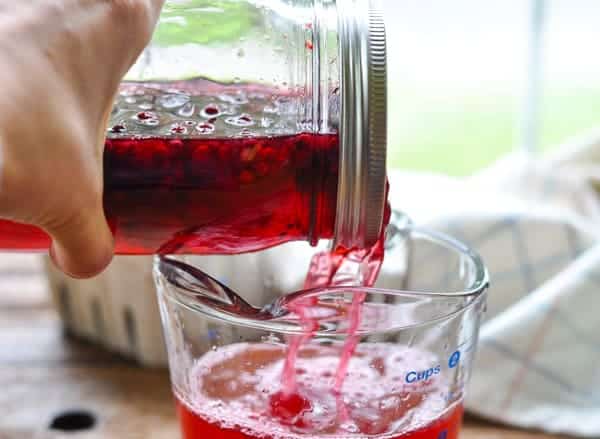
Stir the strained juice together with the fresh lemon juice and you’re done.
Mix-Ins and Easy Variations
The blackberry and lemon base takes to just about anything. My favorite change is topping each glass with seltzer instead of serving it still, which turns it into something closer to a spritz.
A few fresh herbs in the jar are the other easy win: mint is the obvious one, but basil is surprisingly good with blackberry.
- Fresh ginger: drop a coin or two in with the berries for a little heat on the finish
- Peach: a few slices in the jar alongside the blackberries, in season at the same time
- Sparkling: replace some or all of the water in the glass with club soda or plain seltzer
- For the grown-ups: a splash of bourbon, or top the glass with a dry sparkling wine
- Other berries: the same jar method works with strawberries or raspberries if that’s what you have on hand
Want a deeper berry flavor without using more fruit? A spoonful of my Blackberry Syrup stirred into each glass does it.
⇢ Freeze some of the base into ice cubes. They keep the glass cold without watering it down as you sit outside, and they use up a few more berries.
How to Serve It
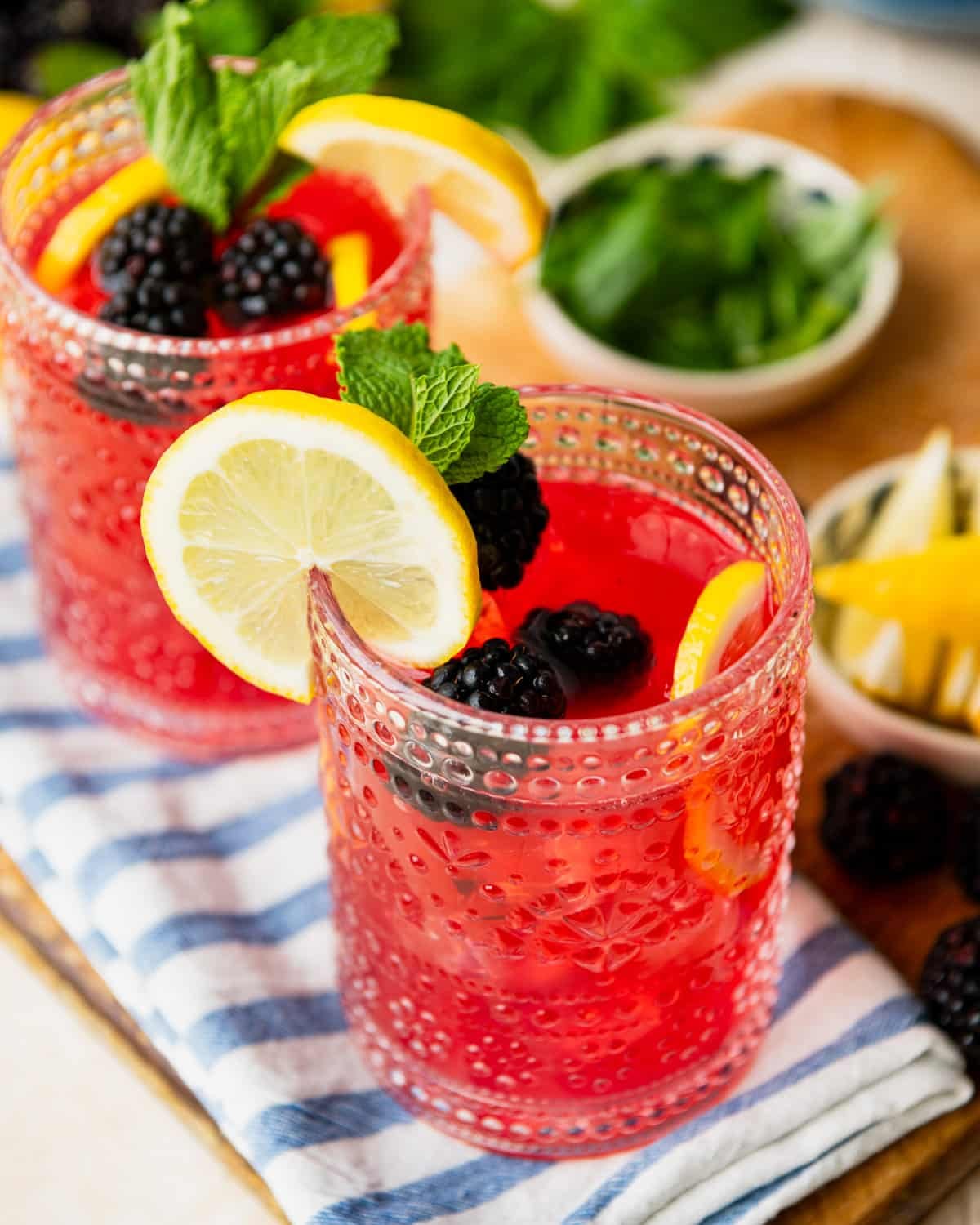
Pour it over plenty of ice and garnish with a lemon wedge and a sprig of fresh mint. One batch makes about 4 cups, which is four tall glasses over ice or two generous ones, so plan on doubling if you’re serving a porch full of people.
Storage and Make-Ahead
Store: Keep the finished lemonade in an airtight container in the refrigerator for 5 to 7 days. Give it a stir before each pour, since the fruit solids settle.
Freeze: The blackberry base freezes well for up to 3 months. Leave a little headroom in the container, because the liquid expands. Ice cube trays work well too.
Make ahead: Strain the blackberry juice and keep it on its own in the fridge, essentially as a concentrate. Then you can add fresh lemon juice a glass at a time all week instead of mixing the whole batch at once.
Frequently Asked Questions
Can I use frozen blackberries?
Yes, and they actually release their juice faster because freezing already breaks down the cell walls. The flavor won’t be quite as bright as fresh berries at peak season, so taste before you add the lemon and adjust.
There’s no need to thaw them first; add them to the jar frozen and pour the boiling water right over.
Do I need a blender or a juicer?
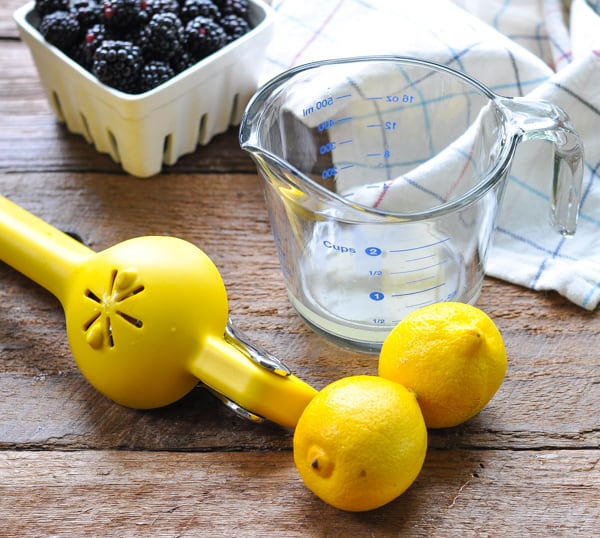
No blender at all. The sugar and hot water do the work that a blender would normally do, which is why this method is so easy. A handheld citrus press makes quick work of squeezing 6 to 8 lemons, but the back of a fork and a little patience will get you there just as well.
Can I use bottled lemon juice instead of fresh?
You can, and it will still taste good, but fresh is noticeably better here. Bottled juice has a duller, slightly flat flavor that shows up more in a drink than it would in a cooked dish where other flavors cover for it. If bottled is what you have, start with a little less and taste as you go.
My lemonade came out pale instead of deep purple. What happened?
Usually one of three things: the berries didn’t sit long enough, they weren’t mashed before straining, or the berries themselves were on the pale, underripe side.
Give it the full 4 hours next time, mash gently before you strain, and look for berries that are dull black rather than shiny and firm. Shiny blackberries are almost always underripe.
More Ways to Use Fresh Blackberries
- Old-Fashioned Blackberry Cobbler
- Blackberry Jam (without Pectin)
- Blackberry Muffins
- One-Skillet Blackberry Chicken
- Honey Lemon Fruit Salad Dressing

Did you make this recipe?
If you enjoyed this recipe, please leave a comment with a 5-star review at the bottom of the post. Thank you!

Old-Fashioned Blackberry Lemonade
Ingredients
- 1 cup fresh blackberries (about 6 ounces)
- ½-1 cup granulated sugar (see notes to adjust for your taste)
- Boiling water (about 2½ cups)
- ¾ cup freshly-squeezed lemon juice (from about 6 to 8 lemons)
- Ice, for serving
- Optional garnish: lemon wedges and fresh mint leaves
Instructions
- Fill the jar. Place the blackberries and sugar in a quart-size mason jar.

- Add the boiling water. Fill the jar with boiling water and stir gently until the sugar dissolves completely.
- Let it sit. Leave the jar at room temperature until cool and deeply colored, at least 4 hours or overnight.
- Mash and strain. Mash the berries lightly with a wooden spoon or potato masher, then strain the liquid from the jar through a fine mesh sieve. Don't press the pulp through.
- Add the lemon and serve. Stir together the strained blackberry liquid and the lemon juice. Pour over ice and garnish with lemon wedges and fresh mint.

Notes
- Sugar is adjustable: I prefer a tart lemonade and find 1/2 cup perfect. Use 3/4 cup for a sweeter glass, or a full cup if your family likes it as sweet as a boxed drink mix. Don’t cut below 1/2 cup, since the sugar is what macerates the berries.
- Lemon is adjustable too: For a sharper, more tart drink, increase the lemon juice to 1 cup. For something softer, cut it back to 1/2 cup.
- Yield: about 4 cups, which pours four tall glasses over ice.
- Frozen berries work. Add them to the jar frozen and pour the boiling water right over. They release juice faster than fresh berries but taste slightly less bright.
- Microwave shortcut: Heat the water in a glass measuring cup on high for 5 to 7 minutes, until you see it boil. Fewer dishes than the stovetop.
- For a larger batch, use two quart jars or a half-gallon jar and scale all the ingredients together.
- Make ahead: strain the blackberry juice and refrigerate it on its own, then add fresh lemon juice by the glass over the next several days.
- Storage: keep the finished lemonade in an airtight container in the refrigerator for 5 to 7 days, or freeze the blackberry base for up to 3 months.
- Ripeness matters. Look for dull, deep black berries. Shiny, firm blackberries are usually underripe and will give you a paler, tarter drink.
Nutrition
Originally published in July, 2020, this post was updated in August, 2026.













This recipe sounds amazing! Wonder if you could substitute other fruits as well–possibly strawberries?
Hi, Barbara! I haven’t tried this method with other fruits, but I think it would work well with both strawberries and raspberries. Let me know if you give it a shot! 🙂
This is an amazing & more refreshing drink….it looks soo tasty and sound too refreshing as well….i will trying to make it from your tips….Thanks for sharing……!
Thanks, Lily! Enjoy!