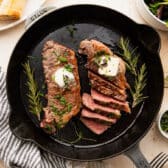
This cast iron steak delivers that golden, steakhouse-style crust with a juicy, tender center, all without firing up the grill. Cast iron’s unbeatable heat retention makes it the best tool for a perfect sear, while a simple butter baste adds rich, classic flavor. It’s an easy, reliable way to make a special dinner at home without the restaurant price tag!
If steak night is your thing, you might also like my Grilled New York Strip Steak, Cast Iron Filet Mignon, or this Simple Steak Marinade, and this pairs beautifully with simple sides like Sour Cream Mashed Potatoes or Oven Roasted Asparagus.
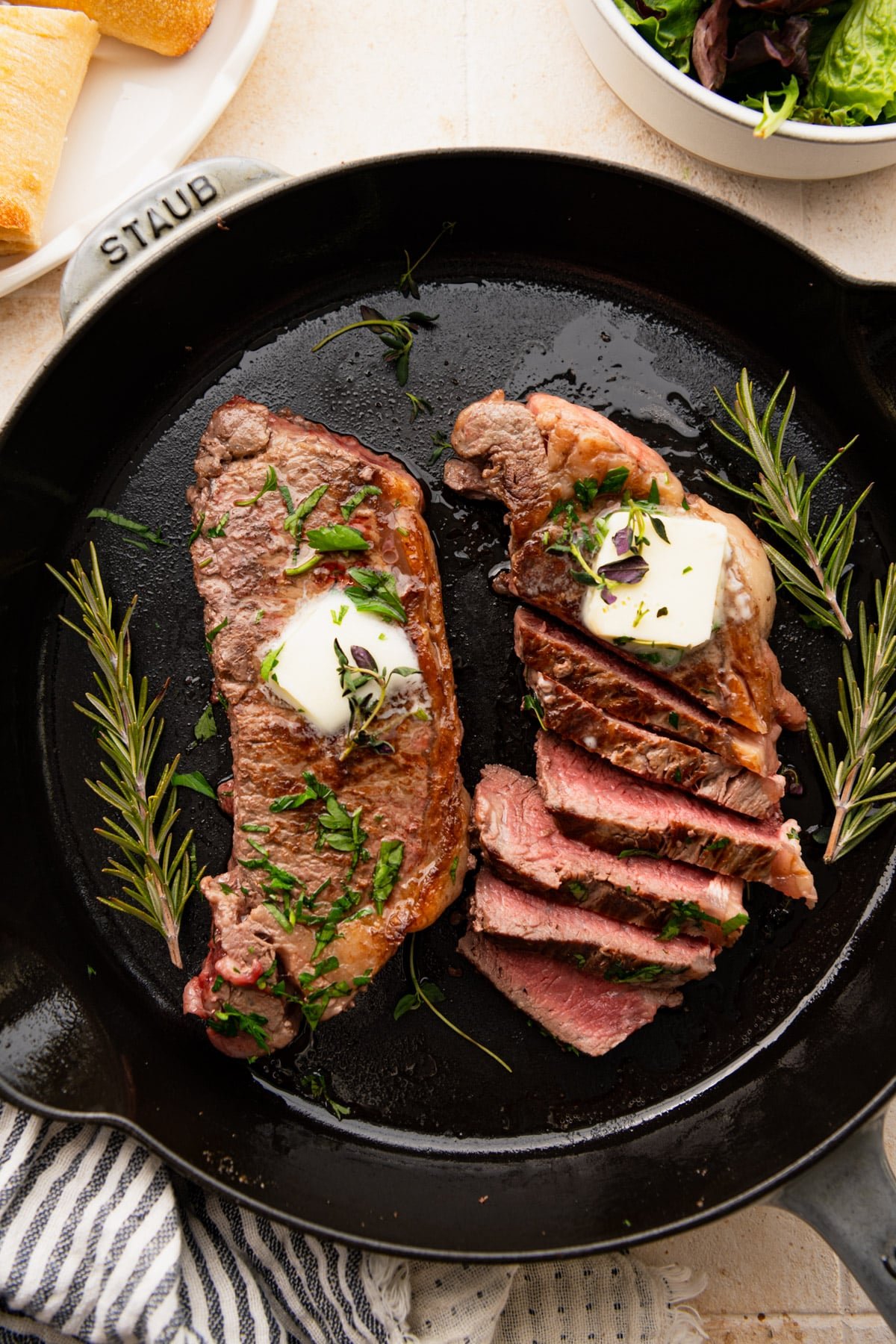
Table of Contents
Before You Get Started
A few small details make all the difference when cooking steak indoors:
- Use an instant-read thermometer. It removes the guesswork and prevents overcooking.
- Pat the steaks very dry. Moisture is the enemy of a good sear. Use paper towels and press firmly on all sides before seasoning.
- Let the steaks come to room temperature. About 30 minutes on the counter helps them cook more evenly from edge to center.
- Preheat the skillet fully. Give your cast iron a full 5 minutes over medium-high heat so it’s hot enough to create that crust.
- Don’t move the steak too soon. Let it sear undisturbed at first. That’s how you build flavor and texture.
Choosing Your Steak
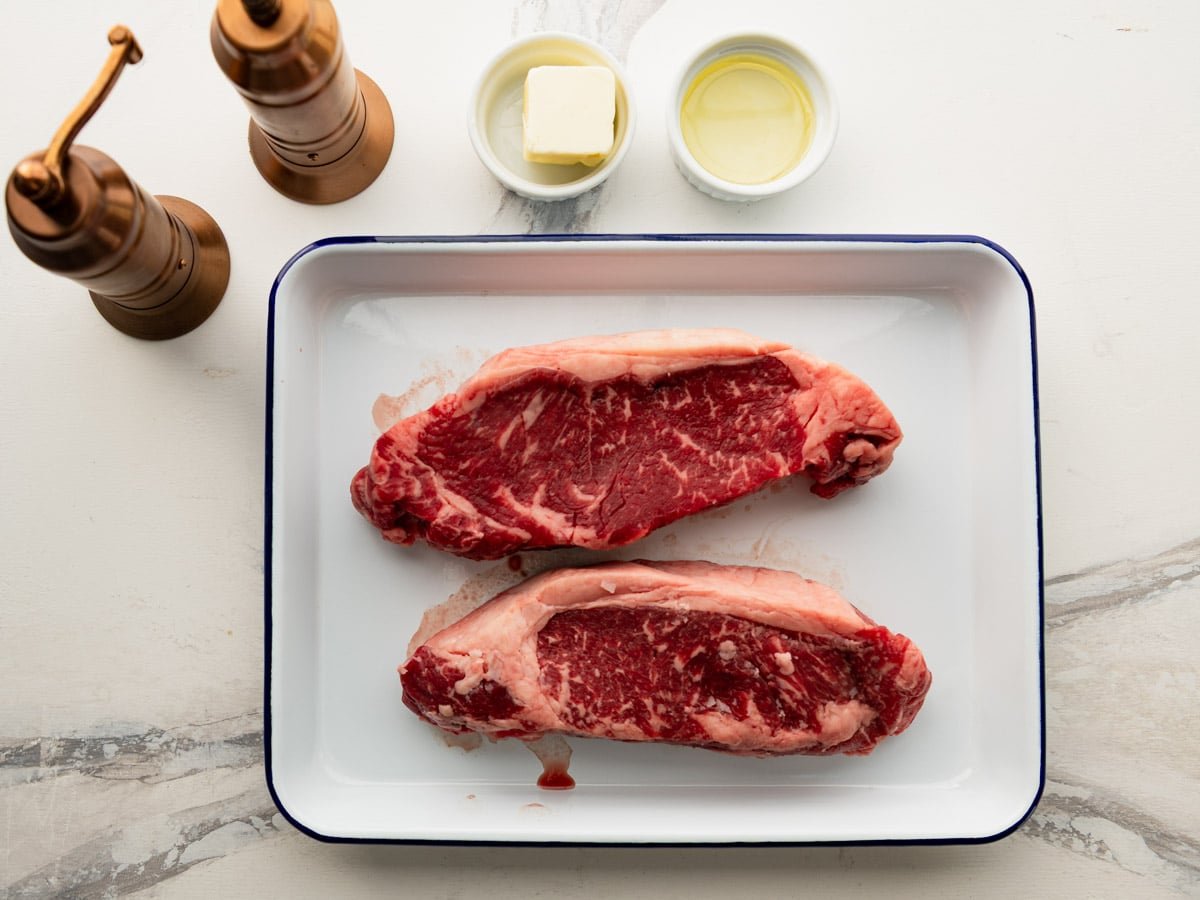
New York strip steaks are my go-to for cast iron cooking. They’re well-marbled, full of flavor, and sturdy enough to handle high heat. Ribeye is another great choice if you prefer a richer, fattier steak, while filet mignon works well for a leaner, more tender option.
Aim for steaks that are about 1 to 1 ¼ inches thick for the best balance of crust and doneness. Thicker steaks can still work, but they may need a quick finish in the oven.
How to Make Cast Iron Steak
This method is straightforward, but each step plays an important role in creating that perfect steakhouse result.
Step 1: Bring the Steaks to Room Temperature
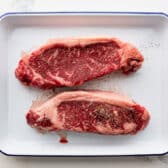
Remove the steaks from the refrigerator and let them sit at room temperature for about 30 minutes. This helps them cook more evenly instead of staying cold in the center.
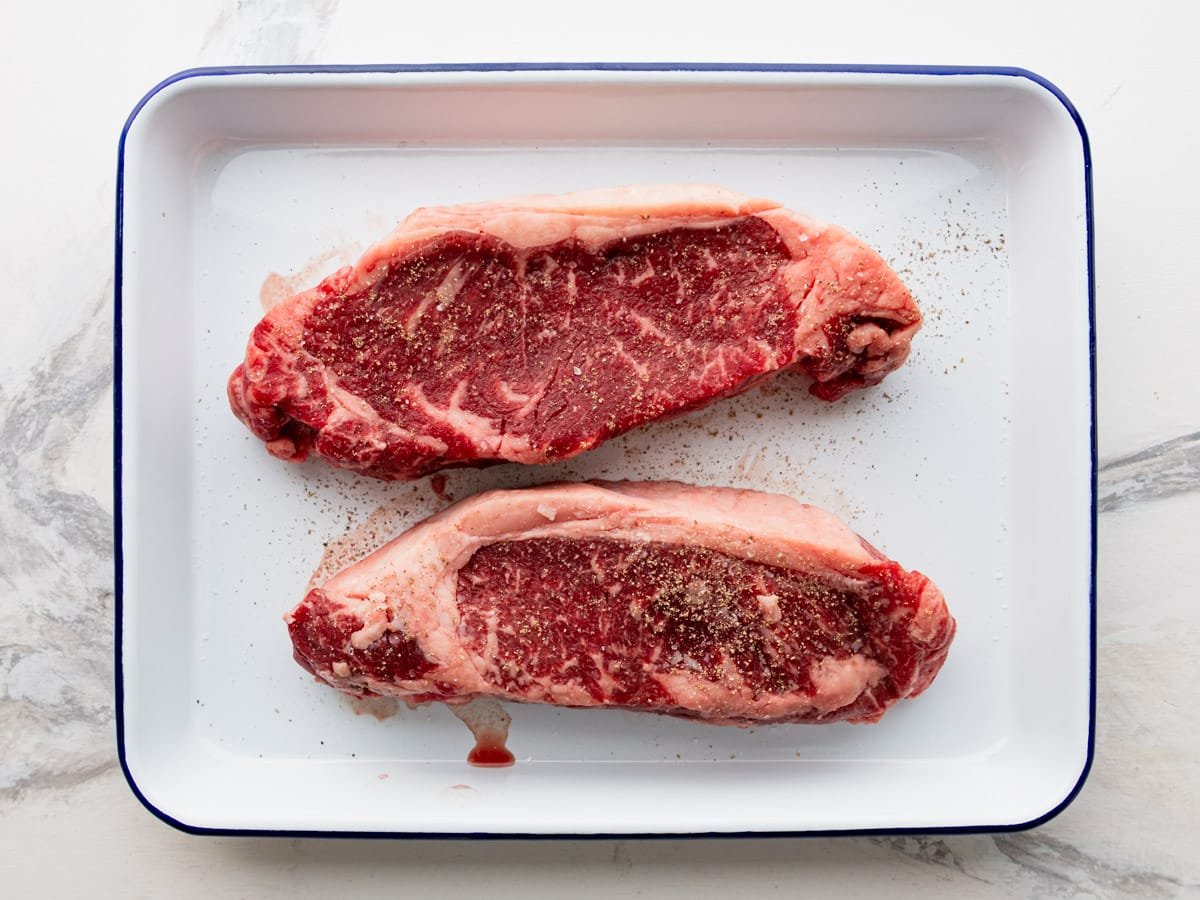
Pat the steaks very dry with paper towels, then season generously on both sides with kosher salt and freshly ground black pepper.
Why kosher salt? Its coarse texture adheres better to the meat and seasons more evenly than fine table salt.
Step 2: Preheat the Skillet
Place a large cast iron skillet over medium-high heat for about 5 minutes. The pan should be very hot before the steaks go in.
Add the oil and swirl to coat the bottom of the pan. The oil should shimmer and just begin to smoke.
** Tip: Skip olive oil here. Its smoke point is too low for high-heat searing and can create bitter flavors.
Step 3: Sear the Steaks
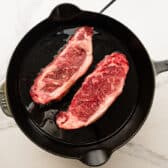
Carefully place the steaks in the hot skillet. You should hear an immediate, strong sizzle.
Let the steaks cook undisturbed for about 4 minutes. This contact with the hot pan is what creates that deep, golden-brown crust.
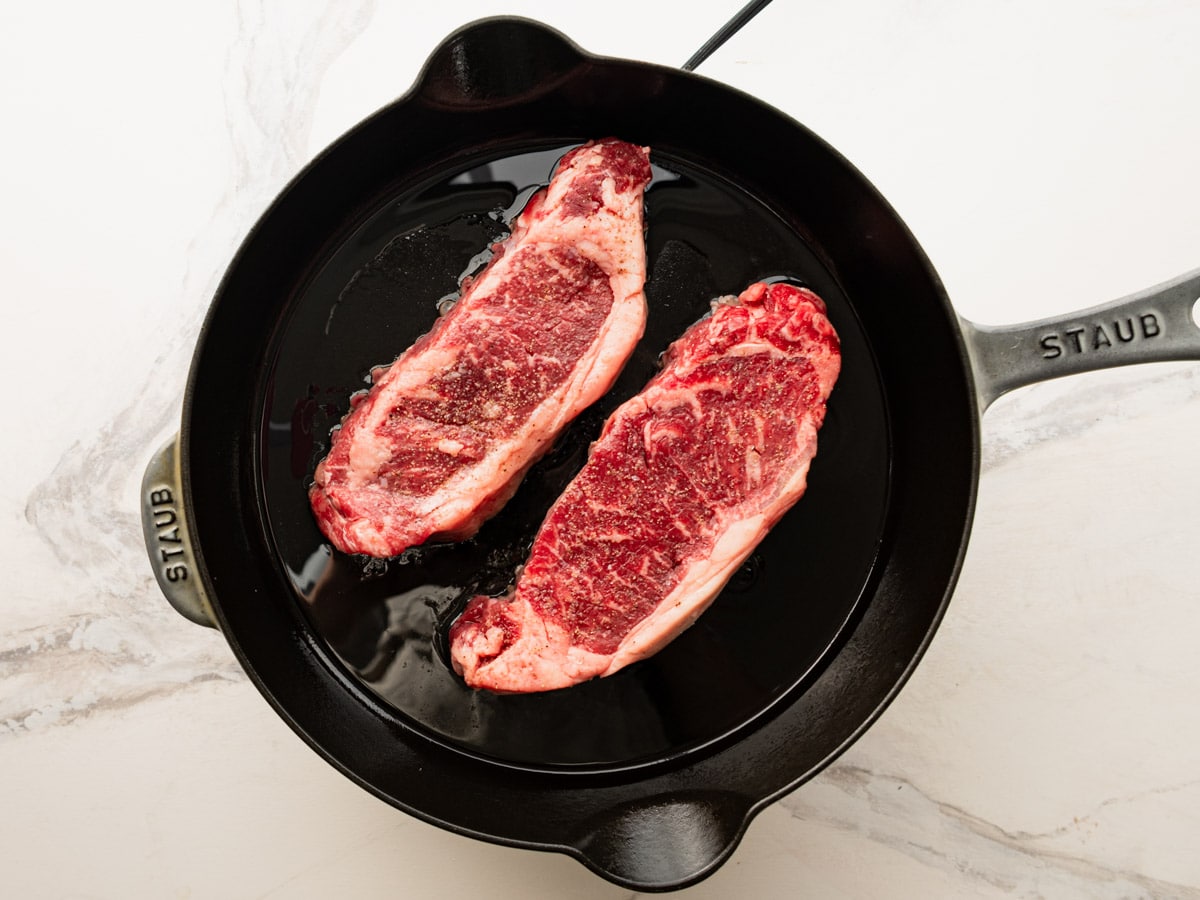
Flip the steaks once and cook for another 2 minutes on the second side.
** Tip: Make sure the steaks aren’t touching. Crowding the pan traps steam and prevents proper browning.
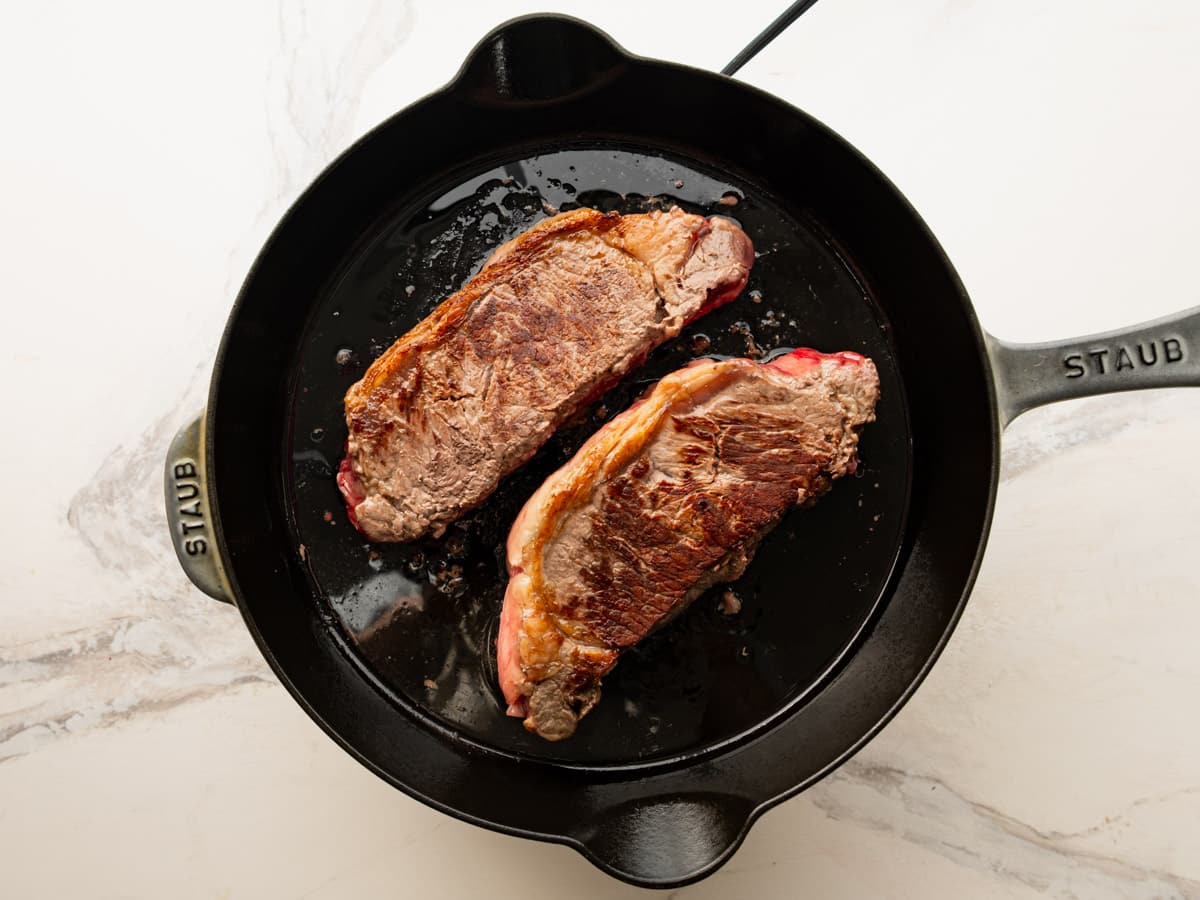
Step 4: Baste with Butter
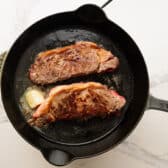
Reduce the heat slightly to medium and add the butter to the skillet. As it melts and foams, tilt the pan and spoon the butter over the steaks repeatedly for about 1 to 2 minutes.
This butter basting adds flavor and helps gently cook the top of the steak while enhancing the crust underneath.
** Optional: Add a sprig of fresh rosemary, thyme, or garlic cloves to the butter for extra aroma and flavor.
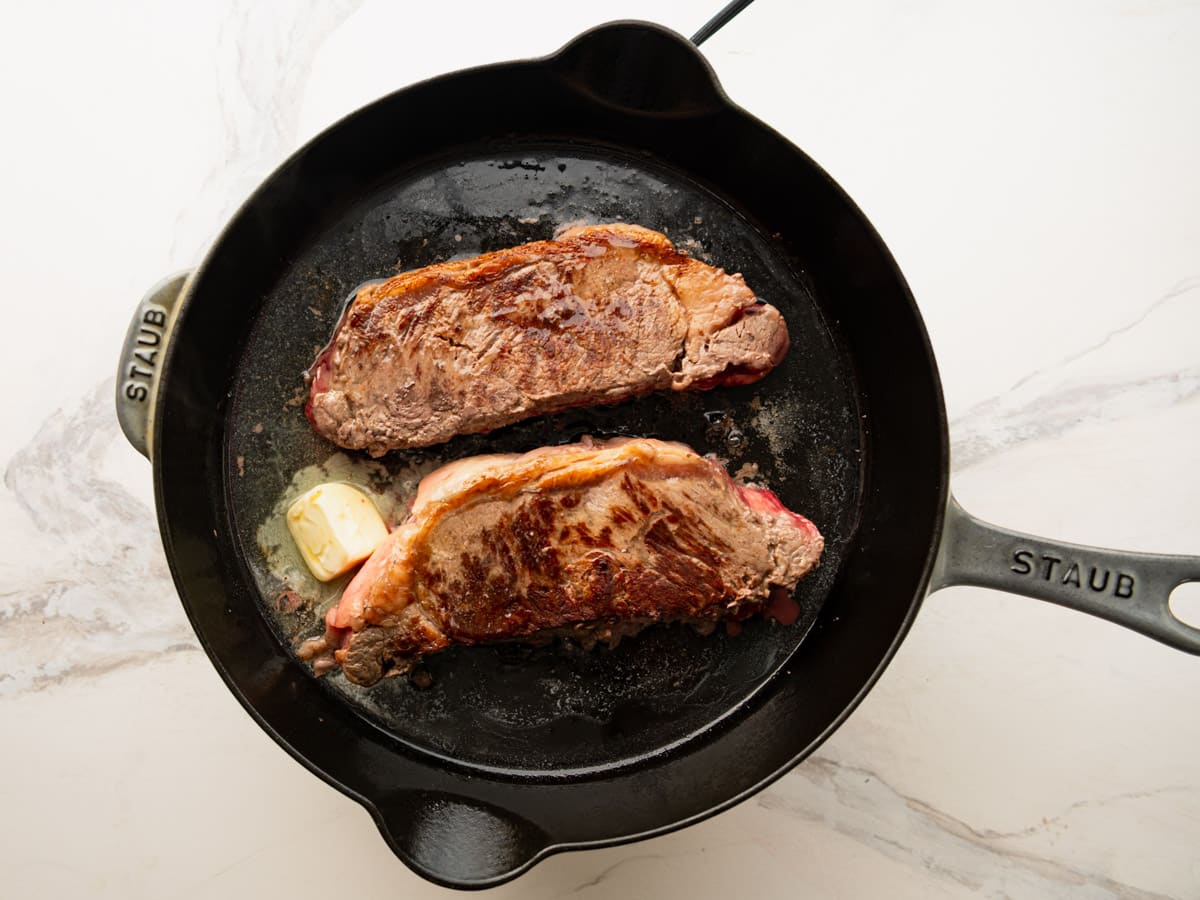
Step 5: Check for Doneness
Use an instant-read thermometer inserted into the thickest part of the steak to check doneness. Pull the steaks a few degrees before your target temperature since they will continue to cook as they rest.
- Rare: 125°F (cool red center)
- Medium-rare: 130–135°F (warm red center)
- Medium: 140–145°F (warm pink center)
For thicker steaks, you may need an additional 1 to 2 minutes per side, or you can finish them in a 400°F oven for a few minutes after searing.
Step 6: Rest Before Serving
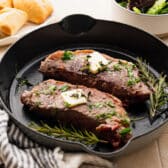
Transfer the steaks to a plate or cutting board and let them rest for 5 minutes before slicing or serving. Resting allows the juices to redistribute so they stay in the steak instead of spilling onto the plate.
** Tip: You can tent the steaks loosely with foil, but don’t wrap them tightly or the crust will soften.
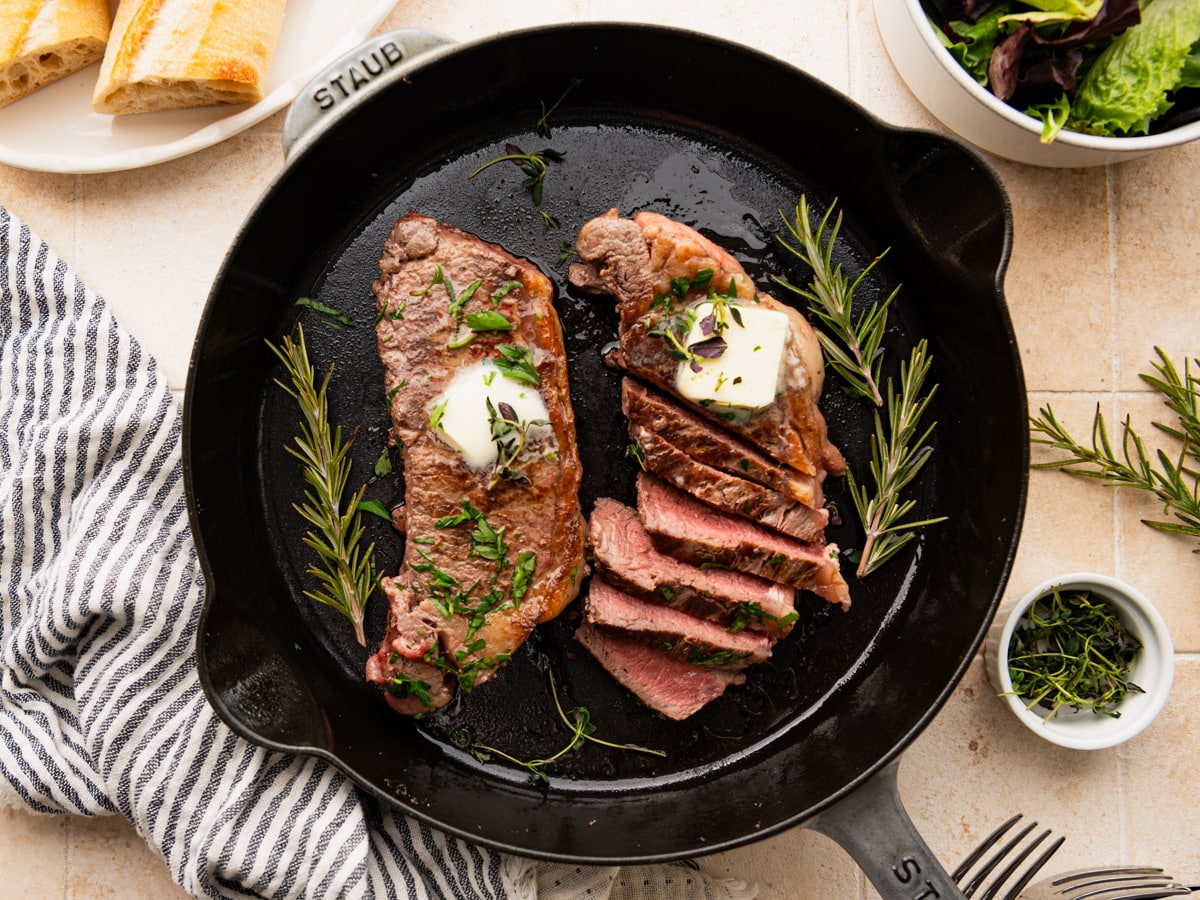
Do I Need to Marinate?
A good-quality steak doesn’t need a marinade. Simple salt, pepper, and butter basting provide plenty of flavor. If you prefer a marinade or are working with a less tender cut, my Steak Marinade Recipe is a great option.
Serving Suggestions
This cast iron steak pairs well with classic, comforting sides:
- Crispy Seasoned Roasted Potatoes, Roasted Gold Potatoes, Dill Roasted Potatoes, or Red Skin Mashed Potatoes
- Sautéed Spinach with Garlic
- Duke’s Homemade Mac and Cheese or Creamy Baked Mac and Cheese
- Amish Green Beans or Garlic Roasted Broccoli
- Tomato Basil Salad
- Corn Salad
- Succotash
- A simple salad or crusty bread to round out the meal
Storage and Reheating
Storage:
Refrigerate leftover steak in an airtight container for up to 3 to 4 days.
Reheating:
The best way to reheat steak is gently in a skillet over medium-low heat. Avoid the microwave if possible, since it can make the steak tough. Cold steak also works well sliced thin for salads, sandwiches, or steak and eggs.
Frequently Asked Questions
How long do I cook steak in a cast iron skillet?
For a 1-inch thick steak, plan on about 4 minutes on the first side, 2 minutes after flipping, and about 2 minutes of butter basting. Total cook time is usually 8 to 10 minutes, but always use a thermometer to confirm doneness.
What’s the best oil for searing steak?
Use a high smoke point oil like vegetable oil or avocado oil. These oils can handle high heat without burning.
How do I know when my steak is done without cutting into it?
An instant-read thermometer is the most reliable method. Insert it into the thickest part of the steak and check against your target temperature.
Why is my cast iron steak tough?
Overcooking is the most common reason. Use a thermometer and pull the steak a few degrees early, then let it rest before cutting.
Can I cook steak in cast iron without smoke?
Some smoke is normal with high-heat searing. To minimize it, make sure the steak is very dry, use a high smoke point oil, and ventilate your kitchen well.
Should I finish my steak in the oven?
For steaks that are 1 ½ inches thick or more, finishing in a 400°F oven after searing helps cook the center evenly without over-browning the outside.
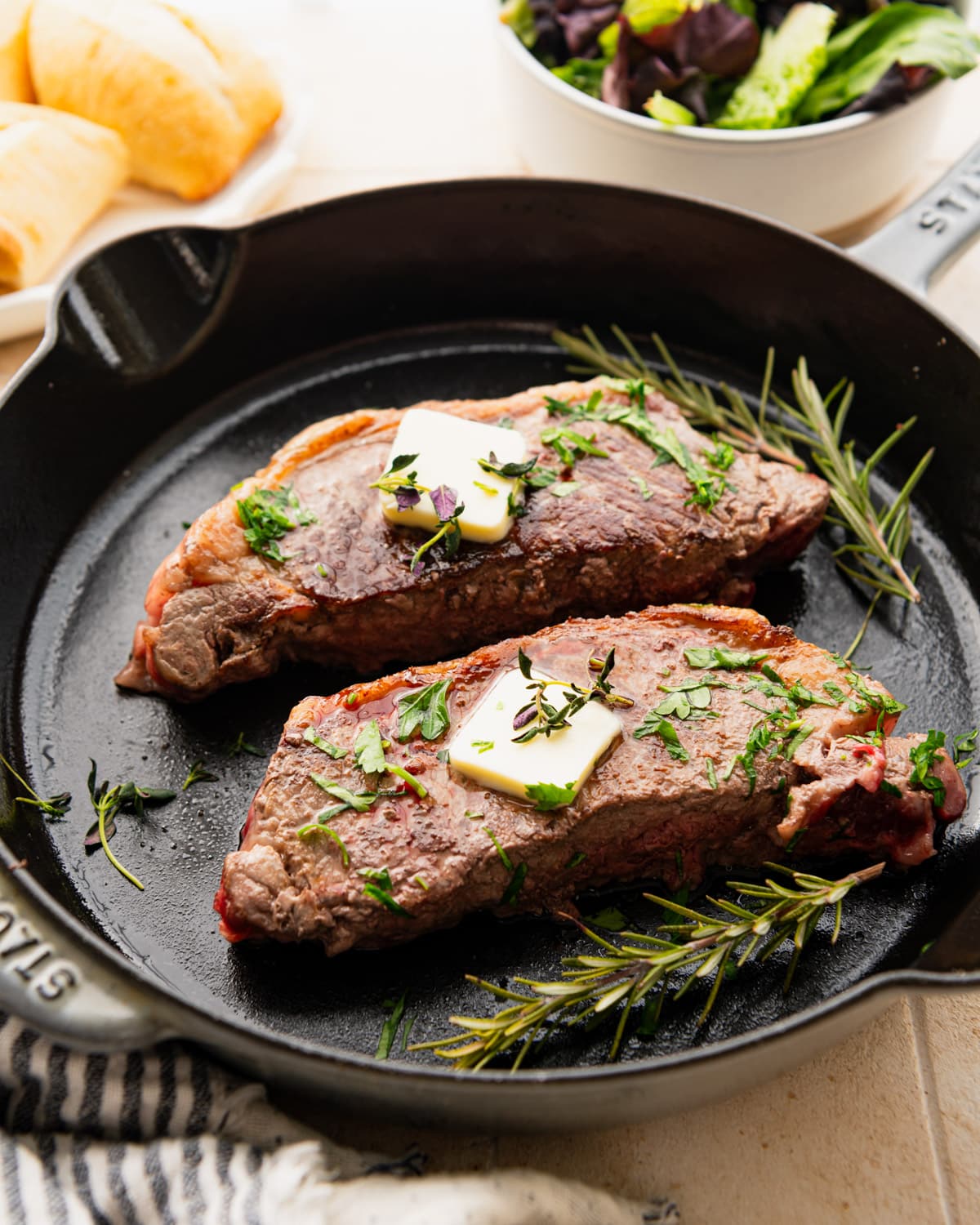
Related Recipes

Did you make this recipe?
If you enjoyed this recipe, please leave a comment with a 5-star review at the bottom of the post. Thank you!
Watch How to Make It

Cast Iron Steak
Equipment
Ingredients
- 2 New York strip steaks (about 10-12 ounces each, 1-1¼ inches thick)
- Kosher salt and freshly ground black pepper
- 1 tablespoon vegetable oil or avocado oil
- 2 tablespoons salted butter
- Optional garnish: additional butter; chopped fresh herbs such as parsley, thyme, or rosemary
Instructions
Bring the Steaks to Room Temperature
- Remove the steaks from the refrigerator and let them sit at room temperature for about 30 minutes. Pat them very dry with paper towels, then season generously on both sides with salt and pepper.

Preheat the Skillet
- Place a large cast iron skillet over medium-high heat for about 5 minutes, until very hot. Add the oil and swirl to coat the bottom of the pan. The oil should shimmer and just begin to smoke.
Sear the Steaks
- Carefully place the steaks in the hot skillet. Cook undisturbed for about 4 minutes, until a deep golden-brown crust forms. Flip and cook for another 2 minutes.
Baste with Butter
- Reduce the heat slightly to medium and add the butter to the pan. As it melts, tilt the skillet and spoon the butter over the steaks repeatedly for about 1-2 minutes.
Finish Cooking
- Continue cooking until the steaks reach your desired doneness, checking with an instant-read thermometer: Rare: 125°F (cool red center); Medium-rare: 130-135°F (warm red center); Medium: 140-145°F (warm pink center). For thicker steaks, you may need an additional 1-2 minutes per side.
Rest and Serve
- Transfer the steaks to a plate and let them rest for 5 minutes before slicing or serving.
Notes
- Pat steaks very dry before seasoning. Moisture prevents a good sear.
- Let steaks sit at room temperature for 30 minutes before cooking for more even results.
- Preheat the cast iron skillet for a full 5 minutes. It should be very hot before the steak goes in.
- Use vegetable or avocado oil (not olive oil) for high-heat searing.
- Don’t move the steak for the first 4 minutes. Let the crust develop.
- Pull steaks a few degrees before your target temp. They’ll continue cooking as they rest.
- Internal temps: Rare 125°F, Medium-rare 130-135°F, Medium 140-145°F.
- Rest for 5 minutes before slicing to keep the juices in the steak.
- For thicker steaks (1½+ inches), finish in a 400°F oven after searing.
- Leftovers keep refrigerated for 3-4 days. Reheat gently in a skillet for best texture.













What brand of instant read thermometer do you use? I keep trying to find a good, fast, accurate one and haven’t found one yet.
I’ve tried many different brands. The one that seems to have worked for the longest and that I keep going back to is the TempPro.