Grapes, sugar, and boiling water go straight into a mason jar. There’s no cooking, no juicer, and no peeling anywhere in this method! The jars sit until the flavor deepens, then you strain and pour. It’s the easiest way I know to turn a September grape haul into juice you’ll enjoy in January.
More ways to put up the harvest:

Before You Get Started
A few things make the difference between a jar of sweet, deeply colored juice and one that never quite gets there. Keep these tips in mind:
- Use concord grapes: They carry the compound behind that classic grape flavor you know from juice and candy. Other varieties give you something thin and pale by comparison.
- Decide how long to wait: Three months in the jar gives the smoothest, sweetest juice, but overnight works and there’s a same-day stovetop version below if you’d rather not wait at all.
- Always use new lids: Reused lids are the most common reason a jar fails to seal. Rings can be used again and again, but lids cannot.


What You’ll Need
The equipment list is short, and you may already have most of it.
- Quart-size mason jars, with new lids and rings: Half-gallon jars work too if you’re making bigger batches.
- A kettle, saucepan, or microwave for boiling the water. My friend Barbara swears by an electric kettle after shorting out her microwave doing this one year, so take that as a gentle warning.
- Canning tongs: Lifting hot jars out of boiling water with regular kitchen tongs is how people get burned.
- A deep pot or canner: It needs enough depth to cover the jars with 1 to 2 inches of water. A tall stockpot is fine.
- A fine mesh sieve for straining months from now.
→ Sterilizing the jars: run them through the dishwasher on the hot cycle, or boil them for 10 minutes in the same pot you’ll use for processing. Keep the jars and lids hot until you fill them, since pouring boiling water into a cold jar can crack it.
How to Make Grape Juice
There’s a farm about a mile up the road where we pick concord grapes every August and September. My neighbor Barbara has an annual tradition with her son of harvesting buckets of them, then turning them into jelly and juice to enjoy all year. When she showed me her method, I could not believe how simple it was!


Instead of cooking the grapes on the stovetop, the hot sugar water creates a simple syrup that macerates the fruit right in the jar, softening the grapes and drawing out their juice over time.
Try it another way
It’s the same fuss-free process behind my Old-Fashioned Blackbery Lemonade.
⇢ This doesn’t water down the juice: One cup of grapes to a quart of water looks wrong on paper, but three months of slow extraction pulls out concentrated color and flavor. The finished juice is rich, not diluted.
Concord grapes are full of large seeds, which makes them hard to eat out of hand. That same fruit makes the best juice you’ll taste.
Step 1: Fill the Jar
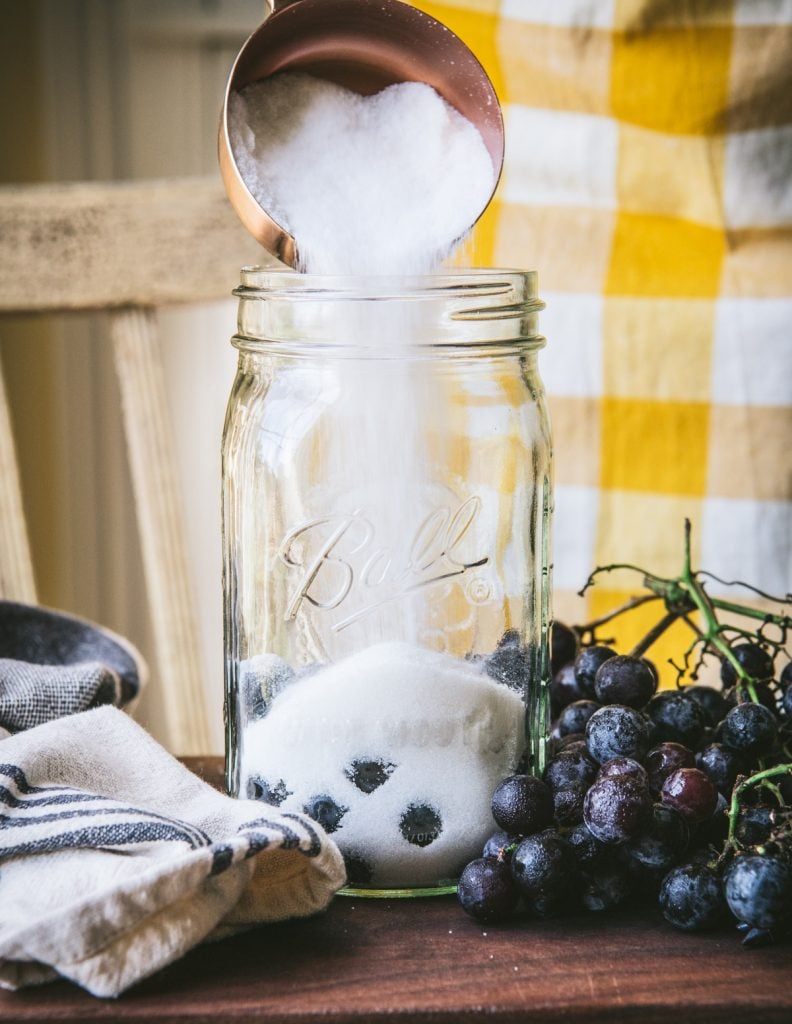
Place 1 cup of rinsed, stemmed concord grapes in a hot quart-size jar, then pour ½ cup of sugar over the top.
Step 2: Add the Boiling Water
Fill the jar halfway with boiling water and stir until the sugar completely dissolves.
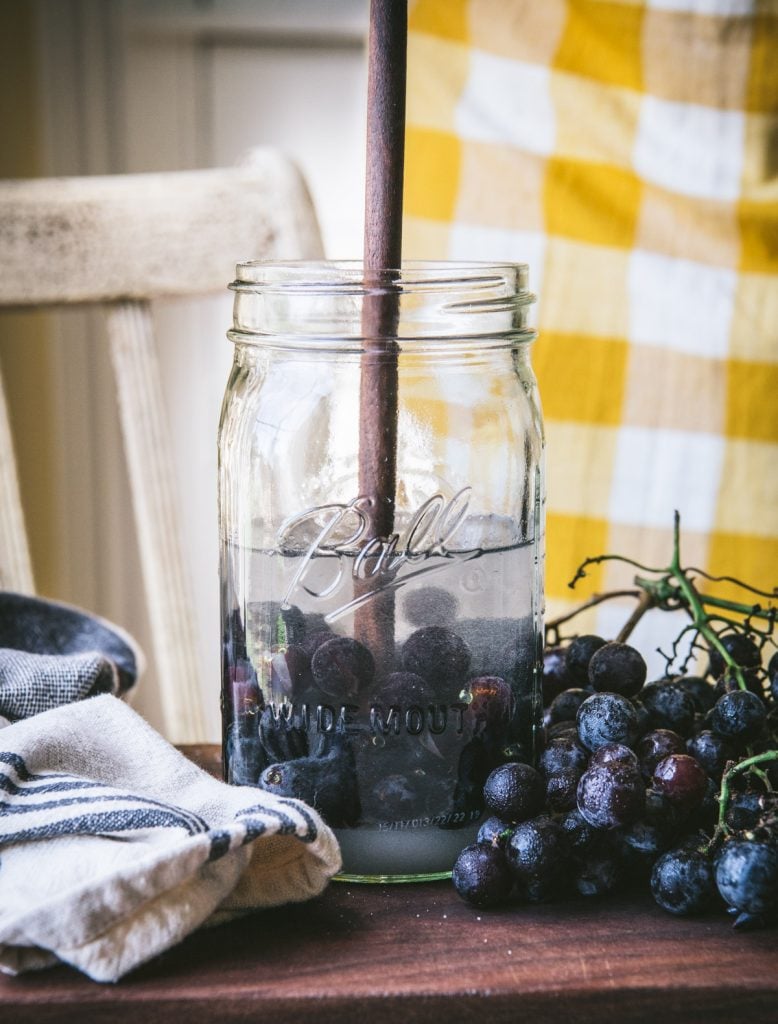
Then top it off with more boiling water, leaving ¼ inch of headspace at the rim.
⇢ Wipe the rim before the lid goes on: A single drip of sugar syrup on the glass is enough to keep a jar from sealing. Use a clean damp cloth.

Step 3: Process the Jars
Set the jars on a rack in your canner or deep pot, cover them with at least 1 to 2 inches of water, and boil for 10 minutes. Half-gallon jars need 15 to 20 minutes.
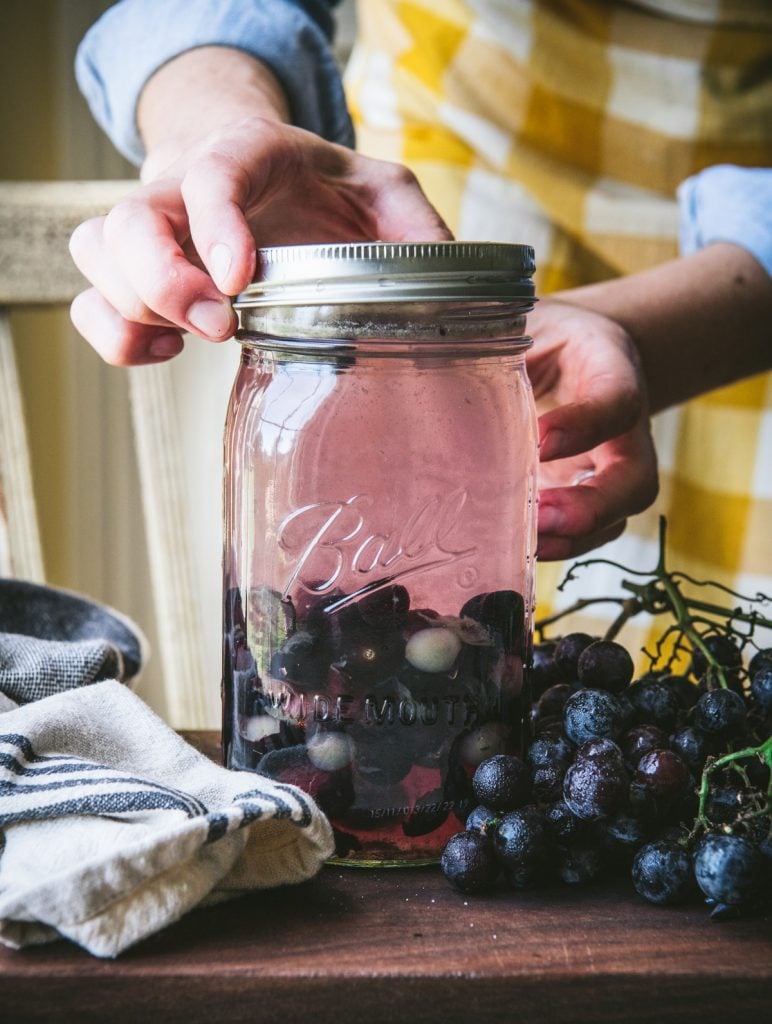
Lift the jars out with tongs and set them on a towel to cool overnight. You’ll hear the lids pop as they seal.
Step 4: Let Them Sit
Store the sealed jars somewhere cool, dark, and dry. Three months is the sweet spot, and the juice keeps developing past that.
The grapes will settle, the liquid will deepen from pink to a rich purple, and the whole thing turns into grape juice while you forget about it.
Step 5: Strain and Serve
Pour the contents of the jar through a fine mesh sieve into a clean jar or pitcher, leaving the softened grapes and sediment behind. Chill and pour over ice.
The strained grapes have given up nearly everything they had, so they’re best composted rather than saved.

Want Grape Juice Today?
If you have grapes now and no patience for waiting, pull the juice out on the stovetop instead. It’s a different drink: brighter, fresher, and more tart, tasting clearly of cooked fruit rather than the smooth, rounded sweetness the jars develop over months. Both are good. They’re just not the same.
- Simmer the grapes: Put 4 cups of stemmed, rinsed grapes in a saucepan with about ½ cup of water, just enough to keep them from scorching. Keep it at a gentle simmer, never a hard boil, which dulls the flavor and draws bitterness out of the seeds.
- Mash as they soften: Cook about 10 minutes, pressing lightly with a wooden spoon as the skins split and the fruit collapses.
- Strain slowly: Pour through a fine mesh sieve lined with cheesecloth and let it drip on its own. Forcing the pulp through leaves the juice cloudy and pushes bitterness into the glass.
- Sweeten while it’s warm: Stir in sugar to taste before the juice cools so it dissolves completely. You should end up with roughly 2 cups.
⇢ Chill it overnight if you can. Fresh juice can create harmless tartrate crystals as it cools, and a night in the fridge lets them settle so you can pour off the clear juice above.
⇢ This version is not shelf-stable. Keep it in the refrigerator or freezer, not the pantry. Only the canned jars above are processed for long-term storage.
How Much Juice One Jar Makes
Each quart jar gives you about 3½ to 4 cups of strained juice, which is roughly four glasses over ice. A gallon of grapes fills somewhere around eight quart jars, so a good picking afternoon can set you up for most of the winter.
The recipe scales one jar at a time, which is the best thing about it. If you only came home with 2 cups of grapes, make two jars. If you picked way more than you know what to do with, keep filling jars until you run out of fruit!
⇢ For half-gallon jars, double everything. Use 2 cups of grapes and 1 cup of sugar per jar, then process for 15 to 20 minutes instead of 10.

How to Serve
Serve this cold over plenty of ice. It’s sweet enough that some families cut it with a splash of sparkling water, and it makes a good base for punch if you’re feeding a crowd around the holidays.
If you filled jars in September, they’ll be ready right around December. A jar tied with a ribbon is one of the easiest homemade gifts you’ll give all year.
More homemade drinks worth trying:
How to Store
Sealed jars: Once the jars have cooled completely, press the center of each lid. It should be down and stay down. Properly sealed jars keep in a cool, dark, dry place for up to a year.
Unsealed jars: If a lid flexes or pops back up, that jar did not seal. Move it to the refrigerator and use it within 3 weeks. It’s perfectly good, it just can’t live in the pantry.
After straining: Once you’ve opened and strained a jar, keep the juice in the refrigerator in a clean container and drink it within about a week.
Fresh stovetop juice: Refrigerate for up to a week, or freeze for up to 6 months. Leave headroom in the container, since the liquid expands as it freezes.
Freezing canned juice: You can freeze strained juice from the jars too, though there’s rarely a reason to when the sealed jars already keep for a year.
Thanks so much for this perfect recipe! I just have a few backyard grapes and they get shaded by the leaves so harvest is pretty uneven – no huge all at the same time batches for me. But it’s no problem to get 1 or 2 cups at a time and really, how many concord grape pies can you eat anyway? This is so much easier. Your instructions are great and your pictures are amazing!
– Pat
Frequently Asked Questions
Do I really have to wait three months?
No, but the wait is what makes this version taste the way it does. Three months lets the sugar syrup slowly pull out color and flavor and gives the sediment time to settle, which is why the juice comes out smooth and clear.
You can strain a jar after a few weeks and it will be drinkable, just lighter and less developed. If you want juice today, use the stovetop method above instead. It’s a fresher, tarter drink rather than a shortcut to the same result.
Do I need a juicer, a press, or a blender?
None of them. The whole point of this method is that sugar and boiling water do the work of extracting the juice, so a mason jar and a strainer are all the equipment you need.
The stovetop version doesn’t need special equipment either. A saucepan, a potato masher or wooden spoon, and a fine mesh sieve are sufficient.
Can I use a grape other than concord?
You can, but expect a big difference. Concord grapes carry the flavor compound most people associate with grape juice, and they also give the juice its deep purple color.
Other slip-skin varieties like Niagara or Catawba work well and will give you a paler, more delicate juice. Table grapes from the grocery store are the weakest option here, since they’re grown for eating rather than for juice.
Can I use less sugar?
Yes. Several readers use half the sugar with good results, so start at ¼ cup per quart jar if you want something less sweet. The sugar is doing real work drawing juice out of the fruit, so cutting it back further will give you a thinner, less flavorful result.
Keep in mind that the sugar is not a preservative in this recipe. The water bath processing is what makes the jars shelf-stable, so reducing it doesn’t affect safety.
Can the juice ferment in the jar?
Not if the jars are processed correctly. The boiling water bath is what stops fermentation, so a properly sealed jar is stable on the shelf for a year.
Fermentation is a sign something went wrong with the seal. If a jar is bubbling, the lid has bulged, the liquid looks cloudy or fizzy, or it smells yeasty or like wine when you open it, throw it out rather than tasting it. Using new lids every time and wiping the rims clean before sealing prevents nearly every case of this.

More Fruit to Put Up in Jars

Did you make this recipe?
If you enjoyed this recipe, please leave a comment with a 5-star review at the bottom of the post. Thank you!

How to Make Grape Juice
Equipment
- 1 (1-quart) mason jar, with a new lid and ring (or more jars as needed)
- Canner or deep stockpot
- Canning tongs
- Fine mesh sieve
Ingredients
- 1 cup concord grapes, rinsed and stems removed
- ½ cup granulated sugar
- 4 cups boiling water (approximately)
Instructions
- Prepare a 1-quart canning jar, new lid, and ring according to the manufacturer's directions for sterilized jars. Keep the jar and lid hot until you fill them. Place the grapes in the hot jar and add the sugar.

- Pour boiling water into the jar until it's about half to two-thirds full, then stir well until the sugar dissolves completely.

- Add enough additional boiling water to fill the jar, leaving ¼ inch of headspace at the top. Wipe any drips from the rim and sides with a clean damp cloth.

- Cover with a hot lid and tighten the ring firmly. Repeat with as many jars and grapes as you like. Set the jars on a rack in a canner or deep pot of boiling water, covered by at least 1 to 2 inches of water, and boil for 10 minutes.

- Remove the jars with canning tongs and set them on a towel or rack to cool overnight.
- When completely cool, check the seals. Each lid should be down in the center and stay down when pressed. Store sealed jars in a cool, dark, dry place for at least 3 months and up to 1 year.
- When you're ready to use the juice, strain the liquid through a fine mesh sieve, discard the solids, and refrigerate the juice in a clean jar for up to 1 week.

Notes
- Scale it one jar at a time. Make a single jar from a small picking or fill a dozen if the vines were generous. The ratio stays the same.
- Want juice today? Simmer 4 cups of stemmed grapes with ½ cup of water for about 10 minutes, strain, and sweeten to taste. Fresh juice is brighter and more tart, and it must be refrigerated or frozen rather than stored in the pantry.
- Concord grapes: They carry the flavor compound behind classic grape juice and give it the deep purple color. Other varieties will taste noticeably lighter.
- Always use new lids. Rings can be reused, but a reused lid is the most common cause of a failed seal.
- Sugar is adjustable. Start at ¼ cup per quart for a less sweet juice. The sugar helps draw out the juice but is not what makes the jars shelf-stable, so reducing it doesn’t affect safety.
- Floating grapes are normal. Some jars settle with the fruit at the top and some at the bottom, depending on how much sugar has dissolved into the surrounding liquid. As long as the jar is sealed, the juice is fine.
- Half-gallon jars: use 2 cups of grapes and 1 cup of sugar per jar, and process for 15 to 20 minutes.
- Yield: each quart jar gives you roughly 3½ to 4 cups of strained juice.
- Storage: sealed jars keep for up to 1 year in a cool, dark place. Jars that don’t seal go in the refrigerator and should be used within 3 weeks.
- Signs to discard a jar: bulging lid, bubbling, or a yeasty or winey smell on opening. Any of these mean the seal failed. Throw it out without tasting it.
Nutrition
Originally published in September, 2022, this post was updated in October, 2026.











Gee whiz, Blair! You sure take incredible mouthwatering photographs! I can’t believe how simple the process is! Even I may be able to do that! Maybe not right away but you will definitely put it on my bucket list of ‘maybe projects. Thanks again, so much.
Thank you so much for your kind words, Marion! 🙂
Another thing that makes me think seriously about making this is that it doesn’t call for as many grapes as I would have thought. Only 1 cupful per quart jar! That strikes me as very economical. Especially considering the price of juice these days. Wow. One question. You suggest sterilizing the jars in the stockpot. How do you get them in and out without burning yourself? Do you recommend a particular brand of canning equipment. Thanks!
I don’t have a specific brand that I prefer, but I always use canning tongs to get the jars in and out.
Pretty comprehensive, right down to the nutrition. I was looking for this recipe given to me by my husband’s aunt and uncle 30 years ago! I thought I had imagined how simple it was, but viola, here it is. Thanks.
That’s awesome! I’m so glad that you can enjoy it again, Tammy! 🙂
Thanks so much for this perfect recipe! I just have a few backyard grapes and they get shaded by the leaves so harvest is pretty uneven – no huge all at the same time batches for me. But it’s no problem to get 1 or 2 cups at a time and really, how many concord grapes pies can you eat anyway? 🙂 This is so much easier. Your instructions are great and your pictures are amazing!
So glad that you enjoyed it, Pat! Thanks for your note!
We usually use a bit more grapes, if we have lots and half the amount of sugar. Plenty sweet for us.
Thanks, Sandy! Yes, you can absolutely adjust the sweetness to suit your taste. Such a treat!
This may be a silly question but half of the jars of juice that I’ve processed have the grapes floating at the top, and half have the floating at the bottom. They all are sealed. Why is this?
Hi, Debra! I have no idea! As long as all of the jars are properly sealed, though, the juice should be great!
Why would you water down Concord grape juice. I press mine, clarify them as best I can, and water bath the juice straight. If you have people who don’t like it that strong you can add water after the fact.
Hi, Michael! This doesn’t water down the grape juice at all — it’s incredibly flavorful and robust after it sits as instructed. I’m sure that your method works well, too! This is just another option for those interested. 🙂
Thanks Blair! My grandparents used to make grape juice this way from their grapes and brought it to my family each Christmas. We usually enjoyed it during the winter around the fireplace along with popcorn. My grape vines produced enough grapes for the first time to make grape juice this year. I am going to use your recipe to make it like my grandparents did.
What lovely memories! We hope you enjoy our recipe as much as your grandparents’ version.
Do you ever make grape jelly, and if so would you share the recipe?
Hi Lenore! We don’t currently have a grape jelly recipe, but will keep it in mind for the future.
My Mother made grape juice like this for years. She is gone now but would be 98 years old. This was a Pennsylvania Dutch way to make juice and sooo good in the winter months.
We hope our version lives up to your grandma’s, Louise!