Mom’s cranberry bread recipe is easy to stir together, perfect for gifting around the holidays, and always moist, buttery, and full of fresh orange flavor. Tart cranberries and crunchy nuts serve as a tasty contrast to the sweet, tender quick bread. Enjoy a slice for breakfast on Thanksgiving or Christmas morning, or offer the loaf as a snack throughout the season alongside a cup of coffee or tea.
If you love this classic cranberry orange bread, you’ll also want to try my no-knead cranberry walnut bread for a rustic, crusty loaf. For more easy homemade breads, check out my cinnamon swirl bread and blueberry bread.
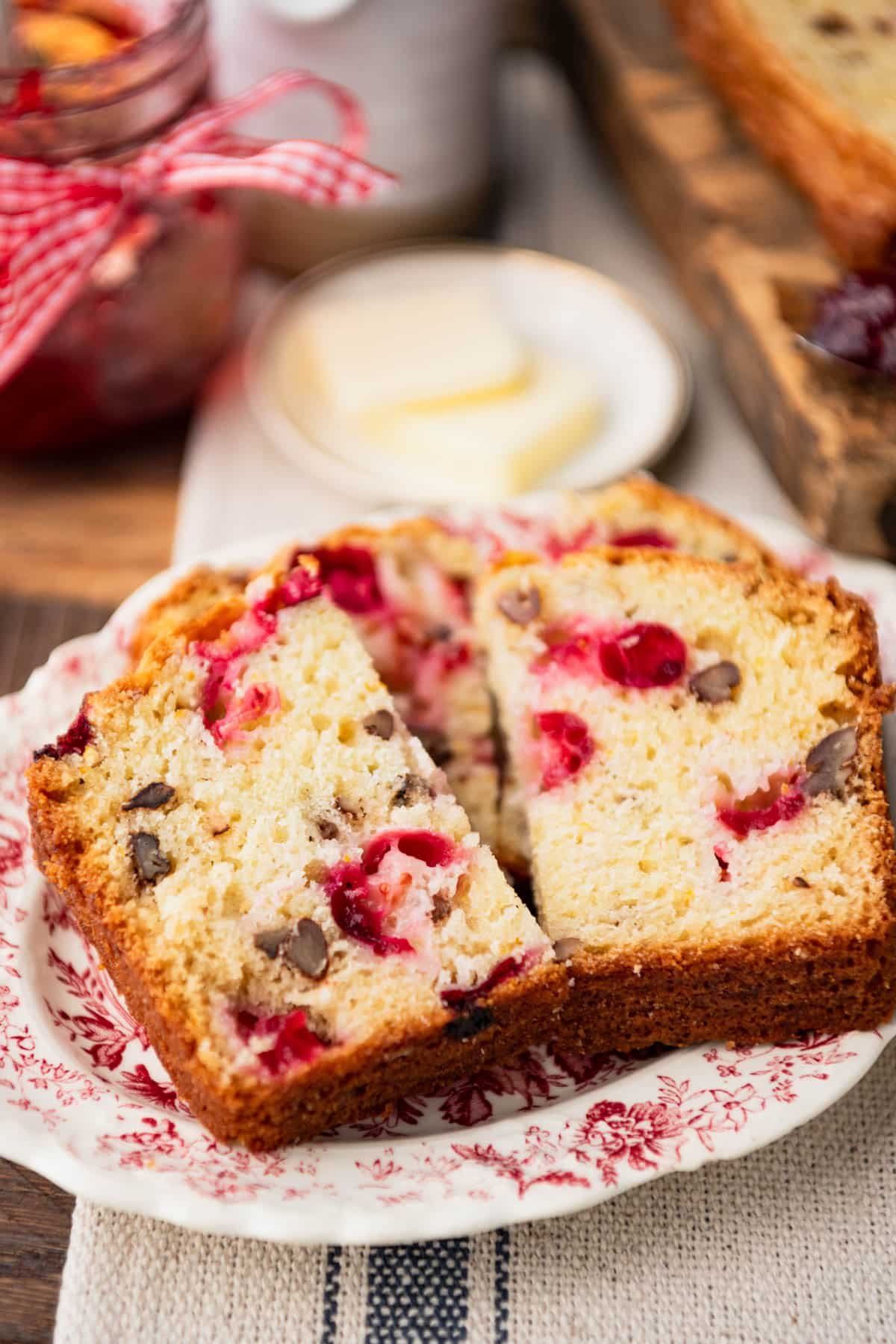
Table of Contents
Before You Get Started
A few quick tips to set you up for success:
- Properly measure the flour. Always spoon and level the flour or weigh it on a kitchen scale. Do not scoop it out of the package. Incorrectly measuring packs the flour too tightly and results in dense, dry bread.
- Don’t overmix the batter. Mixing too much activates the gluten in the flour, resulting in a dry, dense loaf. Gently fold together the ingredients just until everything is combined.
- Use a light-colored loaf pan. Darker pans tend to brown or burn the outside of quick breads before the inside cooks through.
- Toss the cranberries in a little flour. This prevents them from sinking to the bottom of the loaf pan, so you get juicy berries in every bite.
How to Make Cranberry Bread
This fresh cranberry bread recipe only requires 15 minutes of prep. It comes straight from one of my mom’s old, tattered, stained recipe cards, and it’s been a guaranteed winner in our family for years. Since cranberries and oranges are a match made in heaven, this bread combines fresh (or frozen) tart cranberries with bright orange juice and fresh orange zest. Stirred into a rich, buttery batter and studded with crunchy walnuts or pecans, each loaf is the ultimate holiday gift.
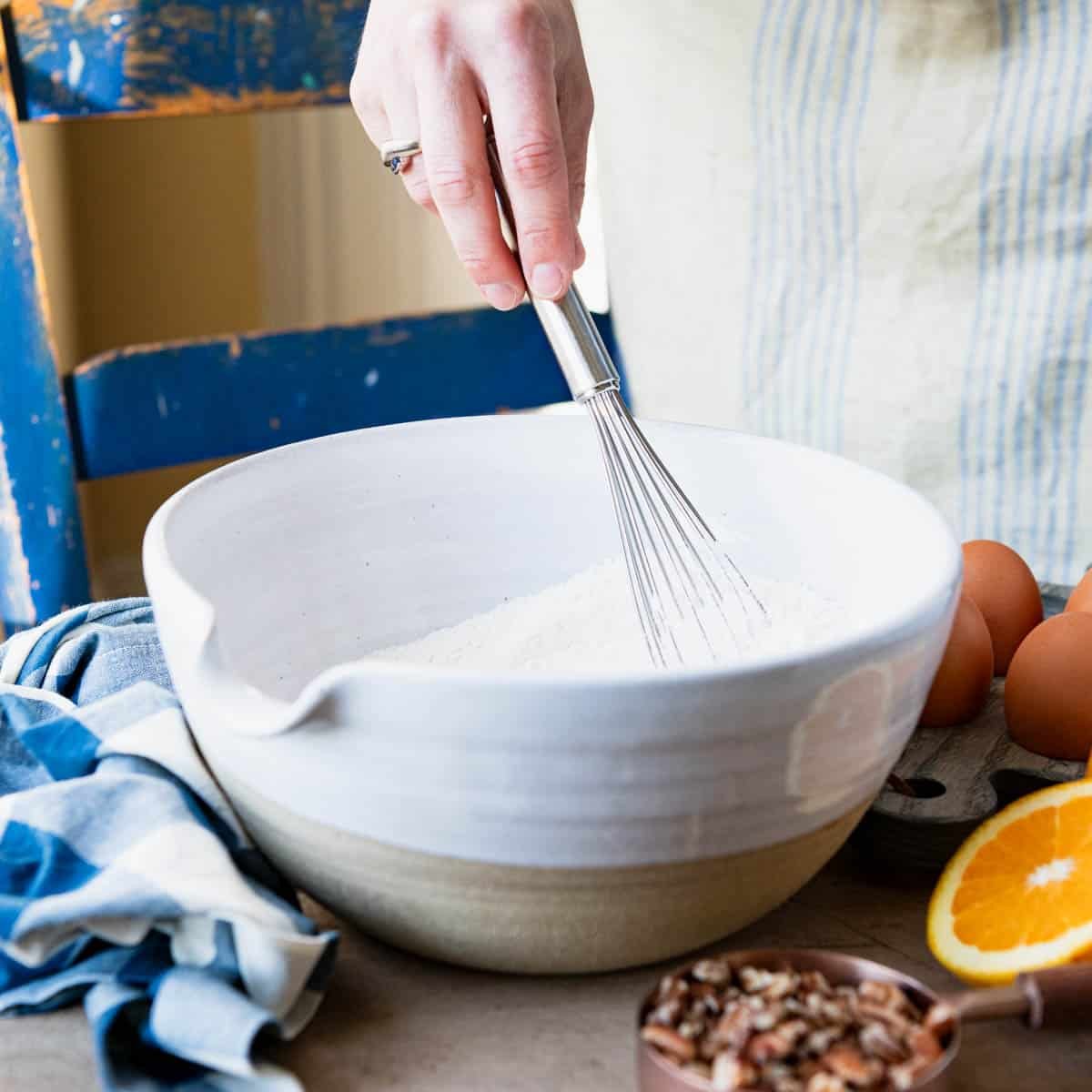
Step 1: Whisk the dry ingredients.
In a large bowl, whisk together flour, salt, baking soda, and sugar. Make sure there are no lumps of baking soda, as this helps the bread rise evenly.
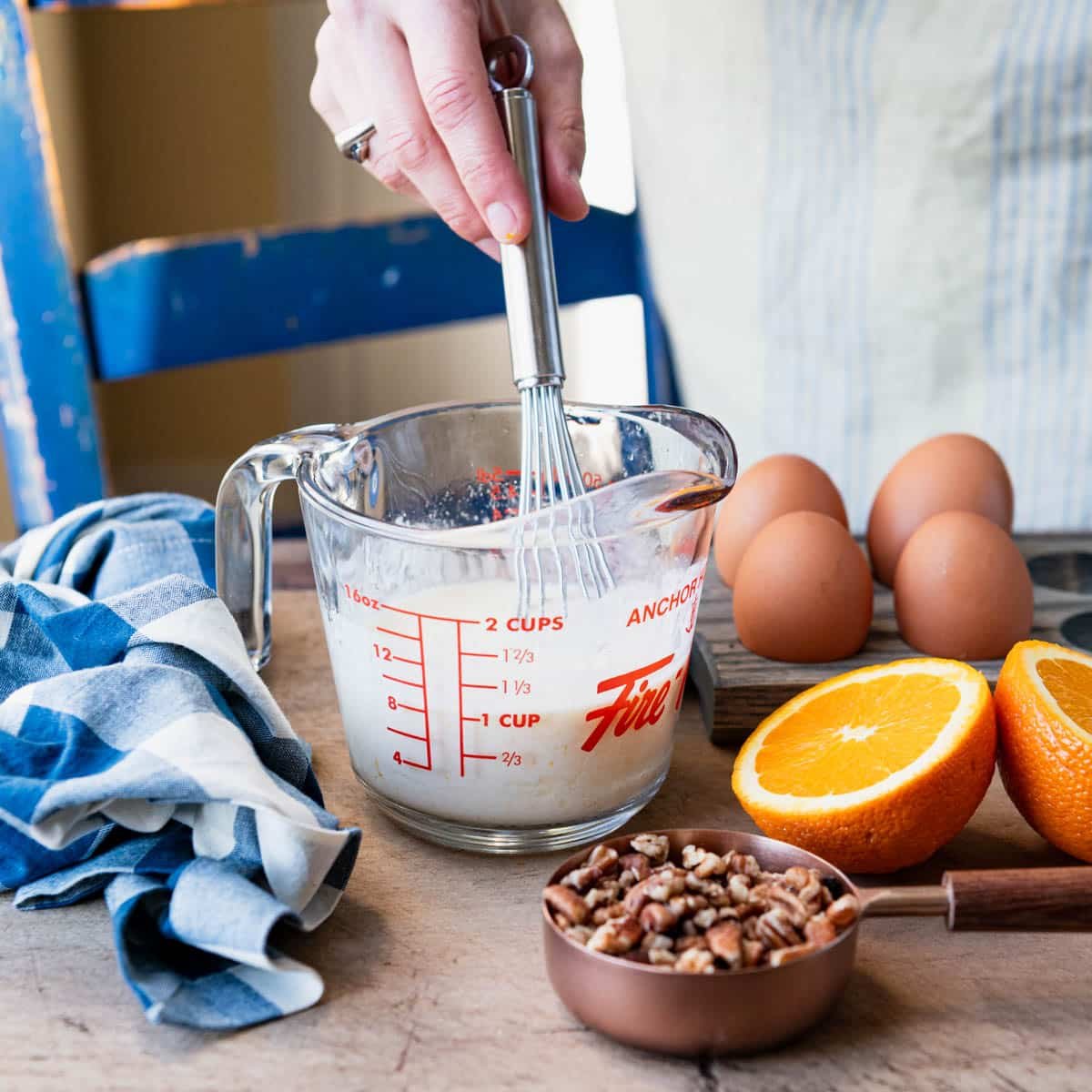
Step 2: Combine the wet ingredients.
In a large measuring cup, whisk together melted butter, orange juice, and milk, adding enough milk so that the wet mixture totals about 1 cup. Then add the beaten egg and orange zest. Whisk until completely combined.
** Pro Tip: Zest the orange first, then squeeze out the juice. The zest is where you’ll find all of the essential oils and the most potent orange flavor. Be careful not to scrape off any of the bitter white pith underneath.
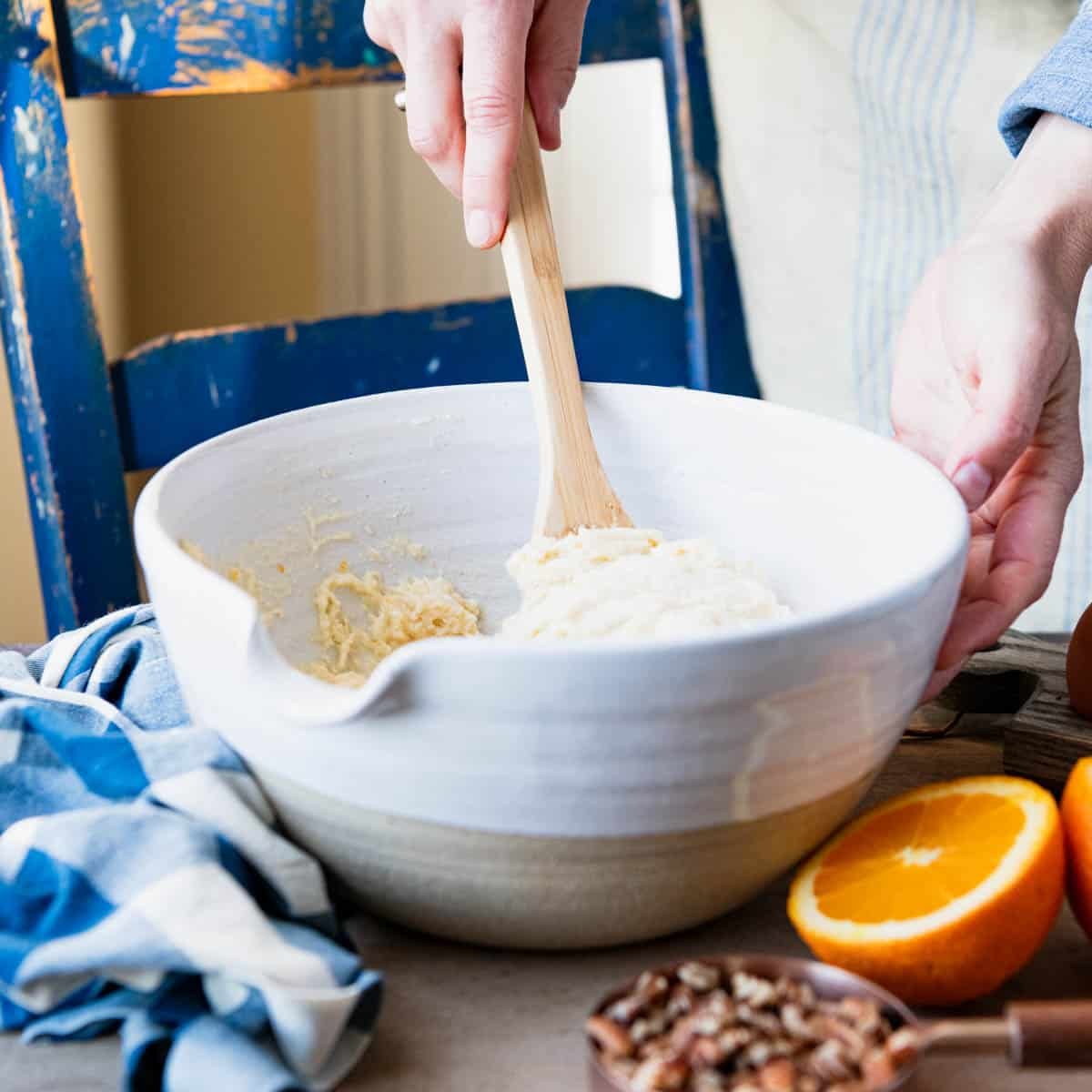
Step 3: Mix wet into dry.
Pour the wet ingredients into the dry ingredients and stir just until the mixture is combined. Be careful not to overmix. The batter should be nice and thick, without any dry pockets of flour. Add a splash of extra milk if needed.
Step 4: Fold in the cranberries and nuts.
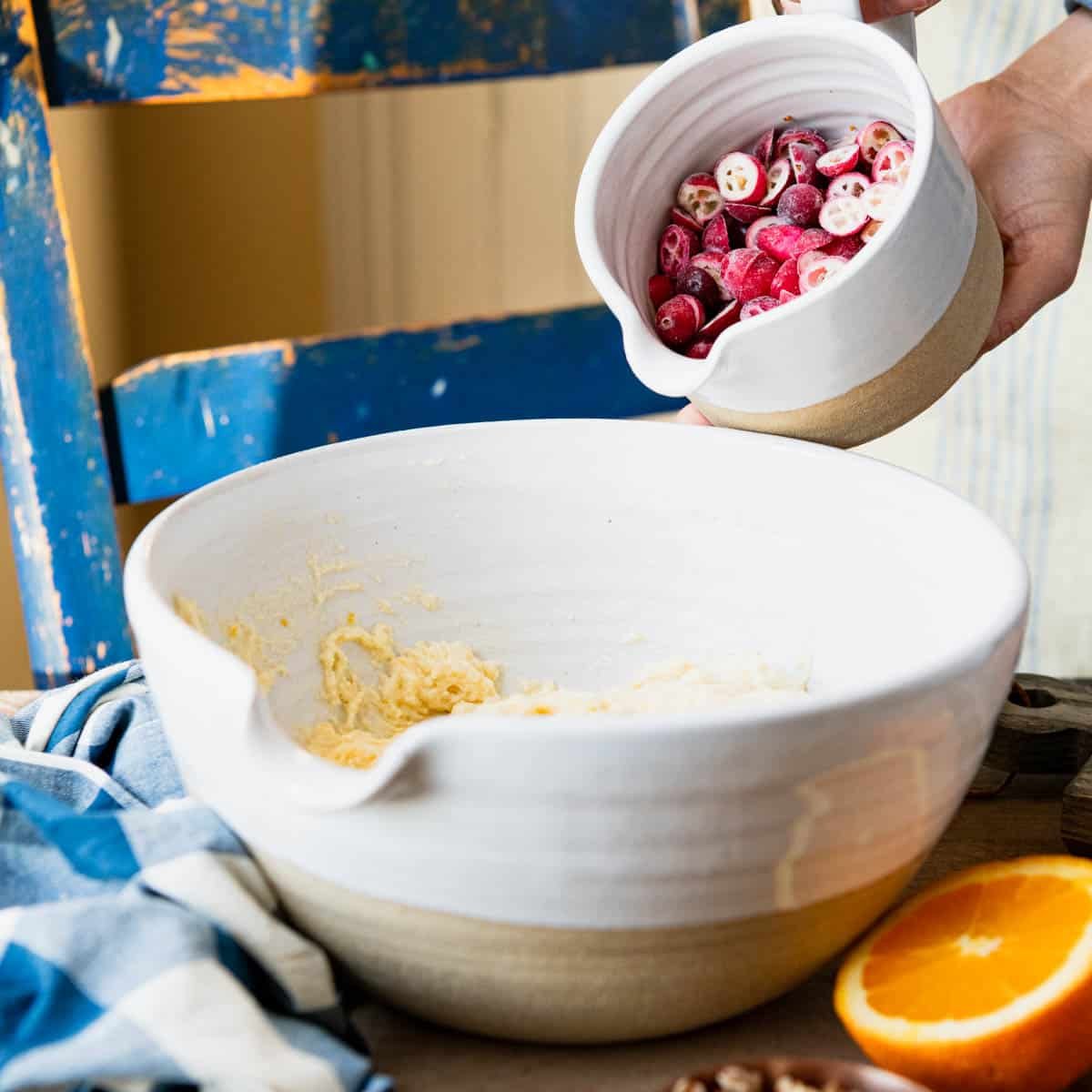
Gently fold in the halved cranberries and chopped nuts. Fresh or frozen cranberries both work beautifully here. If using frozen, do not thaw them before adding to the batter.
** Note: You can use walnuts or pecans, whatever you prefer. Increase to 1 cup of nuts for an extra nutty crunch.
Step 5: Transfer to the pan.
Grease an 8½ x 4½-inch loaf pan (I prefer to use a baking spray that includes flour to prevent sticking). Pour the batter into the prepared pan and spread it evenly.
Step 6: Bake.
Bake in a preheated 325°F oven for 65 to 75 minutes, or until a toothpick inserted in the center comes out clean. The top should be golden and slightly cracked.
Step 7: Cool.
Let the bread cool in the pan for about 5 minutes. Run a knife around the edges to loosen it, then transfer to a wire rack to cool completely before slicing.
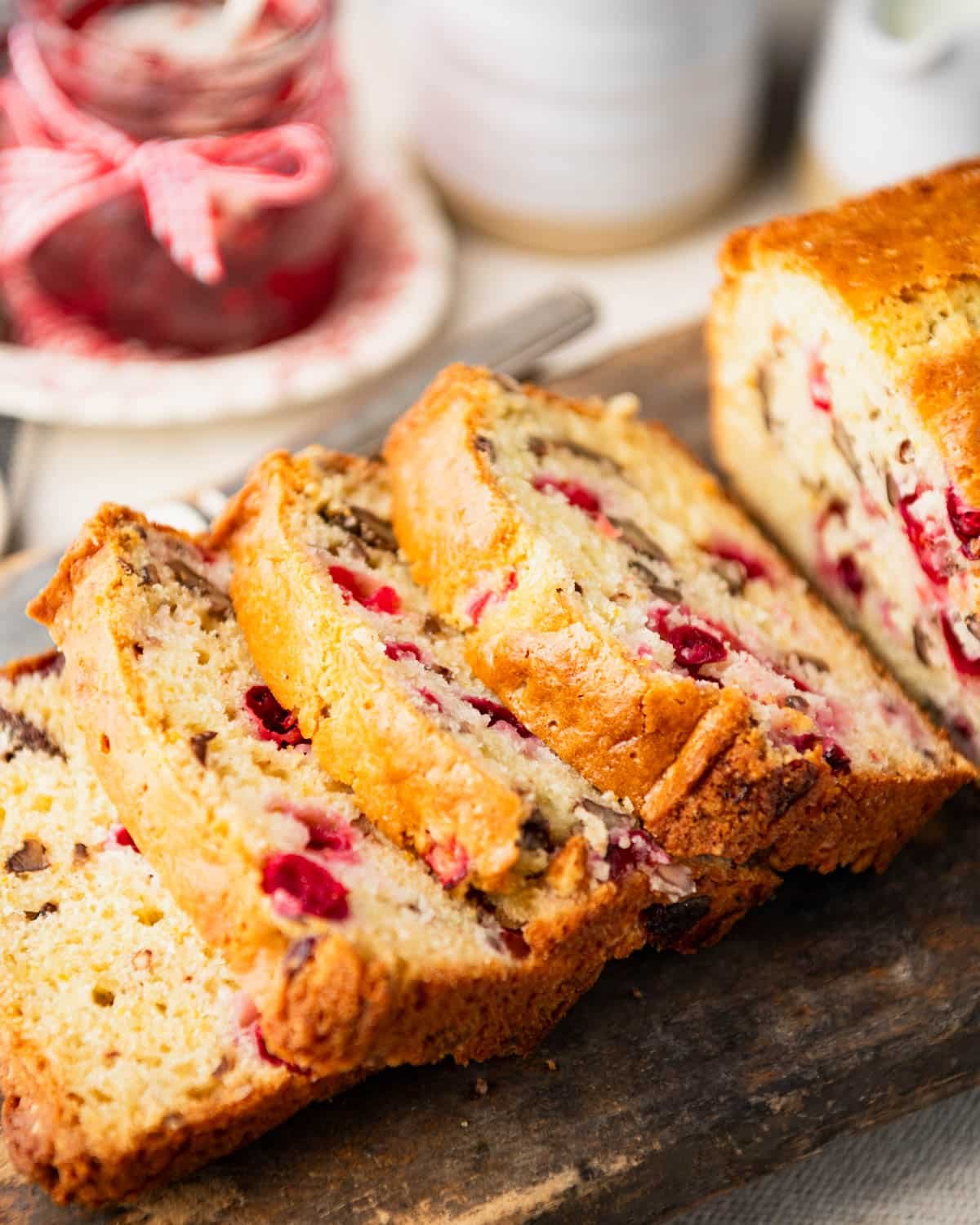
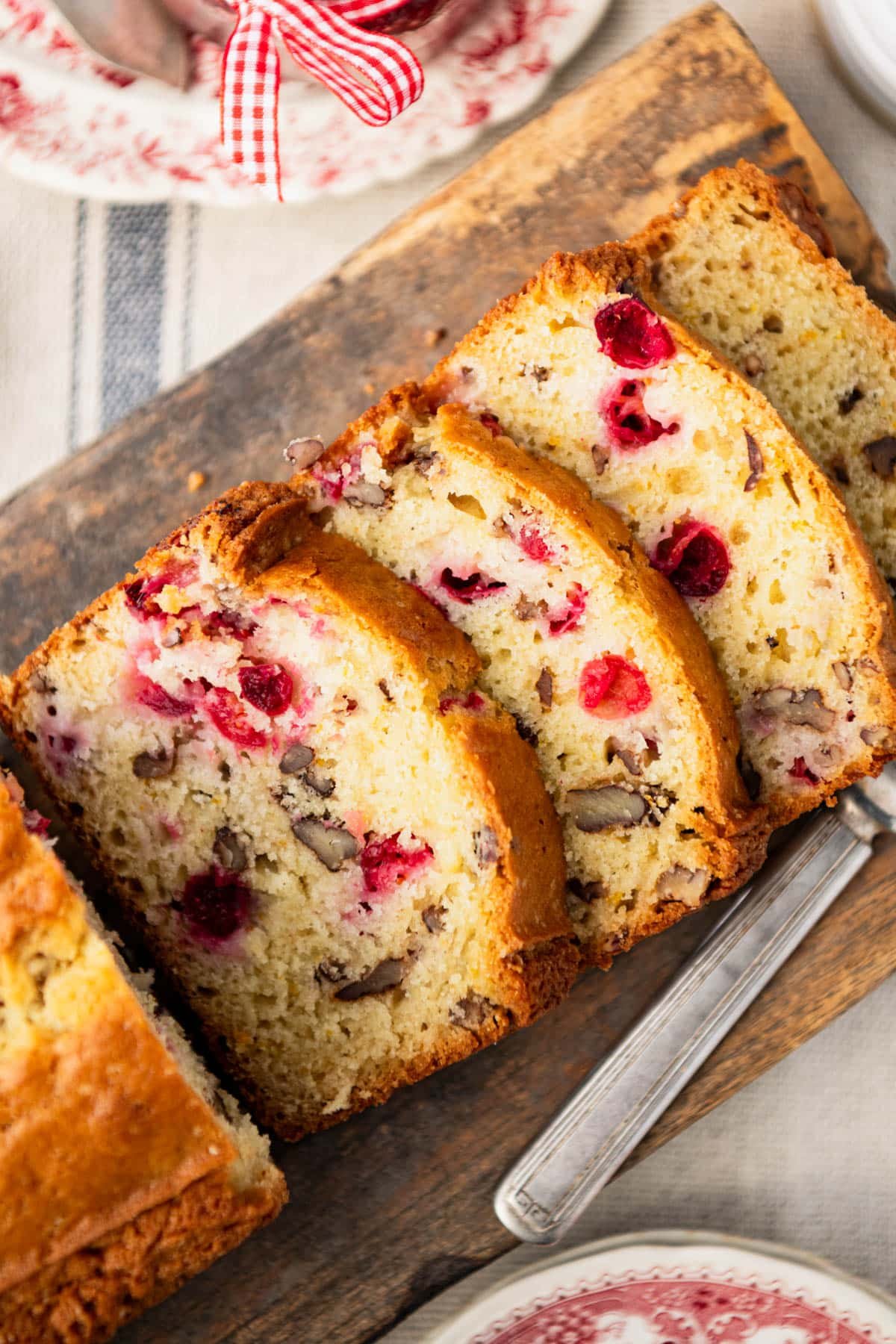
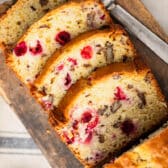
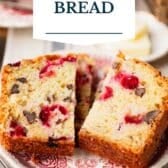
The end result is a moist, tender loaf of bread that is bursting with tart berries and chunks of buttery walnuts or pecans. Simple ingredients come together in a naturally beautiful way.
Orange Glaze
For an extra-special finish, drizzle a simple orange glaze over the cooled loaf. It adds a touch of sweetness and a beautiful presentation, perfect for gifting or holiday brunch.
To make the glaze: Whisk together 1 cup of powdered sugar with 2 tablespoons of orange juice until smooth. Drizzle over the top of the completely cooled bread and let it set for a few minutes before slicing.
Variations
- Omit the orange juice and orange zest. Replace the orange juice with extra milk for a simpler cranberry nut bread.
- Add warm spices like cinnamon, ginger, nutmeg, or cloves for that extra holiday touch.
- Use sweetened dried cranberries instead of fresh or frozen. If using dried, soak them in warm water or orange juice for 10 minutes to plump them up before adding to the batter.
- Make it nut-free. Simply leave out the nuts for a classic cranberry orange bread.
- Double the recipe to make two loaves instead of one. Share a loaf as a gift and keep the second for yourself!
How to Serve Cranberry Bread
This cranberry quick bread can be served warm, at room temperature, or even cold straight out of the fridge. It’s delicious on its own for breakfast (try it alongside a ham and egg casserole) or as a side with Dutch oven roast chicken for a cozy family dinner.
For a simple upgrade, spread slices with butter, cream cheese, or jam. For dessert, try topping a warm piece of bread with a dollop of whipped cream or a scoop of vanilla ice cream.
Storage, Freezing & Make Ahead
Storage: Allow the bread to cool completely on a wire rack before serving or packaging. Wrap the loaf in plastic wrap or foil to prevent it from drying out. The cranberry orange bread will stay fresh at room temperature on the counter for 1 to 2 days, and it will keep in the refrigerator for up to 1 week.
How to Freeze: Allow the bread to cool completely, then wrap tightly in plastic wrap and place it in a Ziploc freezer bag (or wrap again with foil). The bread will keep in the freezer for up to 3 months. Thaw on the counter overnight or for a few hours, then slice and serve.
Make-Ahead Tip: This bread actually tastes even better the next day, once the flavors have had time to meld. It’s a great option for holiday gifting or preparing ahead for a busy morning.
Excellent! I didn’t have an orange so just used orange juice and it still had a nice touch of orange flavor. Very moist which my family likes.
– Kim
Frequently Asked Questions
Do I have to soak the cranberries before baking?
No, soaking is not necessary for fresh or frozen cranberries. Just give them a quick rinse with cool water and cut the larger ones in half before folding them into the batter.
Can I use dried cranberries instead of fresh?
Yes! I prefer the tartness and moisture that fresh or frozen cranberries add, but sweetened dried cranberries (like Craisins) will also work. If using dried cranberries, soak them in warm water or orange juice for about 10 minutes to plump them up before adding to the batter.
How do I keep cranberry bread moist?
The key is to avoid overmixing the batter and to not overbake. Mix just until the ingredients are combined, and check for doneness around the 65-minute mark. A toothpick inserted in the center should come out clean, but the bread should still feel tender.
Can I make cranberry bread ahead of time?
Absolutely. This bread keeps well wrapped at room temperature for 1 to 2 days, in the refrigerator for up to a week, or frozen for up to 3 months. It’s perfect for holiday prep or gifting.
Can I turn this into muffins or mini loaves?
Yes! For muffins, reduce the baking time to about 20 to 25 minutes at 325°F. For mini loaves, check around 35 to 45 minutes. The batter will fill about 12 standard muffins or 3 mini loaves.

Did you make this recipe?
If you enjoyed this recipe, please leave a comment with a 5-star review at the bottom of the post. Thank you!
Mom’s Cranberry Bread
Ingredients
- 2 cups (240 grams) all-purpose flour
- ½ teaspoon table salt
- ½ teaspoon baking soda
- 1 cup sugar
- Juice and zest from 1 orange
- ¼ cup salted butter, melted
- ½ cup milk
- 1 large egg, beaten
- 1 cup fresh or frozen cranberries, halved (if using frozen cranberries, do not thaw before adding to batter)
- ½ cup chopped nuts (such as walnuts or pecans) (increase to 1 cup of nuts if desired)
Instructions
- Preheat oven to 325°F (190°C). Grease an 8 ½ x 4 ½-inch loaf pan; set aside.
- In a large bowl, whisk together flour, salt, baking soda, and sugar.

- In a large measuring cup, whisk together the melted butter, orange juice, and milk, adding enough milk so that the wet mixture totals 1 cup.
- Add the egg and orange zest to the wet ingredients. Whisk until completely combined.
- Pour the wet ingredients into the dry ingredients; stir until just combined, being careful not to overmix. The batter should be nice and thick, without any dry pockets of flour. Add a splash of extra milk, if necessary.
- Gently fold in cranberries and nuts.
- Pour batter into prepared loaf pan.
- Bake for about 65-75 minutes, or until a toothpick inserted in the center comes out clean.
- Cool in the pan for about 5 minutes, then transfer to a wire rack to cool completely.




Notes
- Properly measure the flour. Always spoon and level the flour or weigh it on a kitchen scale. Do not scoop it out of the package, as this packs the flour too tightly and results in dense, dry bread.
- Zest the orange first, then juice it. The zest is where you’ll find the most potent orange flavor. Be careful not to scrape off any of the bitter white pith.
- Don’t overmix the batter. Mixing too much activates the gluten in the flour, resulting in a dry, dense loaf. Gently fold together the ingredients just until everything is combined.
- Use a light-colored loaf pan. Darker pans tend to brown or burn the outside of quick breads before the inside cooks through.
- Toss the cranberries in a little flour before folding them into the batter to prevent them from sinking to the bottom.
- To prevent sticking, use a baking spray that includes flour. It also helps to run a knife around the edges while the bread is still warm.
- Optional orange glaze: Whisk together 1 cup powdered sugar with 2 tablespoons orange juice. Drizzle over the cooled bread.
- Make it nut-free by simply leaving out the nuts.
- Storage: Wrap cooled bread in plastic wrap or foil. Keeps at room temperature for 1 to 2 days, refrigerated for up to 1 week, or frozen for up to 3 months.
Nutrition
Originally published in November, 2016, this post was updated in December, 2025.











I bet this would be extra delicious with a cup of tea.Yum!
Exactly!!! So good!
Have you ever double this recipe?
Hi, Lisa! No, I haven’t — but I’m sure it would work fine! Just double the ingredients and divide the batter between two pans. 🙂
Can you replace the white sugar with another sweetner?
Hi, Connie! You can use a sugar substitute that measures like sugar (for instance, a stevia product). If you’re looking to use something like maple syrup or honey, it would not be a 1:1 replacement because those options are sweeter than sugar — and the liquid nature would change the texture of the bread. I’m sorry that I haven’t tested the recipe with other options to be able to give you specific measurements. Hope you get to try it! 🙂
If I separated the batter into 4 mini loaf pans how long would you think I would cook them and on would you change the temperature?
Hi, Stacy! I haven’t tested mini loaves with this particular recipe, but in general the smaller loaves bake at 350 degrees F for about 33-38 minutes. Hope you enjoy!
Hi Blair,
Recently, I baked an orange nut bread similar to yours using orange zest & juice, baking soda, & baking powder. The skin of walnuts after baking turned out dark. I would appreciate if you would comment on that since the walnuts in your picture have a similar color. Was it caused by orange juice & baking soda? Is this a natural reaction?
Hi, Marta! I used pecans in those photos, and I didn’t even really notice the change in color. Maybe it looks more pronounced in the photos than it did in real life? I honestly have no idea why the skin of walnuts (or pecans) would change color during the baking process. A quick Google search showed this response when someone asked about walnuts changing color in banana bread: https://www.nigella.com/ask/walnuts-changing-colour-in-banana-bread
Not sure if it’s helpful or not, but it’s more info than I would have! 🙂
Hi Blair,
Thank you so much for your prompt reply. It was very helpful. Next time I will try tossing the walnuts in a spoonful of plain flour (without any raising agents) before using them in the cake batter. I always sift all the dry ingredients. I do suspect that the cause is the reaction between baking soda and orange zest. It also happened to me years ago while baking carrot bread. It must have something to do with the orange color & baking soda. My only concern is if the discolored skin of nuts (caused by a chemical process) is safe to our health?
I have no idea! 🙂
Excellent! I didn’t have an orange so just used orange juice and it still had a nice touch of orange flavor. Very moist which my family likes.
We’re glad it turned out well for you, Kim! Thank you for trying it out and taking the time to leave a review.
How much orange juice did you used?
Kim, how much orange juice did you use to replace the squeezed orange?
Hi and thank you for this recipe. My question is if you have ever used dried orange peel in this, or other quick bread recipes, in place of orange zest? I only have the dried peel you get in the spice rack at the grocery store. Also if you have, what are the substitution amounts. Thank you again. Looks so good!
Hi Elizabeth! We haven’t tested it and can’t say for sure. However, a general rule of thumb is to 1/2 teaspoon of dried orange peel for every 1 teaspoon of orange zest as it is quite a bit stronger. We’d love to know how it goes if you try it out!
I was browsing recipes when I spotted this one for cranberry sauce. It is nearly impossible to find canned cranberry sauce without HFCS and I have been using this same recipe for a while, substituting sugar with a sugarless sweetener since I’m diabetic, with very good results. The cranberry sauce eaters at our Thanksgiving family dinner didn’t notice the change except this year I added some home made vanilla extract. The vanilla added an extra highlight to the orange cranberry taste. I use a one for one Stevia to sugar substitute and I add it after the berries have burst and just before I turn off the heat. I use “Never From Concentrate” orange juice which still has some sugar, but that sugar is in a natural form unlike the factory made sweetener HFCS.
Hi Jim! We’re so glad you found our recipe. Thank you for trying it out and taking the time to leave a review!
I didn’t have any orange or OJ so I upped my milk to 3/4 cup and added 1 tsp almond + 1 tsp vanilla extract. I also scaled back the sugar to 150g and added 90g of white chocolate chips. I added crumb toppings and baked for 60 min. It was divine! Glad I baked this in an 8.5 inch instead of 9 as I prefer the shape. Next time, I’ll try it with Greek yogurt and frozen cranberries. A+!I’m
Thank you for the feedback, Anne! We’re so glad you were able to make it work for you.