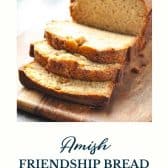
This easy Amish Friendship Bread is laced with notes of cinnamon, sugar, and vanilla for a sweet breakfast, snack, or dessert that pairs perfectly with a warm cup of coffee. There’s a printable starter recipe too, so you can pass it along to your friends!
For even more quick breads for your friends, try this banana nut bread and easy one-bowl pumpkin bread, or browse our full collection of muffins, scones and bread recipes.
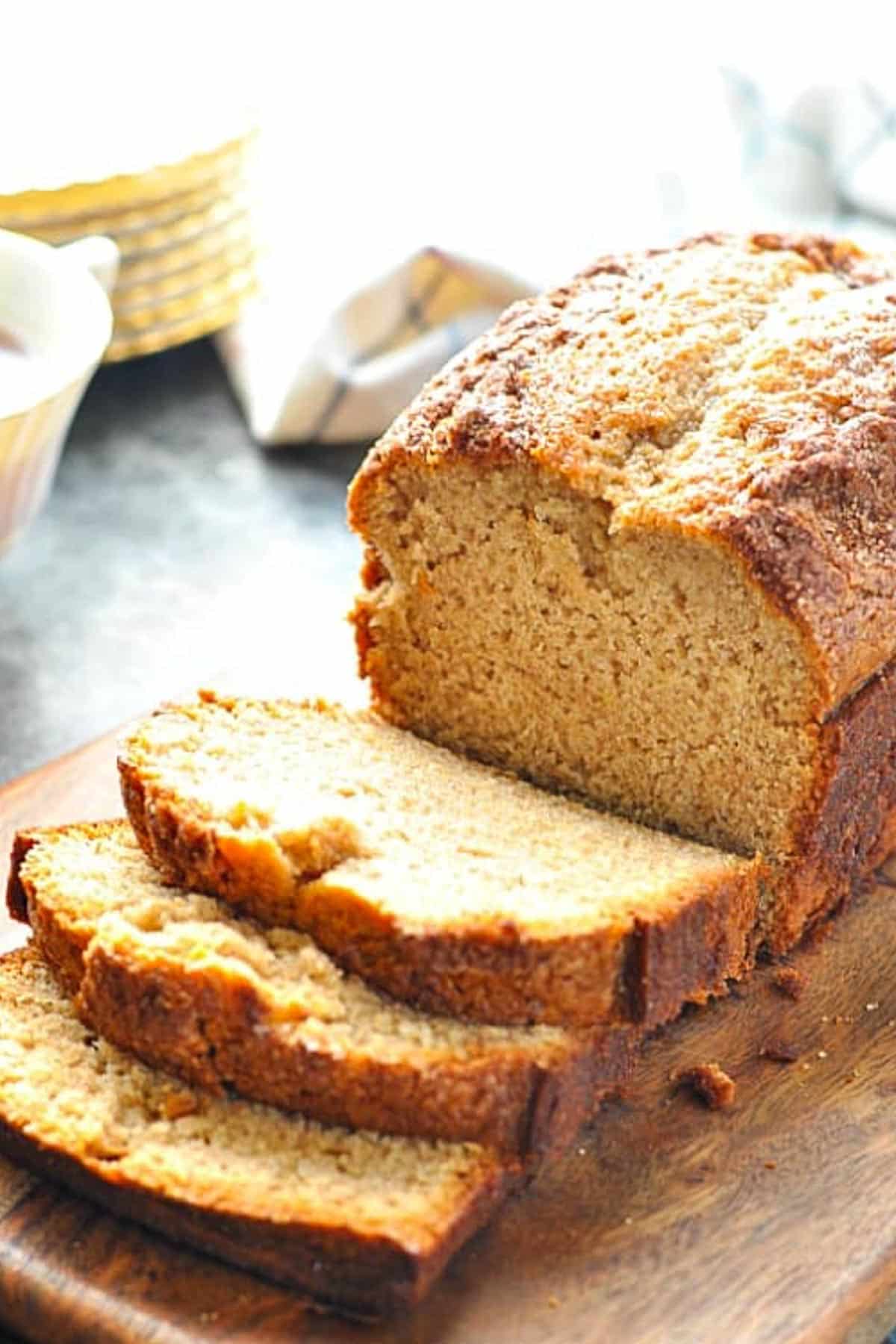
Table of Contents
Thanks to my friend Jackie for sharing her recipe and a bag of her Amish Friendship Bread starter with me. Now I can’t wait to pass along the details to all of you as well!
Before You Get Started
• Use a non metal bowl and a wooden spoon for the traditional method.
• Keep the starter at room temperature so it can ferment properly.
• Expect bubbling, rising, and a mild yeasty smell. These are signs of healthy activity.
• Feed the starter on day 6 and again on day 10.
• Do not seal the bag tightly since gases need room to escape.
** Tip: A healthy starter should look slightly bubbly and creamy. If you see pink, green, or gray streaks or smell anything sharp or chemical, toss it and start fresh.
The Story Behind Amish Friendship Bread

Amish Friendship Bread starts with a simple starter made from flour, yeast, sugar, and milk. Traditionally, you divide the starter every ten days and share it with three friends, who then make their own bread and pass theirs along. It works just like a cozy baking chain that travels from kitchen to kitchen.
You do not have to wait for someone to gift you a bag of starter, though. You can easily make your own, bake a couple of loaves, and choose whether you want to keep the cycle going or share it with friends. It is completely up to you!
Printable Friendship Bread Starter Recipe
Download the Amish Friendship Bread Starter Recipe and printable directions here. I have also included the full set of ingredients and instructions in the printable recipe card at the bottom of this post, so use whichever version works best for you!
How to Make Amish Friendship Bread
Day 1: Make the Starter
Mix the warm water and yeast until foamy. Stir flour and sugar together in a large non metal bowl, then add the yeast mixture and milk. The batter will look thick and a little lumpy. Transfer it to a large zip top bag and leave it out at room temperature overnight.
** Pro Tip: If your yeast does not bubble after 10 minutes, start again with a fresh packet.
Day 2 to 5: Squish and Mix
Once a day, give the bag a gentle squish to keep everything mixed. This helps the starter ferment evenly.
Day 6: Feed the Starter
Add flour, sugar, and milk straight into the bag. Seal and squish until everything is well combined.
** Note: By the next morning, the bag should feel puffier and look more active.
Day 7 to 9: Keep Squishing
Give the bag one good daily squish. The starter may rise and fall during these days, which is completely normal.
Day 10: Divide and Feed Again
Pour the starter into a non metal bowl. Mix in more flour, sugar, and milk. Divide into one cup portions and spoon into four separate bags. Keep one bag for yourself to continue the cycle and share the other bags with friends.
** Pro Tip: Sometimes an extra half cup or so of starter appears if yours is especially active. Simply portion it out like the others.
Make the Bread with the Remaining Starter
The one cup of starter left in the bowl becomes your bread base. Add the eggs, flour, pudding mix, oil, sugar, milk, cinnamon, baking powder, baking soda, vanilla, and salt. Stir gently just until combined.
Fill the Pans and Add the Topping
Divide the batter between two greased loaf pans. Mix cinnamon and sugar, then sprinkle it over each loaf so it bakes into a sweet crust.
Bake and Cool
Bake at 325°F until golden brown and the center tests clean. Cool completely before slicing so the loaves hold their shape.
Variations
• Use butterscotch, chocolate, pumpkin spice, or banana pudding mix.
• Add chocolate chips, chopped nuts, or dried fruit.
• Make banana friendship bread by stirring in mashed bananas.
• Add blueberries and lemon zest for a bright summer version.
• Make muffins instead of loaves and reduce the bake time.
** Tip: If adding wet mix ins like mashed banana or pumpkin, reduce the milk so the batter does not become too loose or dense.
Delicious! It takes like a cake.
– Tabitha
Storage, Freezing & Make Ahead
- Store baked bread at room temperature for 2 to 3 days.
- Freeze individual slices or whole loaves for up to 3 months.
- Freeze extra starter bags for up to 3 months.
- Thaw frozen starter bags completely at room temperature. Bake with them immediately, or start the 10-day cycle over on Day 1 to create even more bags of starter.
- Treat thawed starter as day 1 or bake with it right away.
Frequently Asked Questions
Can I make Amish Friendship Bread without a starter?
Yes! Here’s my recipe for Amish Friendship Bread without starter. It’s great if you’re short on time, or if you don’t want to mess with bags of starter.
What does Amish Friendship Bread taste like?
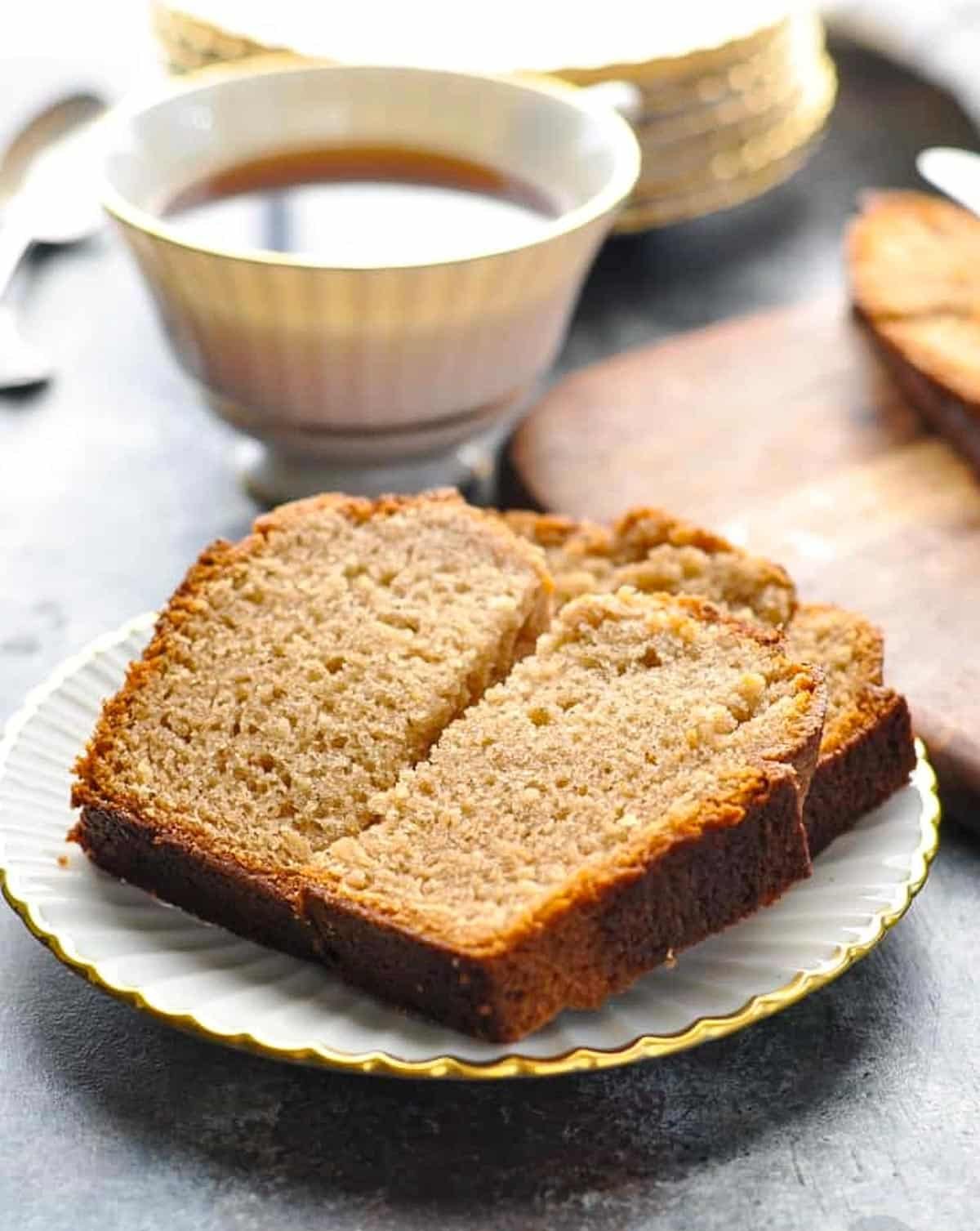
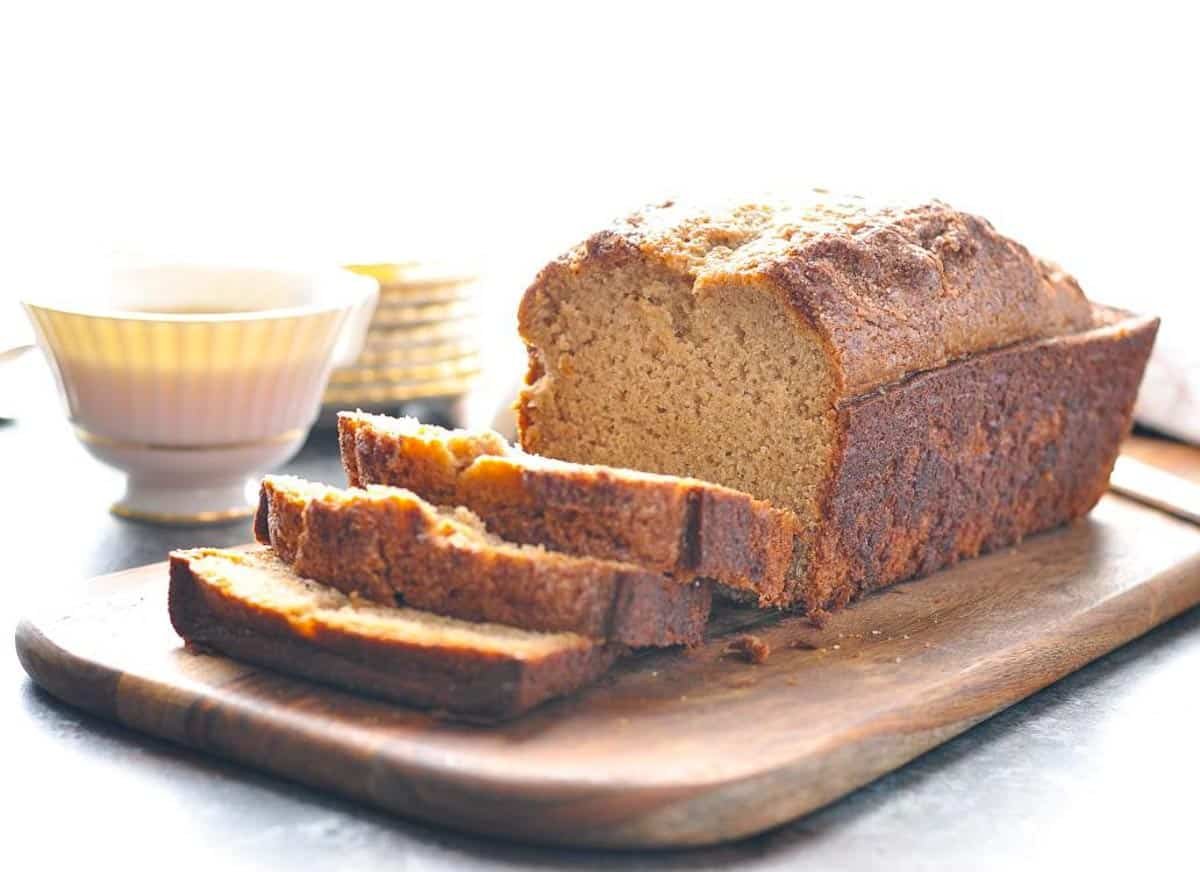
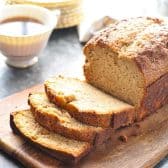
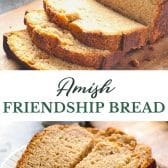
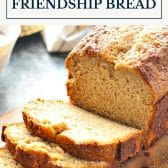
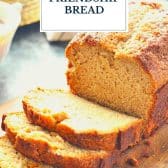
This cinnamon-flavored bread has the consistency of a pound cake or coffee cake, and is dusted with a cinnamon-sugar topping. The gelatin component in the vanilla instant pudding mix, along with plenty of oil, yield an incredibly moist and tender texture. Plus, thanks to the pudding mix, you get the added bonus of rich vanilla flavor.
How do I know if my starter has gone bad?
Spoiled starter may show mold or a pink or green tint. It may also smell sharp or like acetone. Discard and start fresh if you see any of these signs.
Can I skip squishing for a day?
Missing one day is usually fine. If several days pass without mixing, feed the starter and restart the cycle.
Why should I avoid metal bowls?
Traditional recipes warn against metal because of potential reactions during fermentation. Stainless steel is usually fine, but wooden spoons and plastic bowls guarantee no issues.
Can I make this without pudding mix?
Yes. The pudding makes the bread soft and moist, but you can use a homemade mix of cornstarch, sugar, and vanilla instead.
What can I do with extra starter?
Freeze it, bake extra loaves, or surprise more friends with a starter bag. You can also check out these 7 ways to use your Amish friendship bread starter. Pancakes, breads, and cupcakes galore!
Is Amish Friendship Bread the same as sourdough?
No, Amish friendship bread is a sweet sourdough starter since it includes milk and sugar. As a result, it has a much sweeter taste (and less tang) than a traditional sourdough starter.
Related Recipes

Did you make this recipe?
If you enjoyed this recipe, please leave a comment with a 5-star review at the bottom of the post. Thank you!
Amish Friendship Bread and Starter
Ingredients
TO MAKE THE STARTER ON DAY 1:
- ¼ cup warm water (about 110-115°F)
- 1 package active dry yeast (2 ¼ teaspoons)
- 1 cup all-purpose flour
- 1 cup granulated sugar
- 1 cup milk (use at least 2% milk or higher fat)
TO ADD TO THE STARTER ON DAY 6:
- 1 cup all-purpose flour
- 1 cup granulated sugar
- 1 cup milk (use at least 2% milk or higher fat)
TO DIVIDE THE STARTER ON DAY 10:
- 1 ½ cups all-purpose flour
- 1 ½ cups granulated sugar
- 1 ½ cups milk (use at least 2% milk or higher fat)
TO BAKE THE BREAD:
- 1 cup of Amish Friendship Bread Starter (what’s left in your large bowl after dividing on Day 10)
- 3 large eggs
- 2 cups all-purpose flour
- 1 large (5 ounce) box vanilla instant pudding mix (just the dry mix)
- 1 cup canola oil
- 1 cup granulated sugar
- 1 cup milk (use at least 2% milk or higher fat)
- 2 teaspoons ground cinnamon
- 1 ½ teaspoons baking powder
- ½ teaspoon baking soda
- ½ teaspoon vanilla extract
- ½ teaspoon salt
- For the Topping: ¼ cup of granulated sugar + 1 teaspoon ground cinnamon
Instructions
MAKE THE STARTER:
- In a small bowl, combine the warm water with the dry active yeast. Set aside until bubbly, 5-10 minutes.
- In a large non-metal bowl mix together the all-purpose flour and the granulated sugar. Stir in the milk and the yeast mixture.
- Cover loosely and leave on the countertop at room temperature until bubbly.
- Place starter in a large (gallon size) Ziploc bag. Seal bag and squish, squash, and mush until well combined. Let stand at room temperature overnight. The day that you prepare the starter is DAY 1.
- Day 2: Squish and mush the bag.
- Day 3: Squish and mush the bag.
- Day 4: Squish and mush the bag.
- Day 5: Squish and mush the bag.
- Day 6: Add to the bag – 1 cup of flour, 1 cup of sugar, and 1 cup of milk. Squish and mush the bag.
- Day 7: Squish and mush the bag.
- Day 8: Squish and mush the bag.
- Day 9: Squish and mush the bag.
- Day 10: BAKING AND DIVIDING DAY. Pour the entire contents of the starter bag into a non-metal bowl and add 1 ½ cups of flour, 1 ½ cups of sugar, and 1 ½ cups of milk. Measure out 4 separate batches of the starter batter (1 cup each) and place into large gallon-size Ziploc bags. Keep one bag of starter for yourself to continue the process (Day 10 is equal to Day 1) and give the other 3 to friends along with a copy of these instructions. After dividing the starter into separate bags, you should have about 1 cup of the starter batter still left in your large bowl. The starter that remains in the large bowl will be used for baking your Amish Friendship Bread.
BAKE THE FRIENDSHIP BREAD:
- Preheat oven to 325°F/160°C. Spray two loaf pans with nonstick cooking spray; set aside.
- To the bowl with the remaining 1 cup of starter, add the eggs, flour, instant pudding mix, canola oil, sugar, milk, cinnamon, baking powder, baking soda, vanilla, and salt. Stir just until combined.
- Divide the batter evenly between the two greased pans.
- In a small bowl, combine ¼ cup sugar and 1 teaspoon of cinnamon. Sprinkle the top of each loaf with the cinnamon-sugar mixture.
- Bake for 1 hour, or until a toothpick inserted in the center comes out clean. Cool on a wire rack and then remove bread from pans.
REPEAT THE 10-DAY PROCESS OR FREEZE THE STARTER:
- If you keep a starter bag for yourself, then DAY 10 is equal to DAY 1 again, and you can repeat the baking process every 10 days. If you do not want to continue the cycle right away, place the 1-cup bags of starter in the freezer for up to 3 months. When you take the starter out of the freezer, you can treat this as DAY 1, or you can use that starter right away to bake the loaves of Friendship Bread.
Notes
• Keep the starter at room temperature and squish the bag once a day.
• Feed the starter on day 6 and again on day 10 so it stays active.
• Expect bubbling and rising during fermentation. This is normal.
• Do not seal the bag tightly. Let excess air escape.
• Discard starter if it develops mold, odd colors, or an acetone smell.
• Stir the bread batter gently so the loaves stay tender.
• Do not prepare the pudding mix. Add it dry to the batter.
• Loaves freeze beautifully for up to 3 months.
• Extra starter can be shared, frozen, or used to bake more bread. Remember that you can also download a printable PDF of the Amish Friendship Bread Starter Recipe.
Nutrition
Originally published in November, 2017, this post was updated in November, 2025.









Hello, this is the first time I will be making this! Do you need to bake the bread in glass loaf pans or can they be metal? Thank you for posting!
Hi, Colleen! You can use any loaf pan — metal will be fine! 🙂
Thank you!!
Love this, we are on our second round. I am wondering if anyone has tried transitioning this starter into a sourdough bread recipe? Best regards!
Thanks, Michael! I honestly have no idea if the starter would work for sourdough bread. Sorry I’m not an expert in that arena. 🙂
Hello. Many asked how much batter is left after you divide up the 4, one cup bags. I made mine today and I measured it out so everyone would k ow and it was 2 cups. I also added 3 ripe mashed bananas and cut the oil down to 1/2 cup and it came out great! Happy baking and Thanksgiving everyone.
That’s so helpful, Debi! Thanks for taking the time to measure and leave a note! 🙂
Are there other non-sweet bread recipes you can use this same starter for? For instance, a white bread or sourdough bread? I have tried to find some but the starter recipes are different, this is the starter that I have.
I’ve used my friendship starter to make French bread before; it came out sweet, a bit like Hawaiian bread. I would guess that any savory bread you make will have a sweet undertone because of the amount of sugar in the starter. I bet it would make an excellent corn bread. You should be able to substitute the starter for any recipe that has sour cream or buttermilk. I have this sourdough jalapeno cornbread recipe that I’ve been wanting to try with friendship starter – if you make it let me know how it goes!
Alaska Jack’s Jalapeno Pepper Cornbread
1 1/2 cups corn meal
1 1/2 Tbs sugar
1 1/2 tsps salt
1 1/2 cups milk
1 1/2 cups starter
1 1/2 tsps cream of tartar
1 1/2 tsps baking soda
2 eggs – slightly beaten
1 cup cheddar or Monterey jack cheese – shredded
1 cup onion -chopped
1/3 to 1/2 cup finely chopped jalapeno peppers
Combine corn meal, sugar and salt in a mixing bowl. Scald milk, pour over corn meal; cool to lukewarm. Add remaining ingredients and mix well. Pour into buttered 9 inch square pan. Bake at 425 F for 40 minutes.
Sounds awesome! Thanks, Robyn!
How should you store baked Amish friendship bread. How long will it last?
I let mine cool 24 hours in the pan, cover it with parchment paper, placed carefully in a freezer bag and put it in freezer. I done this because I’m making a Hard Candy Christmas and my ppl will be getting homemade food/gifts. I will be making the last two loaves today, 6 loaves total.
Great tip, and a great gift idea, Gayle! 🙂
Hi, Mary! Let it cool completely, then wrap it tightly and store it at room temperature for 2-3 days, or in the refrigerator for up to 1 week. You can also freeze for up to 3 months. Enjoy!
Hi! So, I pulled some starter out of the freezer about 9 days ago. I remember when we were using it before, I found myself “burping” the bag almost daily. I haven’t had to release any gases this time! Do you think it will still be good? I’m hoping to give loaves away to the neighbors for the holidays, so I’m hoping it’ll still work! Thanks in advance.
Hi, Heather! I know that many folks have had great success with freezing the starter, so I think it should work fine for you. No guarantees, though, since I have no idea if your particular starter is still good. I’d do a test batch and see how it turns out. If it doesn’t work well, then you can change plans slightly and still bake a version of the bread without starter to share with friends. Just google “Amish Friendship Bread no starter” and you should find plenty of options. Hope that helps!
Update: they did great!! I had two bags of starter and made 10 loaves of bread (plus two bags of starter). Did one triple batch and one double batch. I haven’t tasted them yet, but they seem to have turned out perfectly!
Awesome, Heather! I’m so glad that it worked well for you. Thanks for taking the time to leave a note and let me know!
I forgot to add the ingredients on Day 6. Now it is day 11. Do you think I could add the ingredients of Day 6 and then wait 4 days to to begin the process to make additional starters and bake some bread for myself?
Yes, I think that will be fine! 🙂
On Day 10, if I want to bake the bread without making 4 starters, what would I do?
Hi, Becky! I suppose you could measure out just 1/4 of the starter, add 1/4 of the additional ingredients (so just 0.375 cups each of flour, sugar and milk), and then prepare according to the recipe from there. You’d still have extra starter leftover, which you could discard if you don’t want to use it.
Hi Blair, thank you so very much for sharing the recipe and starter. My mom baked this exact recipe all the time during my highschool years. Fast forward many years. I have relocated and have no one in my area to share the starter with me. Now I finally have the starter recipe and can hardly wait to bake up some loaves and I can share the starter with the neighbours and friends. Thanks again so much!!
We’re so glad you found our post, Tracy! We hope you enjoy your bread!
I received a starter as a gift and just made my bread. It tasted very good. I was just wondering if you could add things to the dough before baking, (like apples or bananas) or change the pudding flavor for a different flavor. Thank you for sharing this recipe so I could receive my starter.
Hi, Jeananne! Absolutely! You can feel free to add mix-ins of your choice to the bread before baking, or try different pudding flavors. Hope you enjoy it!
How long do I leave the mix lightly covered to let it bubble? Do I put it in the gallon baggies and seal those even if it doesn’t bubble?
Hi, Sara! If the yeast was foamy and/or bubbly when you first combined it with the warm water in step 1, then that indicates that your yeast is fresh and healthy. If it never bubbled or foamed, you’ll need to start over with fresh yeast (and make sure that the water is warm, but not too hot and not too cold). Assuming that your yeast was good at the beginning, your starter should start to bubble within 24 hours on that first day. Keep it in a relatively warm environment. Once you start to see bubbles or “activity,” then package it up. I wouldn’t bother doing that until your starter shows some “life.” Hope that helps!
Could I make this gluten free?
Hi, Linda! I haven’t tried it myself, but I think it would work fine with a gluten-free all-purpose 1:1 flour substitute. Let us know if you give it a shot!
if you are not passing on or making more bread do you have todo the mixing & dividingthe starter mix on step 10? then do recipe again with more flour &sugar? please help this is my 10 days &dont want to disappoint my granddaughter. do I just use 1 cup of stater mix then go to recipe
Hi, Michelle! If you reach Day 10 and you don’t plan to bake the bread, you have a couple of good options to preserve it without losing your progress:
Freeze the Starter: Portion the starter into 1-cup amounts (the usual amount you’d give to a friend or use in a recipe). Place each portion in a zip-top freezer bag, squeeze out the air, label with the date, and freeze. Frozen starter will last several months. When ready to use, thaw at room temperature for a few hours, then treat it as Day 1 of the cycle and continue from there.
OR
Feed and Store the Starter in the Fridge: On Day 10, stir in the feedings (1 cup flour, 1 cup sugar, 1 cup milk) as usual. Instead of baking or dividing, cover the bowl or jar loosely and refrigerate. The cold slows fermentation, so you don’t need to feed it daily. Stir it once every few days, and feed it again about once a week with the usual 1:1:1 ratio. When you’re ready to bake again, bring it back to room temp, feed it once, and treat that as your new Day 1.
How long should I let my starter thaw when I take it from the freezer in order to prepare a batch of bread?
Hi, Cindi! I would give it about 24 hours. Hope you enjoy!
Has anyone tried making this as muffins instead of loaves? If so about how many did it make ? Did you cook them at the same temperature? For how long?
Hi Martha,
This recipe works well in muffin form. You should get 12-24, depending on how big you make them. Keep the oven temperature the same, and adjust the baking time, keeping a close eye on the oven. We hope you enjoy!