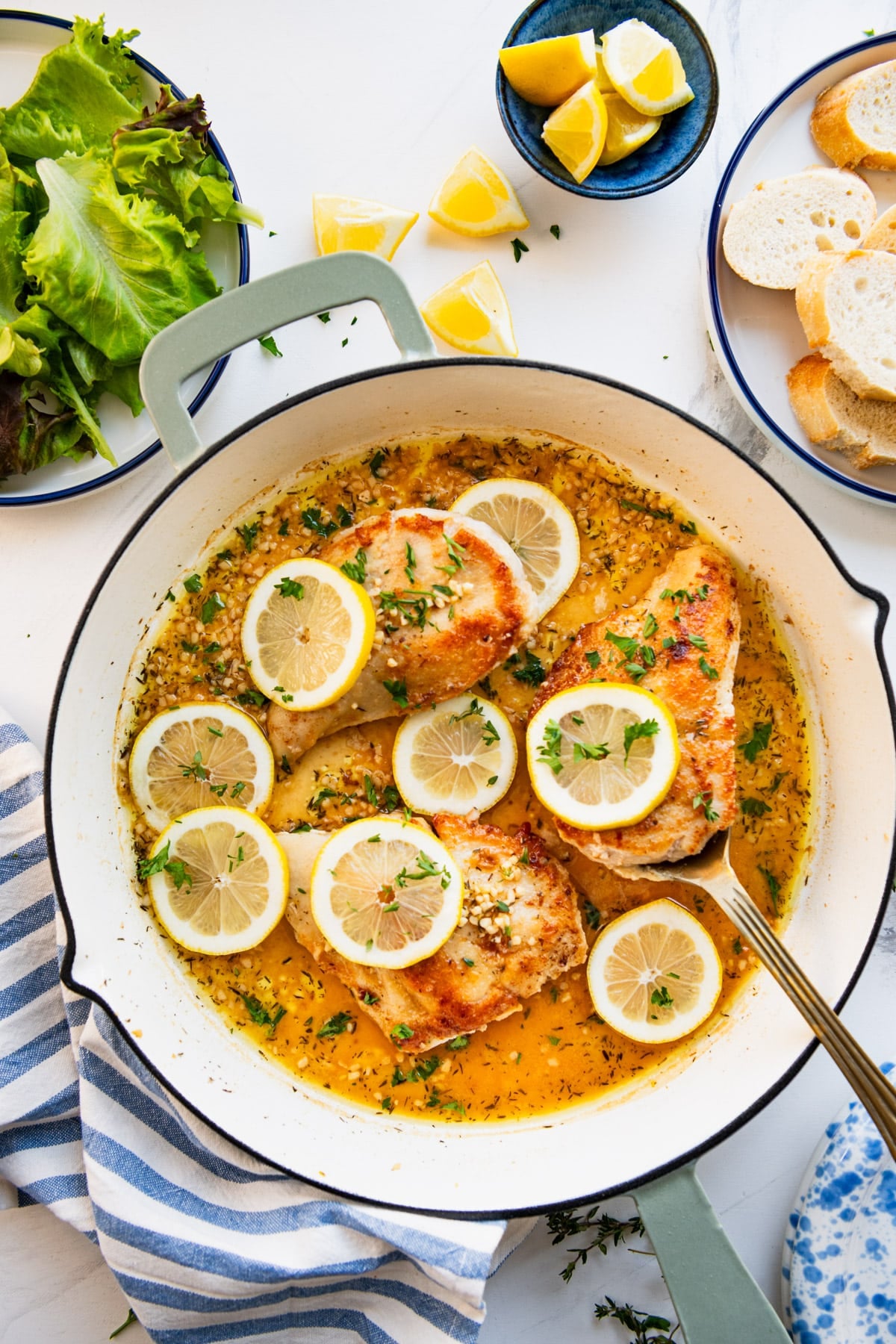
Tender chicken cutlets get a quick sear, and then a buttery lemon pan sauce comes together right in the same skillet. Garlic, white wine, lemon, and a little thyme do most of the work, and you’re sitting down to dinner about 25 minutes after you start. It’s the kind of bright, fresh chicken dinner that tastes like more effort than it actually was.
More easy skillet chicken dinners:
Before You Get Started
A few key tips ensure perfect skillet lemon chicken every time:
- Don’t crowd the pan. Cook the cutlets in batches if you need to. Overcrowding drops the temperature, and the chicken steams instead of searing. You want golden brown, not pale and gray.
- Pat the chicken really dry before dredging. Surface moisture is the enemy of a crispy crust. Press the cutlets between paper towels until they look matte, then season and dredge. The flour will stick better, and you’ll get a cleaner sear.
- Use a fresh lemon, not the bottled stuff. The zest brings the brightness, and the juice from a fresh lemon tastes brighter and less bitter than what comes in a bottle. One lemon is all you need.
How to Make Skillet Lemon Chicken
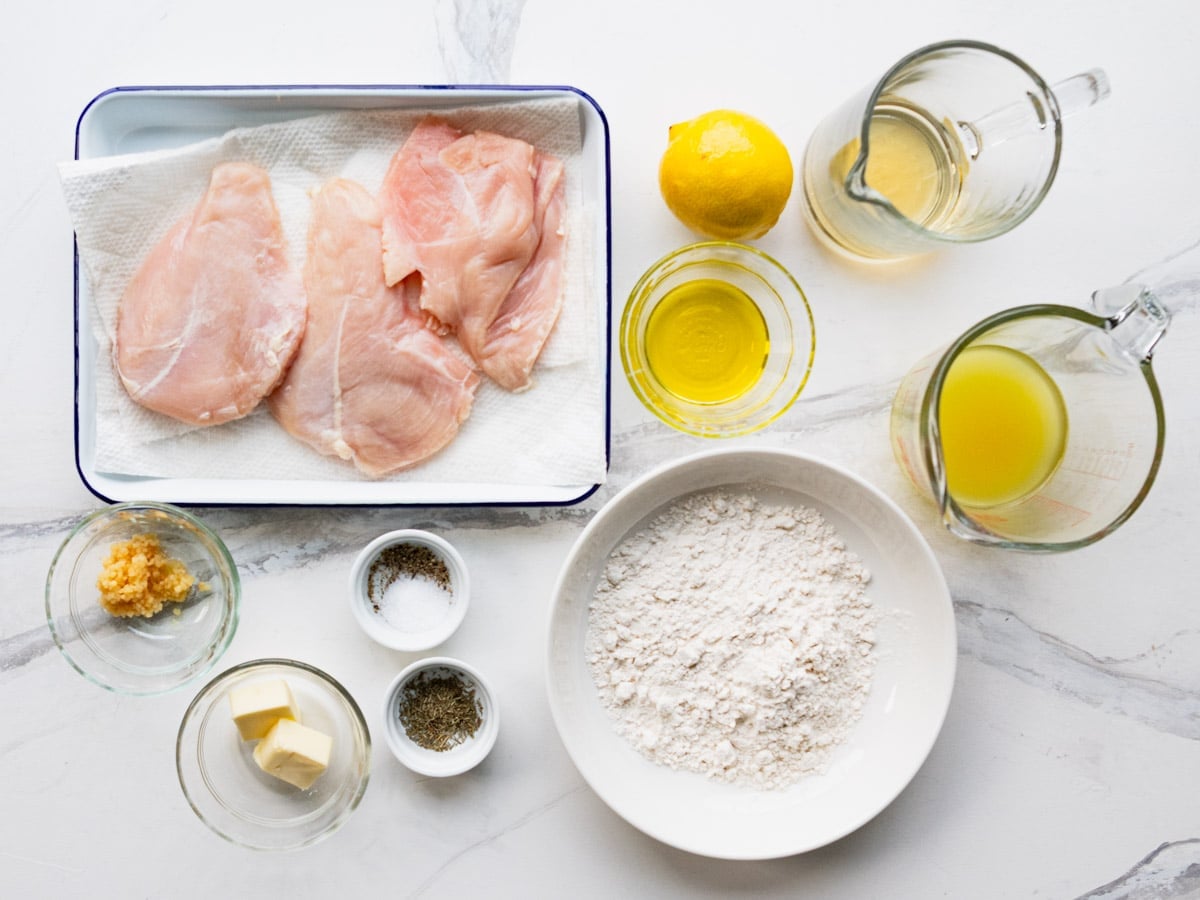
The whole recipe comes together in one pan in three quick stages: sear the chicken, build the pan sauce, and bring everything back together. Here’s how it goes:
Step 1: Season and Dredge the Chicken
Start by patting the chicken cutlets dry with paper towels. This step matters more than it seems. Dry chicken browns better in the skillet, while excess moisture creates steam and prevents that golden crust from forming.
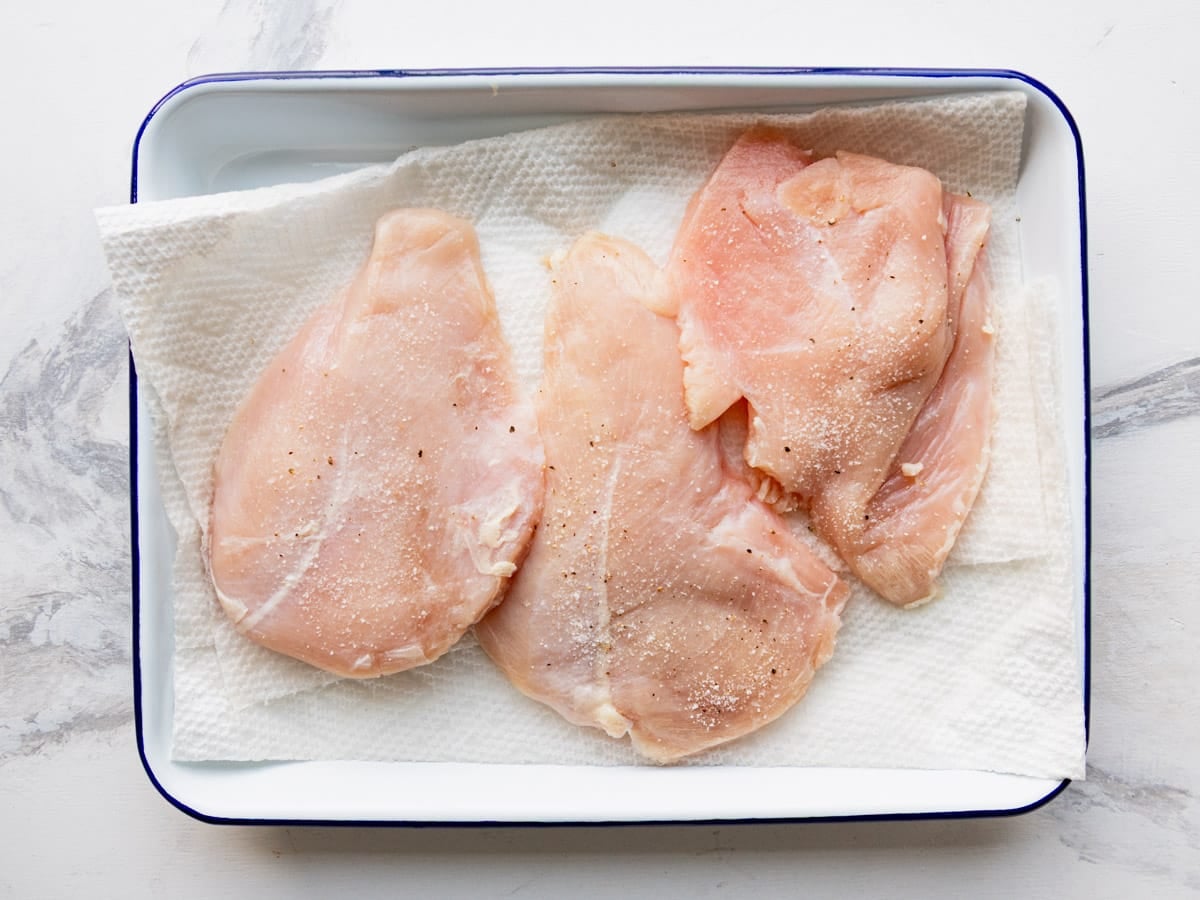
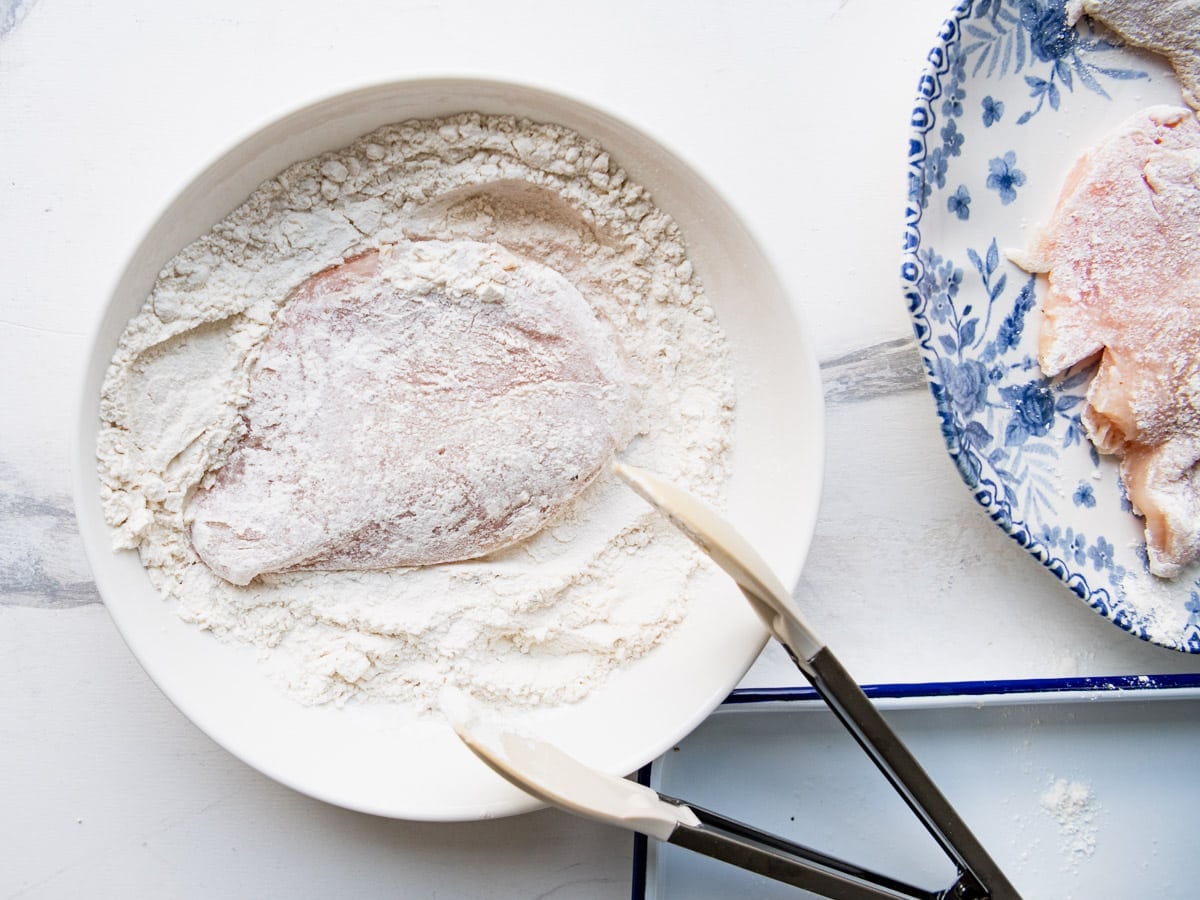
Season both sides generously with salt and pepper. Place the flour in a shallow dish, then lightly dredge each piece of chicken, shaking off any excess before it hits the pan. You want just a thin coating here, not a heavy breading.
⇢ Why the flour matters. The flour gives the chicken a delicate golden-brown crust and also helps lightly thicken the sauce later.
Step 2: Sear the Chicken
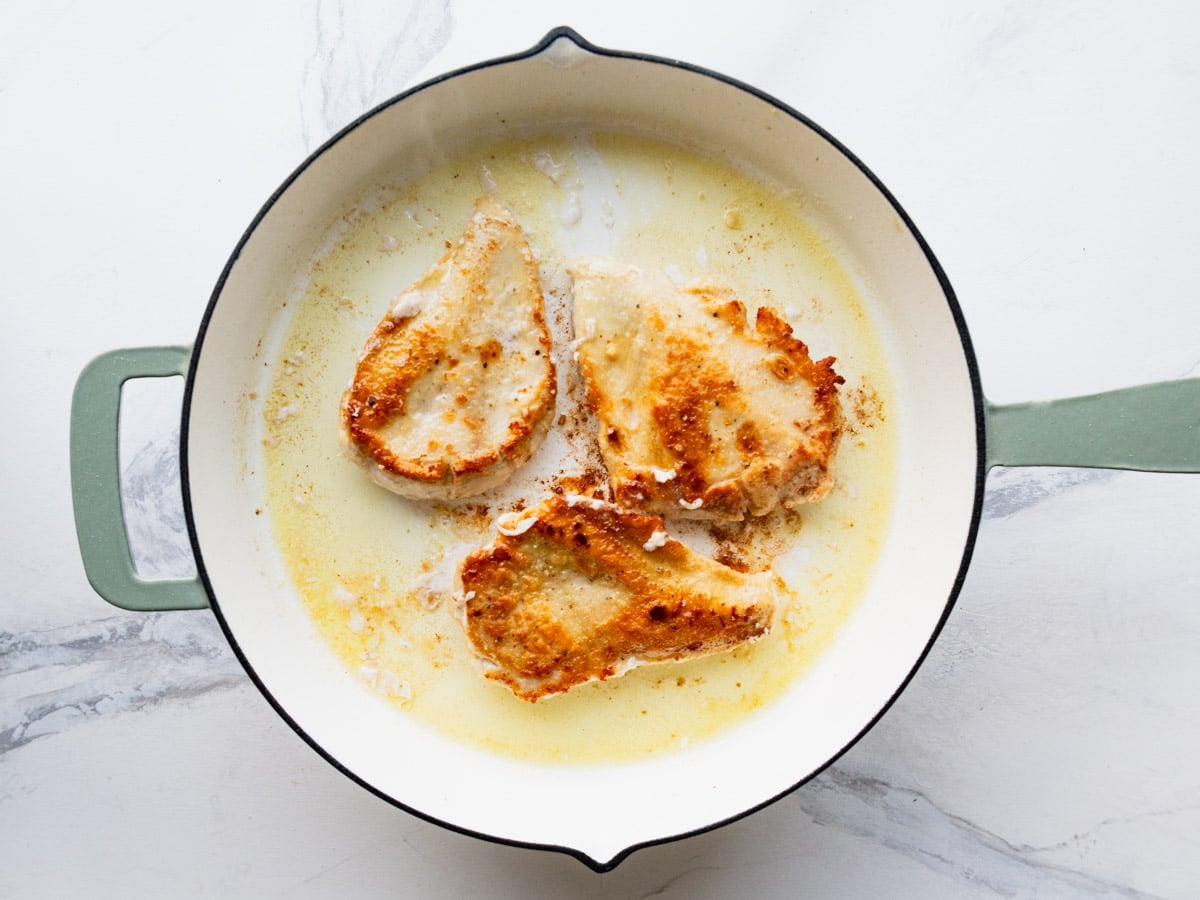
Heat the olive oil and 1 tablespoon of butter in a large skillet over medium-high heat. Once the butter is melted and the pan is hot, add the chicken in a single layer.
Cook for about 3-4 minutes per side, or until the chicken is deeply golden and cooked through to 165°F. Transfer the chicken to a plate and tent loosely with foil to keep warm while you make the sauce.
⇢ Don’t rush the first side. Let the chicken sit undisturbed long enough to form a real crust before flipping. If it sticks badly, it probably needs another minute.
⇢ Work in batches if needed. Overcrowding the skillet traps steam and prevents browning, so give the cutlets a little breathing room.
Step 3: Build the Lemon Pan Sauce
Reduce the heat to medium. Add the remaining tablespoon of butter and the minced garlic to the skillet. Cook for about 30 seconds, just until fragrant. Keep the garlic moving so it softens without browning, since burnt garlic can turn bitter quickly.
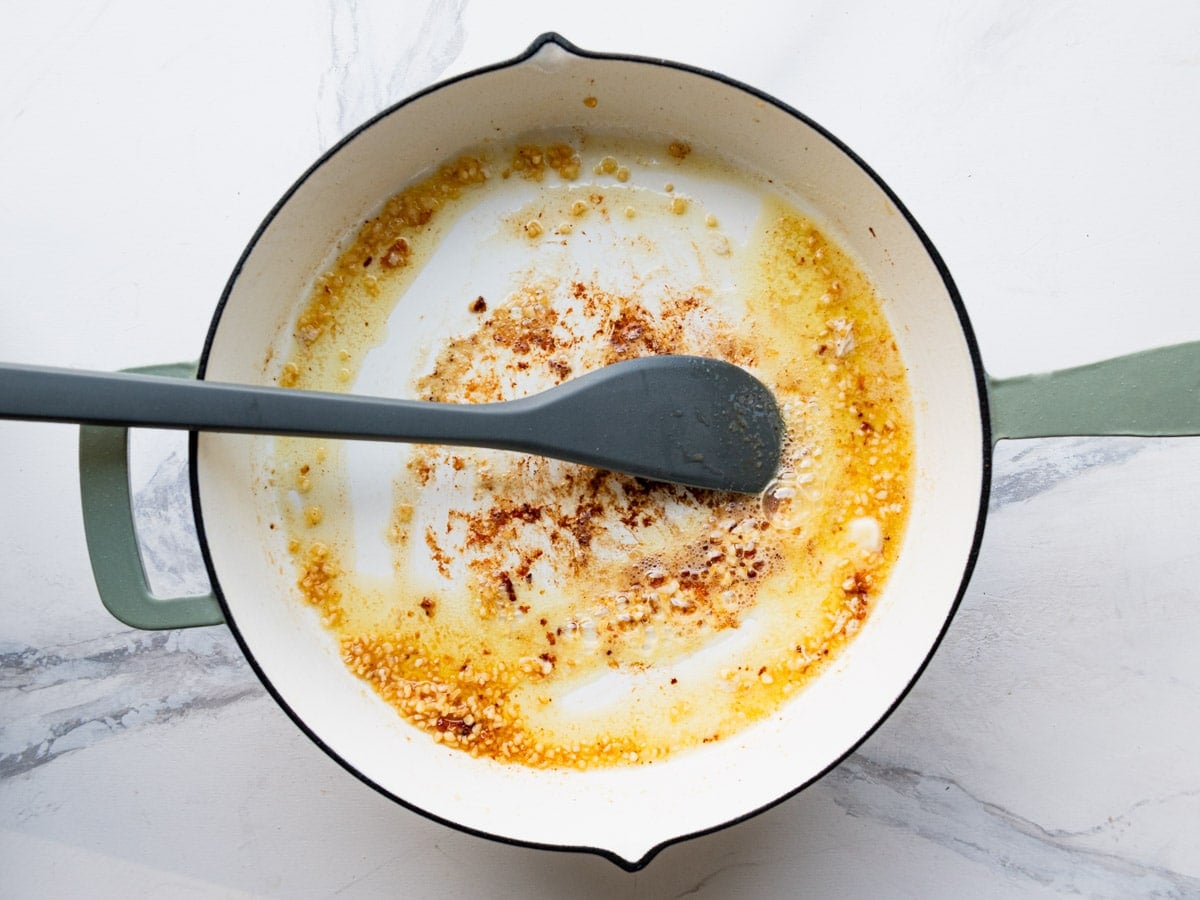
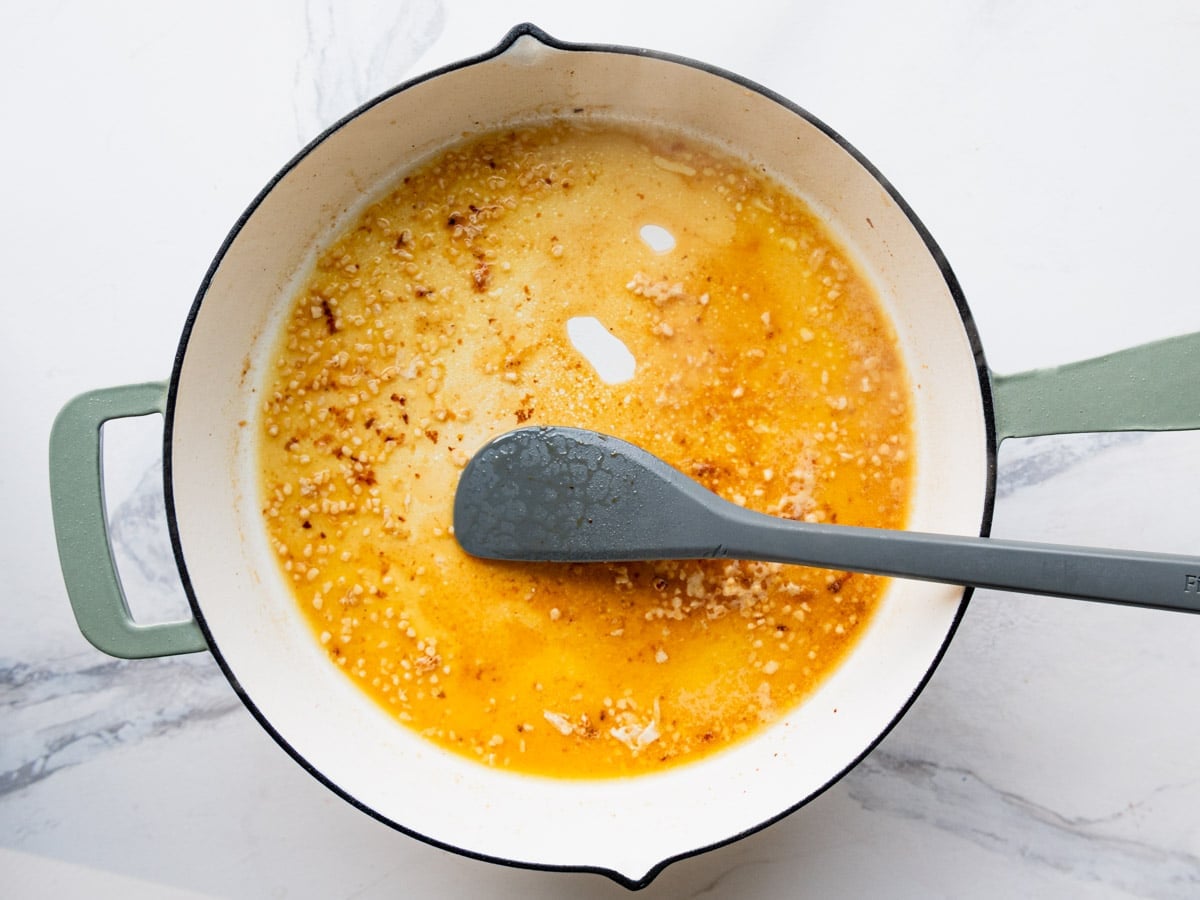
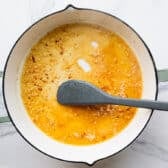
Pour in the white wine and immediately begin scraping up the browned bits from the bottom of the skillet with a wooden spoon or silicone spatula. Let the wine simmer for 1-2 minutes to reduce slightly.
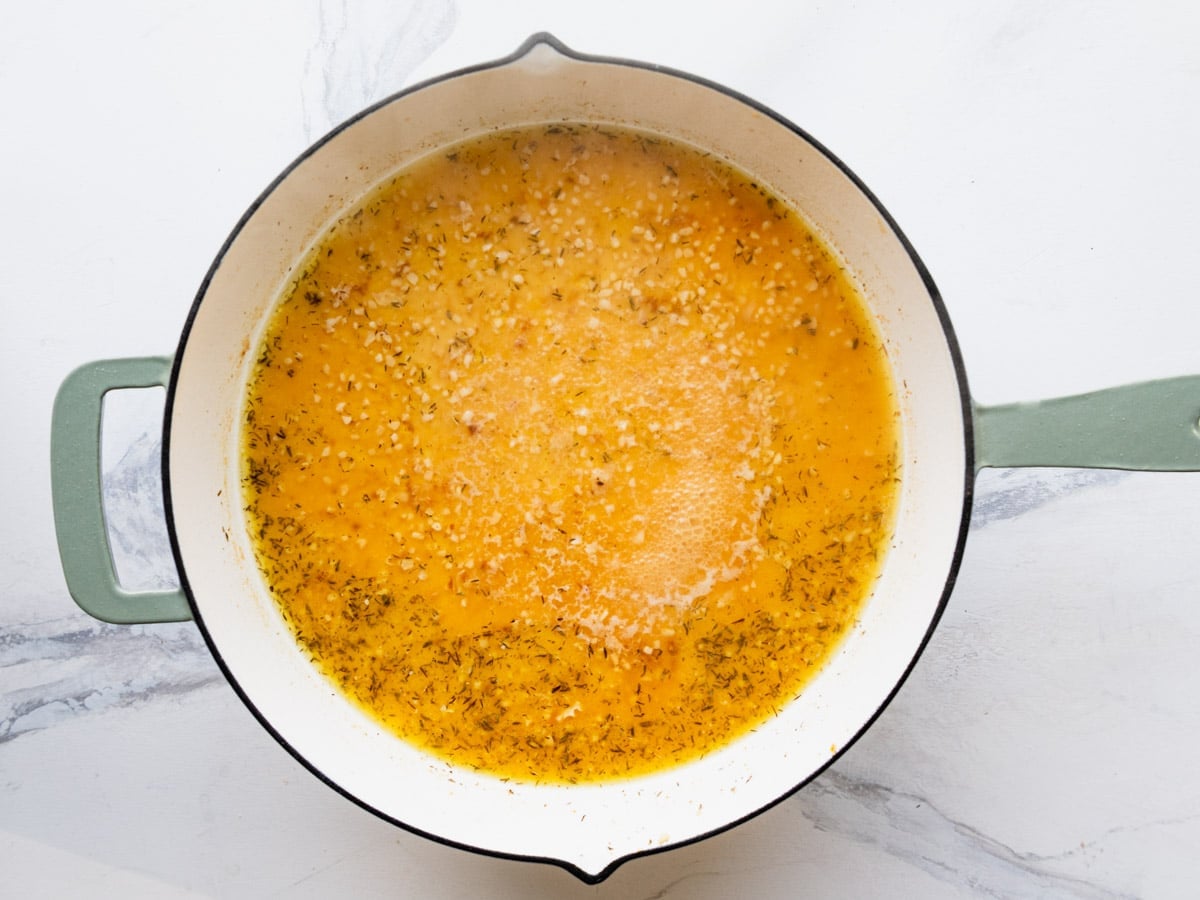
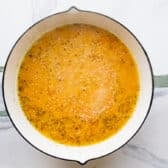
Next, stir in the chicken broth, lemon zest, lemon juice, and thyme. Simmer the sauce for another 2-3 minutes, until slightly reduced and glossy.
⇢ Deglazing is the secret here. Those browned bits left behind from the chicken are packed with flavor. The wine loosens them from the pan and transforms them into the base of the sauce, giving it depth and richness instead of just a sharp lemon flavor.
⇢ Fresh lemon makes a difference. Bottled juice works in a pinch, but fresh lemon juice and zest give the sauce a brighter, cleaner flavor that really stands out in a simple recipe like this.
Step 4: Finish and Serve
Return the chicken to the skillet along with any juices collected on the plate. Spoon the sauce over the top and simmer for another 1-2 minutes, just until everything is warmed through and coated in the lemon-butter sauce.
Sprinkle with chopped fresh parsley and add lemon slices for serving, if you like.
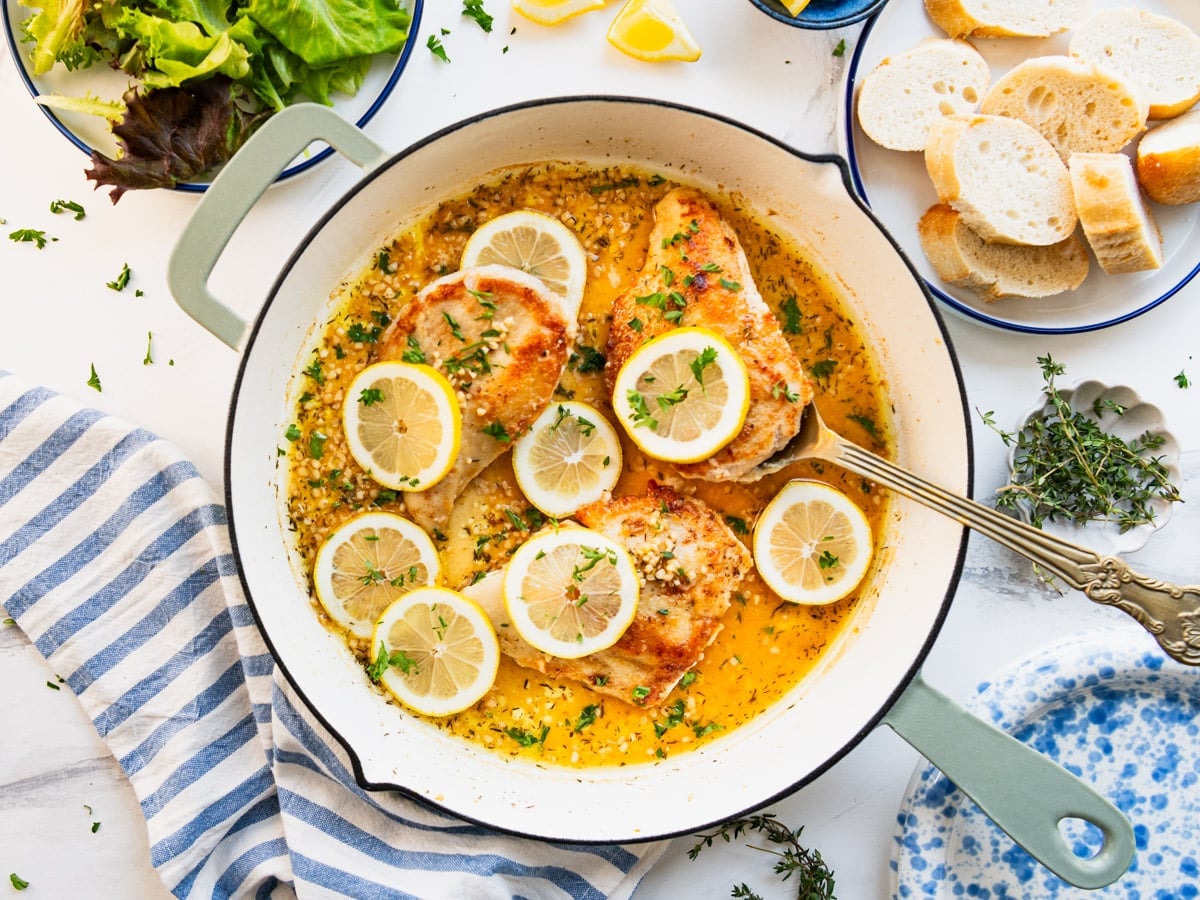
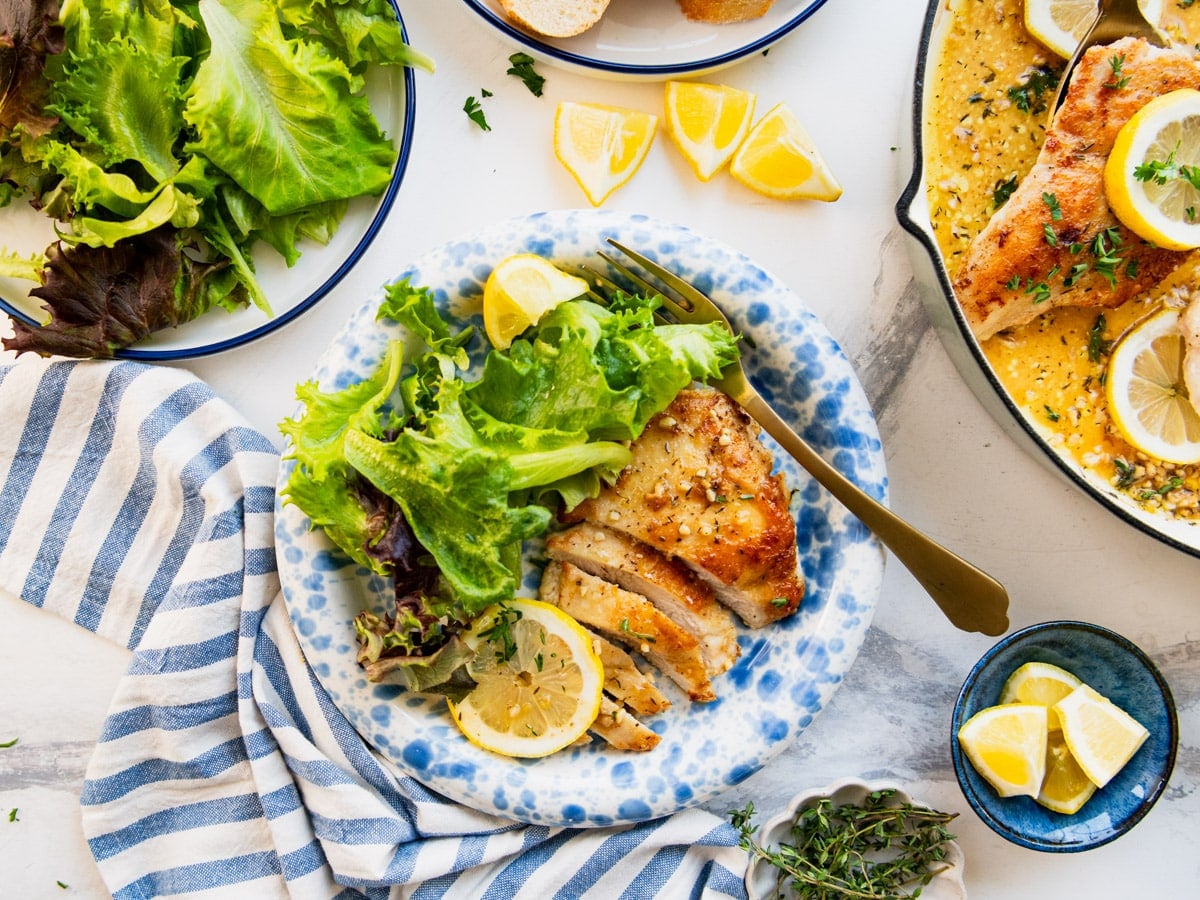
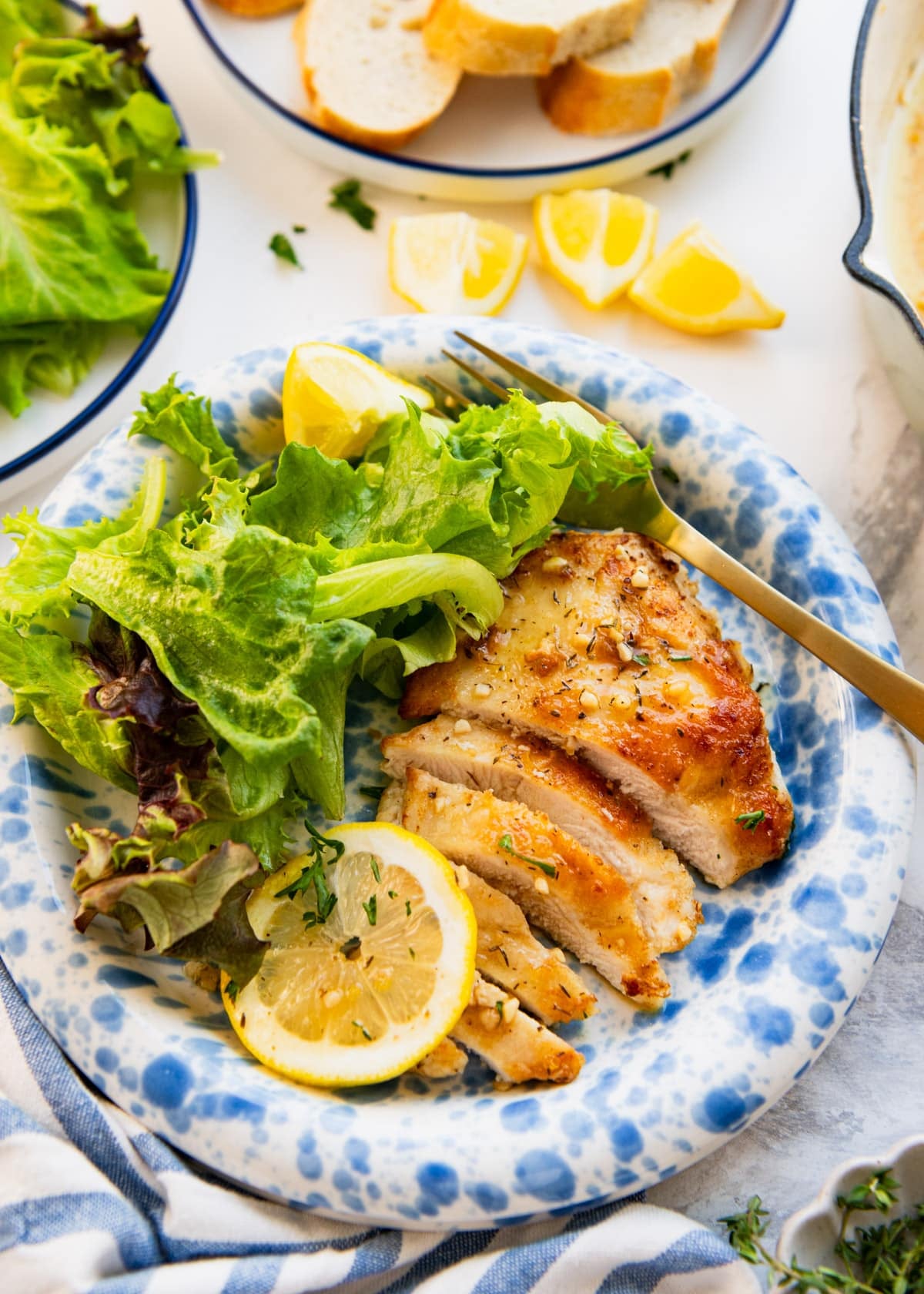
This skillet lemon chicken is especially good served with rice, buttered noodles, mashed potatoes, or a loaf of crusty bread to soak up every bit of the sauce.
Variations
- Use chicken thighs. Boneless, skinless chicken thighs work in place of cutlets, but they’ll need a few extra minutes per side. Pound them to a more even thickness for the best results.
- Skip the white wine. If you don’t have wine on hand, swap in an extra ¼ cup of chicken broth and add a small extra splash of lemon juice for brightness. The sauce will be slightly less complex but still very good.
- Finish in the oven. If you’re working with thicker breasts (or want to hold the chicken warm while you make sides), sear the chicken on the stovetop, then transfer the skillet to a 400°F oven for 5-8 minutes to finish cooking through. Build the sauce on the stovetop after the chicken comes out.
- Add capers. A tablespoon or two of drained capers stirred in with the lemon juice gives the sauce a briny, piccata-style flavor.
- Make it creamy. A splash of heavy cream stirred in at the end softens the sauce and makes it richer.
Serving Suggestions
For soaking up the sauce:
On the green side:
Southern sides:
Storage, Freezing, and Make-Ahead
Refrigerator: Store leftover chicken and sauce in an airtight container in the fridge for up to 3-4 days.
Reheating: Warm gently in a covered skillet over low heat with a splash of broth or water to loosen the sauce. The microwave works too (cover loosely and heat in short bursts), but the stovetop keeps the sauce silkier.
Freezing: This recipe doesn’t freeze especially well. The pan sauce can separate after freezing, and the texture of the chicken changes. If you do freeze it, plan to use the chicken in another dish (like in a sandwich) where you don’t need the sauce.
Make-ahead prep: You can dredge the chicken up to a few hours ahead and keep it covered in the fridge. Pull it out 15-20 minutes before searing so it’s not ice cold going into the pan.
Frequently Asked Questions
Can I use chicken thighs instead of chicken breasts?
Yes. Use boneless, skinless thighs and add a few extra minutes per side. Pound the thighs for even thickness, and the technique otherwise stays the same. The thighs will have a slightly different taste and texture, but will still be delicious.
Can I make this without the white wine?
Yes. Substitute an additional ¼ cup of chicken broth and add a small extra splash of lemon juice to keep the sauce bright. The wine adds a depth of flavor that broth alone doesn’t quite replicate, but it’s still a very good sauce without it.
Why is my lemon sauce watery?
There are a few possible reasons: not simmering the sauce long enough to reduce, adding too much liquid, or skipping the flour dredge (which helps thicken the sauce as the chicken returns to the pan). For a quick fix, simmer the sauce a couple extra minutes uncovered before adding the chicken back in.
Why do you dredge the chicken in flour?
The flour gives the chicken a thin golden crust and helps thicken the pan sauce.
More Easy Chicken Dinners

Did you make this recipe?
If you enjoyed this recipe, please leave a comment with a 5-star review at the bottom of the post. Thank you!
Watch How to Make It

Skillet Lemon Chicken
Ingredients
- 1 lb. chicken breast cutlets
- ½ teaspoon kosher salt
- ¼ teaspoon ground black pepper
- ½ cup all-purpose flour
- 2 tablespoons olive oil
- 2 tablespoons salted butter, divided
- 3 cloves garlic, minced (or ¾ teaspoon garlic powder)
- ¼ cup dry white wine, or substitute additional chicken broth
- ½ cup chicken broth
- Zest from ½ of a lemon
- Juice from 1 lemon (about 2-3 tablespoons)
- ½ teaspoon dried thyme (or 1 teaspoon fresh thyme leaves)
- Optional garnish: chopped fresh parsley; lemon slices
Instructions
- Pat the chicken cutlets dry with paper towels, then season both sides with salt and pepper. Lightly dredge in flour, shaking off any excess.

- Heat the olive oil and 1 tablespoon butter in a large skillet over medium-high heat. Cook the chicken cutlets for 3-4 minutes per side, until golden and cooked through (an internal temperature of 165°F). Transfer to a plate and tent with foil to keep warm.
- Reduce heat to medium. Add the remaining 1 tablespoon butter and the garlic to the skillet. Cook for about 30 seconds, just until the garlic is fragrant.
- Pour in the white wine, scraping up the browned bits from the bottom of the pan. Simmer for 1-2 minutes to reduce slightly.
- Stir in the chicken broth, lemon zest, lemon juice, and thyme. Let the sauce simmer for 2-3 minutes, until slightly reduced.
- Return the chicken to the skillet and spoon the sauce over the top. Cook for 1-2 more minutes, just until heated through and coated in the lemon sauce.
- Garnish with parsley and lemon slices. Serve hot with rice, pasta, mashed potatoes, or crusty bread to soak up the sauce.




Notes
- Don’t crowd the pan. Sear the chicken in batches if needed. Overcrowding drops the pan temperature and the chicken will steam instead of getting a golden crust.
- Pat the chicken dry. Surface moisture keeps the flour from sticking and prevents a real sear. Press the cutlets between paper towels until they look matte before seasoning and dredging.
- No wine? No problem. Substitute an additional ¼ cup of chicken broth and add a small extra splash of lemon juice. The sauce will be slightly less complex but still very good.
- Use chicken thighs. Boneless, skinless thighs work in place of cutlets. Add a few extra minutes per side and pound them for more even thickness, if necessary.
- Finish in the oven. For thicker breasts or to hold the chicken warm, sear on the stovetop and transfer the skillet to a 400°F oven for 5-8 minutes to finish. Then make the sauce on the stovetop after the chicken comes out.
- Storage. Leftovers keep in an airtight container in the refrigerator for 3-4 days. Reheat gently in a covered skillet over low heat with a splash of broth.













Easy skillet lemon chicken from The Seasoned Mom looks absolutely incredible — that bright, zesty lemon sauce with fresh herbs coming together in one skillet in just 25 minutes to create such a light yet satisfying chicken dinner is the perfect weeknight solution! I’ve been on a total chicken kick lately and just made bang bang chicken — the sauce recipe at https://bumpbites.health/blogs/bang-bang-chicken was amazing. This lemon skillet version is definitely next on my list!