
Roasted Lemon Chicken
Bone-in, skin-on chicken roasted on a bed of fresh lemon slices, garlic, and herbs. The skin turns golden and crispy while the meat stays tender and juicy, all with just 10 minutes of prep.
Servings 4 people
Calories 616kcal
Ingredients
- 2 lemons, thinly sliced
- 1 large onion, thinly sliced
- 2 cloves garlic, peeled and smashed
- 3 sprigs fresh thyme
- 2 sprigs fresh rosemary
- 3 lbs. bone-in, skin-on split chicken breast or bone-in, skin-on chicken thighs (about 2 large chicken breasts or 6 thighs)
- Olive oil
- Kosher salt and ground black pepper, to taste
Instructions
- Preheat oven to 425°F. Line a large rimmed baking sheet or roasting pan with foil and spray with nonstick cooking spray or brush with olive oil.
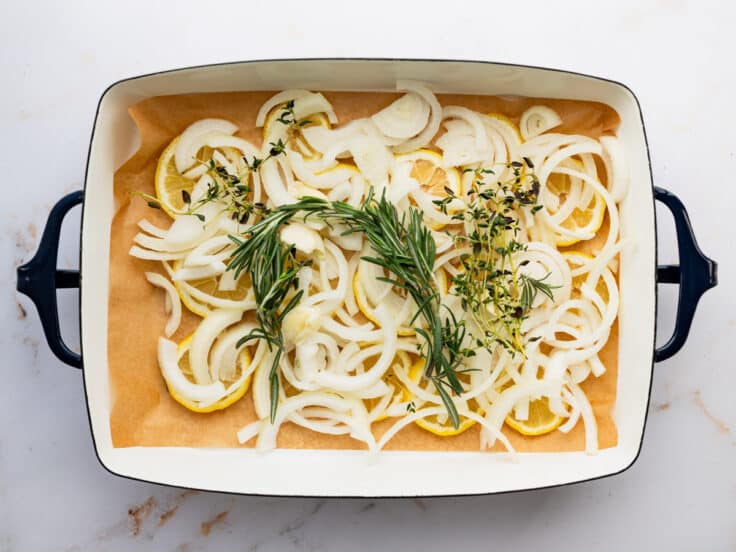
- Arrange the lemon slices, onion slices, garlic cloves, thyme sprigs, and rosemary sprigs in the prepared pan.
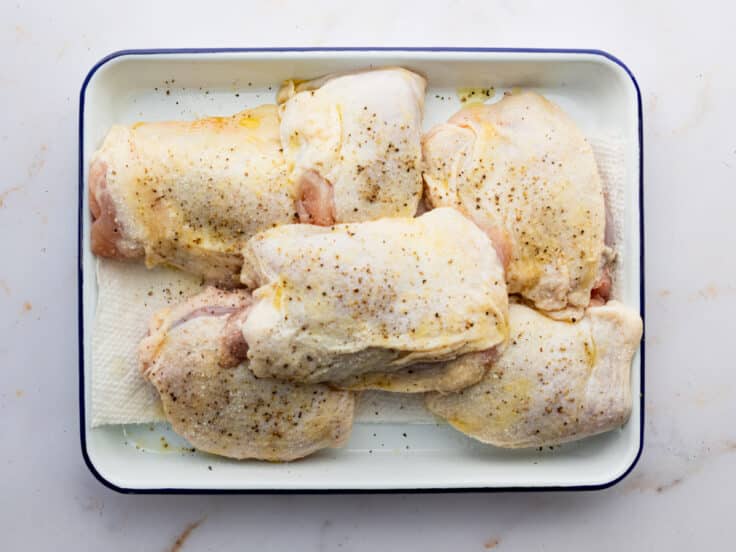
- Pat the chicken very dry with paper towels. Rub all over with about 1 tablespoon of olive oil and season generously with salt and pepper on all sides.
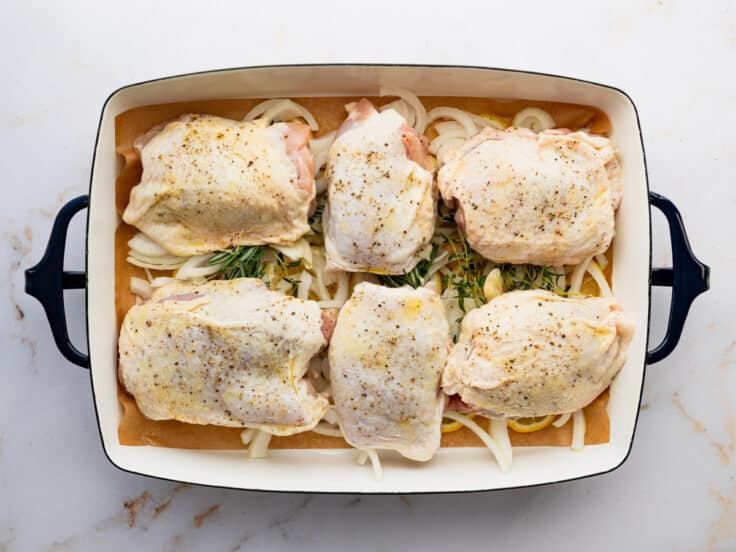
- Place the chicken skin-side up on top of the lemon, onion, garlic, and herbs.
- Roast chicken breasts for 45 minutes to 1 hour, or until an instant-read thermometer reads 165°F. Chicken thighs are done in about 35-45 minutes and should register 175-185°F. For extra-crispy skin, broil for 1-2 minutes at the end (do not broil a pan lined with parchment paper).
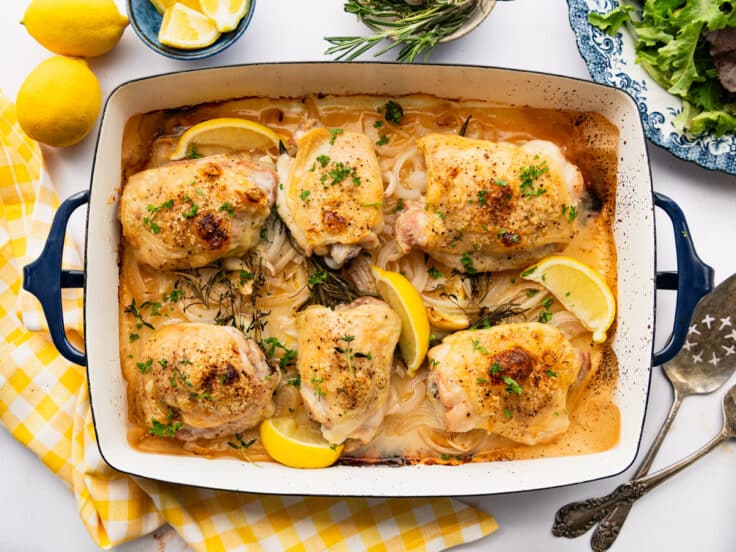
- Allow the chicken to rest for 5-10 minutes before serving.
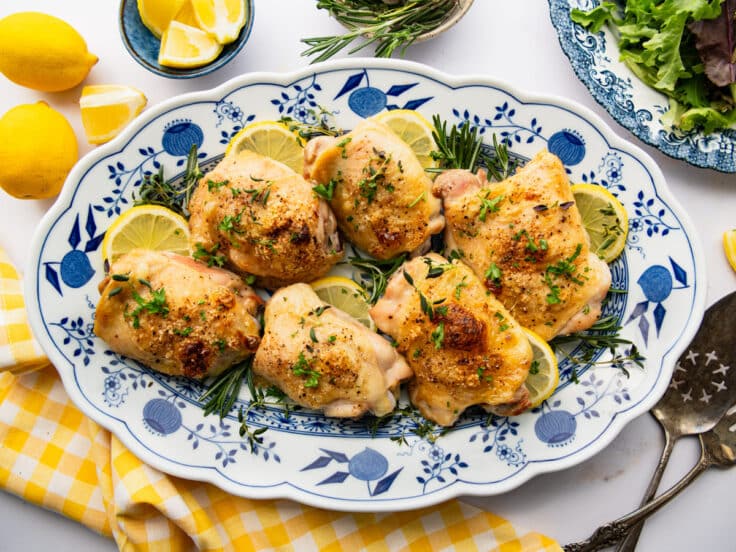
Notes
- Use bone-in, skin-on chicken. The bone and skin protect the meat during roasting, keeping it juicy and developing that crispy, golden exterior. Boneless, skinless chicken works but will cook faster: about 30 minutes for breasts and 20 minutes for thighs. It won't have the same crust.
- Pat the chicken very dry. Removing surface moisture before seasoning is the key to crispy skin. Give each piece a thorough pass with paper towels.
- Roast uncovered the entire time. Covering the chicken traps steam, which softens the skin. Leave it uncovered for the best results.
- Use a meat thermometer. Cooking time varies based on the size of your chicken pieces and oven. A thermometer is the most reliable way to know when the meat is done: 165°F for breasts, 175-185°F for thighs.
- Rest before serving. Let the chicken rest 5-10 minutes after it comes out of the oven so the juices redistribute.
- Scale the recipe easily. Make a larger bed of aromatics and add as many pieces as you need. Leave space between the chicken so heat can circulate; crowding the pan causes steaming rather than roasting.
- Switch up the herbs. Rosemary and thyme are classic here, but parsley, chives, and oregano are also great options.
Nutrition
Serving: 1/4 of the recipe | Calories: 616kcal | Protein: 71g | Fat: 35g | Saturated Fat: 10g | Polyunsaturated Fat: 7g | Monounsaturated Fat: 16g | Trans Fat: 0.4g | Cholesterol: 218mg | Sodium: 505mg | Potassium: 749mg | Vitamin A: 282IU | Calcium: 38mg | Iron: 3mg